








How do you control hand drip coffee extraction at home?
Hand drip coffee uses a dripper and filter paper to separate coffee grounds from the liquid, and four variables decide the result: coffee-to-water ratio, grind size, water temperature, and extraction time. The term is used mostly in Japan and Korea, while pour over is common in Europe and the United States, and each name stresses a different part of the same method.
In practice, a three-stage pouring sequence keeps the bed even and the extraction predictable. Light roasts generally call for higher water temperatures and finer grinds, dark roasts for lower temperatures and coarser grinds. A Yunnan sun-dried Typica, brewed as a working example, shows how the same framework shifts flavor when the equipment or temperature changes.
Want to brew a delicious pour-over coffee at home but don't know where to start? This article begins with the definition of pour-over coffee and the cultural differences behind its various English expressions, systematically sorts out the role of essential equipment, and deeply analyzes the four core variables: coffee-to-water ratio, grind size, water temperature, and extraction time. At the same time, using Front Street Coffee's Yunnan sun-dried Typica as an example, it fully demonstrates the three-stage pouring process and flavor performance, helping coffee enthusiasts build a replicable brewing framework, understand the differences in equipment and water temperature choices between light-roast and dark-roast beans, and ultimately find a pour-over solution that suits them.
Pour-over coffee has now become part of many people's daily lives. Whether ordering at a café or brewing at home, it's relatively easy to get a cup of black coffee. However, to consistently make a delicious pour-over, it's still necessary to master certain extraction principles. This article from Front Street focuses on the basic knowledge of pour-over coffee.
What Is Pour-Over Coffee
Pour-over coffee is gradually becoming part of everyday beverages. The drip coffee served at Front Street Coffee (FrontStreet Coffee) stores has always been brewed using equipment such as a dripper paired with a pouring kettle. One of the notable features of this method is that it uses a dripper and filter paper or other filtering media to separate the coffee grounds from the coffee liquid.
If you observe carefully enough, you'll find that in Chinese it's all called "手冲咖啡" (pour-over coffee), but in English there are several expressions: pour over coffee, hand drip coffee, filter coffee. What does each emphasize?
Front Street Coffee (FrontStreet Coffee)'s understanding is that coffee itself is a foreign import, and the term "手冲咖啡" most likely was translated from "hand drip coffee." The differences in these names are more due to different cultural backgrounds. "Hand drip coffee" is used more in Japan and Korea. From the literal meaning, you can see it emphasizes the visual of "drip"—which easily brings to mind Japan's iconic drip method.
Similarly, "pour over" leans toward describing the state of water flowing and churning through the coffee bed, and is more common in Europe and the United States. "Filter" refers to the filtering equipment. Some cafés in China also use "filter coffee" to refer to pour-over, but in many places, such as Melbourne, "filter coffee" may refer to coffee made with a drip coffee machine.
What Needs to Be Prepared?
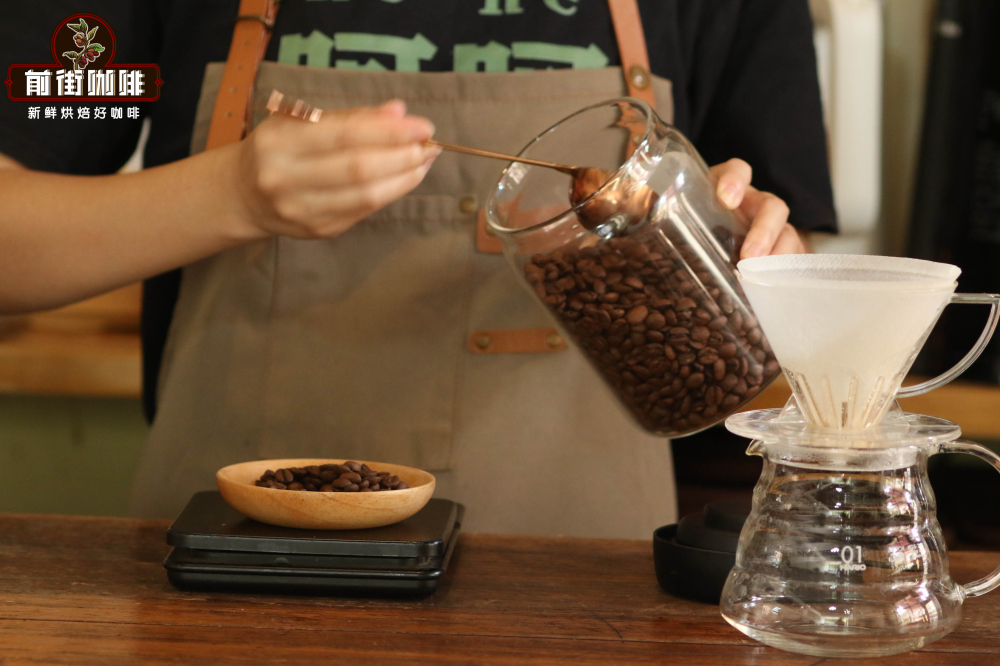
Based on Front Street Coffee (FrontStreet Coffee)'s years of practical experience, making a cup of pour-over coffee typically requires the following tools: a digital scale, a pouring kettle, a dripper, filter paper, a server, a thermometer, a grinder, and most importantly—coffee beans.
The dripper and filter paper handle the task of filtering out coffee grounds, while also absorbing some coffee oils, making the final coffee liquid cleaner and more refreshing in mouthfeel.
Front Street Coffee (FrontStreet Coffee) stores mainly use V60 and KONO drippers for daily service. Friends who frequently read Front Street Coffee (FrontStreet Coffee) content should know that light-roast and dark-roast coffee beans differ in water temperature and dripper selection. Lowering the water temperature is to avoid extracting too many undesirable flavors, because Front Street Coffee (FrontStreet Coffee) believes that dark-roasted beans have already released more aromatic compounds, and if you still brew at the water temperature used for light roasts, over-extraction easily occurs.
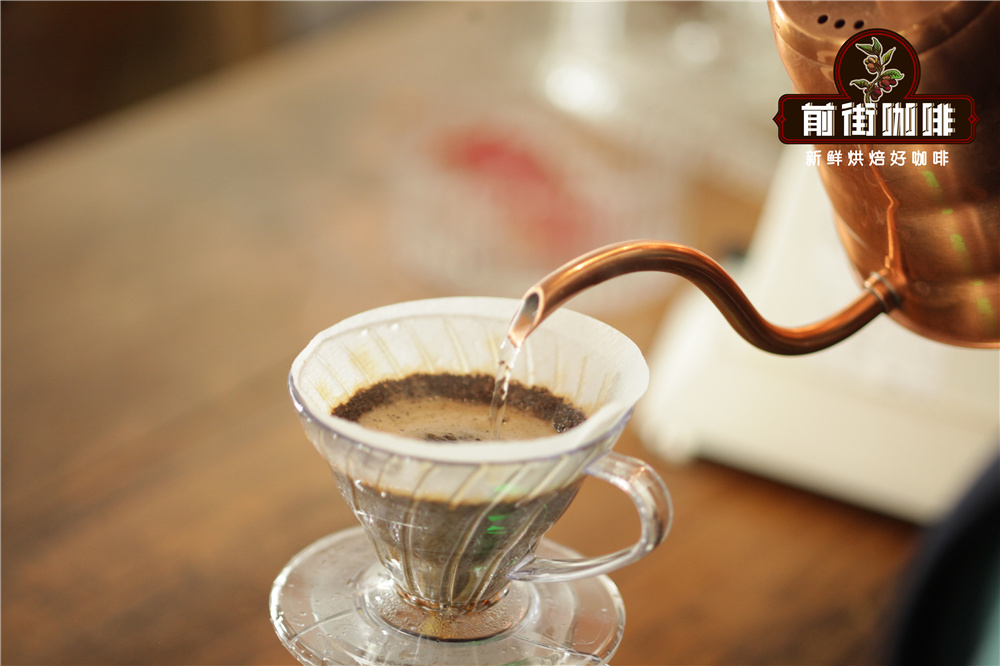
Compared to the KONO dripper, the V60 has a faster flow rate, which can easily cause under-extraction at low water temperatures. The KONO dripper has fewer ribs concentrated at the bottom, allowing the filter paper to hug the wall tightly and restrict airflow, thereby extending the contact time between water and coffee grounds, enabling more thorough extraction and ultimately enhancing body.
The purpose of the digital scale is to weigh the coffee beans and water, while also recording brewing time. Only by quantifying every parameter can you achieve reproducibility and ensure consistency in the final product. The thermometer serves the same logic—ensuring the water temperature falls within the appropriate range before pouring.
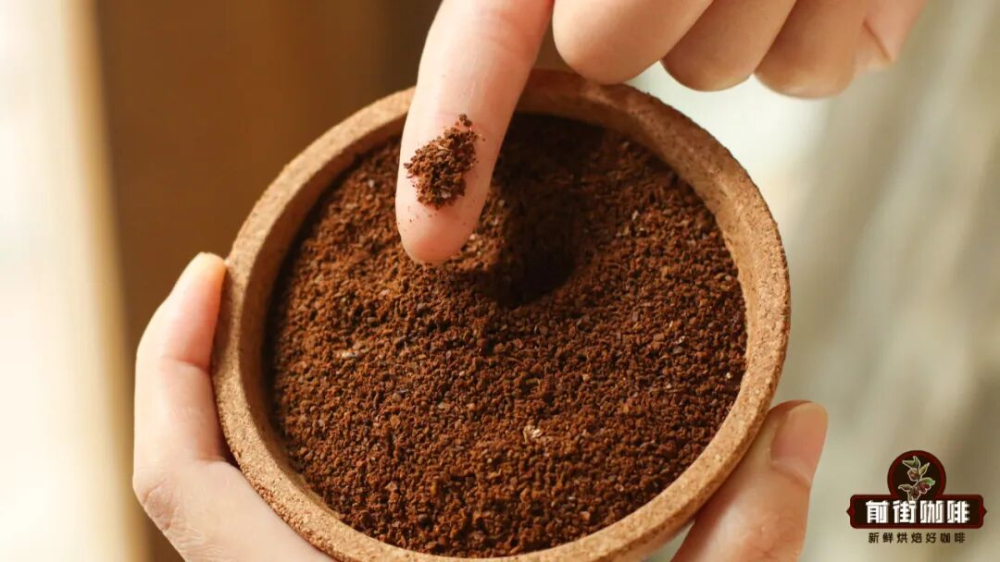
The importance of the grinder cannot be overlooked either. The coarseness of the coffee grounds directly affects the taste of a pour-over: too coarse, and the coffee may taste weak; too fine, and it easily becomes bitter and astringent.
Front Street Coffee (FrontStreet Coffee) recommends a medium-fine grind for pour-over coffee. For light-roast coffee beans, the reference is an 80% pass rate through a 0.85mm standard sieve; for dark-roast coffee beans, control it at 70% to 75%.
How to Brew a Good Cup of Pour-Over Coffee
The brewing process of pour-over coffee is actually not complicated. The key is controlling several variables that affect taste: coffee-to-water ratio, grind size, water temperature, and extraction time.
At Front Street Coffee (FrontStreet Coffee), when serving, we first weigh 15 grams of coffee beans, set the coffee-to-water ratio at 1:15, meaning 225 grams of hot water needs to be poured.
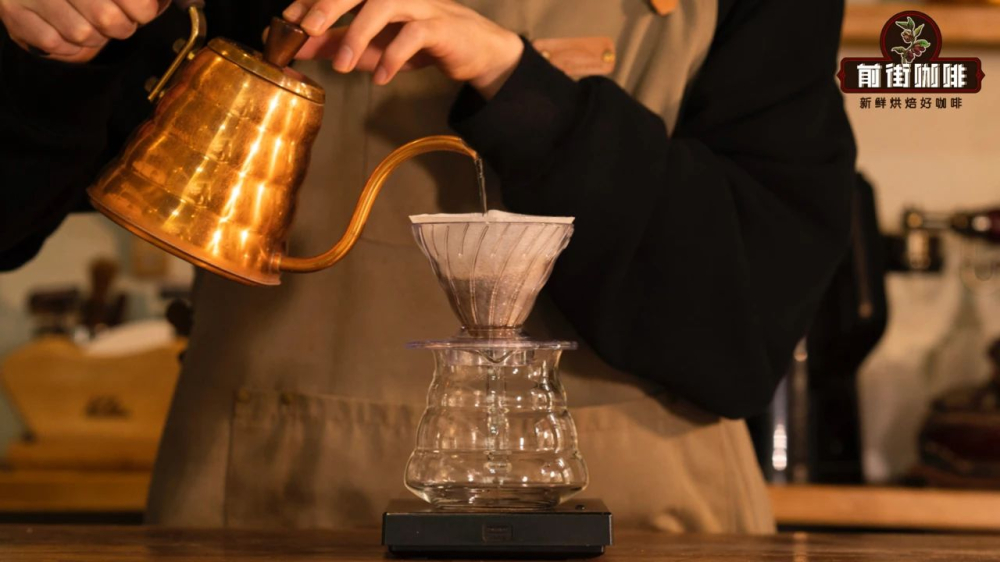
Before brewing, first rinse the filter paper with hot water to make the dripper and filter paper fit more tightly. Then grind the coffee beans to the coarseness we need—the medium-fine level mentioned earlier.
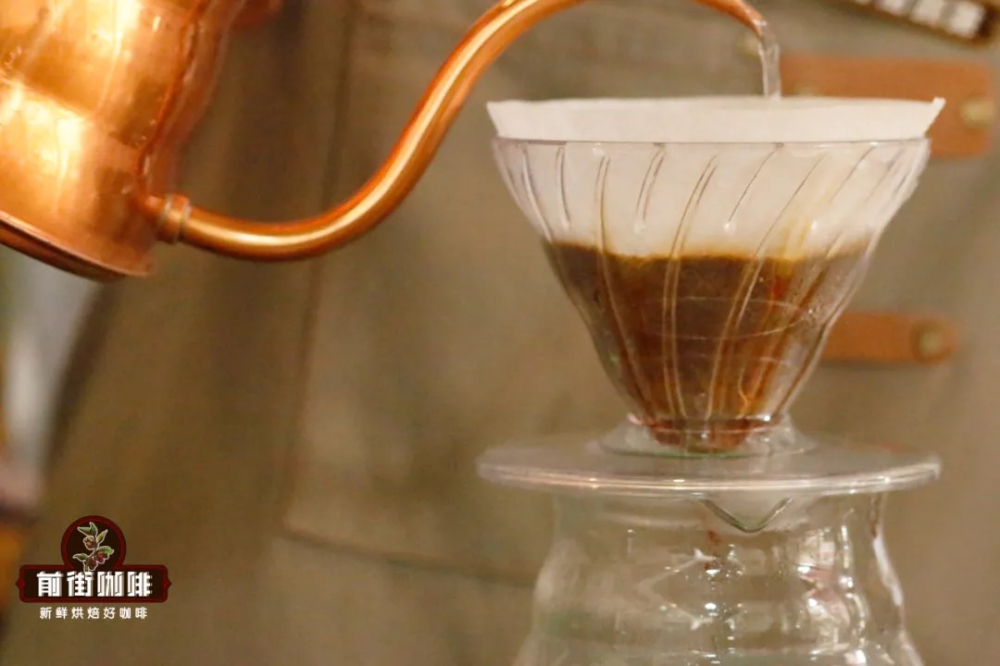
Pour the ground coffee into the dripper and start once the water temperature reaches brewing requirements. The entire pouring process is divided into three stages: the first stage pours 30 grams of water for blooming, ensuring all coffee grounds are saturated. The bloom lasts 30 seconds, with the purpose of releasing carbon dioxide so that subsequent water can extract coffee more effectively; the second stage pours up to 125 grams, then waits for the coffee liquid to drop by half; finally, the third stage pours up to 225 grams, again waiting for the coffee to finish filtering. Total extraction time is controlled at 2 minutes.
Below, Front Street uses a specific bean to illustrate:
Front Street Coffee (FrontStreet Coffee) Front Street Yunnan Sun-Dried Typica Region: Lincang, Yunnan, China Altitude: 1300m Variety: Typica Processing Method: Sun-Dried
As usual, Front Street needs to first introduce the background information of this bean. As everyone knows, Yunnan is an important production area for specialty coffee in China. Within the province, there are four sub-regions: Dehong, Baoshan, Pu'er, and Lincang. Front Street Coffee (FrontStreet Coffee) established its own coffee estate in Lincang as early as 2013.
Yunnan's coffee planting history can be traced back to the late 19th to early 20th century. There is controversy over the exact starting year, with three claims: 1892, 1902, and 1904.
The earliest coffee variety planted in Yunnan was Typica. Later, with the advancement of reform and opening-up policies, international giants like Starbucks and Nestlé entered Yunnan. To achieve higher coffee yields, these major brands began promoting the cultivation of Catimor. To increase income, coffee farmers cut down the elegant Typica and switched to planting Catimor, which has stronger disease resistance and higher yields.
Front Street Coffee (FrontStreet Coffee), in pursuit of a more original and elegant flavor, insists on growing Typica at its estate in Lincang.
Front Street Yunnan Sun-Dried Typica Coffee Brewing Parameters Dripper: KONO Water Temperature: 88°C Dose: 15 grams Coffee-to-Water Ratio: 1:15 Grind Size: 75% pass rate through China Standard No. 20 sieve
The extraction method Front Street uses is the three-stage extraction mentioned earlier: first bloom with 30 grams of water for 30 seconds, then pour in a circular motion with a slow stream up to 124 grams before pausing, wait until the water level drops and is about to expose the coffee bed, then continue pouring up to 227 grams and stop, then wait until the water level drops and is about to expose the coffee bed again before removing the dripper. (Timing starts from the bloom) Total extraction time is 2 minutes.
Taste Description
Yunnan Sun-Dried Typica coffee has a nutty character. Its mouthfeel is more substantial than washed Yunnan coffee, with slightly lower acidity than washed Typica Yunnan coffee, but slightly higher sweetness and better balance, presenting berry-like acidity, interwoven with brown sugar notes and a slight tea-like quality.
For more specialty coffee knowledge, please follow: Front Street Coffee (Frontsteet Coffee)
The above content is compiled by CoffeeHunters, a coffee news website.


