







What Separates Arabica from Other Coffee Species?
Coffee belongs to the Rubiaceae family, with about eighty confirmed species, but three are cultivated for drinking: Arabica, Robusta and Liberica. Arabica, which originated in Ethiopia, accounts for roughly 70 percent of world production and is the species most used for single-origin and specialty coffee.
Within Arabica itself, the arabica variety list includes Typica, Bourbon, Catimor and Maragogype, each with its own cup profile and growing needs. Robusta handles heat and disease better and yields more, so it dominates instant coffee, while Europe leans on Arabica-Robusta blends for espresso.
There are numerous coffee-producing regions around the world, and coffee beans from Brazil, Colombia, Indonesia, and other places each have their own renown. In plant taxonomy, coffee belongs to the Rubiaceae family, and about eighty species of coffee trees have been confirmed, among which there are three main cultivated varieties used for drinking: Arabica, Robusta, and Liberica. Arabica is known for its delicate flavor and aroma and is often used for single-origin and specialty coffee; Robusta, due to its strong adaptability and high yield, is mostly used for instant coffee. Each has its own advantages, and they have also given rise to many hybrid varieties. This article will systematically review the characteristics of these two major coffee varieties and introduce common Arabica sub-varieties such as Typica, Bourbon, Catimor, and Maragogype, while also sharing Front Street Coffee's cupping experiences and product recommendations for the related bean types.
For more specialty coffee knowledge, please follow the WeChat public account: Front Street Coffee (FrontStreet Coffee)
Today, coffee cultivation has spread to many countries, among which coffee beans from producing regions such as Brazil, Colombia, and Indonesia enjoy considerable international prestige.
From the perspective of plant taxonomy, coffee belongs to the Rubiaceae family, which contains at least more than one hundred species, and about eighty species of coffee trees have currently been confirmed. Among them, there are three main varieties cultivated specifically for drinking: Arabica, Robusta, and Liberica.
Generally, Arabica is mostly used to make single-origin or specialty coffee, while Robusta is commonly found in the production of instant coffee. Although people are accustomed to regarding Arabica as representing high quality and Robusta as inferior, this division is not absolute, and choosing according to personal taste preferences is more reasonable. In terms of consumption habits, the United States and Japan prefer lighter coffee brewed from Arabica, while Europe favors espresso made from a blend of Arabica and Robusta.
Arabica advantages: premium coffee beans with outstanding flavor and aroma performance
Arabica originated in Ethiopia and is a representative variety there. It is also grown in southern Africa, other parts of Africa, and many countries in Asia, accounting for about 70% to 75% of total global coffee production. Because Arabica has relatively weak resistance to pests and diseases, it is more suitable for cultivation in high-altitude areas, and the quality of coffee beans produced above 1,500 meters is especially the best.
The excellent quality obtained through careful cultivation gives it balanced flavor, body, and aroma, so it can be recognized as premium coffee beans and is mainly used for single-origin or specialty coffee. The three famous major coffee beans—Hawaiian Kona, Jamaican Blue Mountain, and Yemeni Mocha—all belong to the Arabica variety. Arabica green beans are dark in appearance and narrow and long, and are praised as the model of high-quality highland Arabica. Their characteristic lies in combining sweetness, acidity, and rich aromatic layers.
In terms of flavor performance, Arabica is recognized as the best and has remained the mainstream in the specialty consumption market since the rise of the specialty coffee concept. For example, the Arabica sub-variety Typica has excellent acidity and a very high cupping score. As the oldest coffee variety, its genes are outstanding. Geisha, now widely known in the specialty coffee field, has won the favor of many coffee lovers with its fresh floral aroma and pleasant acidity.
The shortcomings of Arabica
Although Arabica accounts for seventy percent of total coffee production, it has relatively poor resistance to pests and diseases, so many varieties with stronger disease resistance have since been bred. In addition, Arabica also has a large number of sub-varieties formed through mutation or hybridization, such as Typica, Bourbon, and Geisha. In Front Street Coffee's stores, Arabica sub-variety coffee beans are very abundant. For single-origin and specialty coffee alone, more than 50 kinds of coffee beans from different producing regions are offered, capable of meeting diverse taste needs. In addition, the stores also stock more bean categories that are not yet listed for tasting.
At present, most of the coffee beans used by specialty coffee shops on the market are Arabica, and Ethiopia in Africa is precisely the birthplace of coffee. The flavor of Arabica coffee is extremely elegant, and its sweetness is also quite prominent. Common Arabica varieties today include Typica, Bourbon, and Catimor.
Typica is one of the oldest coffee tree varieties in the world, and today almost all Arabica varieties can be regarded as descendants derived from Typica. For example, the famous Jamaican Blue Mountain is a Typica variety, and Papua New Guinea coffee beans, known as "Little Blue Mountain," also belong to Typica and were introduced from Blue Mountain. Because the local growing environment is extremely similar to that of the Blue Mountain range, Papua New Guinea coffee has earned the reputation of "Little Blue Mountain."
As one of the best-flavored varieties among Arabica, Typica is planted in many places. Indonesia in Asia also planted Typica in the early period, and China's Yunnan coffee-producing region was initially dominated by Typica as well. However, at that time, leaf rust broke out globally, and Typica's disease resistance was extremely poor, so it was almost entirely infected. The Indonesian region had no choice but to switch to the Catimor variety, which has strong disease resistance and high yield.
The Yunnan producing region plants relatively little Typica, mainly because its yield is low, management is difficult, and the economic benefits of cultivation are not high. Therefore, local coffee farmers are more inclined to plant Catimor, which has high yield and strong disease resistance.
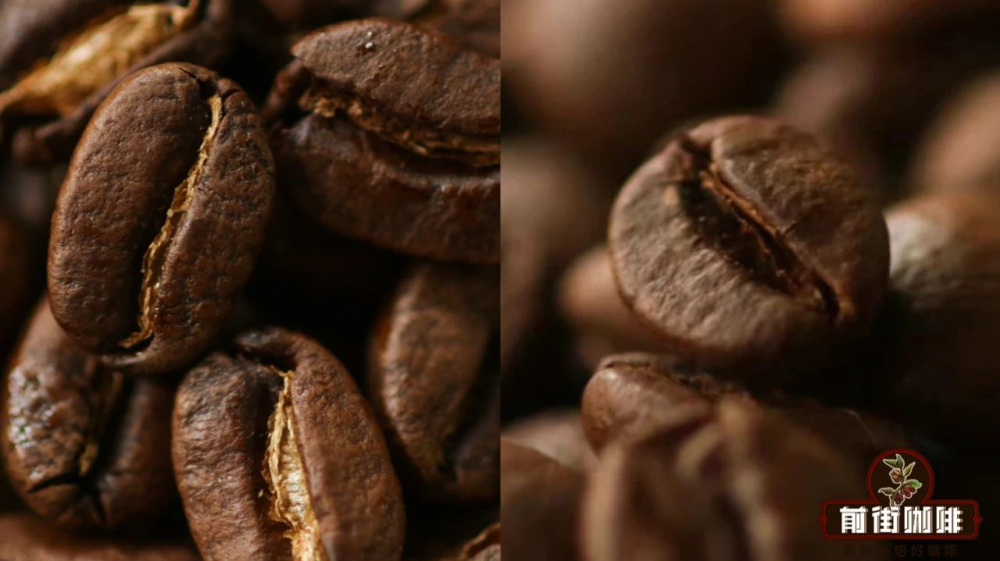
Front Street has purchased Catimor coffee from both producing regions. For example, the Indonesian Golden Mandheling coffee purchased by Front Street is precisely of the Catimor variety. This Mandheling has a very clean mouthfeel, high sweetness, and balanced fruit acidity. As for Catimor coffee from Yunnan, Front Street purchased two kinds: one is Yunnan small-batch coffee, and the other is sun-dried Catimor. Yunnan small-batch uses the locally common washed processing, so its mouthfeel is cleaner; sun-dried Catimor has a fuller body.
Generally speaking, Arabica coffee beans are smaller than Robusta, but everyone cannot judge by appearance alone—large coffee beans are not necessarily not Arabica, such as Maragogype.
Maragogype is a larger bean produced after mutation of the Typica variety. Compared with other coffee beans, Maragogype can be called an oddity, with a volume three times or even more larger than ordinary coffee beans. Maragogype is mainly distributed in Central American countries, and current main producing areas include Guatemala, Mexico, Nicaragua, Honduras, El Salvador, Brazil, and Zaire. The best-quality Maragogype comes from Mexico and Guatemala. Overall, Maragogype has a relatively balanced taste, a round and soft texture, moderate aroma, and a relatively light body, so it is highly regarded in the industry.
According to Front Street's understanding, Maragogype grown at an altitude of 700 to 800 meters has an ordinary taste and lacks distinctive features; while giant Maragogype grown above 1,500 meters has an enchanting sweet fragrance and a strong aroma. In addition to its eye-catching large appearance, giant Maragogype is a variant of Typica (a native Arabica bean variety), and its tree, leaves, and fruit are all much larger than ordinary Arabica. The fruit is plump and the bean texture is hard. It is the only coffee in Central America without sharp acidity, so it enjoys the reputation of "Central American Blue Mountain" and is quite close to elegant Blue Mountain coffee beans, with sweetness amid acidity and a full body, very charming.
Front Street has also purchased many kinds of coffee beans, but has always believed that Maragogype from the Nicaraguan producing region has the best flavor. Among them, the Maragogype coffee grown at Nicaragua's Mama Mina estate performs the most outstandingly. Front Street has also cupped other coffee beans from Mama Mina estate. The coffee beans produced by this estate are all of quite good quality, with a rich and layered flavor. On entry, one can immediately feel the aroma of black berries. Blackberry and smoked plum carry the aroma of citrus peel. The overall flavor is solid, and the mouthfeel is silky, clean, and sweet.
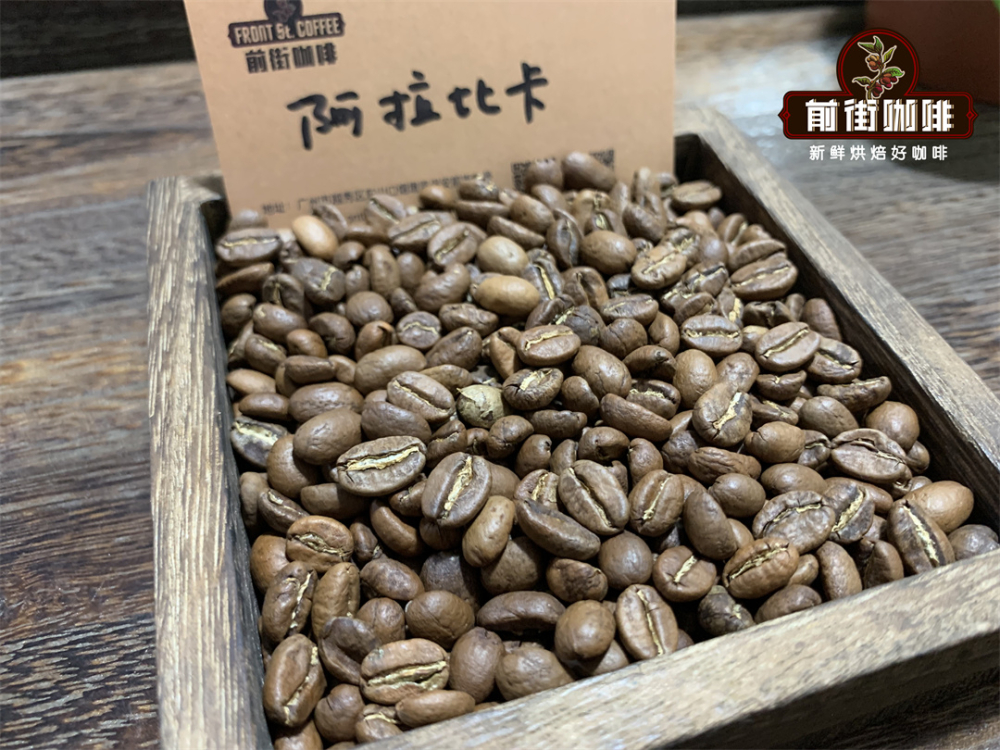
Robusta, one of the three major coffee bean varieties, also has a very wide cultivation range. Robusta is heat-tolerant but not drought-tolerant. Compared with Arabica, it has lower soil requirements and high yield, and is generally planted in low-altitude areas. Arabica, however, is afraid of both cold and heat and is also susceptible to disease, so it has very high requirements for soil drainage and fertility.
Arabica is generally planted in countries such as Indonesia, Vietnam, and Brazil. Sulawesi Island in Indonesia mostly plants Robusta, because Robusta has a rich but bitter taste, and its acidity is very unnoticeable. Arabica, on the other hand, has pleasant acidity, a better mouthfeel, and a flavor that is not too harsh, very mild. Therefore, Robusta is mostly used in fields such as instant coffee, while Arabica is mostly used for specialty coffee.
Since Arabica has good flavor and Robusta has strong adaptability, can the genes of the two be combined to cultivate a coffee variety with excellent flavor and strong adaptability? Of course it is possible. The questions Front Street can think of may have long been thought of by scientists, so many hybrid varieties of Arabica and Robusta have appeared on the market, among which the most famous is Castillo, developed and researched by Colombia's coffee research institution.
According to Front Street's understanding, Castillo is the result of five generations of hybrid selection between Timor and Caturra. Timor is a hybrid variety of Arabica and Robusta, with tall plants and strong disease resistance; Caturra, as a Bourbon variant, has short plants, high yield, and relatively good flavor. As the hybrid offspring of the two varieties, Castillo inherited the excellent genes of both and has become Colombia's current main planted variety.
Front Street Coffee has several coffee beans from the Colombian Castillo variety in its stores, namely Colombia San Jose coffee beans and Sakura coffee beans. Both coffee beans use special processing methods. For example, the processing method of Colombia San Jose coffee beans is refined washing followed by fermentation in rum barrels.
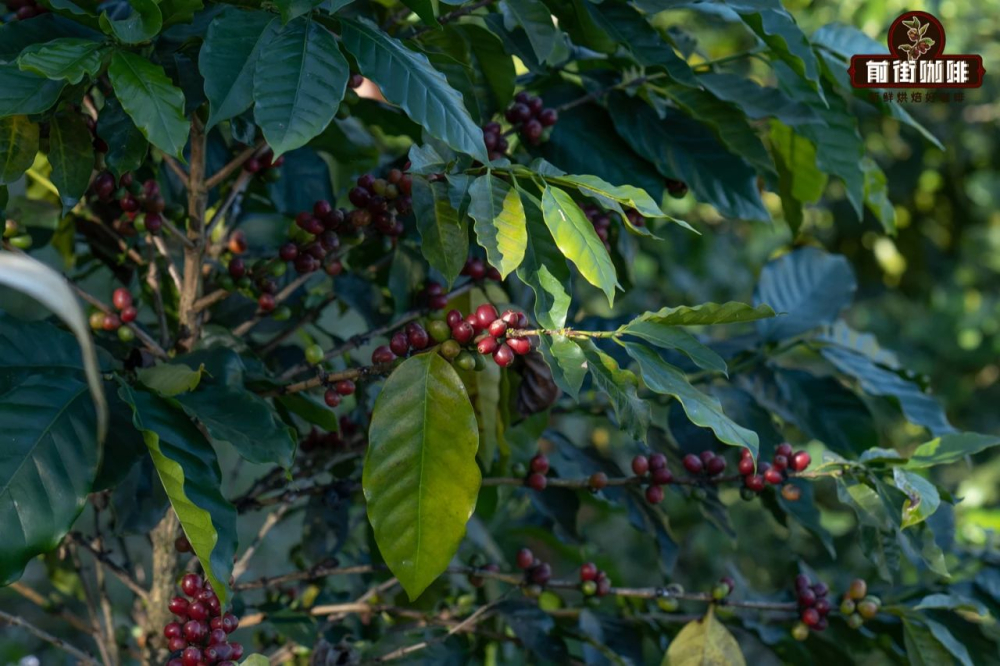
According to Front Street's understanding, the complete processing process of this Colombia San Jose coffee bean is: first manually select fully ripe coffee cherries, after simple washing, ferment them in a tank for more than twenty hours, then place them in rum barrels aged more than 8 years and let them sit for three months, turning them evenly every day so that the coffee beans absorb the aroma of the liquor. After fermentation is complete, they are dried at room temperature. After Front Street cupped this coffee bean, it found that in addition to the aroma of liquor, San Jose also has a rich tropical fruit flavor on entry, very distinctive. This is precisely why Front Street listed this coffee bean.
The above content is compiled by CoffeeHunters, a coffee news website.


