








Where does mocha originate from, and why does Yemen still matter?
Mocha coffee takes its name from Yemen's port of Mocha, and Yemen has grown coffee since around the sixth century. It remains the only producing country that dries its whole crop in the sun. Regional lots such as Mattari, San'ani and Ismaili differ in flavor, and Yemeni beans carried the Bourbon and Typica varieties that spread worldwide.
Trade at the port gave seventeenth-century Europeans the word "mocha," and Ottoman control after 1536 pushed authorities to ban raw bean exports, even requiring seeds to be boiled first. Today the coffee farm faces pressure from qat and drought, yet farmers still turn berries by hand on the rooftops of stone houses.
Yemen is a name that cannot be avoided in coffee history—it has been growing coffee in the most primitive way since the sixth century, and to this day it remains the only fully sun-dried producing country in the world. The mocha coffee produced here once captivated seventeenth-century Europeans and became the original meaning of the word "mocha." This article takes you into Yemen's coffee world: from the rise and fall of the port of Mocha, to the flavor differences among classic producing regions such as Mattari, San'ani, and Ismaili; from the agricultural predicament under the twin assault of qat and drought, to the ancient sun-drying method in which coffee farmers turn the berries on the rooftops of stone houses. We will also share Front Street Coffee's roasting curve and the brewing parameters for the V60, cake cup, and KALITA three-hole dripper, to help you fully understand this complex and wild coffee.
The wave of specialty coffee is often described as a revival in which "craft replaces machinery," but what truly governs supply and demand is still the market. Practitioners use different brewing methods to showcase coffee styles, and farmers also follow market trends to develop new processing methods. Yet there is one country that has been producing coffee in the most primitive way since the sixth century, and that is Yemen.
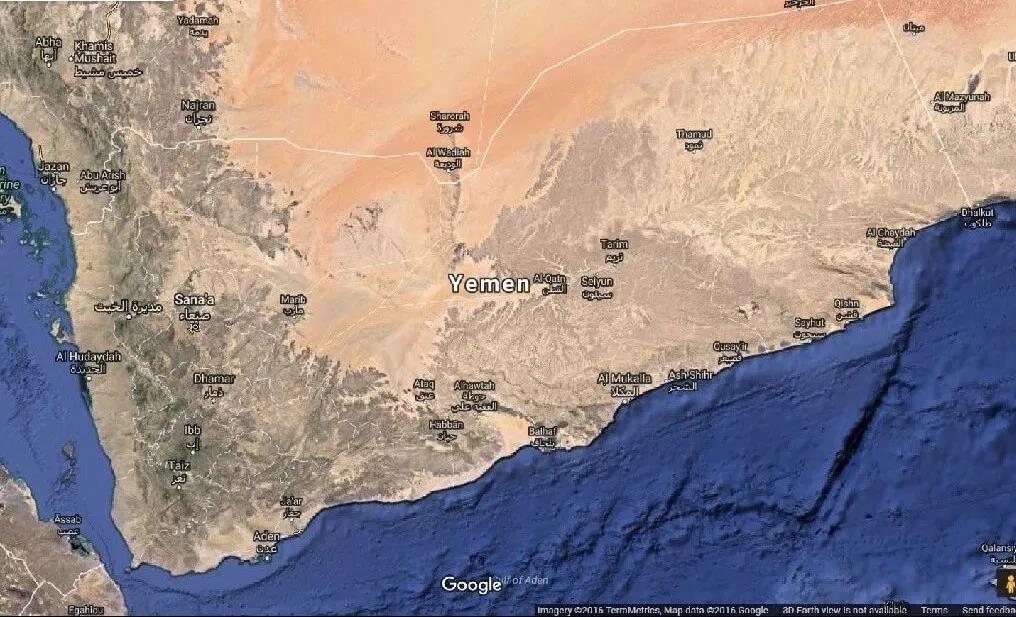
| Yemen
Yemen is located in West Asia, separated from the African continent by only a strait. Had Islamic clergy not promoted coffee on the Arabian Peninsula, coffee might still be nothing more than a wild plant in Ethiopia today. Legend has it that coffee was introduced during the period of Ethiopian rule in the sixth century and was named Qahwa, which means red wine in Arabic. Later, the Ottoman Empire invaded in 1536 and took control of the coffee trade. To protect export profits, the authorities strictly forbade green beans from leaving the country; seeds first had to be boiled in water before they could be taken abroad.
Yemen was the earliest commercial source of coffee, brought to Europe by Muslim merchants and their trading partners. It is also the place of origin of most coffee varieties in the world today; both Bourbon and Typica originate from Yemen. In a sense, Yemen is even more convincing than Ethiopia as the birthplace of coffee, because the documented history of Yemeni coffee can be traced back 1,200 years.
Yemen continues a way of life preserved from thousands of years ago, and it is said that in many regions the central government's power can hardly reach. Ethiopia, across the sea from Yemen, also exported coffee via the port of Mocha, which is why Ethiopian sun-dried coffee is often called mocha (for example, ETHIOPIA Harra Mokka). Yemeni mocha is the progenitor of the world coffee trade, and Yemen deserves much of the credit for bringing delicious coffee to the world. It was called "Arabia coffee," and later the name "Arabica original species" also derived from this.
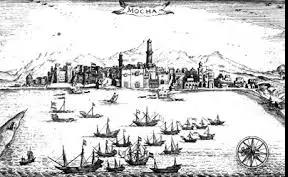
It is said that the place where Europeans first imported coffee and spread it to the world in the seventeenth century was precisely the then-largest coffee port in the world—the port of Mocha.
Today's "port of Mocha" can no longer sustain its former prosperity; all that remains is a historic port with a stretch of white sand beach.
Even so, it still spreads far and wide under the name of coffee.
Although Ethiopia was the first country in the world to discover coffee, the first country to mass-produce coffee as a crop was Yemen. In the early seventeenth century, the first Yemeni coffee was exported to Europe through the ancient small port—the port of Mocha—astounding Europeans. Because all exported coffee sacks were marked with MOCHA to prove they had been shipped from the port of Mocha, Europeans called the delicious coffee shipped from the port of Mocha "mocha coffee," which is also why Mocha became a synonym for coffee in the early period.
In the nineteenth century, Mokha coffee was still a rare and expensive category. In the ocean trade of the Age of Discovery, coffee "aged" during long voyages, and its flavor gradually became stale, which in turn influenced consumers' tastes—the bright acidity in coffee was not appreciated, nor was it regarded as a fresh flavor. (A similar example is Java coffee—after Indonesian green beans arrived in the United States via long-distance sea shipping, their color changed from green to a wood-like yellow.) Therefore, in this sense, the standards for judging traditional Yemeni coffee are not the same as those of the modern coffee industry.
| Yemen's coffee trade
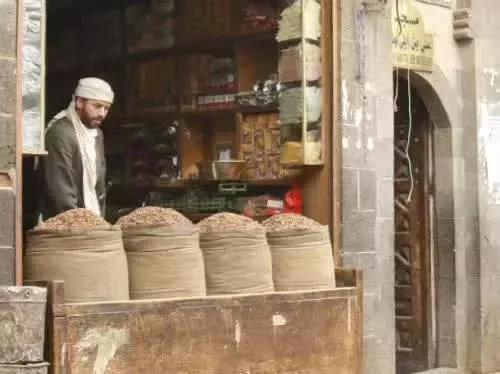
Yemen's coffee trade is relatively complex. Exporters do not buy directly from coffee farmers, but through a network of middlemen. Local buyers store dried coffee berries in underground caves. Most of the coffee actually exported is old beans, not new beans of the current season. Generally, freshly harvested coffee beans of the current year are called "new crop" (New Corp), those harvested the previous year are called "past crop" (Past Corp), and those left for more than a year are called "old crop" (Old Corp). But this is a local tradition, and it is also the reason why the moisture content of Yemeni coffee is usually in the range of 10.5%.
| One of the driest countries in the world
Yemen is one of the driest countries in the world. Economically, the country currently relies on oil exports for three-quarters of its income, but the World Bank predicts that its reserves will be depleted around 2017. This country, once self-sufficient through farming, now depends on imports for eighty percent of its crops. Reasons include population growth and water shortages caused by locals' excessive cultivation of qat (also known as Arabian tea), a crop as old as coffee.
Qat is a social drug commonly used by residents of the Arabian Peninsula. Yemenis like to set aside a room at home to entertain guests, chewing qat while chatting with friends. It contains the stimulant cathinone, whose effect is like a light amphetamine, refreshing the mind and sharpening alertness. But after the effect wears off, users feel depressed. Although the World Health Organization (WHO) has not classified it as a drug, many Western countries have already banned its import.

On the other hand, Yemen has suffered from drought since ancient times. Its major cities all depend on groundwater, agriculture uses ninety percent of the water supply, and the cultivation of Qat alone consumes a large amount of water. The authorities predict that the underground water reserves of the capital, Sana'a, will be used up by 2017. Most Yemeni cities are built on high mountains, and residents rely on wells run by the government or private institutions to survive. The country has as many as 40,000 to 70,000 wells, some as deep as 600 meters underground. In addition, pumping water uphill is costly, and the government spends as much as 7 billion US dollars each year on drilling and pumping. Therefore, in recent years the country has resolved to ban qat, which wastes water and cannot satisfy hunger, and replace it with other crops. Coinciding with the rise of the specialty coffee wave, the Yemeni government is focusing on encouraging farmers to switch to coffee, which consumes half as much water as qat.
| Still produced in the most primitive way—ancient sun-drying
Yemen is the classic example of the old sun-dried flavor and the world's only fully sun-dried coffee-producing country. From the seventeenth century, when Europeans became enchanted with its wild mocha, this has never changed. This is related to Yemen's extremely dry climate. Coffee is mainly grown in the central highlands, where the average annual rainfall is only 400–750 millimeters, far below the optimal 1,500–2,000 millimeters for Arabica. Because of the water-scarce environment, farmers still cannot introduce the more advanced washed method, and the wild flavor surpasses that of Harrar coffee, making Yemen the best choice for experiencing the old-time flavor.
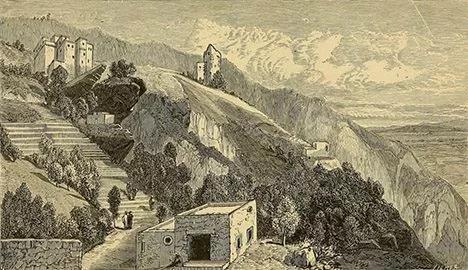
Yemen's sun-drying method is even rougher than Ethiopia's. Coffee berries grow naturally on the trees without any artificial fertilizer or pesticide. In summer they receive a small amount of rain and mist on the hillsides, then flower and bear fruit; in the dry winter, the ripe coffee berries are allowed to hang on the trees and dry naturally, until the fruit dries on the branch, turns purplish-black, and falls to the ground before being picked up. This is a very unique and rare practice, because only Arabia's extremely dry climate and intense sunlight allow it; in other coffee-producing regions, the same practice could cause the coffee berries to rot on the trees. Unlike the refined sun-drying of Yirgacheffe or Sidamo, where red cherries are picked and spread on "raised mesh beds," this is also the main reason Yemen's wild flavor is so pronounced.
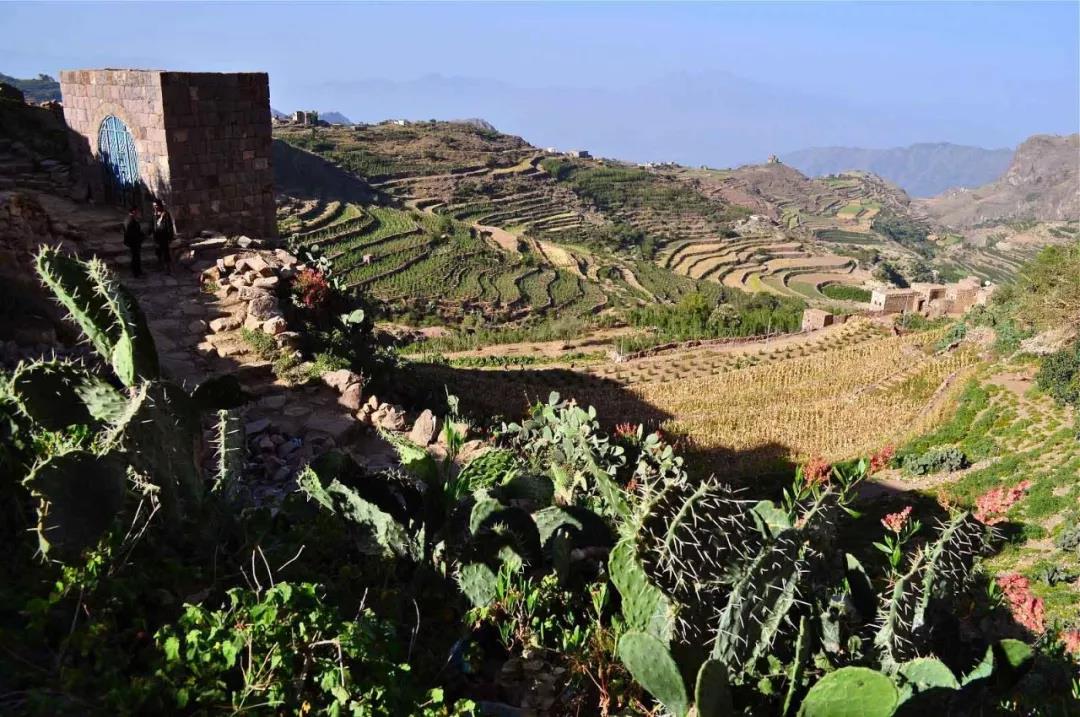
Genuine Yemeni coffee is also not common. Farmers place the harvested fruit on the rooftops of stone houses built against the mountains to dry. During sun-drying, just as with drying rice, they must turn it with wooden rakes to keep every bean drying evenly. After about twenty days, when the coffee is dry, the outer pulp and skin are removed and the coffee beans are taken out; the steps of removing the pulp and hulling all rely on crude stone-mill equipment. Yemeni coffee is rich, complex, wild, and full-bodied, with a strong fermented flavor and lower acidity. In addition, Yemeni coffee often harbors an uncertain factor (the timing of seasonal rainfall) that makes it unpredictable, so calling it the most special coffee in the world is not an exaggeration at all.
By modern cupping standards, Yemeni coffee finds it hard to reach specialty grade. But high-quality Yemeni coffee has a unique flavor: complex Middle Eastern spices, ripe fruit, vinous notes, cocoa, a full body, and a strong sweet aftertaste. Like durian and stinky tofu, people either love it or hate it, with no middle ground.
| How Yemeni coffee is named
There is still no universal standard for naming Yemeni coffee, nor is there an official grading system. Local residents have their own classification system, with hundreds of coffee codes and names used for internal classification, but these do not apply to coffee in the commercial market (for export purposes). In the commercial market, Yemeni mocha usually adopts one of the following two naming methods: "place of origin" or "tree variety name."
Yemeni Mokha Mattari and Yemeni Mokha San'ani use the "place-name method," indicating respectively that they are produced in Bani Matar province and the hillside areas near the capital San'a; Yemeni Mokha Ismaili uses the "tree variety naming method," and its production area is Hirazi, southwest of Bani Matar.
| Yemeni coffee producing regions
Mokha Mattari
This is the most famous market name for coffee from Mattari in Bani Mattar (also written Bany Mattar) province, west of Yemen's capital Sana'a. It is a high-altitude-grown coffee, usually with fine red-wine aromas, dried-fruit notes, a thick body, and chocolate bittersweetness when dark-roasted. Good-quality Mattari beans are small in shape, and the green beans have a pungent sweet wine aroma and a moderate ripe-fruit fermented flavor. It always wins out because of a more pronounced Yemeni style.
Mokha San'ani
A broad market name for coffee from several growing areas west of Yemen's capital Sana'a. It is a blend of beans from tens of thousands of small farms on the hillsides near the capital San'a. The growing altitude is slightly lower than Mattari. Generally speaking, the body is thinner than Mattari and the acidity lower, but the fruity aroma is good, and it often has better ripe-fruit and wild notes than Mattari. According to my experience, in recent years the quality of San'ani has varied greatly, with inferior goods sometimes being flat in flavor or having excessively strong earthy and fermented notes. Careful cupping and selection are a required task for coffee merchants, and absolutely no laziness is allowed.
Mokha Ismaili
Ismaili is one of the traditional ancient tree varieties. This is a market name for a famous coffee from central Yemen, and it is also described as a botanical classification of a traditional Yemeni coffee, with relatively high beverage quality. It is grown at very high altitudes, above 6,500 feet. Its characteristic is that the beans are rounder in appearance and smaller than Mattari, with a thick body and high complexity. Generally speaking, it often performs better than Mattari. This is the least-produced and most expensive Yemeni mocha (Yemeni mocha was already not cheap to begin with). High-quality Mokha Ismaili is produced in the high mountain slopes of the Hirazi region (though its fame is as loud as Bani Matar, it is the producing area with the best local reputation in Yemen), and the highest altitude in the Hirazi region reaches as high as 8,000 feet!
Mokha Rimi
Produced in the Djebel Remi (also known as Raimi, Rayma) region, its quality is similar to San'ani. Mokha Rimi's fermented flavor is usually slightly heavier, and occasionally a surprisingly intense raisin sweetness appears; if roasted properly, the coffee beans smell like opening a bottle of rich jam.
Mokha Yafeh
Produced in Yemen's southern Yafeh (also known as Yaffe) province, it is an uncommon Yemeni mocha and Yemen's only "southern taste." Its production is also not large, and it is almost all sold to the neighboring United Arab Emirates, so it is rarely seen anymore in the international specialty coffee market.
Arabian Mocha
A single-origin coffee from the Yemeni mountains bordering the Red Sea at the southwestern tip of the Arabian Peninsula. The world's finest cultivated coffee, famous for its high viscosity and its unusually rich, wine-like acidity.
| What is the relationship between Yemeni mocha coffee and espresso mocha coffee?
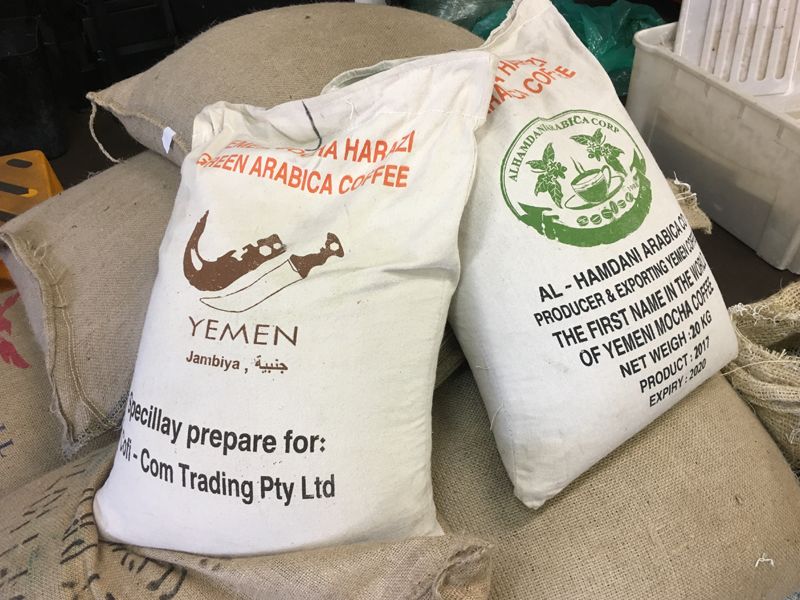
Yemeni coffee possesses the world's most unique, rich, and fascinatingly complex aromas: red-wine notes, wild notes, dried-fruit notes, blueberry, grape, cinnamon, tobacco, sweet spices, raw wood, and even chocolate. You can see all kinds of adjectives applied to Yemeni mocha.
Dark-roasted Yemeni coffee often shows a chocolate-like bittersweet quality, which influenced today's flavored coffee with added chocolate sauce also being labeled with the word "mocha." Therefore, when you see the words "mocha coffee," it may refer to pure Yemeni coffee, or coffee from neighboring Ethiopia, or simply flavored coffee with added chocolate sauce. In any case, for picky coffee gourmets, only true Yemeni coffee is qualified to be called "mocha coffee."
| Mocha coffee grading
The grades of Mocha are divided into: Sanani <依诗玛莉 Sharki< 玛塔莉Mattari, 因也门年均咖啡产量低,其中只有约35%左右是 MochaSanani 和 Mocha Mattari,它俩可以称得上是也门咖啡中品质较好的。
| Roasting
A coffee expert once said: "Yemeni mocha's flavor is so diverse—not only do different producing areas, different tree varieties, and different lots differ, but every sack, even every cup, tastes different." Because of its complexity and variability, for coffee roasters, how to roast out the best flavor of Yemeni mocha is a major challenge!
This Yemeni mocha bean has relatively bright fruit acidity when lightly roasted, with fruity sweetness, spice, and chocolate flavors; when medium-roasted, it has red berry, vanilla, cream, caramel, and chocolate flavors; and when dark-roasted, it clearly shows chocolate, nut, and spice notes. Front Street chose a medium roast level, and considering that Yemeni mocha is a green bean with relatively low moisture, and also considering the uneven bean size, the drop temperature for low-moisture green beans should not be too high, and dehydration in the early stage should be accelerated to preserve moisture for first crack to develop flavor and body. Preheat for 30 seconds, open the airflow to 3, until the green bean color turns light green or white, open the airflow to 4, and after first crack open it to 5 (maximum).
The caramelization reaction produces the optimal roasting degree for flavors such as nuts, chocolate, and caramel, and also balances to a certain extent the tricky acidity of mocha coffee. But be careful: mocha is full of chocolate flavor, yet if over-roasted it easily develops a rubbery taste.
Roasting curve:
Charge when the drum temperature reaches 170°C, set airflow to 3, after 1 minute adjust the flame to 140°C, keep airflow unchanged, roast to 5'00", temperature 147.2°C, the bean surface turns yellow, the grassy smell completely disappears, dehydration is complete, adjust the flame to 110°C, change airflow to 4;
At 8'00", the bean surface shows ugly wrinkles and dark streaks, and the toast smell clearly turns into coffee aroma, which can be defined as the prelude to first crack. At this time, listen carefully for the sound of first crack. At 8'23" first crack begins, reduce the flame to 60°C, open airflow fully (adjust the flame very carefully, not so low that there is no cracking sound), and drop at 197.9°C.
| Brewing recommendations
V60, KALITA three-hole dripper, and cake cup all work.
V60
Parameters: water temperature 90°C / grind size BG 5R (64% passing rate on Chinese standard No. 20 sieve) / coffee-to-water ratio 1:15 / time 2'01
Method: bloom with 27 grams of water for 30 seconds, slowly pour to 120 grams for a staged pour, and when the water level is about to expose the coffee bed, continue pouring to 225 grams to finish.
Flavor: grape, licorice, creamy chocolate, nuts, spices
Cake cup
Parameters: water temperature 90°C / grind size BG 5R (64% passing rate on Chinese standard No. 20 sieve) / coffee-to-water ratio 1:15 / time 2'09
Method: bloom with 33 grams of water for 30 seconds, slowly pour to 121 grams for a staged pour, and when the water level is about to expose the coffee bed, continue pouring to 227 grams to finish.
Flavor: spices, cocoa, grape, rich body.
KALITA three-hole dripper
Parameters: water temperature 90°C / grind size BG 5R (64% passing rate on Chinese standard No. 20 sieve) / coffee-to-water ratio 1:15 / time 2'10
Method: bloom with 30 grams of water for 30 seconds, slowly pour to 117 grams for a staged pour, and when the water level is about to expose the coffee bed, continue pouring to 225 grams to finish.
Flavor: dark chocolate, long-lasting caramel sweetness, thick body, overall balanced.
The above content is compiled by CoffeeHunters, a coffee news website.


