







How Do Panama Geisha Lots Differ Between Estates?
Panama Geisha from different estates can taste completely different even when grown from the same variety with the same natural process. Janson Estate sits in the Volcan region on the western side of Baru Volcano, at roughly 1,700 meters, where lower rainfall and volcanic ash soil tend to give richer dried-fruit notes with prominent sweetness and aroma.
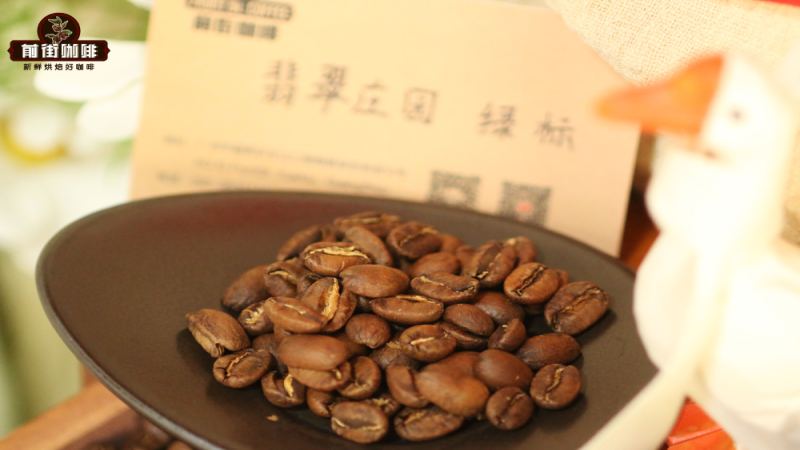
Hacienda La Esmeralda lies in Boquete on the eastern side of Baru Volcano, a plateau at about 1,200 to 2,000 meters and Panama's oldest producing region. Comparing Janson with Esmeralda Red Label and Green Label Geisha across terroir, harvesting, processing, and grading, along with pour-over parameters, shows how each geisha coffe lot takes its own flavor path.
Panama has many estates growing Geisha. Beyond the famed Hacienda La Esmeralda, Janson Estate also produces high-quality Geisha. The two differ in geographical location, processing methods, and cupping performance. This article systematically compares Janson Estate with Front Street Coffee's Esmeralda Red Label and Green Label Geisha, covering terroir, harvesting and processing, grading systems, and actual flavor comparisons, and includes pour-over brewing reference parameters to help coffee lovers understand the subtle differences between naturally processed Geisha from different estates and find the one that suits their taste.
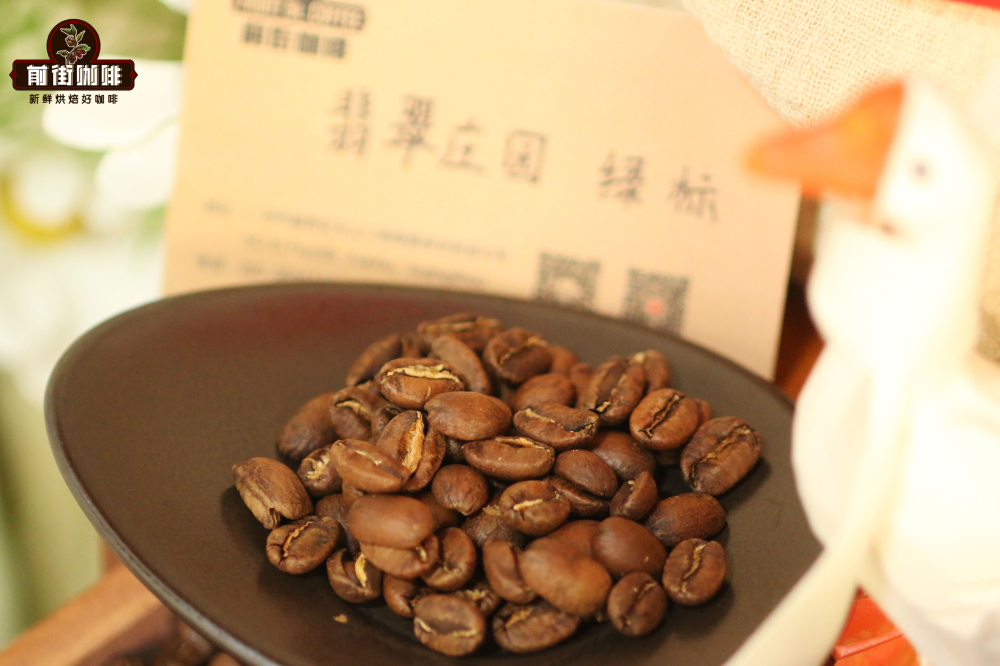
Panama is a fairly large country, and its coffee-growing areas are spread across multiple regions. Among the estates producing Geisha, besides the well-known [Hacienda La Esmeralda], there are also [Janson Estate], [Elida Estate], and others. Even when growing the same Geisha variety and using the same natural process, each estate's coffee can take a completely different flavor path. So what exactly are the differences between them?
[Geographical Location]
Janson Estate:
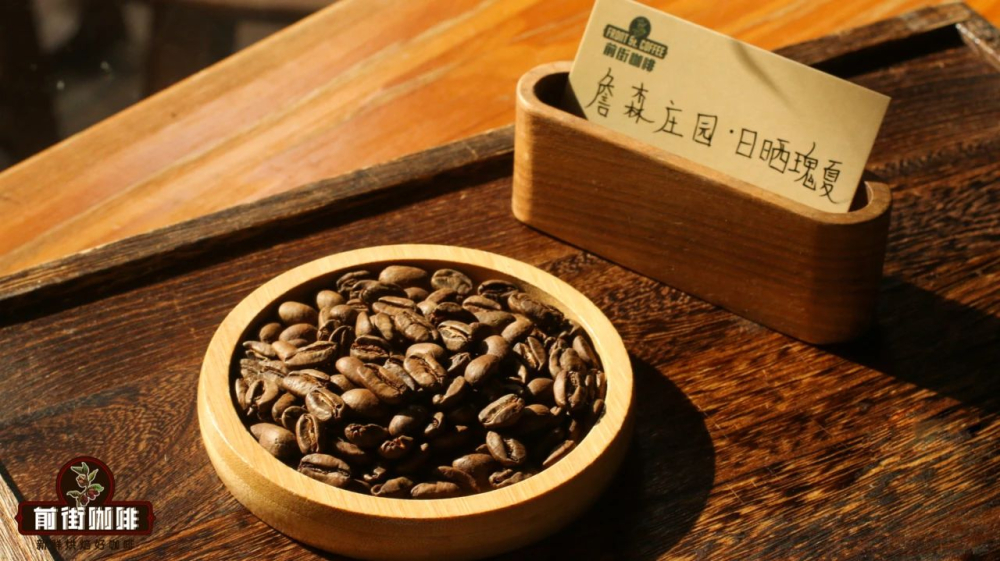
Located in the Volcan region, surrounded by mountains, with lower average annual rainfall than Boquete. Because it sits on the western side of Baru Volcano, the coffee produced here often has richer dried-fruit notes, with more prominent sweetness and aroma. The estate's average altitude is about 1,700 meters, located in Volcan on the western side of Baru Volcano, with a total area of 1,200 hectares. The farm's soil is nutrient-rich volcanic ash soil, with ample rainfall and moderate temperatures. The Janson family operators uphold an environmentally friendly philosophy, fully adopting sustainable farming practices, and have even built a dedicated processing plant that turns coffee cherries into farm fertilizer after processing; only 2,000 Geisha trees are planted per hectare to ensure ample soil space between plants; half of the estate is used to grow Geisha, with production ranking second in Panama. Every lot of green beans is marked with a highly recognizable lot number, enabling 100% traceability.
Hacienda La Esmeralda:
Located in the Boquete region, on the eastern side of Baru Volcano, it is Panama's oldest and most prestigious producing region, on a plateau at about 1,200 to 2,000 meters above sea level. Within the region is Volcan Baru National Park, a national ecological conservation area with rich biodiversity and seven microclimates. Here, mist lingers year-round and rainfall is abundant; the natural conditions are extremely suitable for coffee cultivation, giving Boquete coffee a unique aroma, and making it Panama's largest and highest-quality coffee-producing region.
Therefore, if you want to understand Panamanian coffee regions, it is a good idea to start by tasting Boquete coffee. And among the many famous estates, Hacienda La Esmeralda is undoubtedly the leader here.
After years of experimentation, it was found that only Geisha beans from coffee trees growing above 1,400 meters can display the special flavors this variety should have. Therefore, grading is mainly based on growing altitude, with cupping results as a supplement, dividing into: Red Label Geisha, Green Label Geisha, and Blue Label Geisha.
Beginners new to Geisha can buy the cost-effective Front Street Coffee Esmeralda Green Label Geisha to experience the delicate flavors of premium Panamanian coffee; if giving as a gift to relatives and friends or sharing with coffee enthusiasts, the highest-grade Front Street Coffee Esmeralda Red Label Geisha is recommended, with detailed traceability information, making this cup of coffee even more uniquely meaningful.
[Harvesting and Processing]
Janson Estate:
The harvested coffee beans are called "red coffee cherries," with exceptionally high sweetness. A dedicated processing plant handles the coffee cherries, and a great deal of effort is invested in the roasting stage to enhance the reference value of cupping results.
Hacienda La Esmeralda:
Ripe coffee fruits are hand-picked. Through careful care and special attention to the natural environment, it has obtained Rainforest Alliance certification. Although Hacienda La Esmeralda is world-renowned for the Geisha variety, its uniquely advantageous estate environment and green bean processing techniques also make the estate's coffee beans highly beloved.
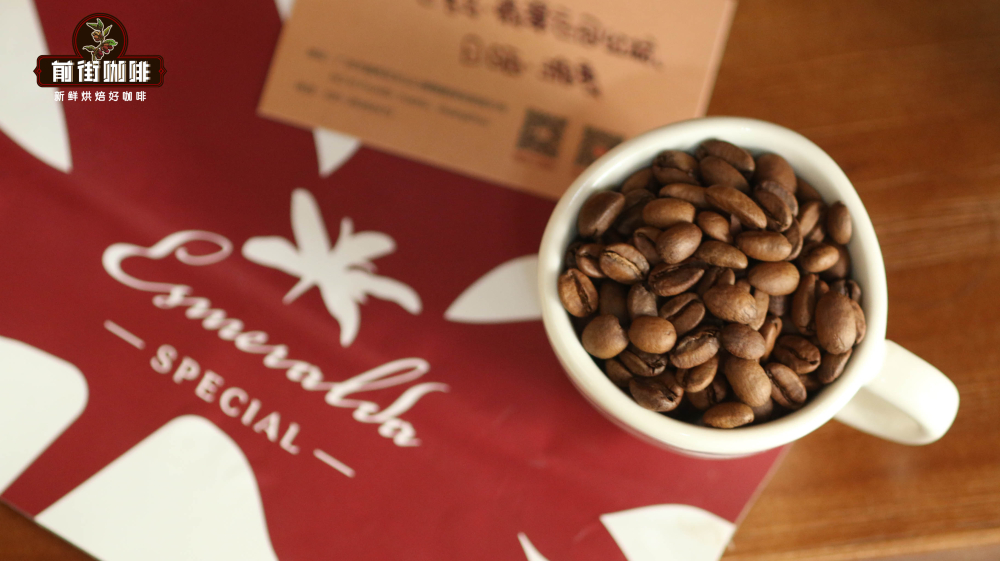
Top-tier Geisha — Front Street Coffee Esmeralda Red Label [Auction Lot], grown at 1,600 to 1,800 meters, with a cupping score above 90, mainly from the Jaramillo and Canas Verdes estates. It belongs to the highest-quality Geisha beans, harvested from the highest areas of the Boquete mountains, with a special and bright floral and citrus aroma. Each lot can be traced by harvest date, specific plot, plot tree age, and other information, and can only be purchased through the annual global auction.
Second-best Geisha — Front Street Coffee Green Label [Reserve Lot], grown at 1,600 to 1,800 meters, a blend of micro-lots from three different estates: Jaramillo, Quiel, and Canas Verdes. Although not the highest-grade auction beans, this grade of Geisha still retains the classic flavors of Geisha coffee beans: floral aroma, fruity notes, citrus acidity, and a thick, juicy mouthfeel. Selecting the most suitably ripe coffee fruits creates strong sweetness, bright fruit acidity, and delicious flavors.
[Natural Process]
The harvested coffee fruits are poured into a large water tank; ripe, plump fruits sink to the bottom, while floating beans are removed. Then the whole coffee fruits—with pulp, skin, and seeds—are spread on drying beds for sun drying, naturally drying to about 12% moisture content, taking about two to four weeks. Finally, a hulling machine removes the dry, hard skin, pulp, and parchment layer, and the green beans are revealed.
Advantages of the natural process:
1. Simple to operate, with lower processing costs.
2. The green beans dry naturally inside the fruit, absorbing the essence of the fruit, resulting in rich fruity aroma, obvious sweetness, and good body.
[Flavor Comparison]
Front Street Coffee Janson Estate Geisha: Distinct lemon-citrus notes, with mouthwatering fruity wine aroma, apple, rose, and dark chocolate fruity notes, and flavors of pomegranate, ripe grape, peach, and dark berries, with rich layers of sweetness and acidity.
Front Street Coffee Esmeralda Red Label Geisha: The acidity on entry is refined and gentle, and sweetness quickly emerges on the tongue and lingers. The mouthfeel is clean and transparent, like black tea. It has aromas of rose, honeysuckle, sweet potato, grapefruit, lemon, black tea, and cane sugar, with clear layers and a long finish.
Esmeralda Green Label: Rich in flavor layers, bursting with floral aroma, strawberry fruitiness, and intense yet gentle citrus-lemon acidity on entry. As the temperature changes, the flavors transition from jasmine and citrus to berries and honeysuckle, then to fruit candy and oolong tea aroma, with lingering cantaloupe and peach sweetness and honey aroma in the finish—fresh and comfortable, bright and balanced, with extremely strong aromatic layering and intense fruit sweetness and lingering sweetness.
[Pour-over Reference]
Cake cup, using immersion extraction, increases the contact surface area between coffee grounds and water. Compared with V60 brewing, it can enhance texture and taste more viscous;
15 grams of grounds, water temperature 91 to 92 degrees, grind to fine sugar coarseness (Chinese standard No. 20 sieve pass rate 80%), water-to-coffee ratio close to 1:15.
Technique: 30g water for blooming, bloom time 30 seconds. Pour hot water from the gooseneck kettle in a clockwise circle centered on the middle of the dripper, start timing when brewing, pour to 125g, then stop pouring, wait 30 seconds, and make the first pour, with total water controlled at 225g.
For the first pour, circle as before, but slightly slower; when going around the outer ring, speed up a little, stop pouring at about 1 minute 15 seconds, and when the liquid level drops by one third, pour again. The second pour is concentrated in the center; do not let the stream hit where the coffee grounds meet the filter paper, to avoid channeling. Finish extraction at about 2 minutes 05 seconds; the tail end can be discarded (the longer it drags on, the more astringency and rough mouthfeel will increase).
Stages: 30-125-225g
Although Janson Estate and Hacienda La Esmeralda are not far apart, the green beans, roasting, and flavor expression of naturally processed Geisha from different estates will have subtle differences. Not all Geisha is roasted the same way; it is also necessary to judge how to best express each bean based on its characteristics, growing altitude, general flavor direction, and so on, through continuous adjustment, cupping, and brewing.
The above content is compiled by CoffeeHunters, a coffee news website.


