







What makes Panama Geisha coffee from Hacienda La Esmeralda distinct?
Panama Geisha coffee is the variety that put Hacienda La Esmeralda on the map, prized for a floral aroma that traces back to Ethiopia. The green beans first reached Kenya in 1931 as disease-resistant breeding material, then moved through Uganda, Tanzania, and Costa Rica before thriving in Panama's Boquete region. La Esmeralda sells it under three grades: Red, Green, and Blue Label.
The labels differ by plot, bean appearance, and dry aroma. On one roaster's list, La Esmeralda Geisha covers five beans: Natural Red Label, Washed Green Label, Natural Green Label, Washed Blue Label, and Natural Blue Label. Light-roasted geisha coffee is usually brewed with staged extraction to protect the delicate floral and fruit notes that define the variety.
Geisha coffee is famous for its captivating floral aroma, and the Geisha from Panama's Hacienda La Esmeralda is the benchmark in the specialty coffee world. On Front Street Coffee's bean list alone, Hacienda La Esmeralda Geisha is divided into three grades totaling five types of beans—what exactly are the differences between them? This article starts from Geisha's Ethiopian origins, tracing its complete journey through Kenya, Uganda, and Costa Rica before finally shining brilliantly in Panama, and provides an in-depth analysis of the essential differences between Red Label, Green Label, and Blue Label in terms of production plots, bean appearance, and dry aroma performance. In addition, Front Street will share brewing parameters and staged extraction techniques for light-roasted Geisha, and describe one by one the flavor profiles of five beans: Natural Red Label, Washed Green Label, Natural Green Label, Washed Blue Label, and Natural Blue Label, helping coffee enthusiasts gain a comprehensive understanding of this precious variety.
"Do Geisha coffee beans really have floral aroma? Can you recommend one?" When browsing Front Street's bean list, many people's eyes unconsciously stop at the two words "Geisha." The Geisha currently sold by Front Street alone covers origins including Ethiopia, Panama, and Costa Rica, and Panama's Hacienda La Esmeralda alone is divided into three grades totaling five types of beans. Today Front Street will talk about the ins and outs of Panama Geisha, and what exactly the differences are between Hacienda La Esmeralda's three grades.
Where are Panama Geisha's roots?
The ancestors of Panama Geisha grew in the primitive forest region of southwestern Ethiopia in Africa. Interestingly, Geisha was first noticed by humans not because of its floral aroma, but because it was collected as disease-resistant breeding material. After consulting materials, Front Street has roughly reconstructed the path of Geisha's migration from its Ethiopian homeland all the way to Panama.
In 1931, a British botanist entered Geisha Mountain in Ethiopia to collect disease-resistant coffee varieties. This batch of seeds was sent to Kitale, Kenya, under the names Geisha and Abyssinian for trial planting. In 1936, Kenya separated a portion of the cultivated young plants and gave them to coffee research institutions in neighboring Uganda and Tanzania for continued cultivation. After more than a decade of research and cultivation across various African countries, the Costa Rican coffee research institution began introducing various coffee young plants from different African countries starting in 1953.
After another decade of cultivation in Costa Rica, the Panama Geisha we know today was introduced from Costa Rica by Don Pachi Serracin in 1963. However, at the time Geisha had low yield and poor economic returns, so coffee farmers were generally unwilling to plant it. Yet one estate owner took a liking to its outstanding wind resistance despite its low yield, and planted it in his estate's windbreak forest to protect the higher-yielding Caturra and Catuai.
That's right—this estate was none other than the later renowned Hacienda La Esmeralda. Every harvest season, the estate owner would process the coffee cherries collected from various plots in batches according to harvest time. Until one accidental occasion, the owner's son caught a wisp of intoxicating floral aroma in the processed green beans, and following the trail, discovered that this charming little thing actually came from the windbreak forest with the harshest climate conditions on the estate. Even more surprising was that if Caturra and Catuai were planted in the same location, they simply couldn't survive, yet Geisha was not only not defeated by the harsh conditions, but actually thrived.
In 2004, Hacienda La Esmeralda sent separately harvested and separately processed Geisha to compete in the Panama Cup of Excellence, and won first place in one fell swoop. Since then Geisha has stood at the forefront of the specialty coffee market, and for over a decade has attracted batch after batch of enthusiasts with its own charm. After cupping Geisha from Hacienda La Esmeralda's three grades, Front Street Coffee found that floral aroma, citrus acidity, and tea-like body truly stay memorable for a long time.
What characteristics do Geisha coffee beans have?
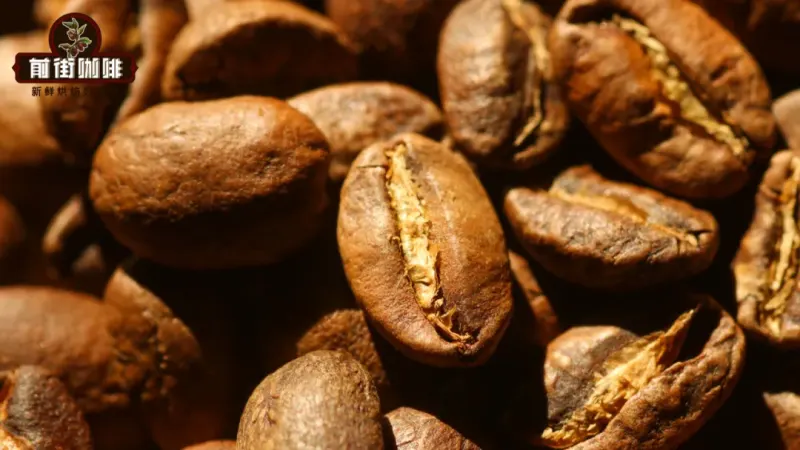
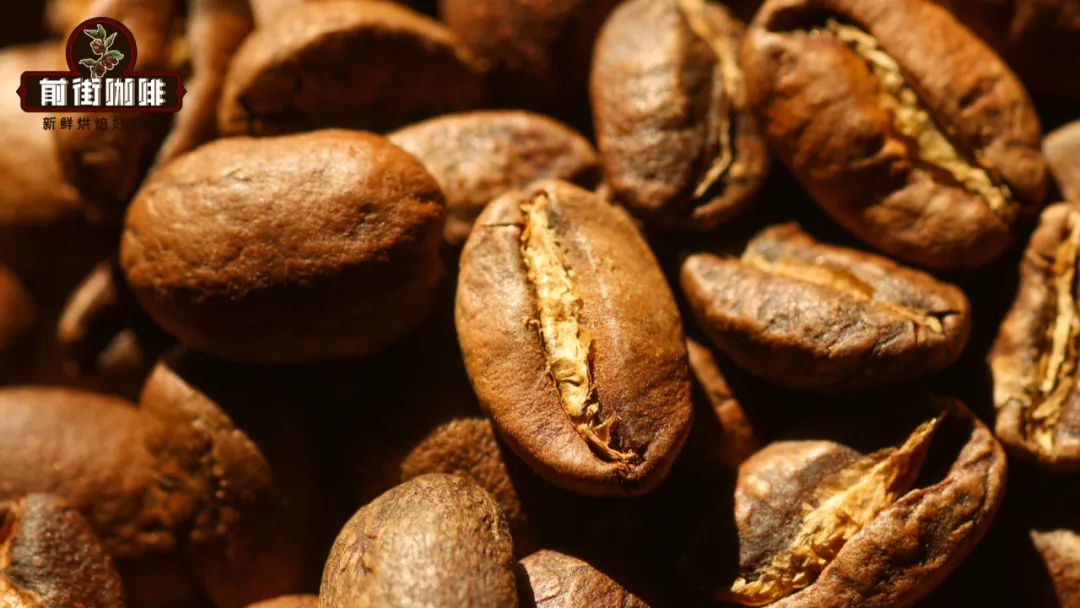
Besides the captivating floral aroma, Geisha also has an appearance feature that makes it recognizable at a glance—pointed and elongated bean shape. Front Street Coffee has observed that Panama Geisha beans are slender, pointed at both ends, and plump and full in the middle, with excellent quality ones even reaching 18-19 screen size, making them highly recognizable.
But to grow top-quality Geisha, the environmental requirements are also quite strict: the production area temperature cannot be low enough to cause frost, the altitude must be sufficiently high, and the temperature difference between day and night must be large enough to give the coffee trees ample time to accumulate nutrients, so they can present Geisha's refined floral aroma and citrus notes.
Regarding the grading of Hacienda La Esmeralda Geisha, what everyone cares about most is exactly where Red Label, Green Label, and Blue Label differ.
First, look at the essential difference. Hacienda La Esmeralda's division of Geisha plots is very detailed, mainly three: Jaramillo, Canas Verdes, and El Velo. Each estate is further subdivided into small plots.
Front Street Coffee's Geisha Red Label comes from the Canas Verdes plot, which has an average altitude of 1,700 meters. Green Label batch Geisha is grown at altitudes between 1,600-1,800 meters, mainly a blend of different plot batches such as Jaramillo and Canas Verdes. Because it adopts a multi-plot blending model, situations where Green Label and Red Label have similar flavors do occur. Blue Label comes from a blend of Geisha grown below 1,500 meters altitude across the three plots.
Having covered the essential differences, Front Street will now discuss the most intuitive differences between the three grades.
|Judging from coffee bean appearance
Geisha Red Label beans are plump and full, uniform in size and consistent. Other Geisha beans are not as guaranteed in bean size—they vary in size. Therefore, even before tasting the flavor, one can feel Red Label's strict quality control standards.
|Judging from aroma
After grinding, Geisha Red Label reveals obvious rose floral aroma and strawberry-like sweet-tartness; Geisha Green Label, whether washed or natural, after grinding gives a fresh lemon aroma and white floral notes; Geisha Blue Label's washed and natural versions appear slightly inferior before Red and Green Labels, with only faint floral aroma and citrus acidity.
Having discussed the most direct differences, Front Street will next demonstrate how to brew a good cup of Hacienda La Esmeralda Geisha.
When brewing Hacienda La Esmeralda Geisha, Front Street Coffee found that they are all quite resistant to extraction—that is, Hacienda La Esmeralda Geisha extracts more slowly than coffee beans from other production areas. Therefore the grind size can be adjusted slightly coarser. Front Street's daily brewing of light-roasted beans uses a grind size of 75% passing through a No. 20 standard sieve, while Geisha can be adjusted to 71% passing through a No. 20 standard sieve.
Coffee grounds: 15g
Coffee-to-water ratio: 1:15
Temperature: 90℃
Grind size: medium-fine grind (71% passing through No. 20 standard sieve)
Dripper: V60#01
Next, use staged extraction: first pour 30 grams of water for a 30-second bloom; after the bloom ends, pour the second stage, circling from the center outward for 100 grams of water. This stage can be poured slowly—Geisha is very resistant to extraction and needs a certain pouring time to bring out the aroma. After pouring, wait for the water level to drop to half, and just as the coffee bed is about to be exposed, pour the third stage of 95 grams of water, for a total of 225 grams. Wait for the coffee to finish filtering, remove the dripper, and the extraction time is approximately between 2 minutes 10 seconds and 2 minutes 20 seconds. The coffee bed settling after brewing is also normal.
[Natural Red Label] Has bright rose and citrus aromas, along with flavors of brown rice, berries, apricot, complex fruits, and honey. It has a thick juicy body, rich layers, and obvious sweetness.
[Washed Green Label] On the palate, rich jasmine floral aroma, high sweetness, with citrus, berries, juicy body, cream, green tea, orange peel, and cantaloupe. Overall rich in layers, with a persistent finish of floral aroma and citrus.
[Natural Green Label] On the palate, bright citric acidity and jasmine floral aroma. As it gradually cools, passion fruit aroma and strawberry juicy body emerge. The finish is a honey-like sweet aftertaste. Overall, the mouthfeel is full and smooth.
[Washed Blue Label] On the palate, soft acidity of lemon and grapefruit. After the temperature drops slightly, there are sweet aftertastes of oolong tea, honey, and sucrose. The mouthfeel is clean and bright.
[Natural Blue Label] Smells of fermentation aroma and fruity sweetness. When tasting, there is sweetness of melon and tropical fruits, with a juicy mouthfeel. Overall sweetness is very high.
The above content is compiled by CoffeeHunters, a coffee news website.


