







How Does the Coffee Bean Process Differ Between Roasting Styles?
Japanese slow roasting and Nordic fast roasting differ in technique and in the flavor they chase. Slow roasting uses a steady profile to build mouthfeel, pronounced caramelization, high consistency, and a short resting period. Fast roasting pushes floral and fruity aromas with a tea-like entry, but it demands higher green bean quality to work well.
Roasting curves show the split at each stage: charge temperature, gas and damper adjustments, the yellowing point, and first crack development. Comparing two profiles on the same natural-process Yirgacheffe Worka Red Cherry sample, then checking roasted bean appearance, ground coffee color, and cupping, shows how the coffee bean process shapes the final flavor.
The two major schools of coffee roasting—Japanese slow roasting and Nordic fast roasting—what are their essential differences in technique and flavor expression? This article uses Front Street Worka Red Cherry coffee beans (natural process) as a sample, comparing two actual roasting curves to break down each stage: charge temperature, gas and damper adjustments, yellowing point, and first crack development. Japanese slow roasting pursues a steady mouthfeel, pronounced caramelization, high consistency, and a short resting period; Nordic fast roasting emphasizes lifted floral and fruity aromas with a tea-like entry, but demands higher green bean quality. The article also analyzes roasted bean appearance, ground coffee color variation, and cupping performance to help you fully understand how these two roasting philosophies shape the final flavor of coffee.
For more specialty coffee knowledge, please follow: Front Street Coffee (Frontsteet Coffee)
When it comes to coffee roasting schools, Japanese slow roasting and Nordic fast roasting are probably the two most frequently discussed.
The origins of these two roasting approaches can perhaps be traced to the starkly different coffee tasting preferences of Japan and the Nordic region—Japanese consumers value mouthfeel, while Nordic people care more about aroma expression; Japanese palates do not favor acidity and are especially sensitive to astringency and off-flavors, so they demand coffee that is clean and full-bodied. In the Nordic region, due to the cold climate, people lean toward sweet-and-sour notes and also pay more attention to aroma layering (no wonder their noses tend to be more prominent). The beans selected for this session are Yirgacheffe [Front Street Worka Red Cherry Coffee], natural process.
From this we can understand the fundamental difference between these two roasting methods—slow roasting is like braising pork, finishing with a reduction, achieving good doneness, prominent sweetness, and a rounded mouthfeel; fast roasting is like searing steak, first searing on high heat for a charred exterior and tender interior, then turning to low heat to let the inside mature, allowing the coffee to fully develop and pursuing floral and fruity aromas.
The above are all "theories" circulating in the industry, so today let's actually put them into practice and see how slow roasting and fast roasting truly differ in technique and flavor expression...
Introduction:
In Worka village, there are numerous green bean processing plants, involving both cooperatives and private companies. Banko Factory and Worka Coop are closely related. Because the cooperative's processing plant sometimes cannot handle the volume of freshly harvested cherries at the same time, smallholder coffee farmers of Worka Coop can choose a nearby green bean processing plant—namely Banko Factory—to share the workload and complete the processing together.
The total cultivated area of Worka Coop's smallholder family members is about 763 hectares, with annual output reaching 460 tons. These smallholders' coffee plots average about 1 hectare, at growing elevations of about 1,850 to 2,100 meters, and the coffee varieties are mainly Heirloom. Each smallholder's average yield is 650–700 kg per hectare. The main local production model is: small coffee farming households deliver the red cherries harvested in each batch directly to the cooperative's processing site for centralized processing.
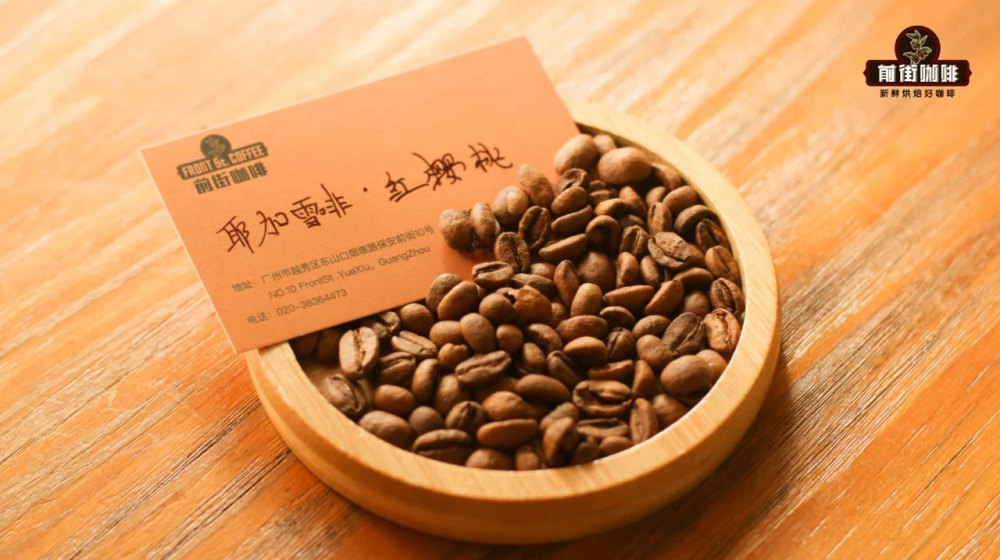
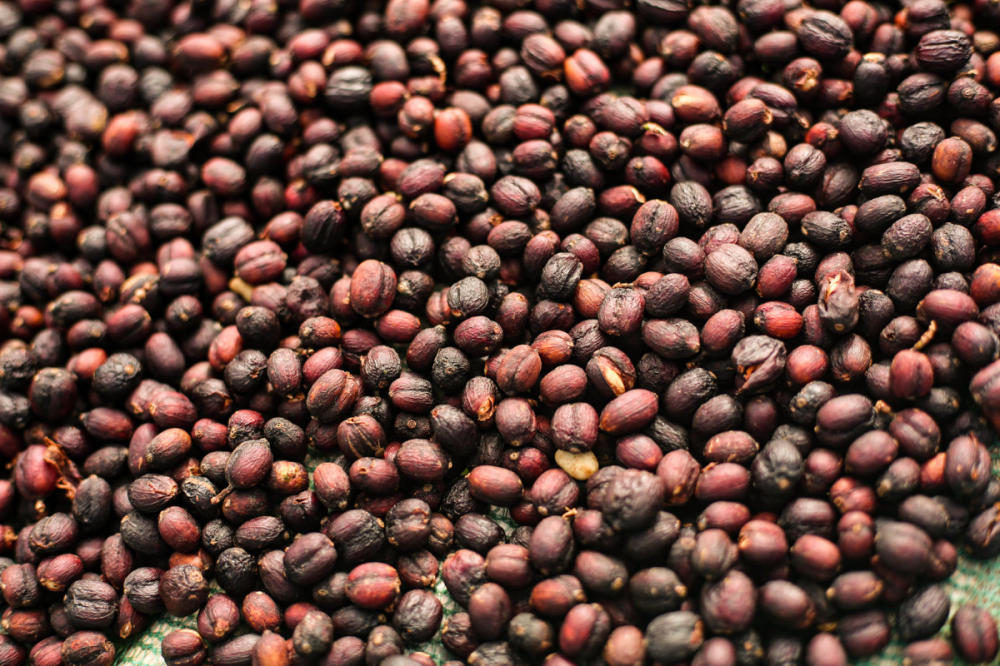
This batch of green coffee beans comes from Worka Coop, uses the natural process, and has been graded G1, the highest grade, by ECX. From green bean appearance, consistency, and freshness to dry aroma and flavor, it performs well and carries the regional characteristics of Yirgacheffe.
Now let's look at our 2 roasting curves.
First is slow roasting. By adjusting the damper and gas, the temperature rise is kept relatively steady: the damper is adjusted from 20% all the way to 80%, and at the same time, to ensure a steady temperature rise, the gas is increased by 10% at the yellowing point to compensate for the heat carried away by airflow, and you can hear first crack proceeding in an orderly manner.
Then for this fast-roast batch, we first start with a lower charge temperature, set the gas relatively high at the beginning, and keep the damper at 80% before first crack, emphasizing hot-air efficiency to simulate a European-style roaster environment. As shown in the figure, the turning point is faster than the previous batch, and the early temperature climb is rapid. By stepping down the gas at the yellowing point, browning point, and first crack point, the Maillard reaction is extended to develop flavor, and the development time accounts for a relatively large proportion of total time.
From the appearance of the roasted beans, the slow-roasted beans are more open and relatively even in color. After grinding, the slow roast shows less color variation, while the fast roast shows more obvious color variation.
Cupping comparison:
Finally, to summarize: from roasted bean appearance and cupping, we can see that Japanese slow roasting gives the coffee better overall consistency, a steadier mouthfeel, and a bit more sweetness; the entry is smoother, and caramelized flavors are more pronounced. Although Nordic fast roasting is slightly less impressive in appearance, it delivers floral and fruity notes right on entry, with a slight tea-like quality and relatively lifted aromas. In terms of green beans, Nordic fast roasting demands higher green bean quality, because this roasting method will more strongly highlight the flaws of beans that are not handled well; Japanese slow roasting is relatively more forgiving of green bean requirements, and especially for coffees like Mandheling, slow roasting is more suitable to amplify their strengths. Because slow roasting introduces heat evenly and achieves a high degree of doneness, the resting period is shorter. The editor has tried drinking it as soon as 2 hours after roasting, with no roastiness at all; while just as a good steak needs to be rested to reach its best flavor, fast roasting has a relatively longer resting period, but once resting is complete, the aroma at the moment of grinding is enough to make one feel delighted~
When it comes to shaping coffee flavor, different roasters have different understandings, so there is no standard answer~ The above is just the editor's humble opinion on roasting, Please point out any shortcomings~
A good cup of coffee comes from the coffee farmer's careful cultivation, the processing plant's meticulous processing, the roaster's craftsmanship in roasting, and the barista's precise operation. What finally reaches your taste buds is that pleasant richness and aroma.
The above content is compiled by CoffeeHunters, a coffee news website.


