







Single origin or blend: what should you know about coffee robusta and other beans for espresso?
Espresso beans fall into two camps: single origin and blends. Single origin means the coffee comes from one country, region, or estate, so the cup reflects a traceable place and variety, which is why the third wave of coffee favors it. Blends mix beans from different origins so one bean's strength covers another's gap for a more balanced result. Knowing what is coffee robusta helps here, since robusta is a distinct species often used in blends.
For espresso and latte art at home, blends often give the balance and consistency that milk drinks need, while single origins show regional character more clearly. Blend coffee is made by a roaster or barista combining origins, and the guide points to several options such as classic, specialty, and dark cocoa base blends for espresso use.
Walking into a specialty coffee shop, the beans on the menu often fall into two camps: single origin and blended. What exactly is the difference between them? Single origins emphasize traceable regional flavors, while blends achieve balance by mixing beans from different regions. This article will systematically sort out the differences between the two, from definitions and characteristics to suitable scenarios, and for espresso needs, recommend several products such as Front Street Classic Blend, Specialty Blend, and Dark Cocoa Base Blend, helping coffee lovers understand the knowledge while finding beans suitable for making espresso and latte art at home.
These days, when browsing the bean list in a specialty coffee shop, you often see two types of choices: single origin coffee and blended coffee. What exactly is the difference between the two?
Single origin coffee emphasizes "single"
More and more specialty coffee shops are beginning to offer single origin (Single Origin) coffee. So-called single origin is a concept relative to blended coffee (Blended Coffee). Generally speaking, it may come from the same coffee-producing country, or be narrowed down to the same region, or even be precise to the same estate. For example, Front Street Coffee Huakui (creamy strawberry), Front Street Coffee Fruit Dingding (citrus, jasmine), Front Street Coffee Golden Mandheling (spices, caramel), Front Street Coffee Huilan (nuts, dark chocolate), etc., are all very representative single origins, each with its own distinctive flavor.
According to the view of SCAE, the key reason single origin coffee emerged is traceability. It allows enthusiasts to understand which estate this type of high-quality coffee comes from and what makes it special, and the taste in the cup represents a certain origin, region, or bean variety. The third wave of coffee advocates coffee knowledge, such as brewing methods and regional flavors, and precisely because of this, single origin coffee has become more and more popular.
Blended coffee focuses on making up for shortcomings with strengths
Blended coffee is when a roaster or barista mixes coffee beans from different origins together to obtain a more balanced flavor. For example, if a certain bean is smooth in mouthfeel but lacks aroma, another bean with a prominent aroma can be added to combine their respective strengths. During production, green beans may first be mixed and then roasted, or they may be roasted separately and then blended.
Blending is both a technique and an art, and it also carries the personal style of the roaster or barista. Blended coffee is mostly seen in espresso drinks, such as Espresso, Americano, Latte, or Cappuccino. After blending, the coffee usually tastes more balanced, smoother, and more stable, and it can be said to lean more toward mass appeal.
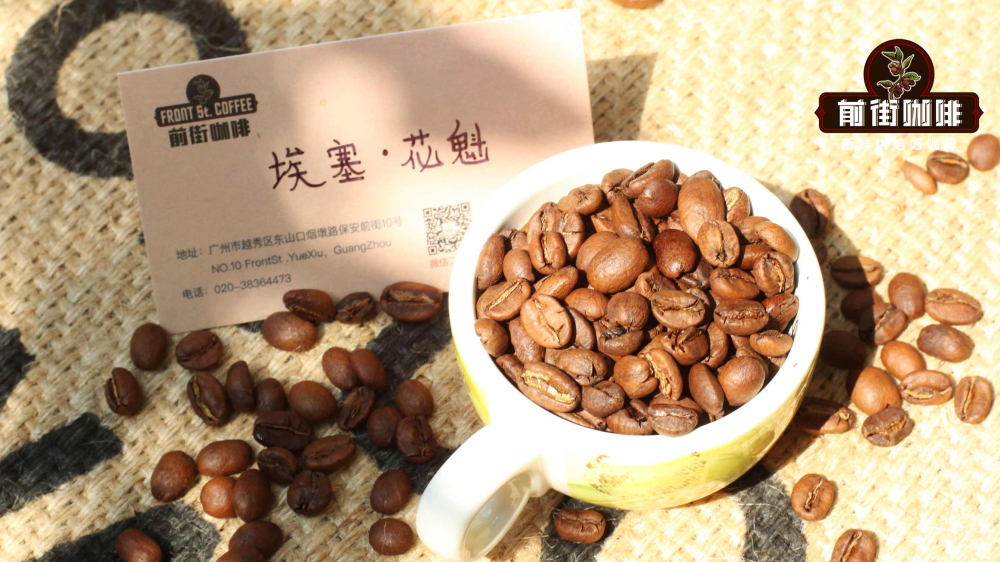
Friends who want to practice latte art at home can try Front Street Classic Blend. This is a medium-dark roasted espresso recipe composed of three origins, with design inspiration from the once-popular "Mamba," that is, Mandheling plus Brazil. In order to increase aroma and crema, Front Street Classic Blend also adds a small amount of Robusta, thereby enhancing flavor intensity, so that beginners can easily extract espresso with golden crema at home.
If you prefer complex nutty aromas such as almond, apricot kernel, and walnut, Front Street Specialty Blend and Front Street Dark Cocoa Base Blend are recommended. They both contain a relatively high proportion of Brazilian coffee beans, thus bringing a comfortable bittersweet taste and a very smooth entry. Among them, Front Street Specialty Blend has the nutty, chocolate, and caramel aromas common in Colombian coffee, as well as moderate acidity; Front Street Dark Cocoa Base Blend combines the acidity of ripe plum from Yunnan small-bean coffee, and after being ground into powder, it gives off a creamy chocolate aroma, with a balanced taste and high adaptability. In addition to making lattes, it can also produce many kinds of espresso drinks.
Is single origin coffee necessarily better tasting?
Drinking single origin coffee is aimed at tasting the coffee's original flavor, so sugar and milk are usually not added. Some roasters point out that if a single origin bean is extracted with an espresso machine to make Single Origin Espresso, under a high-pressure environment, the coffee's acidity, sweetness, bitterness, and other characteristics will all be amplified, and not everyone can accept it. Therefore, single origin coffee is not necessarily better tasting. If it is brewed instead by methods such as pour-over or AeroPress, the sharpness will be much lower than that of single origin espresso, making it easier to drink. In addition, using a light roast or medium roast also makes the coffee flavor easier to accept; of course, you can also try diluting a high-concentration single origin coffee with water.
Tasting specialty coffee is actually not much different from tasting red wine. There is a lot to learn in it, but it is also the pleasure of challenging the taste buds. I hope everyone can learn to appreciate it and gradually come to like specialty coffee.
The above content is compiled by CoffeeHunters, a coffee news website.


