







Where Are Ethiopian Heirloom Coffee Beans Grown?
Ethiopia is the birthplace of coffee, and its producing regions include Sidamo, Harar, Yirgacheffe, Guji, and Limu. Heirloom is a general term for local varieties rather than a single named cultivar. The country holds a vast genetic repository of coffee, and the government does not identify each variety individually, partly to protect wild coffee.
Regional flavor differs by area, and washed versus natural processing changes the cup further. Yirgacheffe tends toward citrus and floral notes, while other regions lean in different directions. Well-known lots such as Huakui show how a coffee green bean from Ethiopia can taste very different depending on origin and processing method.
As the birthplace of coffee, Ethiopia boasts numerous renowned producing regions and a vast genetic repository of varieties. From the perspective of Front Street Coffee, this article systematically sorts out the origin of the concept of Ethiopian heirloom varieties, analyzes the flavor characteristics of representative regions such as Yirgacheffe, Sidamo, and Limu, and compares the impact of washed and natural processing methods on coffee taste. It also introduces the origin background of well-known beans like Huakui, helping coffee enthusiasts understand how to choose an Ethiopian coffee that suits their personal preferences.
When coffee is mentioned, Ethiopia is often the first thing that comes to many people's minds. This country, located in northeastern Africa, is home to a large number of coffee-producing regions, such as Sidamo, Harar, Yirgacheffe, Guji, and more. Perhaps most people's understanding of Ethiopia still stops at names like Yirgacheffe, Sidamo, and Huakui. In this article, Front Street Coffee takes everyone into Ethiopia to get to know several of the country's more representative coffee-producing regions.
In recent years, more and more heirloom varieties have been discovered in Ethiopia, and Ethiopian coffee seems to have become synonymous with high quality, bringing people different surprises every year. When it comes to Ethiopian heirloom varieties, many people may still not be very clear about them. In fact, Ethiopian heirloom is simply a general term for local coffee varieties.
For example, when Front Street Coffee recommends beans to everyone, it usually explains the variety of the beans. For instance, the variety of Front Street Coffee's Brazil Queen's Estate is Yellow Bourbon, the variety of that Jamaican Blue Mountain coffee bean is Typica, and some other coffee bean varieties are Caturra, Catuai, and so on. So here comes the question: why are only Ethiopian coffee beans collectively called local heirloom varieties?
Ethiopia is the homeland of coffee, and the number of coffee varieties is extremely large, making it a genetic treasure trove. The local government simply does not have the energy to identify each variety one by one. In addition, out of consideration for protecting wild coffee varieties, it is unwilling to disclose too much variety information to the outside world. So even locals themselves cannot figure out exactly what variety the coffee trees they plant belong to, and therefore use local heirloom as a general term, written in English as heirloom.
Nearly 2,000 coffee varieties in Ethiopia have been recorded, of which 1,927 are heirloom varieties and 128 are introduced foreign varieties. Therefore, judging from appearance alone, Ethiopian coffee varieties are like a "grand garden," with long, short, thin, and plump ones all available.
Ethiopian coffee enjoys an extremely high reputation in China, and Chinese people especially favor Ethiopia's Sidamo and Yirgacheffe producing regions. Sidama Province is located in southern Ethiopia, with Arsi Province to the north, extending eastward to connect with Bale Province, and the Gamu Gofa administrative region to the west. Front Street Coffee believes that most people's impression of Ethiopian coffee beans is still mainly fruit-toned, acidic, fruity, vinous, mellow, and floral, and its representative producing region is Yirgacheffe.
Generally speaking, the Limu producing region is mainly dominated by washed beans, and its taste is milder than that of the Sidamo producing region, often with citrus characteristics. Although its fame is not as loud as that of Sidamo or Yirgacheffe, it also produces many coffee beans with unique flavors.
The Yirgacheffe producing region is most famous for washed beans, but natural beans also perform well. Front Street Coffee once compared washed beans and natural beans from the Yirgacheffe producing region.
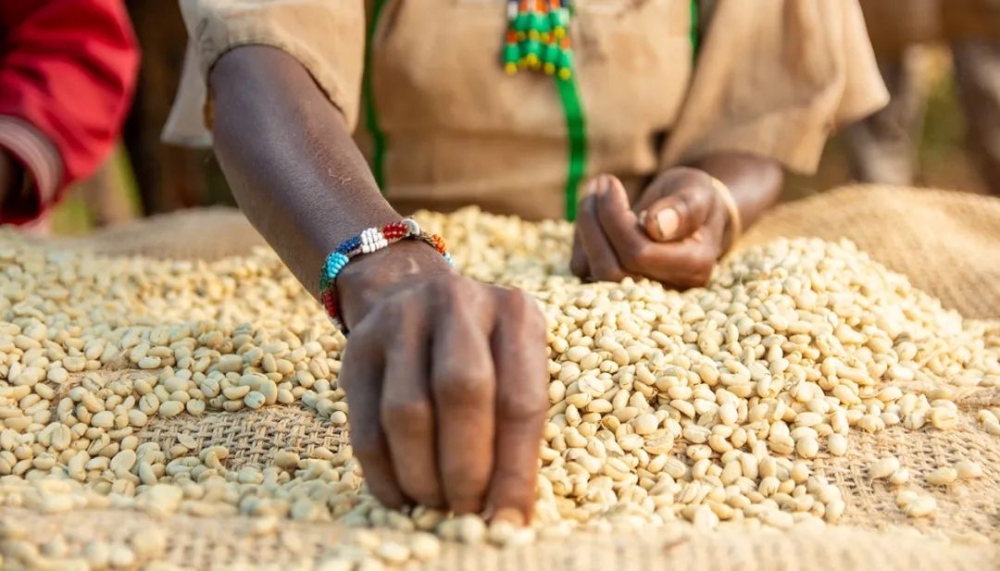
In the green bean state, natural beans appear yellow-green with more silver skin; washed beans appear blue-green with less silver skin. The reason is that during the washed processing, the coffee beans are soaked for a long time, the silver skin separates from the beans, and when the parchment is finally removed, the outer silver skin is also peeled off along with it, so very little silver skin remains on the surface of washed green beans. Natural beans are just the opposite: the fruit skin and pulp remain attached to the outside of the beans, and the silver skin adheres tightly to the coffee beans, making it difficult to fall off when the parchment is removed, so many outer silver skins still remain on the surface of natural green beans. If you want to know whether a coffee bean is washed or natural, you can also refer to this method introduced by Front Street Coffee to identify it.
Front Street Coffee has also noticed that many customers often cannot make up their minds between Yirgacheffe natural beans and washed beans. According to Front Street Coffee's cupping comparison of coffee beans from the Yirgacheffe producing region, for example, the natural Red Cherry listed by Front Street Coffee is not intense on the palate, with medium body, like fruity black tea; while Front Street Coffee's washed Yirgacheffe Gedingding has citrus acidity, berry sweetness, and notes of almond and tea on the palate, with honey sweetness in the aftertaste, low body, bright acidity, clean and refreshing.
Simply put, if you prefer a bright acidic taste, Front Street Coffee suggests you buy washed Yirgacheffe; if you prefer a fuller body with more sweetness and aroma, Front Street Coffee suggests you can buy natural beans. When choosing other beans, you can also follow this approach.
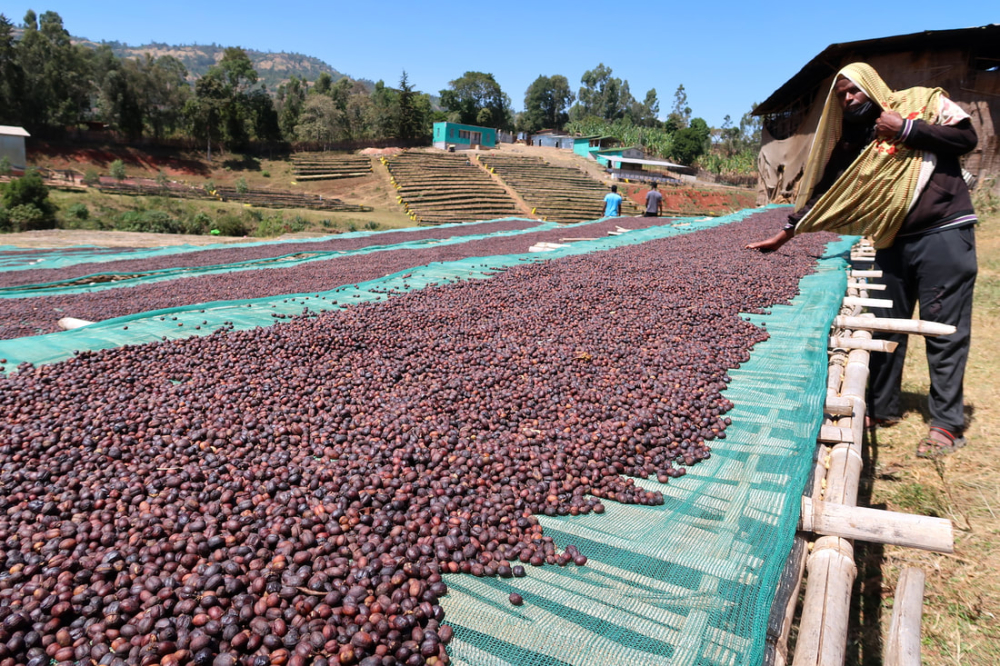
Ethiopia also has a producing region famous for natural processed coffee beans — Sidamo. The industry in the Sidamo area is mainly agricultural, and the coffee-growing areas are mainly distributed around the East African Rift Valley, at altitudes between 1,500 and 2,200 meters, with high altitude, abundant sunshine, and plentiful rainfall. The greatest advantage of this region is that soil fertility is maintained through the cycling of organic matter, using fallen leaves from surrounding trees or plant residues as fertilizer. The pristine growing environment has created obvious differences and distinctive characteristics among coffees produced in different towns. The processing method of coffee has a profound impact on the expression of flavor, and Sidamo coffee is no exception.
Natural Sidamo presents rustic yet rich fruit flavors, sweet, juicy, ripe fruitiness, with a red-wine-like feel in the body. High-quality natural coffee requires more meticulous care and has higher requirements for weather and coffee fruit ripeness, making it rarer than washed processing. Among them, the most famous coffee-growing areas in the Sidamo region include Guji and West Arsi. Most of the Sidamo region uses the natural processing method to process coffee green beans. Front Street believes that the natural processing method gives coffee beans from the Sidamo region rich fruity aroma and a smooth mouthfeel.
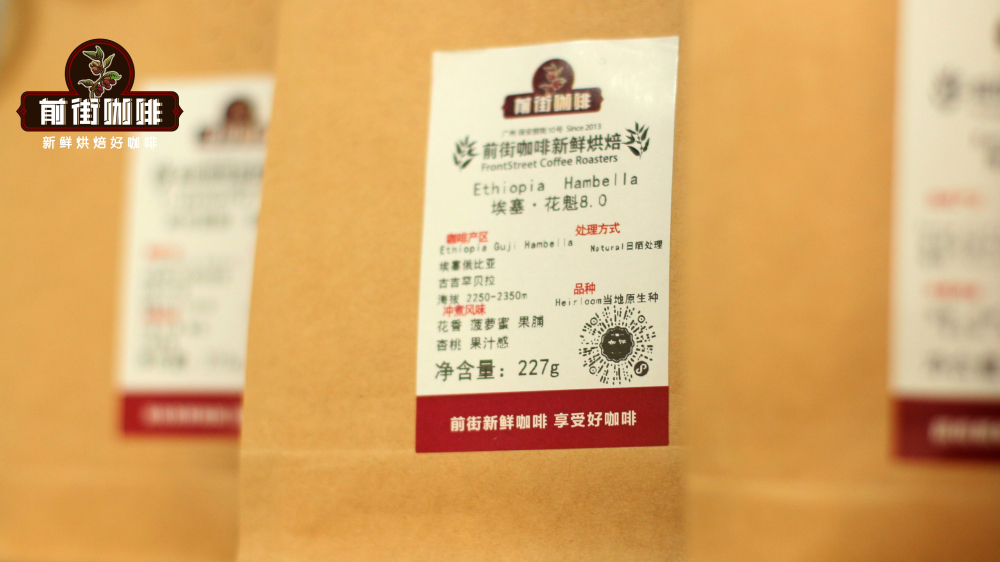
Front Street Coffee has listed coffee beans from both of these Ethiopian producing regions. Among them, Front Street Coffee's Huakui coffee beans come from Hambela, a sub-region of Guji in the Sidamo producing region. Generally speaking, only naturally processed coffee beans produced and processed by Buku Abel Estate can be called "Huakui," so Buku Abel Estate is also known as "Huakui Estate." The place where Huakui is grown is surrounded by sugarcane and bananas. Under high-altitude climate conditions, this creates Huakui coffee's smooth mouthfeel, with passion fruit acidity and the fermented vinous aroma brought by natural processing. Another West Arsi coffee bean listed by Front Street Coffee has flavors of plum, berries, cranberry jam, nectarine, mango, and honey on the palate.
Front Street Coffee believes that the Yirgacheffe producing region and the Sidamo producing region both belong to Ethiopia's famous producing regions. The most notable characteristic of Sidamo is citrus sweetness, with natural processing being more prominent; the most notable feature of Yirgacheffe is floral aroma, and the acidity of washed coffee is especially bright and lively. Beans from both producing regions have both natural and washed processing methods. Natural coffee has more layers and a more intense aroma, while washed coffee has fewer layers and a bright, clean taste.
For more specialty coffee knowledge sharing, please follow the WeChat public account: Front Street Coffee.
The above content is compiled by CoffeeHunters, a coffee news website.


