







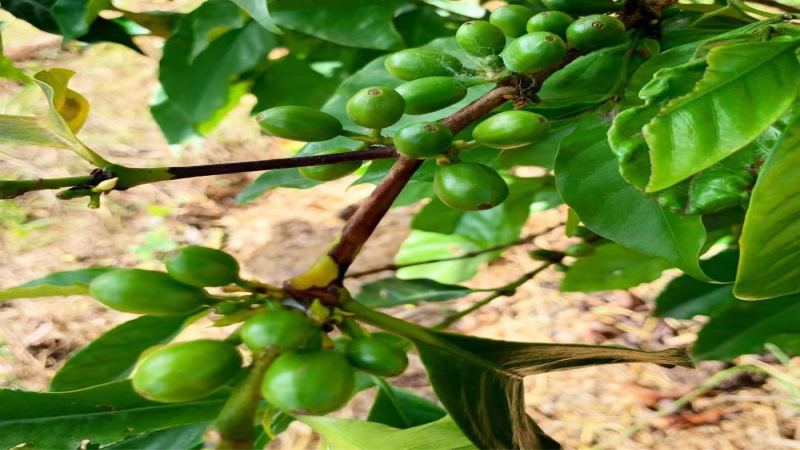
Is Panama Geisha the Same as Ethiopia Gesha Village Geisha?
Both are Geisha, but Ethiopia's Gesha Village and Panama's Hacienda La Esmeralda produce different cup profiles. The variety demands high altitude, cloud cover or shade, and fertile soil to show its floral character. Below 1,500 meters at La Esmeralda, floral notes fade, which is why the estate grades its Geisha by altitude.
The earliest Geisha coffee seeds were found in 1931 in Ethiopia's forests, then sent to the Kenya Coffee Research Institute, introduced to Uganda and Tanzania in 1936, brought to Costa Rica in 1953, and only planted in Panama in 1970. That shared lineage is why the comparison of Gesha Village Gold Label and La Esmeralda Red Label matters.
Although both are Geisha varieties, those grown in Ethiopia's Gesha Village and Panama's Hacienda La Esmeralda each have their own distinctive cup profiles. In this article, Front Street Coffee compares the cupping and brewing flavors of two beans—Gesha Village Gold Label (Gesha 1931) and Hacienda La Esmeralda Red Label—to help you understand the flavor gap between Geishas from different origins, and to clarify whether Ethiopia's Gesha Village Geisha and Panama Geisha are the same variety. Geisha is extremely picky about its growing environment; high altitude and cloud-shaded cover are key to its floral bloom, and Hacienda La Esmeralda is world-famous precisely because of its unreplicable altitude and climate conditions.
Front Street often mentions that the same coffee variety planted in different places—or even in different areas or at different altitudes within the same origin—will show noticeable differences in flavor. So where exactly do these differences lie? This article takes Gesha Village Geisha and Panama Geisha as examples, using cupping to observe the flavor distance between Geisha beans from different origins, while also answering whether Ethiopia's Gesha Village Geisha and Panama Geisha belong to the same Geisha.
A quick introduction to Geisha coffee
Although Geisha's flavor is exquisite and elegant, this expression depends on specific growing conditions. The variety is quite demanding about its environment, requiring high altitude, cloud cover or abundant shade trees, and fertile soil. In other words, to let Geisha fully release its floral advantage, high altitude is almost a necessity. This is also one reason Panama's Hacienda La Esmeralda Geisha is renowned worldwide: it has both fame and altitude and climate conditions that other origins cannot replicate. Even within Hacienda La Esmeralda itself, Geisha beans grown below 1,500 meters no longer show prominent floral notes—which is exactly why the estate grades its Geisha by altitude.
The earliest Geisha coffee seeds were discovered in 1931 in Ethiopia's primitive forests, then sent to the Kenya Coffee Research Institute, introduced to Uganda and Tanzania in 1936, brought to Costa Rica in 1953, and only introduced to Panama in 1970. So, is the Ethiopia Gesha Village Geisha that Front Street offers the same Geisha as Panama Geisha?
|Ethiopia Gesha Village Geisha Coffee
Gesha Village's Geisha originated from an expedition by estate owner Adam and BOP judge Willem Boot in the surrounding forests. In a jungle wrapped in dense forest (called the Gori Gesha Forest), they discovered multiple wild coffee tree species, and the most surprising of all was the native Geisha. They collected seeds from the native Geisha trees, selected them, planted and studied them at Gesha Village, and ultimately developed three varieties: Gori Gesha, Gesha 1931, and Illubabor Forest. The first two both belong to Geisha, while Illubabor Forest is a disease-resistant variety provided by the Ethiopian research institute.
Gori Gesha comes from the wild coffee forest near the estate (Gori Gesha Forest) and encompasses the diversity of Geisha genetics, so it is named after the forest. Gesha 1931 was selected from multiple Geisha varieties in the Gori Gesha Forest; based on coffee plant morphology, coffee bean appearance, and cupping results, it is closest to Panama Geisha. It is named Gesha 1931, and "1931" comes from the year people discovered the Geisha variety in Ethiopia. The Gesha Village Gold Label that Front Street offers uses the 1931 Geisha variety; let's look below at this bean's cupping performance.
What is Gesha Village Gold Label Geisha coffee bean?
Gold Label accounts for only 5% of Gesha Village's annual production and can almost be regarded as an offering on par with auction lots. Competitors around the world often choose this lot; for example, at the 2018 WBC World Championship held in the Netherlands, the champions from Australia and Japan chose Gold Label lots to compete. Roasters with high quality standards also purchase it. It has complete traceability, and each lot has outstanding flavor and high complexity. It is the estate's best label after the auction lots.
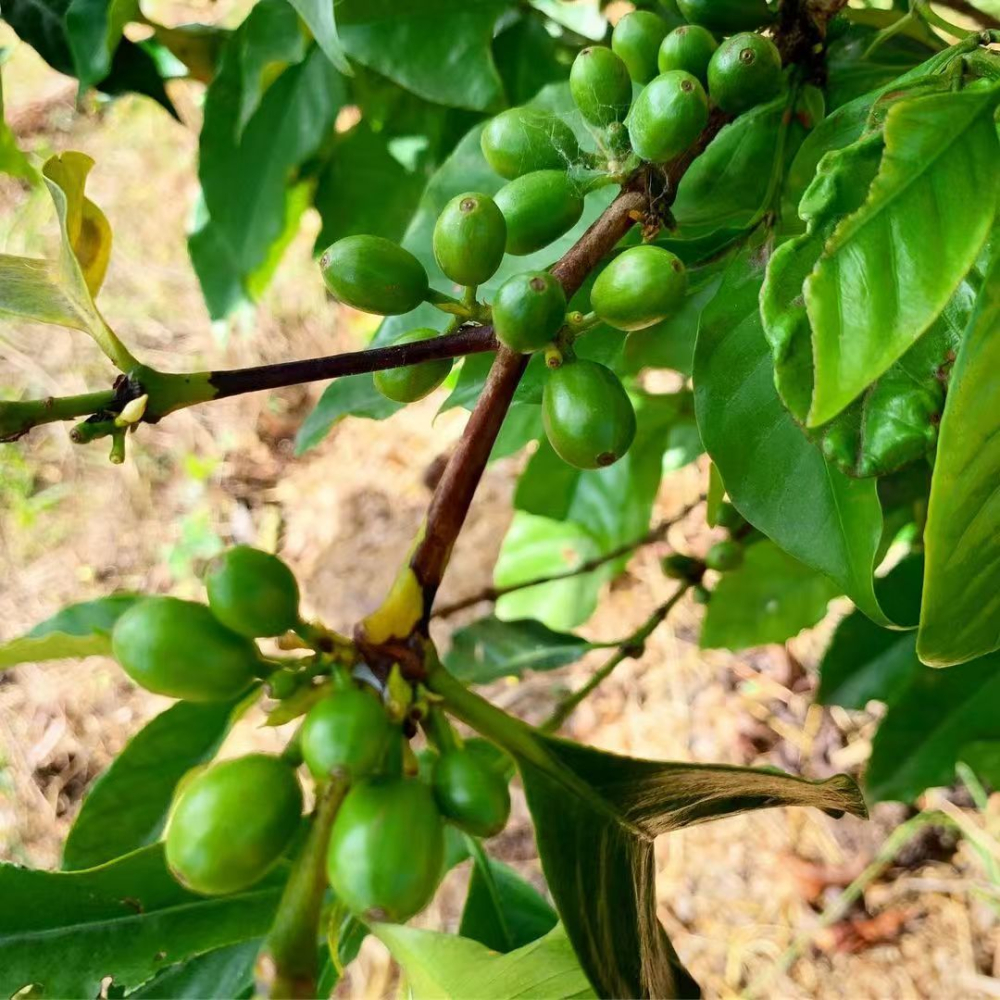
Front Street Coffee — Gesha Village Oma 059 Lot
Grade: Rarities (Gold) label Gold Label
Processing Method: Natural (32 days)
Variety: Gesha 1931
Country: Ethiopia
Region: Bench Maji
Altitude: 1,931-2,040 meters
Front Street Coffee cupping report:
Dry aroma: citrus
Wet aroma: fermented notes
Flavor: citrus, floral, cream, fermented winey, berries
|Panama Hacienda La Esmeralda Geisha
For ease of comparison, Front Street Coffee selected Hacienda La Esmeralda's Esmeralda Special Geisha coffee bean, commonly known as "Red Label." Red Label Geisha is grown at 1,600-1,800 meters, scores above 90 in cupping, and mainly comes from two producing areas: Jaramillo and Canas Verdes. Hacienda La Esmeralda's Red Label also has complete traceability, allowing you to trace the specific growing plot. The Red Label Geisha that Front Street obtained also uses the natural processing method.
Jaramillo has annual rainfall of 4,000 ml, average daytime temperature of 19-25°C, average nighttime temperature of 11-15°C, and average altitude of 1,600-1,700 m. This plot is subdivided into 5 small plots: Mario, Noria, Reina, Bosque, Buenos Aires.
Canas Verdes has annual rainfall of 3,500 ml, average daytime temperature of 16-23°C, average nighttime temperature of 10-15°C, and average altitude of 1,600-1,800 m. Canas includes a total of 9 small plots: Lino, Coronado, Fundador, Leon, Montaa, Trapiche, Chinta, Cabaa, Tumaco.
Front Street Coffee — Hacienda La Esmeralda Red Label Geisha Coffee Bean
Region: Boquete, Panama
Estate: Hacienda La Esmeralda
Plot: Canas Verdes, Mario Plot
Altitude: 1700m+
Processing Method: Natural
Front Street Coffee cupping report
Dry aroma: jasmine, citrus
Wet aroma: citrus, lemon, honey
Palate: lemon, honey, berries, orange peel, mango, cream, citrus, tea-like
Front Street Coffee brewing comparison
Through cupping, Front Street found that Geisha beans from both origins have outstanding juicy mouthfeel. To better present the smooth fermented texture and juice-like sweet acidity brought by natural processing, Front Street brews at 90°C and uses a 60 dripper to enhance the layering of the Geisha coffee.
Dripper: V60 #01
Dose: 15g
Coffee-to-water ratio: 1:15
Grind size: fine granulated sugar (78% passing No. 20 sieve)
Water temperature: 90°C
Front Street Coffee staged extraction method: first use 30g of water to fully wet the coffee bed into a "hamburger" shape, and bloom for 30s; in the second stage, at 1'00'' on the timer, pour to 125g, pause until the water level drops to 2/3 of the coffee bed, then pour the third stage; in the third stage, at 1'45" on the timer, pour to 225g, and after the coffee liquid has completely dripped, the total extraction time is 2'02". After extraction, gently swirl, and taste once the coffee liquid is even.
Hacienda La Esmeralda Red Label Geisha brewing flavor: bright rose and citrus aroma, genmai, berries, apricot, complex fruit, honey, thick juicy mouthfeel, rich flavor layers, and obvious sweetness.
Gesha Village Gold Label Geisha brewing flavor: obvious fermented notes on entry, citrus aroma, floral, berry sweet acidity, creamy smoothness, soft acidity, medium sweetness, and moderate finish.
From the above comparison, Gesha Village's 1931 Geisha and Panama Geisha are similar in appearance, but judging by cupping and brewing flavor, Front Street finds the two beans still very different. At most, their relationship can only be considered the same variety family; in other respects, they can be said to each form their own system. The Geisha coffee beans from both origins are worth savoring carefully—they are two completely different experiences.
For more specialty coffee beans, please add the private WeChat of Front Street Coffee, WeChat ID: kaixinguoguo0925
The above content is compiled by CoffeeHunters, a coffee news website.


