








How Do You Make Osmanthus Coffee at Home?
Osmanthus coffee comes together in three home recipes: an osmanthus Americano, an osmanthus latte, and a caramel brûlée latte with more layers. You need dried osmanthus, osmanthus jam or syrup, osmanthus oolong tea, sugar and cream. Medium to medium-dark roasted beans work well, since their caramel and chocolate notes pair with the sweet floral aroma without being overwhelmed.
Dried osmanthus should not go straight into the espresso machine basket, and it can turn bitter if steeped too long or at too high a heat, so infuse it separately and strain. The Americano is the simplest, the latte adds steamed milk, and the brûlée version finishes with a caramelized sugar top. Knowing how to use an american coffee machine for the espresso base keeps each drink consistent.
The autumn breeze brings refreshing coolness, and the fragrance of osmanthus fills the air—it's once again the season best suited for incorporating osmanthus into coffee. This year, Front Street Coffee has brought a richer osmanthus coffee lineup than in previous years, featuring both simple-to-make osmanthus Americano and osmanthus latte, as well as a slightly more elaborate but stunningly layered osmanthus version of caramel brûlée latte. This article will detail the required ingredients, the approach to selecting coffee beans, and the specific preparation parameters and precautions for the three drinks. It will also address common questions such as whether osmanthus can be placed directly into the coffee machine for extraction and how to prevent osmanthus from turning bitter. Whether you prefer a refreshing sugar-free Americano or a creamy, rich latte, you'll find the perfect cup to recreate at home.

As the autumn breeze turns cooler and the air fills with the sweet scent of osmanthus, making osmanthus-infused drinks becomes the seasonal choice every year around this time. Front Street Coffee has released coffee recipes incorporating osmanthus almost every year during this season—after all, it's hard to find a flavor element that better represents autumn than osmanthus. This year is certainly no exception.
Compared to previous years, Front Street Coffee's osmanthus coffee offerings this year have expanded in variety. In addition to several common preparations, there are also styles with slightly more steps but more outstanding flavor complexity. Front Street Coffee has test-made each of these recipes, and the results have been satisfying. Now let's break down in detail how to make these autumn-inspired osmanthus coffees.
But before that…
But before that, Front Street Coffee will first list the ingredients that will be used later, all of which can be conveniently purchased online or offline: dried osmanthus, osmanthus jam or osmanthus syrup, osmanthus oolong tea leaves, white sugar, and cream.
As for coffee beans, Front Street Coffee recommends choosing medium or medium-dark roasted beans, and avoiding overly light or overly dark roasts. Osmanthus aroma is sweet and full, easily evoking warm and comforting associations; medium to medium-dark roasted coffee beans have just the right degree of caramelization, presenting a steady profile of caramel and chocolate without being too intense or sharply acidic, making them a perfect match for osmanthus.
If you want to incorporate osmanthus into coffee, Front Street Coffee's espresso series is the priority choice: the bold and crema-rich Front Street Classic Blend, the nutty Front Street Specialty Blend, the Front Street Commercial Blend suitable for service, and the cost-effective Front Street Dark Cocoa Blend—each bean has a different character and can correspond to different usage scenarios.
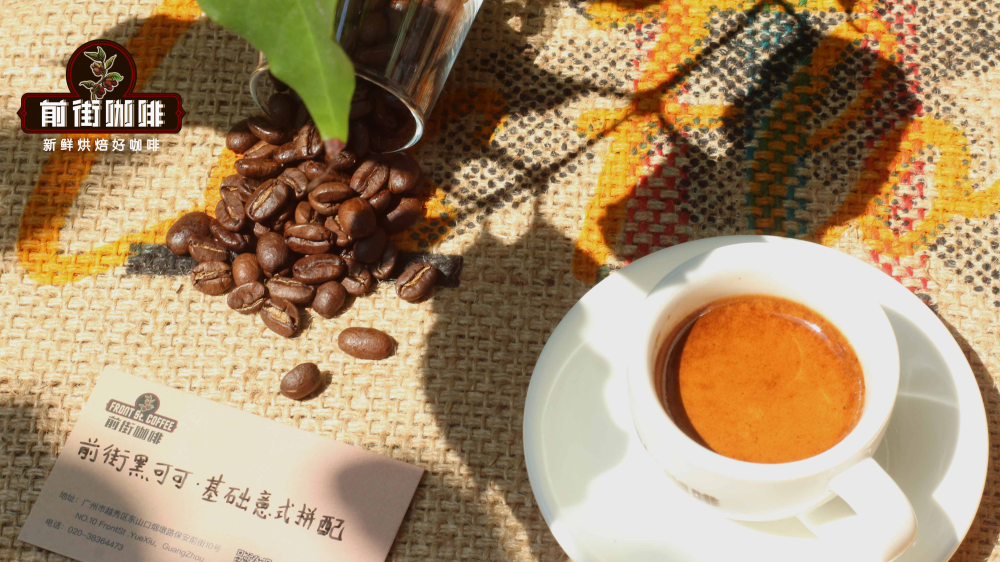
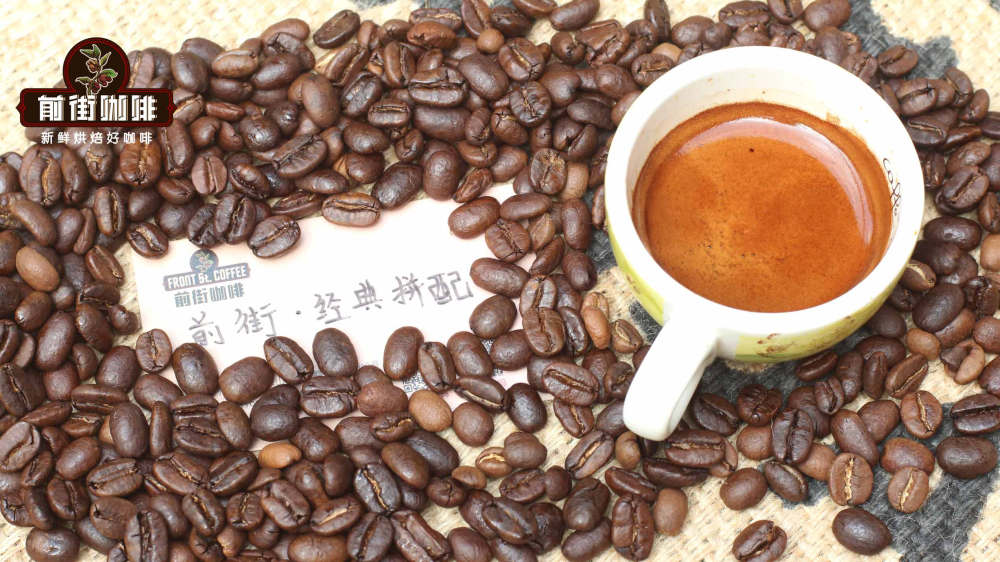
The demonstration in this article will use the Front Street Classic Blend coffee beans from the bean list. This is a medium-dark roasted espresso blend that not only showcases the flavor advantages mentioned above but also extracts a rich crema.
Finally, one thing to note: the content shared in this article is not served to the public at Front Street Coffee's physical stores.
I. Osmanthus Americano / Osmanthus Oolong Americano
Let's start with the osmanthus Americano. Its method is simply introducing osmanthus to a regular Americano, giving the coffee an extra layer of elegant osmanthus fragrance beyond its own aroma. If you don't like sweetness and don't want an overly heavy taste, this osmanthus Americano will be very suitable for you.
The osmanthus Americano is not complicated to make. Taking Front Street Coffee's approach as an example, the parameters are the same as a regular Americano: extract 40ml of coffee liquid from 20g of grounds in about 30 seconds, then add 180ml of 65°C hot water to dilute.
There are two ways to give the Americano an osmanthus aroma: one is to sprinkle a small amount of osmanthus on the surface of the coffee puck before extraction and extract together; the other is to add a small amount of osmanthus to steep after the espresso extraction is complete (about 2g, steep for 30 seconds, then filter out the osmanthus with filter paper). The resulting coffee will carry osmanthus flavor, and the steps are quite simple.
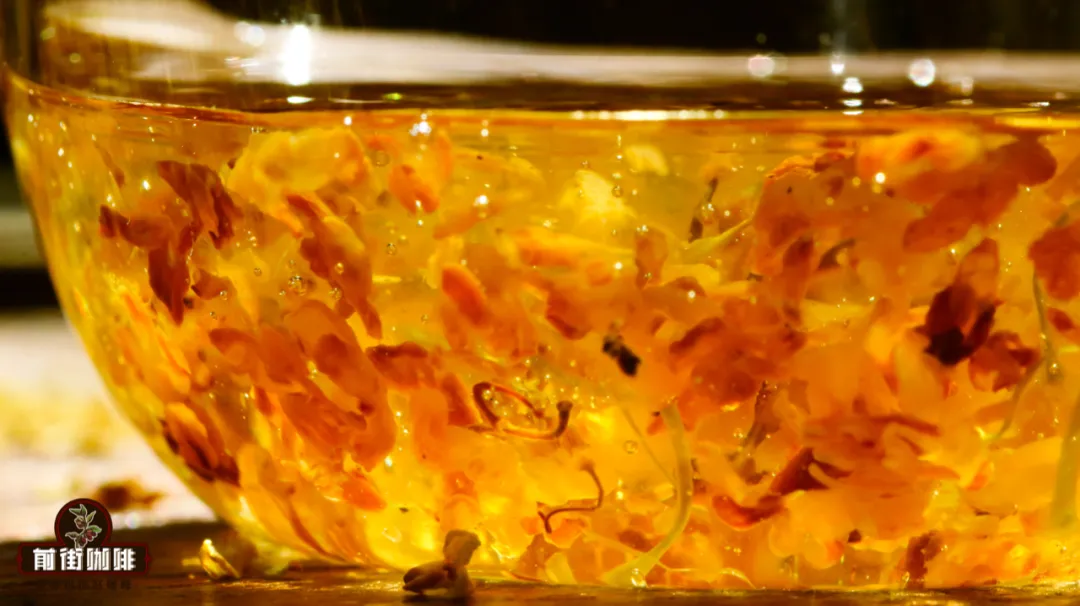
Next is an extension of the osmanthus Americano—the osmanthus oolong Americano. It replaces the water in the osmanthus Americano with osmanthus oolong tea, resulting in a stronger osmanthus flavor while adding a layer of oolong tea's refreshing fragrance.
When making the osmanthus oolong Americano, there's no need to steep osmanthus again; instead, steep osmanthus oolong tea leaves. However, note that the tea concentration should not be too high, otherwise the finished coffee will taste noticeably bitter; moreover, tea itself has a stimulating effect, and if brewed too strong and combined with coffee, people sensitive to caffeine may have difficulty falling asleep.
So pay attention to the concentration when brewing the tea. Front Street Coffee's method is: brew 5g of osmanthus oolong tea leaves with 200ml of hot water at 85°C, steeping for five minutes. After five minutes, pour 180ml of osmanthus oolong tea into the Americano cup, then add 40ml of espresso on top, and a cup of osmanthus oolong Americano is complete.
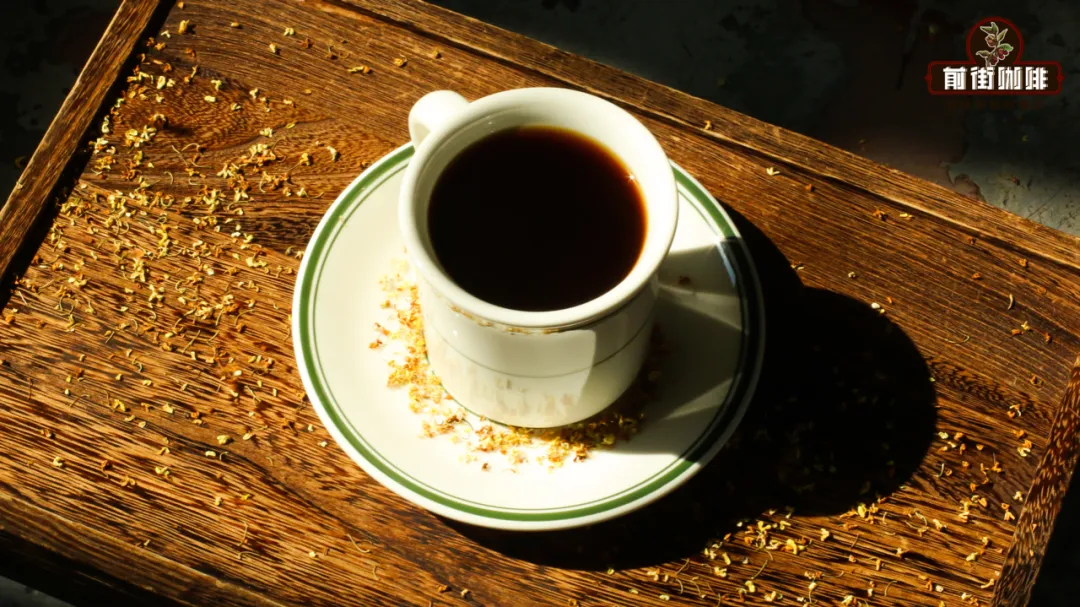
If you want a more visually appealing look, you can sprinkle a small amount of dried osmanthus on the surface of the coffee, but the amount should not be too much, otherwise it will affect the mouthfeel and noticeably diminish the drinking experience (as shown in the image below).
II. Osmanthus Latte
Next is the osmanthus latte. Similar to the osmanthus Americano, it releases osmanthus aroma on top of a regular latte, with the difference being that the osmanthus is steeped in milk rather than espresso.
This is because if you steep osmanthus in espresso, the aroma is easily overwhelmed by the milk. On one hand, the osmanthus flavor extracted by espresso isn't strong enough; on the other hand, the large amount of milk requires balancing the coffee's bitterness. Therefore, milk should be used to steep the osmanthus here.
Since the osmanthus aroma needs to fully infuse into the milk, and the milk temperature is relatively low, the steeping time will be longer. When making the osmanthus latte, Front Street Coffee typically uses 5g of osmanthus with about 210ml of milk, sealed and refrigerated for four hours, then removed and filtered, and finished following the normal latte steps.
The latte made this way has a rich osmanthus aroma, and combined with the coffee's own milk chocolate and nutty creamy notes, it's fragrant and richly layered. However, osmanthus itself carries a slight bitterness; if you're not fond of bitterness, Front Street Coffee suggests adding a small amount of syrup to neutralize it—about 5ml is enough to make the coffee more palatable.
Of course, if you find the above method time-consuming, you can also directly mix osmanthus syrup into the coffee to make an osmanthus-flavored latte. The specific parameters are: 200ml of 65°C milk, 40ml of espresso, and 12ml of osmanthus syrup. You can also decide whether to sprinkle osmanthus on the surface for decoration according to personal preference, but be careful not to sprinkle too much, to avoid interfering with the mouthfeel.
III. Caramel Brûlée Coffee (Osmanthus Version)
The last osmanthus coffee has more steps, but whether in aroma or taste, it's worth the effort—the osmanthus version of caramel brûlée coffee.
Caramel brûlée coffee has been quite popular recently. It adds whipped cream and torched caramel on top of a latte. When you sip it, you can taste the rich aroma of coffee, feel the softness and richness of the cream, and crunch into the crispy caramel—three completely different experiences from top to bottom, with a strong sense of layering. The osmanthus version additionally incorporates osmanthus and related ingredients, adding another layer of osmanthus fragrance for even more complexity.
The materials needed, besides those used for the latte itself, include: white sugar, a torch, osmanthus jam, osmanthus syrup, and cream.
First, whip the cream. Before whipping, add a small amount of osmanthus syrup to the cream so that the cream itself carries osmanthus aroma. Front Street Coffee prefers less sweetness, so the amount of syrup is small—8ml of osmanthus-flavored syrup per 100ml of cream.
Whip until the cream reaches a semi-solid state, then set aside. Then follow the hot latte steps to extract espresso and heat the milk (no need to steam milk foam, just heat), then begin assembly. First, pour 8ml of osmanthus jam into the cup. (If making an iced version, increase the osmanthus jam amount by about 7ml, reduce the milk ratio, and add ice cubes, similar to making an iced latte.)
Then pour in milk (200ml), espresso (40ml), and the whipped cream (as appropriate) in sequence. Then evenly spread a layer of white sugar on the surface.
After the white sugar is spread, take out the torch and torch the sugar.
Stop when the outer layer turns golden brown, then decorate according to personal preference, and a richly layered, outstanding caramel brûlée latte (osmanthus version) is ready.
Before drinking, you can take small sips to taste each layer in sequence, then stir evenly with a spoon to experience the blended flavor—highly recommended to give it a try.
The above content is compiled by CoffeeHunters, a coffee news website.


