







How Does the Coffee Grading System Work in Honduras?
Honduras is one of the most important coffee-producing countries in Central America, and its coffee shares the floral, fruity notes and smooth juice-like mouthfeel common to the region, with added hints of exotic spice in the aroma and a nutty, chocolate-like finish. This guide covers the country's development history, flavor characteristics, grading standards, and six main producing regions, plus roasting and brewing notes on several Honduran beans.
National borders do not change how coffee tastes, so Honduran beans overlap in flavor with those of Guatemala and El Salvador while still showing their own balance and layering. The country's mountainous highlands, tropical climate, mild temperatures, and abundant rainfall suit coffee trees well. Its coffee grading system and the distinct profiles of six core regions are the focus of the detailed review.
Honduras is now one of the most important coffee-producing countries in the world, but just a few decades ago its coffee industry lagged far behind its neighbors. From the perspective of Front Street Coffee, this article systematically reviews the development history, flavor characteristics, grading standards, and six core production regions of Honduran coffee, and includes Front Street's roasting and brewing practice records on several Honduran beans. Whether you want to understand the overall picture of Honduran coffee or are looking for flavor clues about specific regions, this article can provide valuable reference.
Honduras's coffee industry did not attract much attention in its early years. When neighboring Guatemala and El Salvador had already made a name for their coffee on the international market, Honduran growers were still struggling to make ends meet.
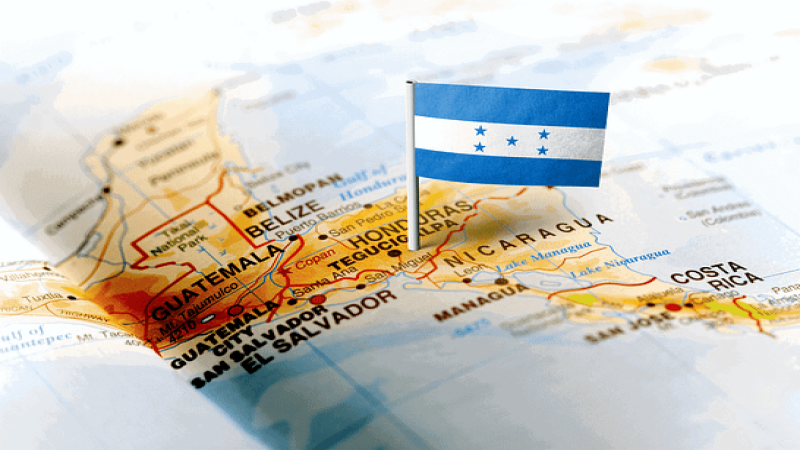
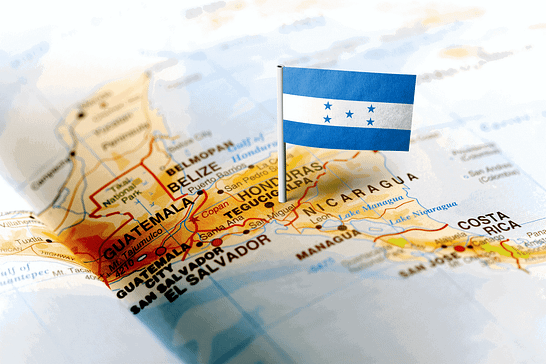
Honduras is located in northern Central America, with the Caribbean Sea to the north, the Gulf of Fonseca of the Pacific Ocean to the south, Nicaragua and El Salvador to the southeast, and Guatemala directly to the west. The country's terrain is mainly mountainous and highland, with a tropical climate, relatively mild temperatures year-round, and abundant rainfall, making it very suitable for coffee tree growth. After comparing many Central American coffee beans side by side, FrontStreet Coffee noticed that the beans from these countries generally carry floral and fruity notes and a smooth juice-like mouthfeel. Some may ask, shouldn't each country have its own unique flavor label? Indeed, whenever FrontStreet Coffee introduces a country's coffee, it first points out that country's flavor baseline so that everyone can build a memory reference point. But one thing needs to be understood: national borders are drawn by people, and coffee beans do not immediately change their taste just because they grow on the other side of a boundary.
Front Street has always believed that good roasting should faithfully reflect the characteristics of the production region itself—Yirgacheffe should present the appearance of Yirgacheffe, and then explore more possibilities on that basis. This is the principle FrontStreet Coffee adheres to when setting roasting strategies. Back to Honduran coffee: although its flavors overlap with those of neighboring countries, it can capture hints of exotic spices at the aroma level, while the finish shows a substantial nutty and chocolate-like thickness, making the overall cup balanced and layered.
Overview of Honduran Coffee
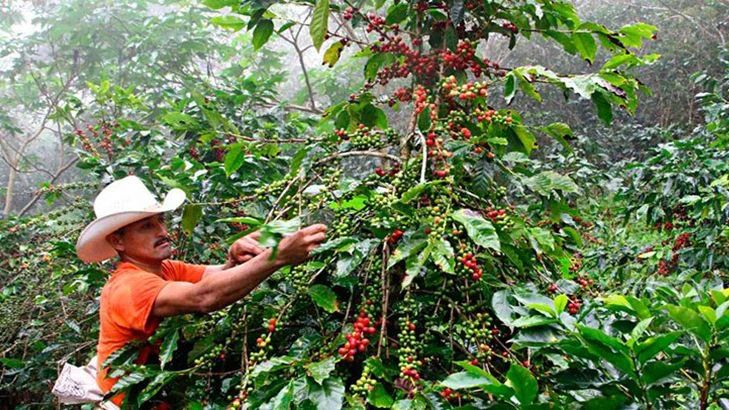
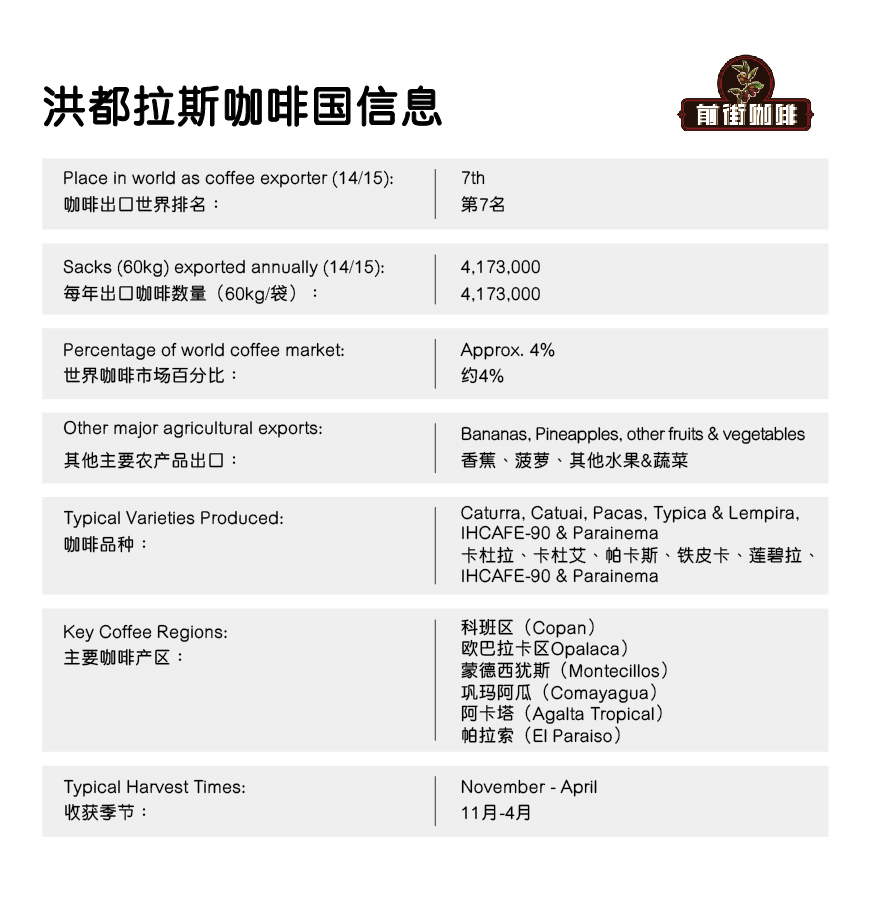
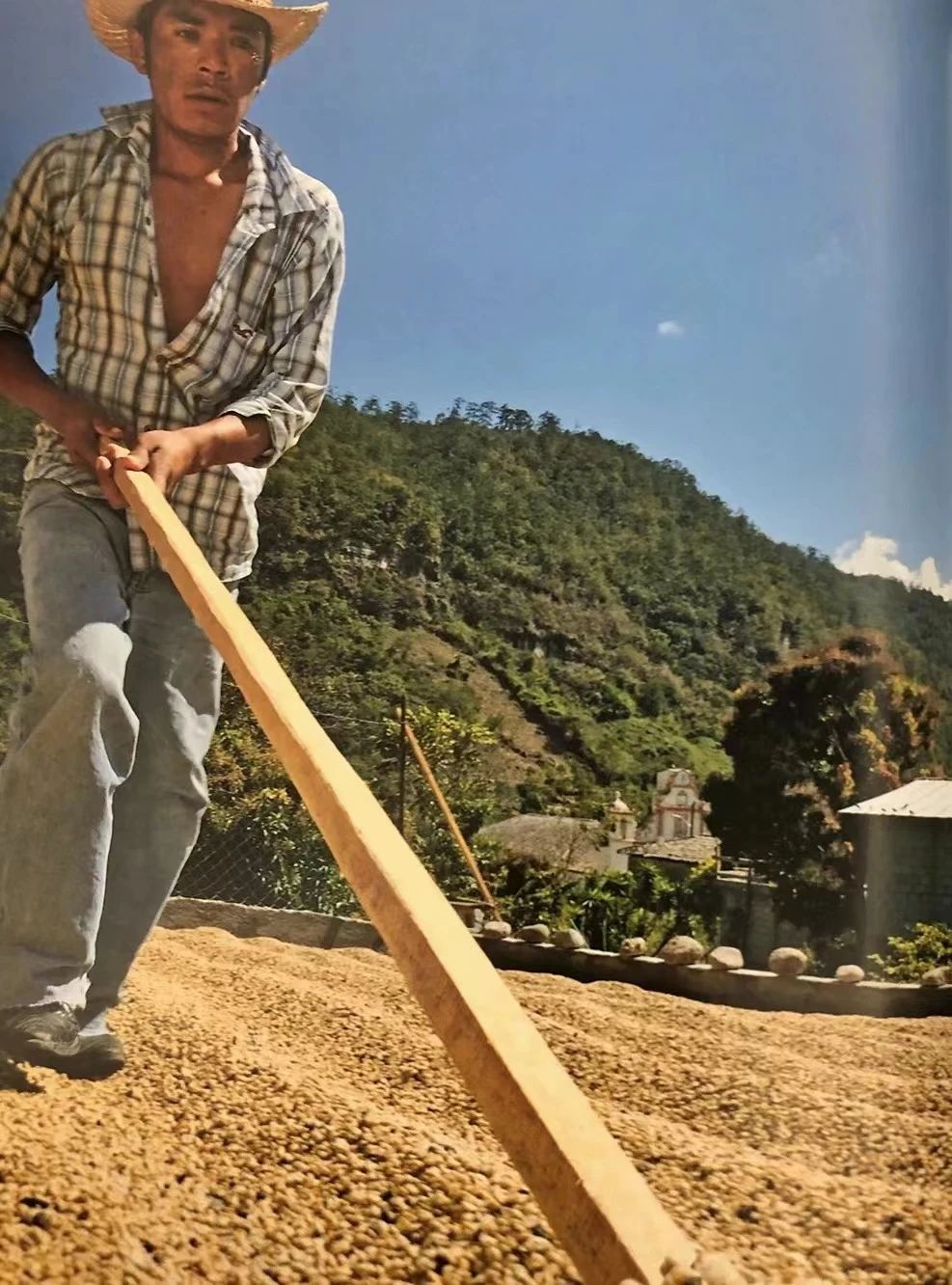
Honduras is not only the largest coffee-producing country in Central America; if only washed Arabica beans are counted, it is even the world's second-largest producer of washed Arabica. It was only after entering the 21st century that coffee overtook bananas to become the country's most important cash crop. The banana industry was controlled by large American companies, but coffee is different: growers are mainly smallholder farmers. Honduras currently has about 110,000 coffee farmers, and harvesting is mainly done by hand, with the annual harvest period lasting from November to March of the following year.
Honduras produces two types of coffee of outstanding quality that are deeply favored by coffee lovers. One is produced in highlands at 1,000 to 1,500 meters above sea level and is called "Highland Coffee"; the other is produced in highlands at 1,500 to 2,000 meters above sea level and represents Honduras's highest grade, called "Strictly High Grown Coffee." Most Honduran coffee is exported to the United States and Germany.
The Development History of Honduran Coffee
Coffee was first introduced to Honduras by Spanish merchants in the late 18th century. By 1804, there was already small-scale cultivation locally. Honduras's late start in coffee has historical reasons—the country long lacked transportation infrastructure connecting production areas and ports, preventing the coffee industry from growing. It was not until after 1970 that the government established the official coffee institution Instituto Hondureño del Cafe (IHCAFE), focusing on improving coffee quality. Coupled with the fact that the entire territory of Honduras is suitable for growing coffee trees, production finally surpassed Costa Rica and Guatemala in 2011.
In 1975, Brazil suffered frost damage and coffee production fell sharply. Honduras took this opportunity to quickly fill the market gap, with production jumping from 500,000 bags to 1.8 million bags, and these were snapped up. It was from that time that Honduran coffee production truly got on track. By the 1990s, the specialty coffee wave arose in Central America, and other countries competed on quality one after another, while Honduras fell behind in coffee quality. The core problem lay in green bean processing: mountainous areas have abundant and unpredictable rainfall, disrupting the drying stage. In 2004, Honduras held its first Cup of Excellence green bean competition, and 21 coffees from across the country stood out and participated in an online auction. In 2011, Honduras became Central America's largest coffee-producing country by volume and also the world's second-largest Arabica coffee producer.
Today, Honduras ranks among the world's top ten coffee-producing countries and is the world's second-largest Arabica producer. Coffee plays a pivotal role in the country's economy and people's livelihood. Honduras has 280,000 hectares of coffee farms, mainly small plantations, most less than 3.5 hectares, and these small farms contribute 60% of the country's coffee production.
Characteristics of Honduran Coffee
The average cultivation altitude is above 1,100 meters. The main variety is Arabica, among which Caturra, Catuai, Pacas, and Typica predominate, and the processing method is mostly washed. The aromas of Honduran coffee are quite diverse, and the best lots carry complex fruity aromas and lively juice-like acidity. The body and sweetness are both relatively high, with fruit-toned characteristics, and sometimes nutty, toffee-like aromas appear, making the layering quite rich.
Honduran Coffee Grading System
Strictly High Grown (SHG): altitude above 1,200 meters.
High Grown (HG): altitude above 1,000 meters.
Central Standard (CS): cultivation altitude above 600 meters.
Six Major Regions of Honduran Coffee
Honduran coffee can be divided into six major regions, mainly distributed in the west and south: Copan, Opalaca, Montecillos, Comayagua, Agalta Tropical, and El Paraiso. The average cultivation altitude for specialty beans in these areas is above 1,100 meters. Among the coffee produced in these regions, 69% is HG grade, 12% is SHG, and 19% is CS.
1. Copan
Location: Located in western Honduras, bordering Guatemala, covering Copán Department, Ocotepeque Department, Cortés, Santa Bárbara Department, and part of Lempira Department. Altitude: 1,000 to 1,500 meters; Temperature: 11.5 to 22.5°C; Rainfall: 1,300 to 2,300 mm; Harvest period: November to March; Through cupping, Front Street found that coffee beans from this region present rich chocolate flavors, and the sweetness blending honey and caramel is their signature characteristic, while fruity flavors are relatively weak.
FrontStreet Coffee: Honduras Las Gemelas Estate
Region: Copan
Estate: Las Gemelas
Altitude: 1,250 meters
Variety: Red Catuai
Processing method: Natural
FrontStreet Coffee Green Bean Analysis and Roasting Notes
When Front Street observed this bean, it found it was pale green, with more silver skin on the surface, round and short in shape, and uniform in size. It smelled of sour green grass and pear. After Front Street's roaster received this bean, considering that its altitude was not particularly high and that it used the natural processing method, the decision was made to start with a lower bean-charging temperature and then gradually reduce the heat with medium flame during roasting.
Yangjia 800N roaster (300 g batch): charge immediately when the drum temperature rises to 175°C, set heat to 130, open the damper to 3, turning point at 1 minute 36 seconds; when the drum temperature reaches 140°C, adjust the damper to 3.5 and keep the heat unchanged; when the drum temperature is 151.1°C, the bean surface turns yellow, the grassy smell completely dissipates, and the dehydration stage begins; when the drum temperature reaches 176°C, lower the heat to 100 and leave the damper unchanged; at 8 minutes 28 seconds, wrinkles and dark streaks appear on the bean surface, and the toasted bread smell clearly turns into coffee aroma, which can be regarded as the prelude to first crack. At this point, carefully distinguish the first crack sound. First crack begins at 9 minutes 00 seconds, adjust the damper to 4, develop for 1 minute 40 seconds after first crack, and discharge at 196°C.
FrontStreet Coffee Brewing Recommendations
Dripper: Hario V60
Water temperature: 90°C
Dose: 15 grams
Coffee-to-water ratio: 1:15
Grind size: medium-fine grind (80% passing a standard No. 20 sieve)
FrontStreet Coffee three-stage brewing method: For the first stage, bloom with 30 grams of water for about 30 seconds; for the second stage, pour in stages until 125 grams, and when the water level drops and is about to expose the coffee bed, continue pouring the third stage until 225 grams, then stop. When the water level drops and is about to expose the coffee bed, remove the dripper. (Start timing from the beginning of the bloom.) Extraction time is 2 minutes 00 seconds.
Brewing flavor: Brown sugar, berries, grapes, fermented wine aroma.
2. Opalaca Altitude: 1,100 to 1,500 meters; Temperature: 11.5 to 22.5°C; Rainfall: 1,400 to 1,950 mm; Harvest season: November to February; Varieties: Bourbon, Typica, Catuai, Pacas. Opalaca is located among Santa Bárbara Department, Intibucá Department, and Lempira Department. Through cupping coffee beans from this region, Front Street found that the flavor shows very delicate acidity, with an overall balanced performance. The cup carries tropical fruit notes such as grapes and mulberries, the aftertaste interweaves sweetness and acidity, presenting a strong lemon flavor, balanced by honey and caramel sweetness, with fruit flavors very prominent.
3. Montecillos Altitude: 1,200 to 1,600 meters; Temperature: 12 to 21.2°C; Rainfall: 1,300 to 2,300 mm; Harvest season: November to April; Varieties: Bourbon, Catuai, Typica. Montecillos is located among La Paz, Comayagua, Santa Bárbara, and Intibuca. Through cupping coffee beans from this region, FrontStreet Coffee found that the flavor is full of rich fruit and sweet aromas, accompanied by lemon and floral notes. Lemon and fruit aromas are its important features, especially peach and orange, with lively and bright acidity, a velvety smooth texture, and a lasting finish.
4. Comayagua Altitude: 1,000 to 1,500 meters; Temperature: 14.0 to 22.0°C; Rainfall: 1,350 to 1,700 mm; Varieties: Bourbon, Caturra, Typica, Pacas; Harvest season: December to March. Comayagua is located among Comayagua and Francisco Morazán. Through cupping coffee beans from this region, Front Street found that the flavor is mainly lemon, with obvious sweet fruit aromas, a creamy and rich mouthfeel, along with citrus sweetness and notes of sweetness and chocolate.
5. Agalta Tropical Altitude: 1,000 to 1,400 meters; Temperature: 14.5 to 22.5°C; Rainfall: 1,300 to 1,950 mm; Harvest season: December to March; Varieties: Bourbon, Catuai, Typica. Agalta Tropical spans parts of Olancho, El Paraiso, and Francisco Morazán, mainly located in the eastern provinces, and is the most scattered region, composed of fourteen protected areas to increase plant diversity and balance the ecosystem, with high ecotourism value. Through cupping coffee beans from this region, FrontStreet Coffee found that the flavor carries honey aromas, with strong citrus notes and subtle yet distinct acidity, as well as a pleasant finish.
6. El Paraiso Altitude: 1,100 to 1,500 meters; Temperature: 16 to 22.5°C; Rainfall: 1,000 to 1,400 mm; Harvest season: December to March. El Paraiso is located in El Paraíso in southern Honduras, bordering Nicaragua. Through cupping coffee beans from this region, Front Street found that the flavor is mainly gentle fruit acidity, with caramel aromas and a balanced mouthfeel.
FrontStreet Coffee Honduras Laurales Estate Washed Parainema
Region: El Paraiso
Altitude: 1,400 meters
Variety: Parainema
Processing method: Washed
Grade: SHG
FrontStreet Coffee Roasting Notes
Yangjia 800N roaster (300 g batch): charge immediately when the drum temperature reaches 160°C, set heat to 130, open the damper to 3, turning point at 1 minute 36 seconds; when the drum temperature is 109°C, open the damper to 4 and keep the heat unchanged; when the drum temperature is 153°C, the bean surface turns yellow, the grassy smell completely disappears, and the dehydration stage begins; when the drum temperature reaches 177°C, lower the heat to 50 and leave the damper unchanged; at 8 minutes 28 seconds, wrinkles and dark streaks appear on the bean surface, and the toasted bread smell clearly turns into coffee aroma, which can be defined as the prelude to first crack. At this point, listen carefully for the first crack sound. First crack begins at 9 minutes 24 seconds, leave the damper unchanged, develop for 2 minutes 10 seconds after first crack, and discharge at 195°C.
FrontStreet Coffee Brewing Notes
Dripper: Hario V60
Water temperature: 90°C
Dose: 15 grams
Coffee-to-water ratio: 1:15
Grind size: 80% passing a standard No. 20 sieve
FrontStreet Coffee uses staged extraction: bloom with 30 grams of water for 30 seconds, then pour in a small stream in circles until 125 grams for the stage break; when the water level drops and is about to expose the coffee bed, continue pouring until 225 grams and stop; when the water level drops and is about to expose the coffee bed, remove the dripper. (Start timing from the beginning of the bloom.) Extraction time is 2 minutes 02 seconds.
Brewing flavor: Citrus, berries, grapefruit peel, nutty notes after cooling, dark cocoa finish, prominent berry acidity, tea-like body.
In addition to the six major regions above, there are also some smaller regions. Next, Front Street will introduce Sweet Orange Estate from the La Paz region in southwestern Honduras.
FrontStreet Coffee Honduras Sweet Orange Estate
Country: Honduras
Region: Marcala
Altitude: 1,425 meters
Variety: Catuai
Processing method: Washed
FrontStreet Coffee Roasting Analysis
This coffee belongs to the SHB grade. Front Street observed that the bean density is medium, and the yellowing point is at about 5 minutes 15 seconds. Then reduce the heat and open the damper to enter the Maillard reaction. At first crack, open the damper wider and maintain the heat. The temperature is about 192.4°C, and drop the beans 2 minutes 00 seconds after first crack.
Yangjia 600g semi-direct-fire roaster: preheat the drum to 200°C and charge, open the damper to 3, ignite after 30 seconds, adjust heat to 160, turning point at 1 minute 31 seconds; maintain heat, yellowing at 5 minutes 15 seconds, grassy smell disappears, enter the dehydration stage, lower heat to 130, open the damper to 4, and when it reaches 170°C lower the heat again to 110. At 8 minutes 40 seconds, dehydration is complete, wrinkles and dark streaks appear on the bean surface, and the toasted bread smell turns into coffee aroma, which is the prelude to first crack. At this point, keep the heat unchanged, open the damper to 5, and listen carefully for the first crack sound. First crack begins at 9 minutes 11 seconds, open the damper fully to 5. Develop for 2 minutes after first crack, and discharge at 192.4°C.
FrontStreet Coffee Brewing Recommendations
Dripper: Hario V60
Water temperature: 90°C
Dose: 15 grams
Coffee-to-water ratio: 1:15
Grind size: 80% passing a standard No. 20 sieve
FrontStreet Coffee staged brewing method: Bloom with 30 grams of water for 30 seconds, then pour in a small stream in circles until 125 grams for the stage break; when the water level drops and is about to expose the coffee bed, continue pouring until 225 grams and stop; when the water level drops and is about to expose the coffee bed, remove the dripper. (Start timing from the beginning of the bloom.) Extraction time is 1 minute 58 seconds.
Brewing flavor: Dry aroma with spices and roasted peanuts, making the bean's acidity more prominent; soft berry acidity, flavors of orange, melon, cream, nuts, and dark chocolate, with a genmaicha tea-like finish.
Professional coffee knowledge sharing. For more coffee bean information, please follow the WeChat official account: FrontStreet Coffee.
The above content is compiled by CoffeeHunters, a coffee news website.


