







What makes geisha coffe stand out in the cup?
Geisha coffee earns its reputation through a cup profile of layered floral aroma, citrus and peach notes, bright complex fruit acidity, a creamy mouthfeel, and an oolong tea sweetness that lingers in the finish. Its extremely low yield, combined with Panama's limited total production, is a major reason the bean sits near the top of lists of the most expensive coffee.
Brewing geisha as pour-over benefits from a three-stage extraction that lets those delicate aromatics come through without flattening the fruit acidity. Because coffee is an agricultural crop, the flavor is shaped first by variety, altitude, soil, and climate, so post-processing and roasting should preserve and showcase those qualities rather than mask them.
Geisha coffee holds an almost legendary status in the specialty coffee world, and people often joke that specialty beans fall into just two categories—Geisha and everything else. Why is it so expensive? What exactly makes its flavor so unique? And how do you tell Red Label apart from Green Label? From the perspective of Front Street Coffee, this article systematically traces Geisha's varietal origins, its rise to fame, and its flavor characteristics, while sharing in detail the pour-over parameters and three-stage extraction steps for Front Street Coffee's Emerald Estate Geisha, helping coffee enthusiasts gain a more comprehensive understanding of this bean and offering a reference approach for brewing it themselves.
For more specialty coffee knowledge, please follow our WeChat public account: Front Street Coffee (FrontStreet Coffee)
Perhaps you've heard the saying: specialty coffee beans come in only two categories—Geisha, and all other Arabica varieties. Though this carries a hint of exaggerated humor, it also reflects from the side Geisha's unshakable position in the specialty coffee world.
What makes Geisha coffee so unique? Why is it priced so high?
Even if you don't normally brew pour-over coffee, the name Geisha comes up often, and it's almost always tied to the word "expensive," frequently appearing at the top of the world's most expensive coffee rankings. So why has Geisha's price remained so high?
What made Geisha take the world by storm is the rich yet elegant floral aroma in the cup, notes of citrus and peach, the full acidity of complex fruits, a creamy smooth mouthfeel, and the oolong tea sweetness that emerges in the finish. Such a refined flavor profile makes it feel as though you're not drinking coffee at all, but rather savoring a fragrant fruit tea. Front Street has mentioned in many articles that coffee is ultimately an agricultural crop, and its flavor is always closely tied to variety, climate, altitude, soil, management, and other factors—it is the truest expression of variety and local terroir. Post-processing and roasting should aim to preserve, restore, and showcase these authentic flavors as much as possible. Geisha's outstanding performance is precisely the result of all these conditions working together.
As the saying goes, rarity drives up value. Geisha's yield is extremely low. Panama's total annual coffee production is about 10,000 tons, while the renowned Emerald Estate produces only 150 bags of green beans per year, roughly 9,000 kilograms. If Geisha accounts for just 3% of total production, that's only 270 kilograms. Add to that the continuous media hype and promotion of Geisha's flavor, and enthusiasts' pursuit of it only grows—so its price naturally remains high long-term.
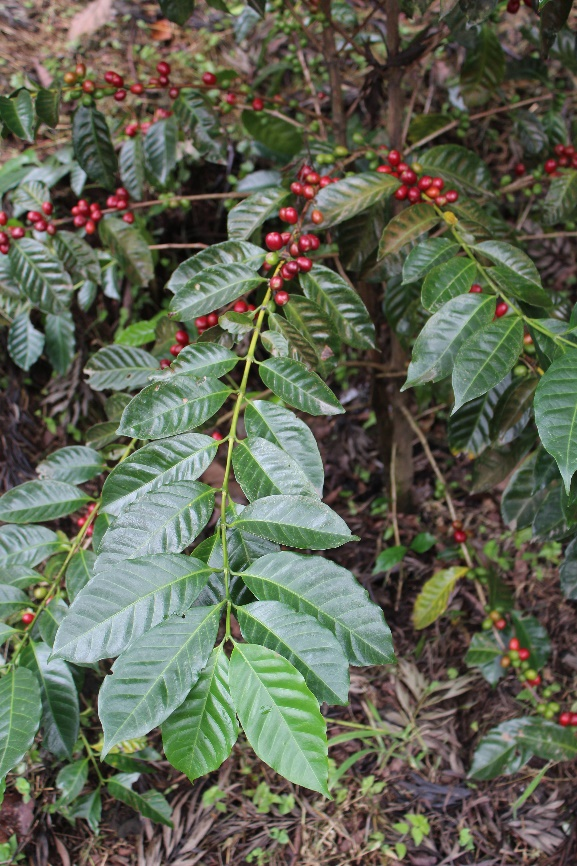
Compared to other Arabica varieties, Geisha not only yields fewer cherries, but the plant itself is exceptionally delicate and highly demanding about its growing environment. It needs high altitude, fertile soil, cloud cover or tree shade, and cannot tolerate direct sunlight. Geisha's leaf system is very thin, its photosynthetic efficiency is relatively low, and its root system is fragile, absorbing water and nutrients quite slowly—so yields remain limited. Growing at high altitudes also means the fruit ripens relatively later. A single Geisha tree produces only half the cherries of a Caturra variety, which is another important reason for its high price.
The Emerald Estate owner who discovered Geisha's potential once said that the farm needs plenty of shade trees to block sunlight for the delicate Geisha, and traditional pruning methods must be used in the early planting stages, otherwise the plants easily die. Geisha planted at higher altitudes takes longer for the fruit to ripen, and only then does the flavor become more complex and unique. Geisha cherries must be harvested at the optimal moment of ripeness and immediately processed. This is a tremendous test of the estate owner's professional judgment and the quality of the labor force—once the best timing is missed, quality declines and causes waste.
Geisha coffee rose to fame at the Best of Panama competition
For Geisha to have achieved its current stellar reputation, Front Street believes much of the credit goes to Panama's Emerald Estate. The estate's third-generation owner, Daniel, once said that the discovery of the "Geisha variety" was something he finally confirmed in 2003 after years of comparison and testing. Two weeks before the 2003 Best of Panama (BOP) competition, while selecting competition lots at an internal cupping table, he discovered that the Geisha variety carried outstanding flavors of jasmine, citrus, peach, blueberry, bergamot, sugarcane, and more. These flavors differed from mainstream preferences in the coffee circle at the time, but Daniel insisted on entering Geisha in the competition—and took first place.
In 2005, the Emerald Estate sent Geisha to the Specialty Coffee Association of America (SCAA) evaluation, where it defeated many star competitors to win world-class specialty coffee honors, and went on to take the world championship in both 2006 and 2007, once again drawing global attention from coffee people. Afterwards, coffee-growing regions everywhere introduced Geisha, including Yunnan in China, which also began cultivating this popular variety. Although Geisha is now produced all over the world, Front Street believes that as the discoverer of Geisha's flavor, the Emerald Estate not only strictly controls quality at every level, but its natural processing method also best presents the classic "Geisha taste."
The difference between Red Label Geisha and Green Label Geisha
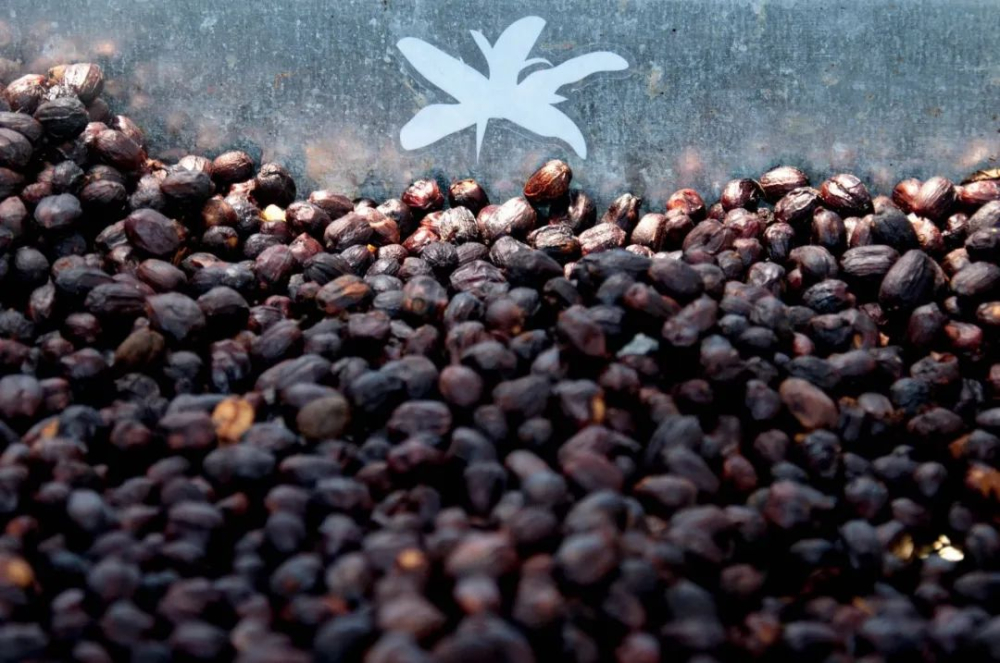
On Front Street's bean list alone, there are about 10 Geisha coffees to choose from. If you're trying Geisha for the first time, Front Street would recommend Front Street Emerald Estate Natural Red Label or Washed Green Label. Red Label refers to the Emerald Special grade ESMERALDA SPECIAL (including auction lots); Green Label refers to Private Collection PRIVATE COLLECTION.
The highest-grade Red Label is picked from high-altitude Geisha cherries at 1,600 to 1,800 meters, with a cupping score above 90, mainly from the Jaramillo and Cañas Verdes farms. Although high altitude brings many challenges to cultivation and harvesting, in the Boquete region, Geisha's floral and fruity charm is most pronounced. The Emerald Estate holds its own separate auction event, and among the divided plots, the Red Label lots put forward for competition are called auction lots. Auction lots have unique numbers, each corresponding to a complete lot from a specific plot. The one we hear about most often is probably the Mario plot of the Jaramillo farm. The Front Street Emerald Red Label Geisha coffee beans that Front Street carries come precisely from the Mario plot, using natural processing.
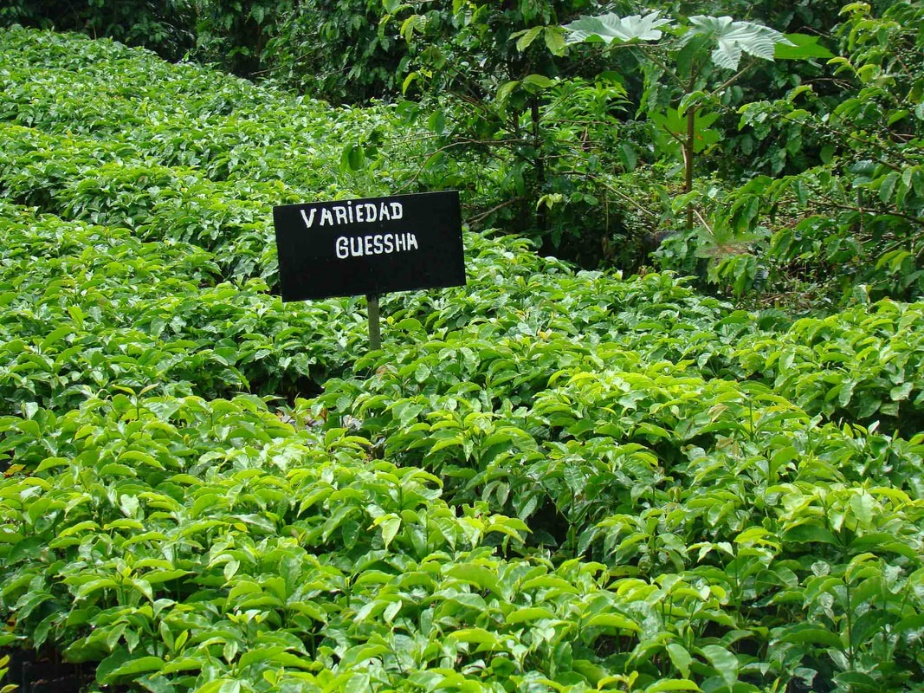
The other one, a washed-process Front Street Emerald Estate Green Label Geisha, cups with a fresher, more natural profile of lemon, berries, pomelo, and Tieguanyin tea. Green Label is selected from cherries grown at 1,600 to 1,800 meters, produced from micro-lots in Jaramillo, Cañas Verdes, and other areas without specific plot separation. Green Label does not participate in auctions. Although its grade is not as high as Red Label, it mainly showcases the signature classic flavor of high-altitude Geisha.
Front Street believes that to present the classic "Geisha flavor," more floral aroma and acidity must be preserved. Therefore, Front Street's Geisha coffee beans are all light-roasted, with roasting curves adjusted accordingly for different processing methods and flavor differences. Through cupping, Front Street sensed the striking fragrance of rose, citrus, berries, complex fruits, and honey in the Front Street Emerald Natural Red Label; and the fresh, bright, richly layered notes of jasmine, citrus, berries, honeysuckle, and oolong tea in the Front Street Emerald Washed Green Label.
Front Street Emerald Geisha coffee pour-over sharing
Light-roasted coffee beans allow high-altitude beans to retain more floral and fruity aromas. Compared to medium-dark roasting, light-roasted beans have a denser internal structure and require higher water temperature and finer grinding to better draw out the coffee's flavor compounds. Here, Front Street uses water at 92 to 93 degrees Celsius for extraction, and for grind size, Front Street uses a No. 20 standard sieve with an 80% pass rate—that is, the coarseness of fine granulated sugar, which is setting 10 on the Front Street store's ek43s grinder.
Front Street's flavor descriptions for each coffee are based on freshly roasted beans. If the coffee beans have been stored for more than a month, the aroma has likely already partially dissipated, making it difficult to reproduce in brewing. Front Street also deeply understands the importance of freshness, so it ensures that only coffee beans freshly roasted within 5 days are shipped, allowing everyone to enjoy the fullest flavor window upon receipt.
Regarding the choice of dripper, Front Street believes that Front Street Emerald Estate Red Label Geisha should present a rich layering of orange aroma and honeyed charm, so Front Street Coffee (FrontStreet Coffee) baristas use a resin V60 dripper. The V60 dripper body has spiral ribs connecting the top and bottom and a large central hole, which speeds up the flow rate of water, while the spiral-shaped vent groove design lengthens the water flow path, increasing the contact time between coffee grounds and hot water. Each stream of water converges along the grooves toward the center of the dripper, concentrating the pressure on the coffee grounds and extracting a coffee with richer layering.
Below, Front Street demonstrates the brewing steps for the store's Front Street Emerald Red Label Natural Geisha, which everyone can use as a reference and compare with their own brewing approach.
The pour-over parameters for Front Street Emerald Red Label Geisha coffee are: dripper: V60, water temperature: 91-92 degrees Celsius, dose: 15g, coffee-to-water ratio: 1:16, grind size: fine granulated sugar (No. 20 sieve bowl, 80% pass rate)
Three-stage extraction: In the first stage, pour 30 grams of water for a 30-second bloom, then pour 95 grams (the scale reads about 125 grams), finishing the pour at about 1 minute. When the water level drops to two-thirds of the coffee bed, pour the remaining 100 grams (the scale reads about 225 grams), finishing the pour at about 1 minute 35 seconds. Drip completes at 2 minutes 10 seconds. Remove the dripper and extraction is complete.
The brewed Front Street Emerald Red Label Geisha coffee has an elegant acidity of rose, citrus, strawberry, and tropical fruit, with a lingering, pleasant black tea character. The flavor layers shift with temperature changes, and the overall mouthfeel is smooth.
The above content is compiled by CoffeeHunters, a coffee news website.


