







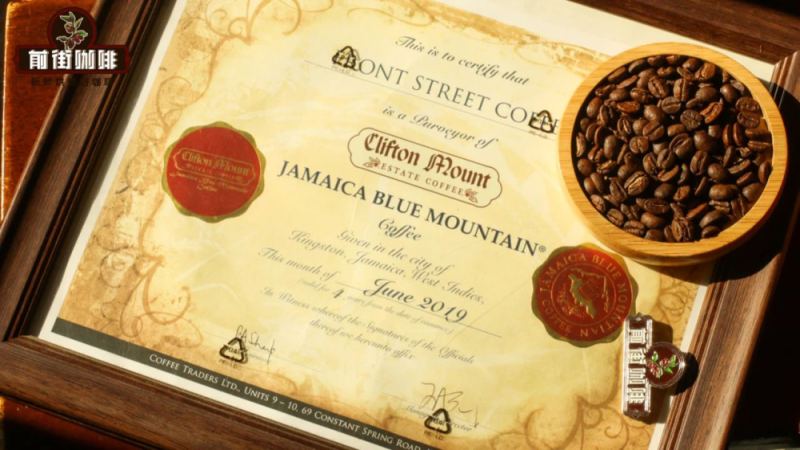
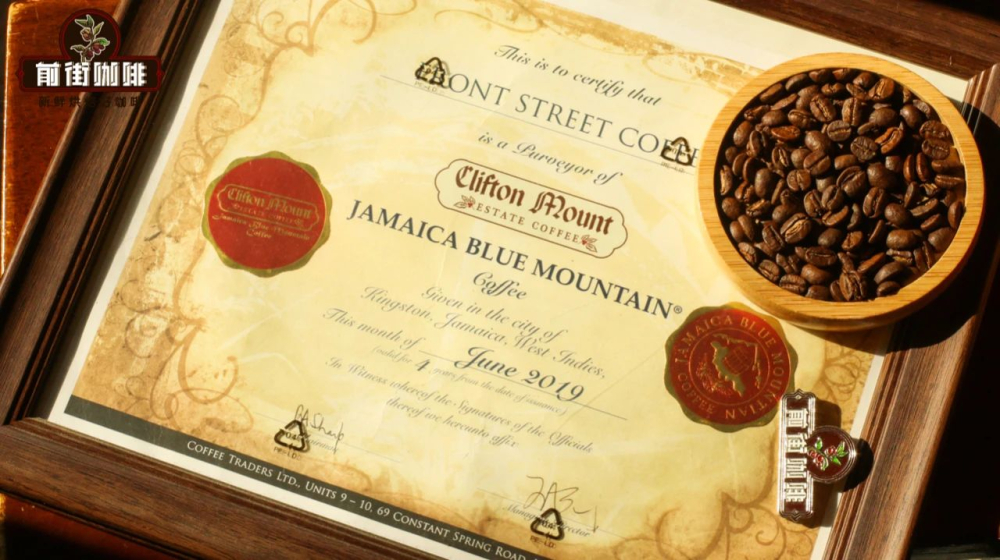
Blue Mountain coffee enjoys a stellar reputation in the global coffee world, and its price has always remained high. This article systematically examines the reasons why Jamaican Blue Mountain coffee is so precious from four dimensions: historical origins, growing region environment, grading system, and brewing methods. The article traces the path by which the Typica variety was introduced to Jamaica, explains how the climate and soil conditions of the Blue Mountains shape coffee quality, clarifies the essential differences between Blue Mountain coffee, Blue Mountain blend, and Blue Mountain flavor, and introduces the cultivation background of Clifton Mount Estate. Front Street Coffee also shares the roasting curve and pour-over parameters for Blue Mountain No. 1 for coffee enthusiasts' reference.
For more specialty coffee knowledge, please follow the WeChat public account: Front Street Coffee (FrontStreet Coffee)
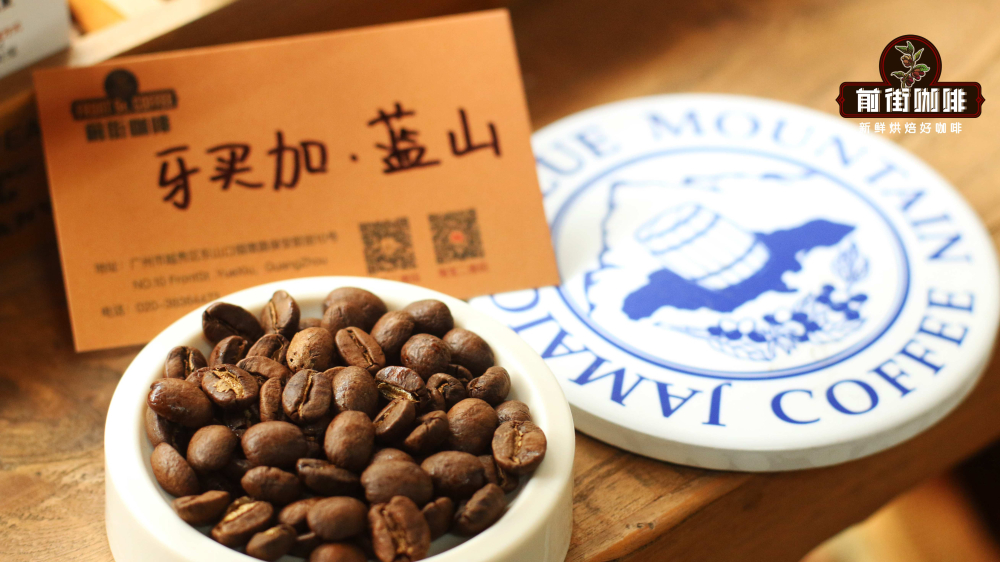
Looking back at Hong Kong dramas from the 1990s to the early 2000s, whenever the plot involved coffee, what the characters mentioned was almost always Blue Mountain. This coffee has extremely high global recognition and was once regarded as a label of taste and status. Limited production, outstanding quality, captivating flavor, and a hefty price tag have kept Blue Mountain coffee in a state of short supply for a long time. For this reason, a large number of products named "Blue Mountain flavor" later emerged on the market. Front Street Coffee (FrontStreet Coffee) needs to clarify here in particular: so-called Blue Mountain flavor coffee and true Blue Mountain coffee are completely different things.
The term Blue Mountain flavor originated in Japan. Japan is the largest buyer of Blue Mountain coffee, with at least eighty percent of the total shipped to Japan each year. Japan divides Blue Mountain coffee into three quality and product tiers: Blue Mountain coffee, Blue Mountain blend, and Blue Mountain flavor.
Blue Mountain coffee requires 100% Blue Mountain coffee beans
Blue Mountain blend requires at least 60% Blue Mountain coffee beans
Blue Mountain flavor may contain no Blue Mountain coffee beans at all
From this it can be seen that coffee beans labeled Blue Mountain flavor are not necessarily produced in Jamaica's Blue Mountain region.
【Jamaican Coffee Cultivation History】
Anyone familiar with the spread of Arabica knows that in 1616 the Dutch, leveraging their maritime trade advantage, obtained coffee seedlings from Yemen and brought them back to Amsterdam, where they were placed in greenhouses and carefully cultivated. This seedling later became known as the Typica "European mother plant." In 1699, the Dutch transplanted descendants of the European mother plant to Java, and the trial planting succeeded.
In 1708, France followed the Dutch example and obtained coffee trees from Yemen for trial planting, but they failed to survive. By 1714, the mayor of Amsterdam gifted Typica seedlings from Java to King Louis XIV of France. In 1720, a French naval officer took a Typica seedling from the Royal Botanical Garden in Paris and transported it to the Americas with careful attention along the way, arriving at the French island of Martinique in 1723, where it was planted and grew vigorously, producing abundant fruit.
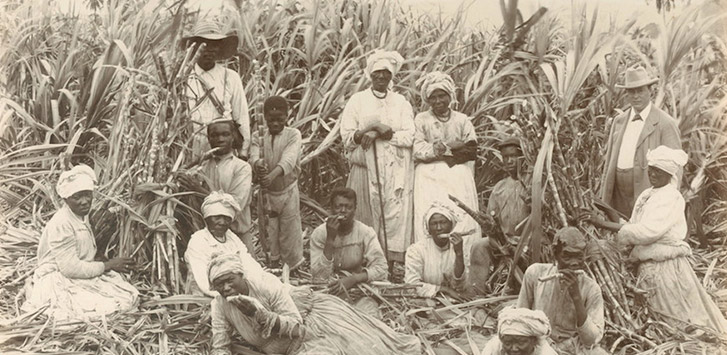
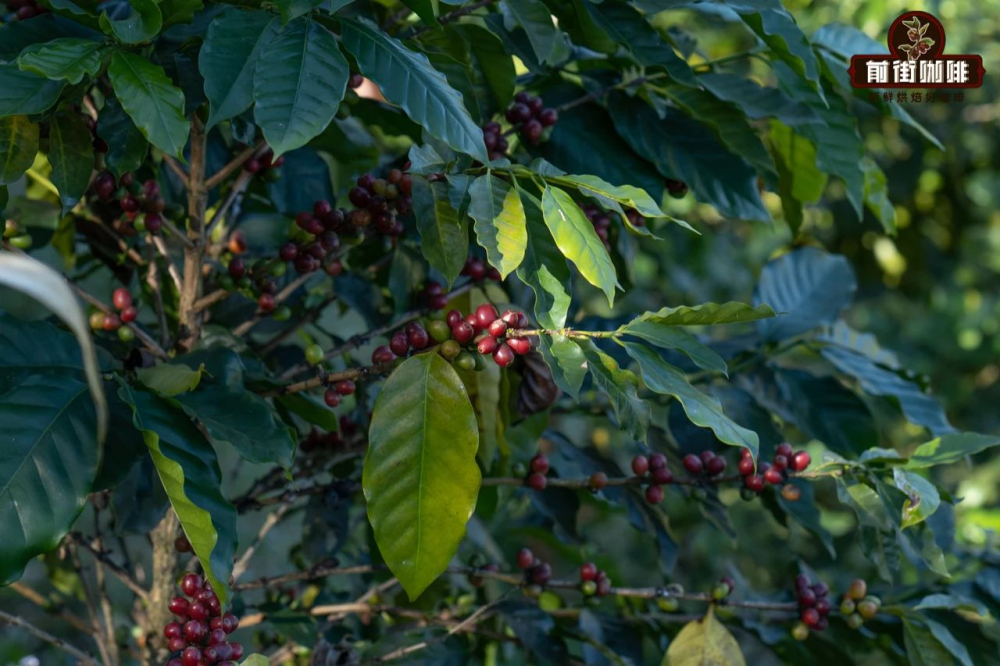
In 1725, the British governor Nicholas Lawes purchased 7 Typica seedlings from the French island of Martinique and planted them in the Blue Mountain area of eastern Jamaica. Not long afterward, coffee gradually spread throughout the Blue Mountain region.
【Growing Region Overview】
Blue Mountain coffee comes from the Blue Mountains near Kingston, Jamaica. The highest peak of the Blue Mountains is 2,256 meters above sea level, making it the highest and longest mountain range in Jamaica. Surrounded by the Caribbean Sea, on clear days sunlight shines directly onto the azure sea, and the peaks reflect the blue radiance refracted from the seawater, which is how the Blue Mountains got their name.
The Jamaican Blue Mountain growing region lies within the coffee belt, with fertile volcanic soil, clean and pollution-free air, a humid climate, and frequent fog and rain year-round. Average annual rainfall is 1,500 to 2,000 millimeters, and the temperature is about 27 degrees Celsius. Afternoon clouds and mist cover the mountaintops, shielding the coffee trees from strong light while also bringing ample moisture. Such natural conditions have created the world-renowned Jamaican Blue Mountain coffee and also make it the second most expensive coffee in the world.
【Blue Mountain Coffee Grading System】
Coffee beans produced in Jamaica's Blue Mountain region are divided into three grades according to cultivation altitude: Jamaican Blue Mountain Coffee, Jamaican High Mountain Coffee, and Jamaican Prime Washed Coffee.
Among them, Blue Mountain coffee and High Mountain coffee are each further divided into four grades. From highest to lowest quality, they are: NO.1, NO.2, NO.3, and PB, with PB meaning peaberry. According to CIB standards, only coffee grown above 666 meters above sea level can be called Jamaican Blue Mountain coffee; coffee produced in the Blue Mountain area at about 2,000 to 2,256 meters, due to the steep terrain on the mountainside, rare output, plump and excellent beans, and harmonious flavor with acidity, bitterness, aroma, body, and sweetness all present, is recognized as the finest, which is why the national treasure Blue Mountain No. 1 commands the highest price among all Blue Mountain coffees. 【Clifton Mount Estate】
Clifton Mount is the oldest coffee estate in Jamaica still in operation today. Clifton Mount Estate is also the only estate in Jamaica certified by the Rainforest Alliance. The estate is located on the island in the Newcastle area, on the eastern slope of the summit of Catherine's Peak. As early as around 1750, Clifton Mount Estate had already begun cultivating and producing coffee.
According to an 1810 survey by the Jamaica Institute, Robert Hamilton was the owner of the farm at that time. Clifton Mount is divided into two parts: at the summit there are 80 acres of coffee land and 427 acres of pasture; at the foot of the mountain there are 111 acres of coffee land and 264 acres of pasture.
【Front Street Coffee (FrontStreet Coffee) Jamaican Blue Mountain No. 1】 Region: Blue Mountain growing region Farm: Clifton Altitude: 1310m Variety: Typica Processing method: Washed Grade: NO.1
Front Street Coffee (FrontStreet Coffee) Roasting Analysis
Front Street's roaster used a medium roast for the Blue Mountain No. 1 coffee beans to highlight Blue Mountain's balanced and full-bodied flavor. Using a Yangjia 600N semi-direct-fire roaster with 500g of green beans as an example.
Charge at a drum temperature of 165°C, heat 130, airflow set to 3; turning point at 1'32", at a drum temperature of 95.8°C the heat remains unchanged; at 3 minutes adjust airflow to 4, at 4 minutes increase heat to 140. When the drum temperature reaches 153.3°C the bean surface turns yellow, the grassy smell completely disappears, and the coffee enters the dehydration stage; at 8'36" the bean surface shows ugly wrinkles and dark streaks, and the toast aroma clearly turns into coffee aroma, which can be defined as the prelude to first crack. At this point you need to listen clearly for the sound of first crack; first crack begins at 10'06", develops for 3 minutes after first crack, and the beans are dropped at 198.5°C.
Authentic Blue Mountain coffee is expensive. This top-grade coffee bean grows on fertile volcanic soil, with suitable ambient temperature, and has a rich nutty flavor with a balanced and full-bodied taste. Blue Mountain coffee beans are usually used for pour-over, and many enthusiasts worry that they cannot brew a cup of Blue Mountain coffee with balanced acidity, sweetness, and bitterness and a full-bodied mouthfeel, so they go to Front Street Coffee (FrontStreet Coffee)'s stores to ask Front Street's baristas for advice.
When Front Street Coffee (FrontStreet Coffee) brews Blue Mountain coffee, the brewing parameters are as follows:
Dripper: KONO dripper
Water temperature: 88 degrees Celsius
Dose: 15 grams
Coffee-to-water ratio: 1:15
Grind size: 75% passing through a Chinese standard No. 20 sieve
To highlight Blue Mountain coffee's full-bodied mouthfeel, Front Street recommends using a dripper with an immersion function. The upper part of the KONO dripper is a smooth wall, while the lower part has short ribs. When the filter paper is soaked through, it can cling tightly to the dripper wall, while the ribs in the lower part play a drainage role, allowing the coffee grounds to fully contact the hot water so that more flavor compounds are extracted. Coffee brewed with the KONO dripper has a much improved body compared with the Hario V60.
Because Blue Mountain coffee beans use a relatively dark roast level, Front Street uses 75% passing through a Chinese standard No. 20 sieve when grinding this coffee. Due to the darker roast, the structure is looser and the coffee compounds are more easily extracted, so the grind size used is slightly coarser than for light-roasted coffee beans to avoid brewing out burnt bitterness.
When Front Street brews Blue Mountain coffee, it first pours in 30 grams of hot water for a 30-second bloom. After the bloom ends, pour from the center with a thin stream and slowly circle to 125 grams. When the water level in the dripper drops to the point where the coffee bed is about to be exposed, continue circular pouring to 225 grams. The total extraction time is about 2 minutes.
After brewing, Front Street's Blue Mountain No. 1 coffee has a rich nutty and dark chocolate flavor, balanced acidity, sweetness, and bitterness, and a full-bodied mouthfeel.
The above content is compiled by CoffeeHunters, a coffee news website.


