







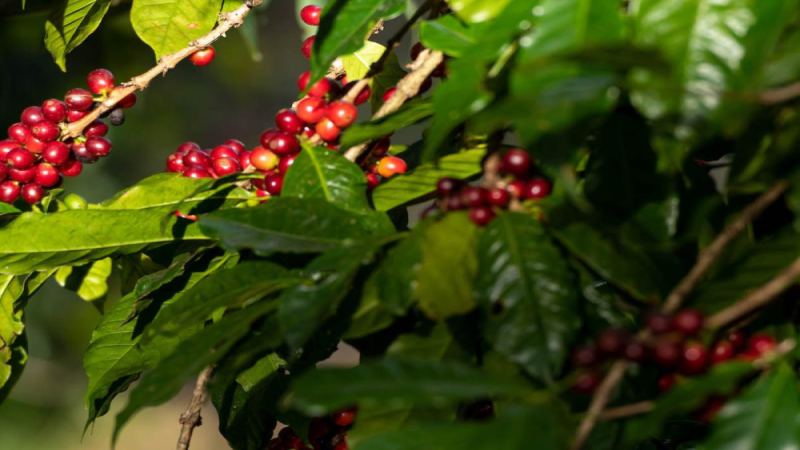
How Did Panama Geisha Coffee Beans Become So Sought After?
Geisha coffee won the Panama BOP competition in 2004, displacing Blue Mountain as the leading specialty coffee. The variety had been little noticed since its discovery in Ethiopia's Geisha forest in 1931. This article traces its spread to Panama's Hacienda La Esmeralda and explains the estate's red, green, and blue label grading system and plot divisions.
The timeline runs from Geisha seeds sent to Kenya in 1931, to Uganda and Tanzania in 1936, to Costa Rica in 1953, and to Panama in the 1960s with Mr. Don Pachi, who brought the trees to add genetic diversity and disease resistance. In 1998, Daniel Peterson noticed the sparse, fragile trees at Hacienda La Esmeralda, and the rest followed.
Since Geisha coffee won the Panama BOP competition in 2004, it has replaced Blue Mountain as the leader in the specialty coffee world. But this variety went through a long period of obscurity from its discovery in 1931 to becoming globally famous. This article will trace Geisha's spread from the forests of Ethiopia to Panama's Hacienda La Esmeralda, explain the estate's red, green, and blue label grading system and plot divisions, and share Front Street Coffee's roasting and brewing recommendations for Geisha. Whether you are a beginner just encountering Geisha or an enthusiast wanting to understand its flavor system in depth, you will gain a complete picture and practical reference.
In 2004, Geisha stunned the world at the Panama BOP competition, dethroning the long-dominant Blue Mountain coffee and earning the title of the best coffee of the 21st century. So when exactly did the Geisha variety come into existence? And why was it unknown to the world until 2004? With these questions in mind, Front Street Coffee (FrontStreet Coffee) will today discuss the origins and rise of Geisha coffee.
After reviewing a large number of documents, Front Street has pieced together the following timeline: in 1931, Geisha seeds were discovered in the Geisha forest of Ethiopia and subsequently sent to a leading coffee research institution in Kenya; in 1936, Geisha was introduced to Uganda and Tanzania; in 1953, Costa Rica also began introducing this variety; by the 1970s, Mr. Cerasuolo obtained seeds from CATIE in Costa Rica and began growing Geisha. Due to extremely low yields and the need to participate in auctions, these beans are truly precious.
In 1931, Geisha was quietly exported from the Geisha Mountain in southwestern Ethiopia to Kenya, and then spread to Tanzania and Costa Rica. In the 1960s, Mr. Don Pachi brought Geisha from Costa Rica to Panama. The original purpose of introducing Geisha saplings was merely to enhance the genetic diversity and disease resistance of Panamanian coffee. Don Pachi distributed the saplings to estate owners in various regions to grow together, but because Geisha plants are delicate, they did not attract much attention.
It was not until 1998 that Daniel Peterson, who returned after graduating from university to help his father manage the farm at Hacienda La Esmeralda, noticed that these sparse, seemingly fragile coffee trees were quite unique and tried transplanting them to higher-altitude areas. When formal production began in 2004, Geisha's flavor amazed everyone. On the advice of numerous coffee experts, Hacienda La Esmeralda entered Geisha in the BOP competition, where it defeated Bourbon, Caturra, Catuai, Typica, and other perennial winners to take the crown that year.
It is said that afterward, the Panama National Treasure Bean competition deliberately separated Geisha from non-Geisha into two groups, to prevent Geisha from stealing the spotlight from other varieties again.
Hacienda La Esmeralda
When mentioning Panama Geisha, one cannot fail to mention the renowned Hacienda La Esmeralda. Regulars at Front Street Coffee (FrontStreet Coffee) know that the Panama origins on Front Street's bean list are almost all Geisha, and the top three Geishas all come from Hacienda La Esmeralda. Below, Front Street will tell you the story of Hacienda La Esmeralda.
In 1964, American banker Rudolph Peterson retired and moved to Panama, buying Hacienda La Esmeralda in Boquete, initially focusing on dairy farming. Later, his son Price resigned from his medical practice to help his father manage the farm, introducing Caturra and Catuai varieties in 1987 and building a wet processing plant in 1994, from then on having its own coffee processing facilities.
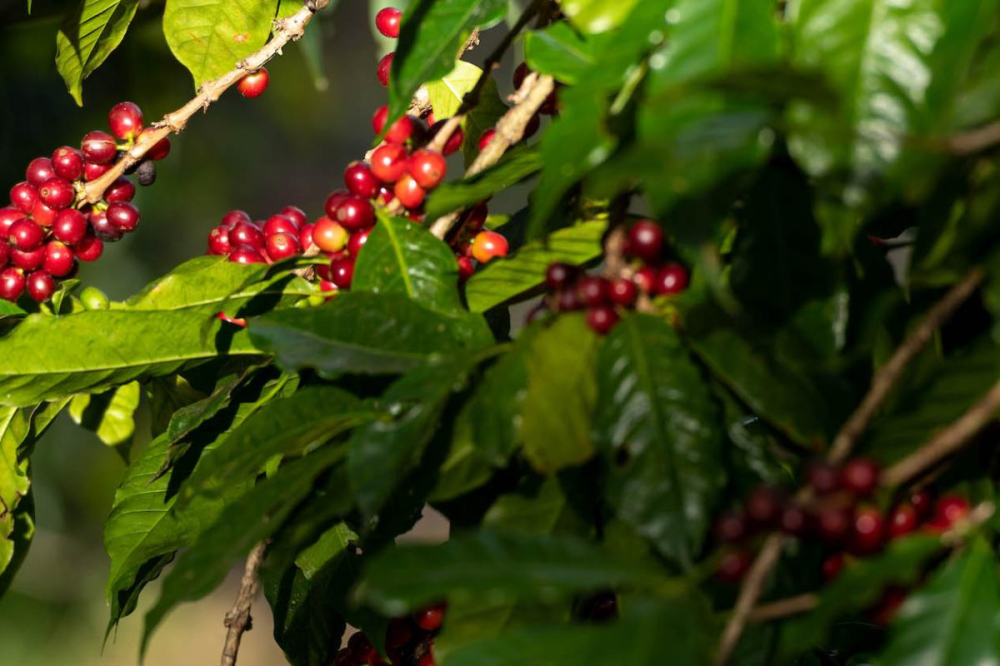
Currently, Hacienda La Esmeralda mainly has three estates growing Geisha: El Velo, Cañas Verdes, and Jaramillo. In 1996, Hacienda La Esmeralda bought the nearby Jaramillo, which had superior geographical conditions and existing coffee varieties with outstanding flavor. El Velo was acquired by Hacienda La Esmeralda in 2012 as an experimental base for growing various coffee varieties, and it has also produced red-label Geisha.
Jaramillo is precisely the estate where the Panama Geisha variety was planted. Due to its scarce yield, it initially did not receive the owner's attention, and only after acquisition was its extraordinary flavor discovered. Front Street Coffee (FrontStreet Coffee) believes this is exactly what makes Geisha fascinating—the harsher the growing environment, the better the flavor performance.
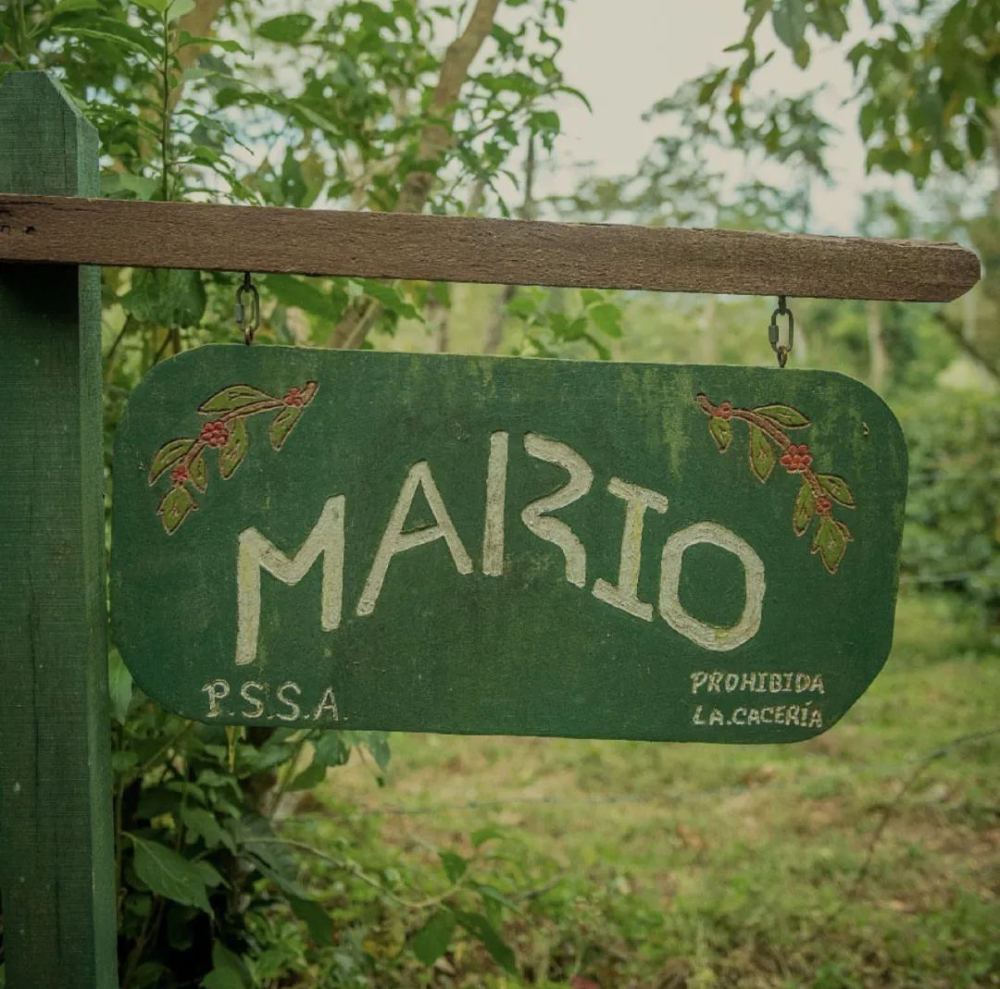
Cañas Verdes estate is currently the main producer of Hacienda La Esmeralda's Geisha, with many auction-level Geishas originating here. The famous Mario plot is also located within this estate, and the Esmeralda red label that Front Street purchased comes from the Mario plot.
According to information Front Street has learned, in 2022 Hacienda La Esmeralda acquired another new estate, which has not yet been officially named. According to current owner Rachel's statement, this place is temporarily called "Spring" estate. This estate is at a higher altitude, and Front Street speculates that Hacienda La Esmeralda intends to grow higher-quality Geisha there.
Although Hacienda La Esmeralda discovered the outstanding-flavored coffee beans from the start, for precise management it cupped different areas within the estate and determined planting plots based on altitude. After winning the 2004 Panama green bean competition BOP, it went from strength to strength, and only after expert identification was it confirmed that these coffee beans belonged to the Ethiopian Geisha variety. Thereafter, the Peterson family invested most of its energy into infrastructure construction to support excellent batch separation and fine processing.
Plot divisions of Hacienda La Esmeralda's Geisha variety
High-quality Panama Geisha coffee beans mainly come from two plots, Jaramillo and Cañas Verdes. Front Street Coffee's (FrontStreet Coffee) Hacienda La Esmeralda red label comes from the Cañas Verdes plot.
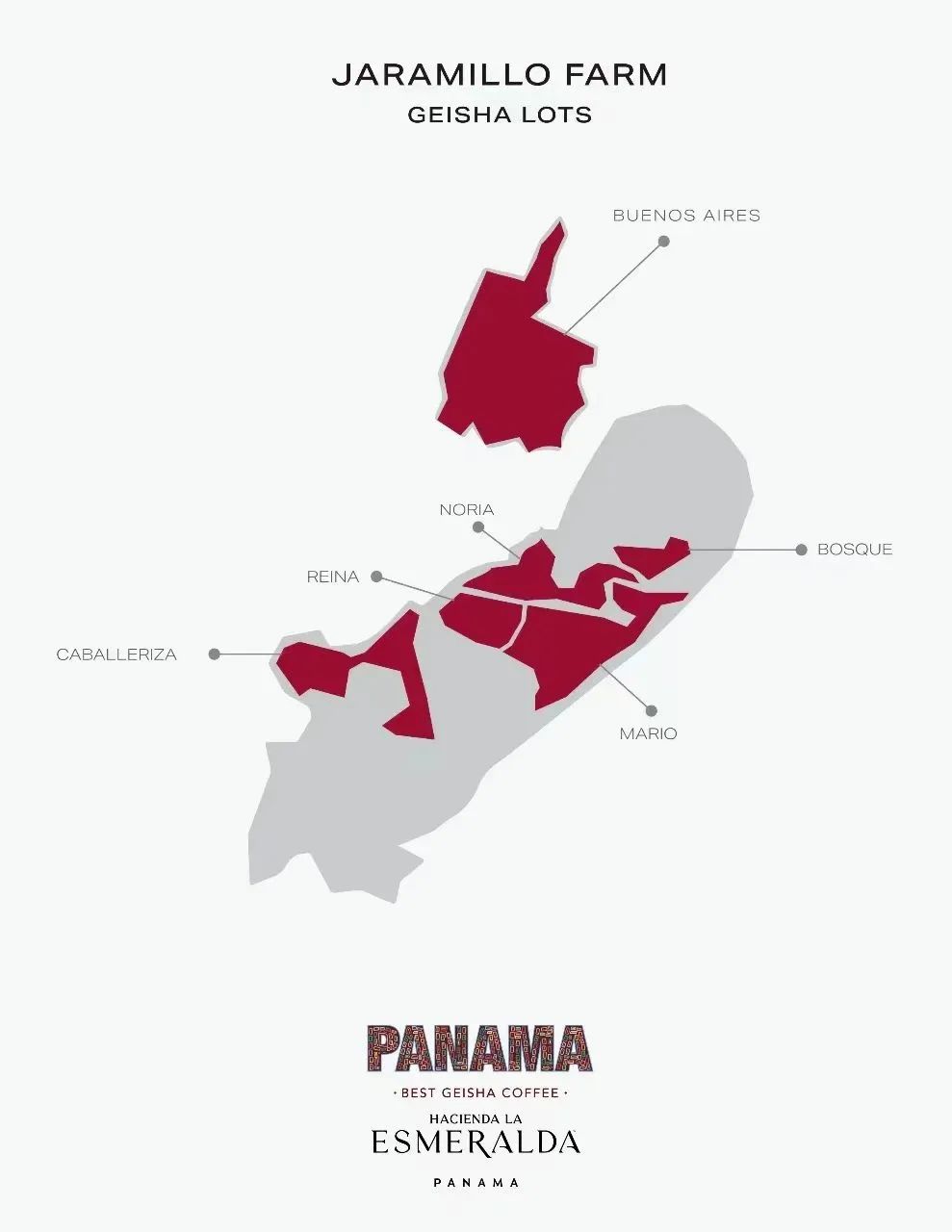
Jaramillo has an annual rainfall of 4000 ml, average daytime temperature of 19-25°C, average nighttime temperature of 11-15°C, and average altitude of 1600-1700 m. The Jaramillo plot is subdivided into 5 small plots: Mario, Noria, Reina, Bosque, and Buenos Aires.
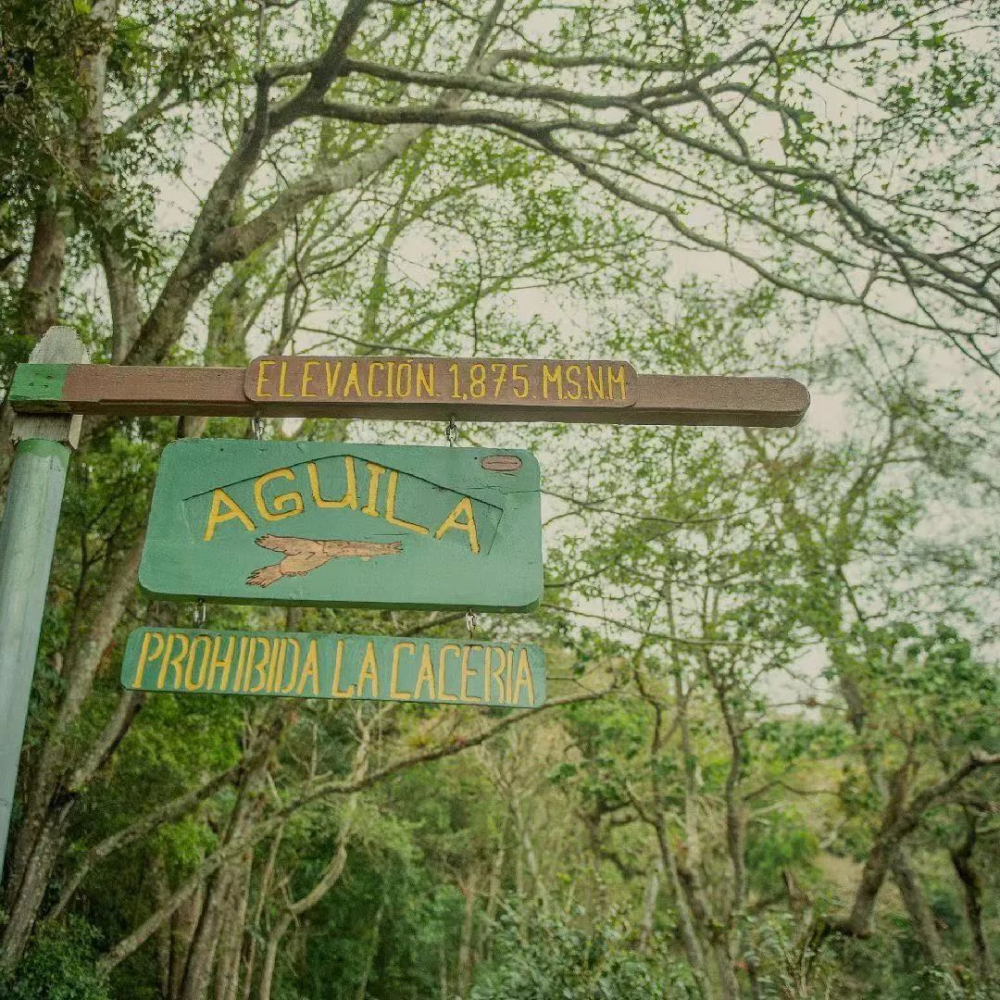
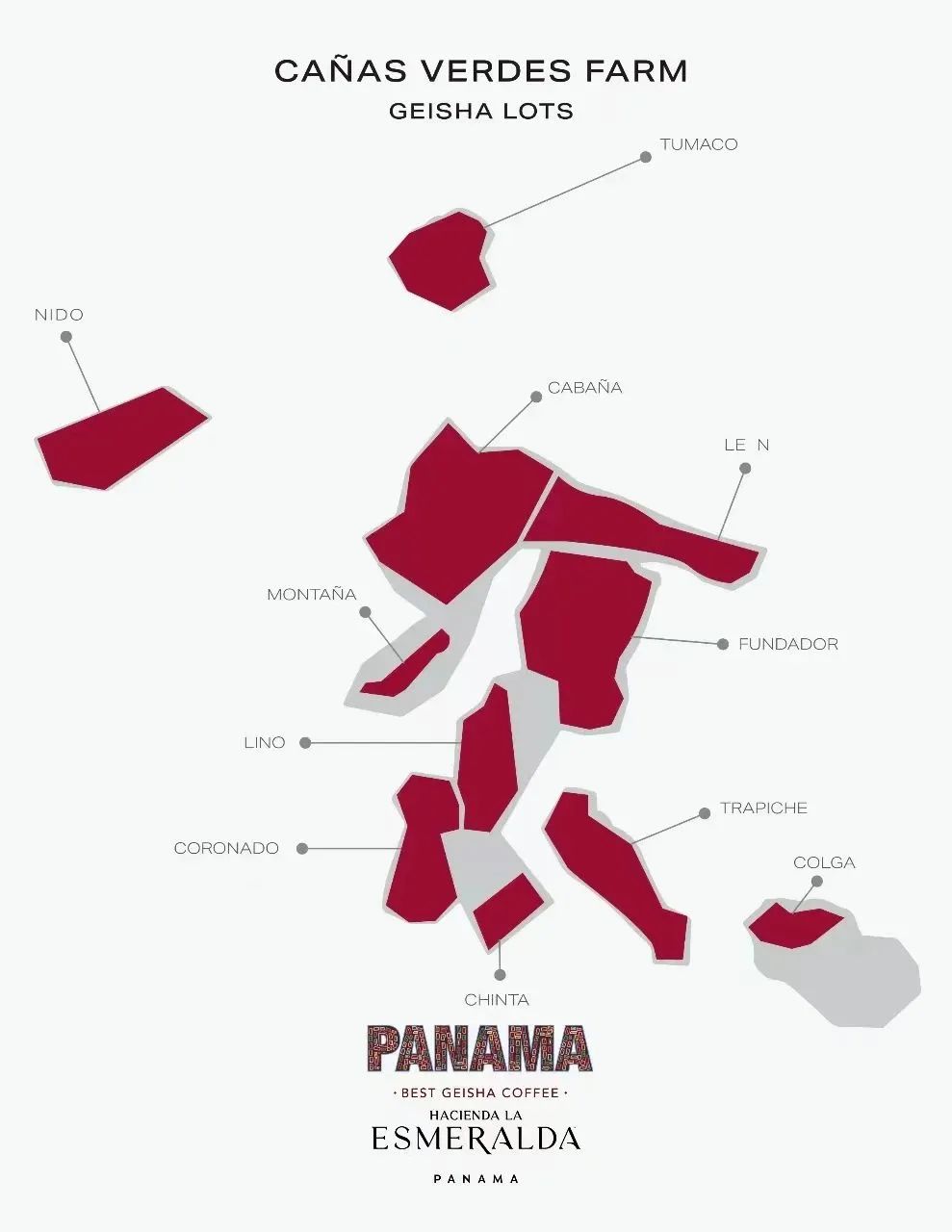
Cañas Verdes has an annual rainfall of 3500 ml, average daytime temperature of 16-23°C, average nighttime temperature of 10-15°C, and average altitude of 1600-1800 m. Cañas includes a total of 9 small plots: Lino, Coronado, Fundador, León, Montaña, Trapiche, Chinta, Cabaña, and Tumaco.
El Velo is the most recently acquired plot by Hacienda La Esmeralda, with an average altitude of 1700-1900 m. In addition to growing Geisha and Catuai, this plot also has a small number of other exotic varieties, such as Laurina, Pacamara, Mocha, and SL28. El Velo is divided into 7 small plots: Guabo, Portón, Durazno, Mural, Higo, Buena Vista, and Guila.
Geisha auction, red label, green label, blue label
Hacienda La Esmeralda's marketing strategy differs from other estates. Based on cupping performance as well as planted variety and plot, it is divided into five major brands. Under the Geisha variety there are three brands: Esmeralda Special, Private Collection, and Geisha1500. Under the Catuai variety there are two brands: Diamond Mountain grows and Palmyra. Currently, in addition to Hacienda La Esmeralda's blue, green, and red label Geishas, Front Street Coffee (FrontStreet Coffee) also has Diamond Mountain from the Jaramillo and Cañas Verdes blocks, whose hazelnut-cocoa flavor and slightly citrusy acidity are also deeply loved by Front Street Coffee (FrontStreet Coffee).
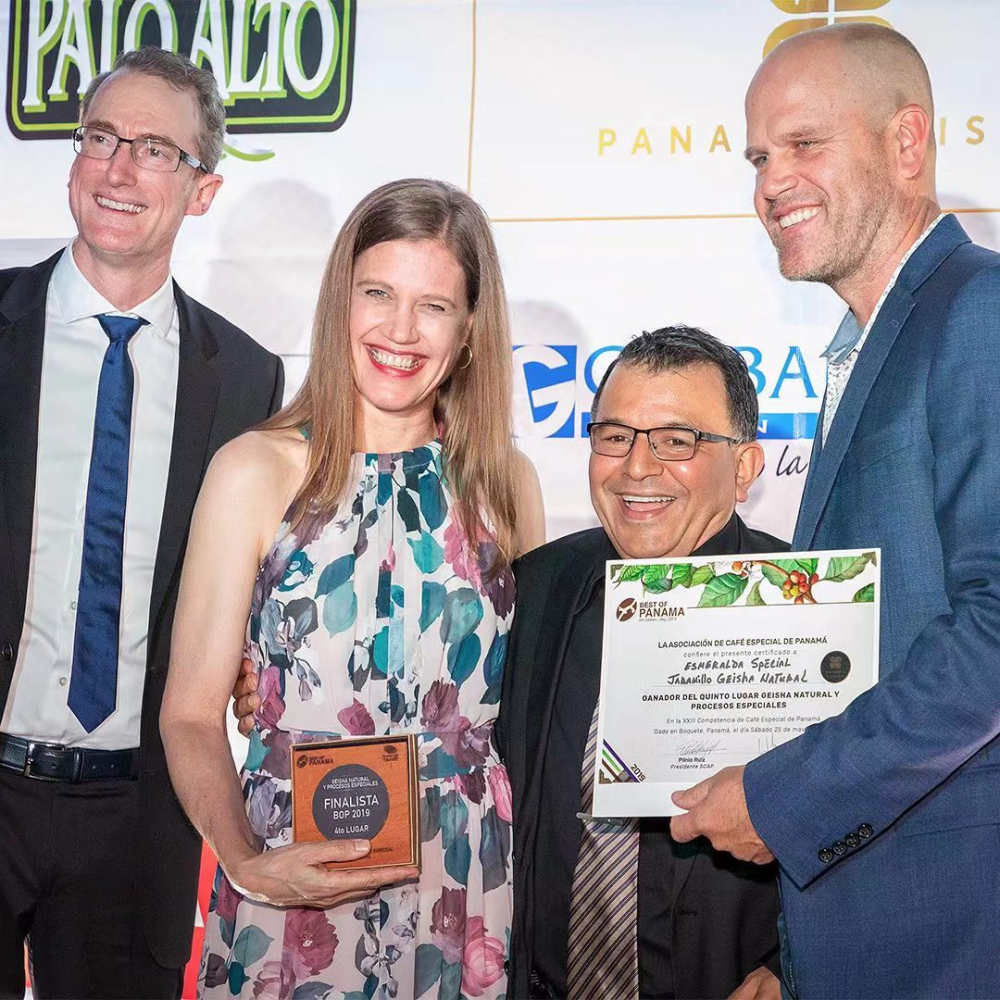
Esmeralda Auction
Esmeralda Auction is a brand that Hacienda La Esmeralda separated from the red label in 2022; this batch can only be obtained through auction. As early as 2021, when Front Street spoke with owner Rachel, we learned that at that time the Esmeralda Special red label included both auction and non-auction batches, making management rather chaotic, and she indicated that auction batches would be separated out in the future. Sure enough, in 2022 Esmeralda Auction was officially launched, and on August 17, 2022 (Beijing time), batch ES-W-3-1 sold for 2,755 USD/kg, setting a record high for Hacienda La Esmeralda.
Esmeralda Special
The Geisha produced under Esmeralda Special is what we commonly call the red label. It selects Geisha coffee beans grown at an altitude of 1600-1800 meters with a cupping score above 90, from the two production areas of Jaramillo and Cañas Verdes.
In the independent auction held by Hacienda La Esmeralda itself, only the Geisha batches put up for auction from the divided plots are auction red labels. However, there are also non-auction red labels on the market, which are actually Geishas selected from the same plots that did not participate in the auction and were released to the market; the variety quality is consistent, with only a difference in selling price. This grade of Geisha uses natural or washed processing, and the flavor carries a distinctive and bright floral fragrance and citrus aroma.
Private Collection
Private Collection, commonly known as green label, is not an independent competition batch, but rather Geisha varieties that do not participate in auctions yet still have excellent quality. It selects micro-lot blended beans grown at an altitude of 1600-1800 meters from different plots such as Jaramillo and Cañas Verdes.
Because it uses a blended-bean model without detailed plot labeling, the green label sometimes has a very high flavor similarity to the red label, but the next release may differ again. Front Street believes that although the green label is not as high-grade as the red label, it still carries Geisha's classic flavors—floral fragrance, fruity notes, citrus acidity, and a thick, juicy mouthfeel. It is worth noting that in recent years green label Geisha has only been offered in washed processing.
As is well known, the higher the altitude, the richer the changes in coffee aroma. Geisha has another peculiarity: the more extreme the growing environment, the better the flavor performance. Anyone who knows the history of this variety knows that Geisha was discovered back then in a windbreak forest precisely because of its unusual flavor.
This characteristic is also reflected in Front Street Coffee's (FrontStreet Coffee) selection cupping. Front Street uses different grind settings for different beans to ensure that all samples tested have a 70% pass rate on the standard sieve. For green label and red label to achieve this pass rate, the grinder must be adjusted to a finer setting than for other lower-altitude beans, and the same applies to some other high-altitude beans.
Geisha1500
Blue label Geisha selects blended beans grown at an altitude of 1400-1500 meters from three different plots: Jaramillo, Cañas Verdes, and El Velo. The flavor has faint floral notes, fruity acidity, and sweetness, with a less thick mouthfeel; blue label Geisha is only available in washed processing. Among these Esmeralda tiers, red label and green label are beans of the same altitude, the difference being that the red label specifies plots while the green label is a mixed harvest; the price gap is large, so Front Street Coffee (FrontStreet Coffee) believes the green label offers better value for money.
However, in the 2021 harvest season, Hacienda La Esmeralda discontinued the blue label series, and the coffee produced in the areas that originally produced blue label Geisha was sold to a certain brand, which launched "Las Rocas," i.e., volcanic rock Geisha coffee beans. In the end consumer market, the original blue label simply changed brands, and the flavor remains the same.
Front Street Coffee (FrontStreet Coffee) roasting recommendations
When Front Street Coffee (FrontStreet Coffee) roasts these three different grades of Panama Geisha coffee beans, the main approach is to highlight Geisha's rich floral fragrance and bright, varied fruity acidity, using a light roast profile. However, Front Street takes into account the different growing environments of each grade and makes corresponding adjustments in roasting details.
Red label Geisha
Charge at 150°C, heat 120, damper set to 3; turning point at 1'36", when temperature reaches 140°C open the damper to 4 with heat unchanged; at 147.6°C the bean surface turns yellow and the grassy smell completely disappears, entering the dehydration stage; when the temperature reaches 150°C adjust heat to 100 with the damper unchanged;
At 7'38", ugly wrinkles and dark streaks appear on the bean surface, and the toasty bread smell clearly turns into coffee aroma, which can be defined as the prelude to first crack; at this point listen carefully for the first crack sound. At 8'10" first crack begins, open the damper to 4, develop for 1'28" after first crack, and drop at 189.5°C.
Green label Geisha
Charge at 160°C, heat 110, damper set to 3; turning point at 1'28", when temperature reaches 140°C open the damper to 3.5 with heat unchanged; at 153.3°C the bean surface turns yellow and the grassy smell completely disappears, entering the dehydration stage; when the temperature reaches 161°C adjust heat to 90 with the damper unchanged;
At 6'54", ugly wrinkles and dark streaks appear on the bean surface, and the toasty bread smell clearly turns into coffee aroma, which can be defined as the prelude to first crack; at this point listen carefully for the first crack sound. At 7'50" first crack begins, open the damper to 4, develop for 1'20" after first crack, and drop at 192.5°C.
Volcanic rock new blue label Geisha
Charge temperature 180°C, yellowing point 5'20" at 151.6°C, first crack point 8'30" at 181.8°C, develop 1'28'' after first crack, discharge at 190°C.
Front Street Coffee (FrontStreet Coffee) brewing recommendations
Front Street Coffee (FrontStreet Coffee) recommends the following brewing parameters: Hario V60 dripper, 90°C water temperature, 15 grams of coffee, 1:15 coffee-to-water ratio, medium-fine grind (80% pass rate on China standard No. 20 sieve).
Front Street takes into account that these Geisha coffee beans are all light roasts, and light-roasted beans have a lower extraction rate of coffee substances than dark roasts. Therefore, to ensure full extraction of Geisha's flavor, a higher water temperature is used for brewing, along with a finer grind setting.
Front Street recommends using freshly roasted coffee beans for brewing, so as to experience the coffee's rich flavors to the greatest extent. The coffee beans shipped by Front Street Coffee (FrontStreet Coffee) are all within 5 days of roasting, because Front Street deeply understands the great impact of coffee bean freshness on flavor. Front Street's roasting philosophy is "freshly roasted good coffee," so that every customer who places an order receives the coffee in its freshest state. Coffee's resting period is about 4-7 days, so when customers receive it, it is exactly at its best flavor.
Brewing technique
Front Street Coffee (FrontStreet Coffee) uses staged extraction, also called three-stage brewing: use 30 grams of water for a 30-second bloom, then pour in a slow circular stream until reaching 125 grams for the stage break; when the water level is about to expose the coffee bed, continue pouring until 225 grams and stop; when the water level is about to expose the coffee bed again, remove the dripper. (Timing starts from the beginning of the bloom.) The extraction time is 2'00".
Geisha coffee flavor descriptions
Red label: bright rose and citrus aromas, brown rice, berries, apricot, mixed fruits, honey, with a thick juicy mouthfeel, rich flavor layers, and pronounced sweetness.
Green label: rich jasmine fragrance, high sweetness, citrus, berries, juiciness, cream, green tea, orange peel, cantaloupe; the overall flavor is richly layered, with a persistent finish of floral and citrus notes.
Blue label: floral fragrance, with soft lemon and grapefruit acidity on the entry, honey sweetness in the middle, and oolong tea and brown sugar sweetness in the finish; the mouthfeel is relatively clean and bright.
Professional coffee knowledge exchange More coffee bean information Please follow Coffee Workshop (WeChat public account cafe_style)
For more specialty coffee beans, please add private WeChat Front Street Coffee (FrontStreet Coffee), WeChat ID: kaixinguoguo0925
The above content is compiled by CoffeeHunters, a coffee news website.


