







Can You Make Americano Without an Espresso Machine?
A French press can produce the concentrated coffee base needed to make americano at home, so an espresso machine is not required. By lowering the coffee-to-water ratio, immersion brewing yields a dense, rich liquid that can be diluted with hot water for black coffee or topped with milk for a latte-style drink.
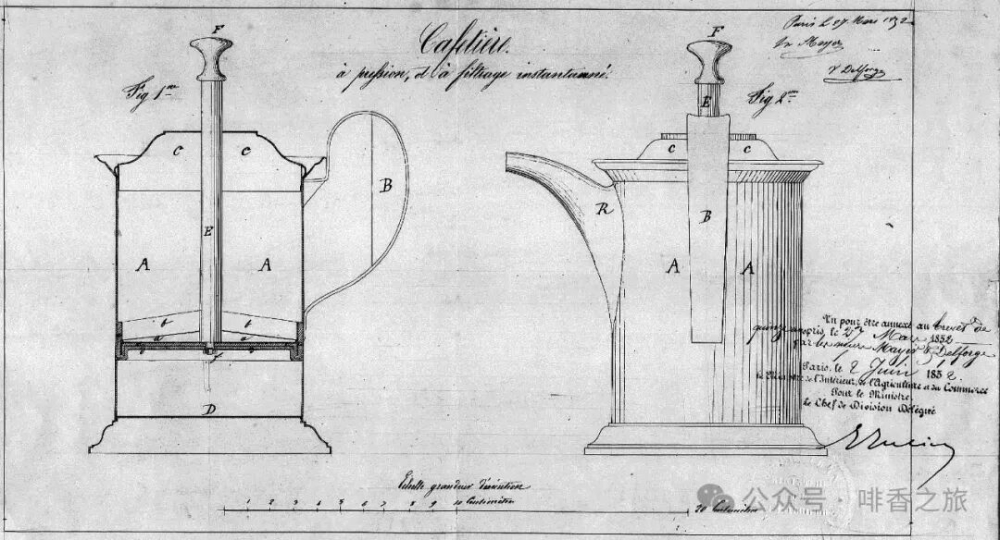
The French press, called cafetière à piston in French, was first patented in 1852 in France by Jacques Victor Delforge and Henri Otto Mayer. Milanese designers Giulio Moneta and Attilio Calimani patented a similar press device in the United States in 1929. Front Street Coffee shares practical brewing parameters and flavor notes for the method.
Want to enjoy a rich Americano or latte at home, but hesitate because of the price of an espresso machine? In fact, you don't necessarily need an expensive machine to get an espresso base—a French press can do the job just as well. This article will walk you through the history of the French press, how it differs from espresso, and a detailed breakdown of how to use a French press to make highly concentrated coffee liquid and Americano-style black coffee. We'll also share Front Street Coffee's practical parameters and flavor experience, so you can easily master the secrets of this device.
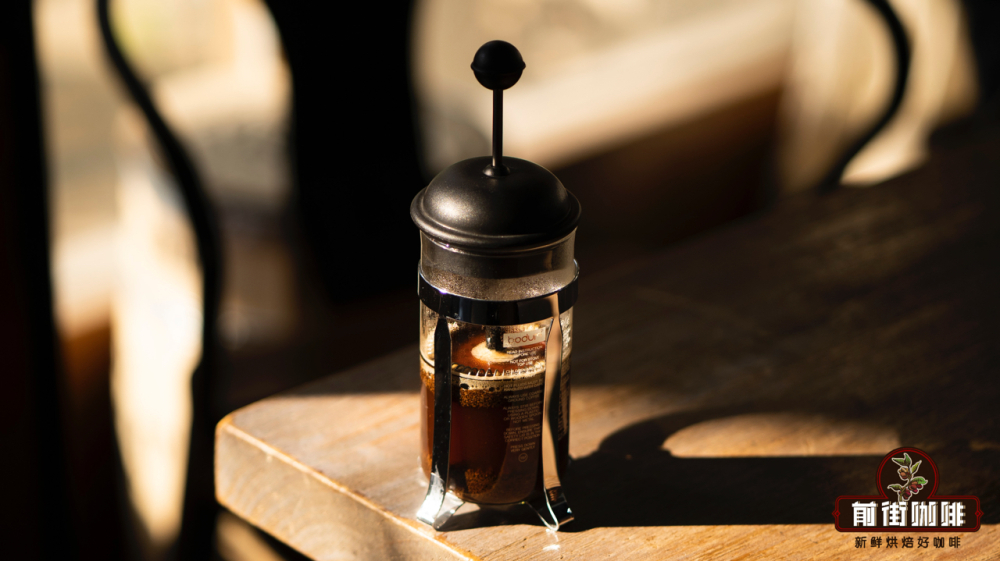
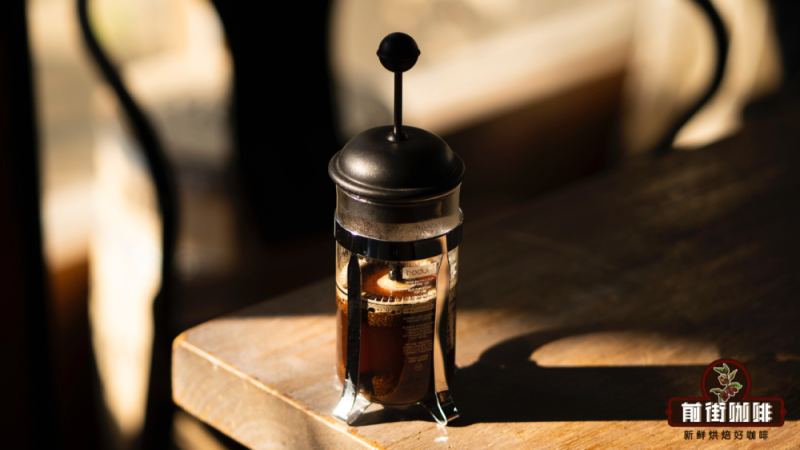
Recently, while chatting with customers, Front Street noticed that quite a few enthusiasts want to buy an espresso machine so they can enjoy an Americano or latte at home, but are put off by the price... The point of buying an espresso machine is just to get a rich coffee base, then add whatever mixers you like according to your preference. But this rich coffee base doesn't necessarily require an espresso machine—a French press can do it too!
The French press, also known as the French press, is called cafetière à piston in French. As it spread over time, it came to be known as the French press in English, which is also the most common way we refer to it today.
The earliest known device was patented in 1852 in France by Jacques Victor Delforge and Henri Otto Mayer. The image below shows their original patent design. Over the years, the French press underwent several design revisions. The first French press was possibly made in France—a metal or coarse cotton cloth screen mounted on a rod that users could press into a pot of hot water and coffee grounds. That does sound quite close to the French press we know today.
Then in 1928, Milanese designers Giulio Moneta and Attilio Calimani invented a coffee device, and in 1929 obtained a US patent for a coffee-making apparatus similar to the modern French press. This was also a press-type device, featuring a spring to seal the filter.
Does making espresso really require an espresso machine?
Without an espresso machine, we can understand espresso as simply very concentrated coffee. So whether it's drip coffee or immersion coffee, you can reduce the coffee-to-water ratio to get a highly concentrated coffee liquid—like today's topic, the French press. Of course, coffee made this way can't be compared to what an espresso machine produces. Whether using a French press or pour-over, the richness and body of highly concentrated coffee still can't match true espresso, and it can't achieve the golden crema on top of espresso.
A little science lesson: What is the crema on top of espresso?
When an espresso machine extracts espresso, the coffee grounds are ground extremely fine and extracted under pressure as high as 9 bars. When hot water passes through the coffee puck, the carbon dioxide in the coffee grounds, due to the immense pressure, causes the water to become supersaturated with CO2. The carbon dioxide can't be released and instead dissolves directly into the coffee liquid. The high pressure also forces the oils contained in the coffee out of the coffee puck, which are then carried out by the hot water.
After extraction is complete, as the coffee liquid flows out of the machine, atmospheric pressure returns to normal. The carbon dioxide still remaining in the coffee liquid is about to return to the air, but it encounters the oils in the coffee liquid. The oils surround the carbon dioxide that's trying to escape into the air. This is how the layer of crema is created.
Espresso made with a French press may not have golden crema, but it preserves the coffee's natural oils.
Unlike drip coffee, without a paper filter to filter it out, the coffee's oils and very fine particles are retained, resulting in a smooth mouthfeel but somewhat lacking in cleanliness.
How to make espresso with a French press?
Normally, when using a French press to make black coffee, a 1:15 coffee-to-water ratio is used to directly extract coffee of suitable strength. Since it needs to steep for 4 minutes, the grind size should be 75% passing a No. 20 sieve (coarse sugar size) to avoid over-extraction. But making espresso with a French press mainly involves using a low coffee-to-water ratio to extract a highly concentrated coffee liquid. So use 20g of coffee at a 1:4 ratio, which yields 75-80g of coffee liquid. The grind also needs to be relatively finer—80% passing a No. 20 sieve (fine sugar size), with a water temperature of 92°C. Since the grind is finer, the steeping time is shortened to 3 minutes.
How to make Americano with a French press?
Coffee made with a French press is black coffee and can't be called Americano; the overall feel is similar to pour-over coffee. This time, Front Street used Ethiopian natural Red Cherry to demonstrate how to make black coffee with a French press. The coffee-to-water ratio is 1:15, grind size is 75% passing a No. 20 sieve (coarse sugar size), water temperature is 94°C, and steeping time is 4 minutes.
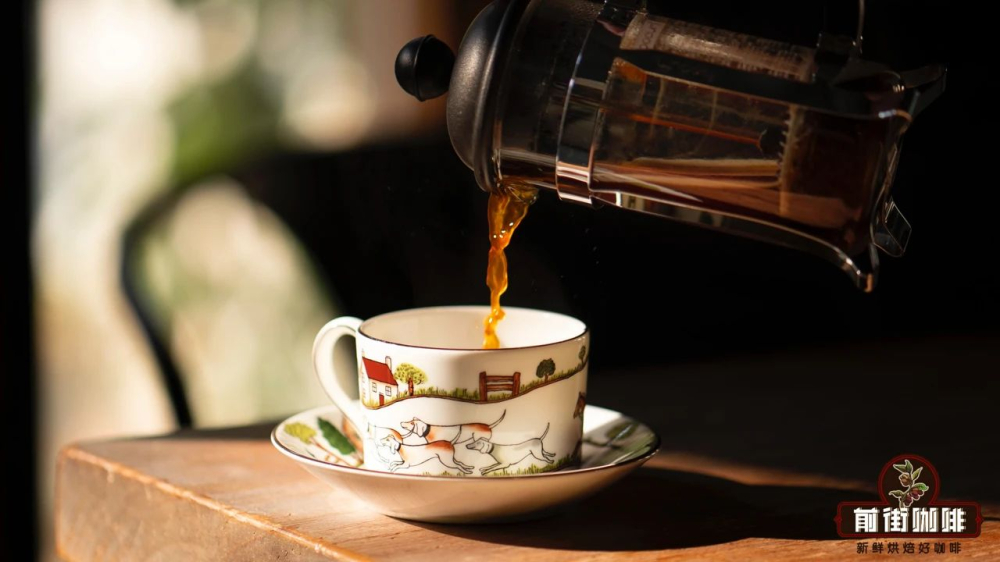
Pour the ground coffee into the press, then add 225ml of hot water, pull up the plunger, cover with the lid, and wait 4 minutes. Then slowly press down the plunger so the metal filter presses to about 1/4 of the way down the carafe, to prevent the fine particles at the bottom from surging upward. After extraction is complete, pour out all the coffee liquid before tasting, to avoid the coffee grounds continuing to extract and causing bitterness. Flavor profile: A full, berry-juice-like mouthfeel with pronounced sweetness and a black tea-like finish. Overall rich and solid, but lacking in cleanliness.
The above content is compiled by CoffeeHunters, a coffee news website.


