







What Sets Guatemala's Coffee Producing Regions Apart?
Guatemala packs more than 300 microclimates into a small country, ranging from tropical rainforests to volcanic highlands, and its coffee producing regions sit mostly above 1,500 meters. This favors strictly hard beans. The article examines Geisha lots from the Acatenango cooperative and La Bella estate, covering terroir, processing, cup profile, and a full pour-over recipe.
Guatemala borders Mexico to the north and Honduras and El Salvador to the south, with a wet season from May to October and a dry season from November to April. Northeast rainfall reaches 2,000 to 3,000 millimeters, while the south gets about 500 to 1,000 millimeters. Forests cover nearly half the land, placing the country in the coffee-growing latitude band.
Although Guatemala is not a large country, it boasts an astonishing diversity of microclimates, from tropical rainforests to volcanic highlands, nurturing distinctive specialty coffees. This article focuses on Geisha lots from two Guatemalan estates—the Acatenango cooperative and La Bella estate—breaking down everything from terroir and processing methods to cup profile, complete with Front Street Coffee's full pour-over recipe. If your curiosity about Geisha extends beyond Panama, this article will guide you through the unique floral and sweet-tart layers of Guatemalan Geisha.
The coffee-producing countries of the Americas each have their own character: Colombia and Brazil are known for their volume, Panama has made its name with Geisha, and Costa Rica stands out for its honey processing. In this diverse landscape of American coffee, Front Street Coffee also holds a strong interest in Guatemalan coffee.
Guatemala is located in Central America, bordered by Mexico to the north, Honduras and El Salvador to the south, the Caribbean Sea to the east, and the Pacific Ocean to the west. Its land area is only about three times that of Taiwan, yet it encompasses diverse terrain including tropical rainforests, highlands, and volcanoes, with more than 300 types of microclimates—so many that it even attracts climate researchers from around the world.
Guatemala's Coffee Regions
Guatemala lies in the tropics, with volcanoes found throughout the country. The northern and eastern coastal plains have a tropical rainforest climate, while the southern highlands have a subtropical climate. The year is divided into dry and wet seasons, with the wet season lasting from May to October and the dry season from November to April of the following year. Annual rainfall in the northeast ranges from 2,000 to 3,000 millimeters, while the south receives about 500 to 1,000 millimeters. Forests cover nearly half of the country's land, placing it right in the golden latitude band for coffee cultivation. Coffee is a critically important cash crop locally, and a deep coffee culture has developed around it—people drink it daily, and most cannot go without a cup of coffee at lunch.
Guatemala's overall elevation is relatively high, with coffee-growing zones mostly distributed above 1,500 meters, which favors the production of strictly hard beans. Specialty coffee accounts for a considerable proportion, and Robusta varieties are also grown. The country is divided into eight major regions: Antigua, Acatenango, Atitlán, San Marcos, Cobán, Fraijanes, Huehuetenango, and Nuevo Oriente.
Guatemala's Processing Methods
Most coffee-producing countries in the Americas use washed processing as the mainstream method—Colombia and Costa Rica are both examples—and Guatemala is no exception. What is the washed processing procedure like?
After the coffee cherries are harvested, they must be sent to the washing station as soon as possible. First, the cherries are poured into water for flotation, the purpose being to screen out beans with insufficient density. Cherries with a shorter growing cycle have lower density and will float to the surface during flotation; cherries with adequate density sink to the bottom and flow with the water into the next stage.
The skin and pulp are then removed by machine, and the coffee beans—still retaining their mucilage—are sent to fermentation tanks, where fermentation breaks down the mucilage layer. After fermentation is complete, the beans are rinsed with clean water to thoroughly wash away the broken-down mucilage and any remaining pulp.
Guatemala's Coffee Varieties
Front Street Coffee selected a small quantity of Guatemalan Geisha varieties for cupping this time, to explore their flavor expression.
Acatenango Geisha
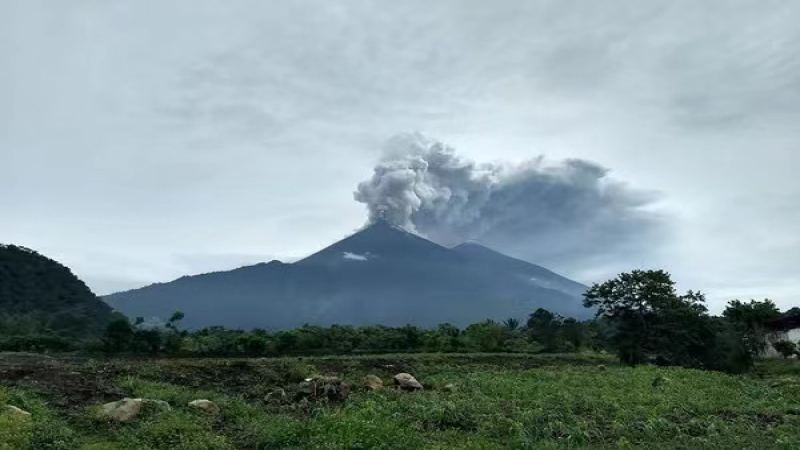
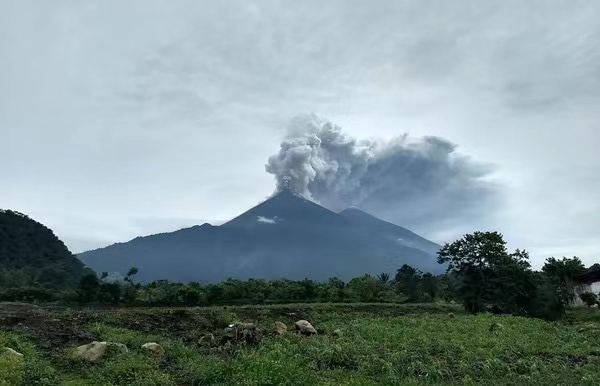
The Acatenango cooperative, which the Acatenango region refers to, is located in the Acatenango area of the Chimaltenango department in Guatemala, within a valley extending from the Acatenango volcano. The cooperative takes its name from its proximity to this volcano.
The Acatenango volcano is the third-largest volcano in Central America. Its volcanic geology brings fertile soil, creating a natural advantage for coffee cultivation. Although Acatenango is the eighth and most recently established coffee region in Guatemala, coffee has been cultivated here for over a century, with four generations continuing to work the land. The Acatenango cooperative is also one of the earliest cooperatives in the area.
In terms of geographical conditions, warm, moist Pacific air currents protect the area from frost, and rainfall is abundant and stable. The dense forests within the valley both maintain suitable humidity and shield the coffee trees from strong sunlight. The planting elevation is about 1,200 meters, offering the large diurnal temperature variation characteristic of high-altitude areas, and together with the fertile volcanic ash soil, these factors combine to create an excellent natural environment.
The coffee beans purchased by the Acatenango cooperative mainly come from members' own farms. According to available information, each member produces an average of 30 bags of green beans per harvest season (69 kg per bag). The cooperative currently has 293 members (221 men and 72 women), with an annual supply of about 9,000 bags, equivalent to more than 30 containers.
Opening the packaging to observe the bean shape, the beans are not particularly uniform overall, but the aroma they give off is very pleasant. Though not as intense as Panamanian Geisha, it is still noteworthy and enough to stir anticipation on the palate—the distinctive scent and aromatic quality of Geisha beans are extraordinary in their own right.
Once this Geisha is brewed, the coffee liquid as a whole radiates abundant floral aromas. On closer inspection, one can catch a jasmine-like note. On the palate, the acidity is bright and direct, crisp and pleasant, with a honey-like sweetness in the finish, interwoven with fruity flavors. The aroma of this bean is like perfume, and its clean acidity is invariably accompanied by a bouquet of fresh flowers—this is precisely the magic of Geisha coffee.
La Bella Estate Geisha
La Bella estate is located in the Las Minas mountain range in eastern Guatemala. The estate has a natural mountain spring, and this exceptional water source ensures worry-free irrigation year-round, as well as facilitating the washed processing method for the coffee beans, thereby achieving superior quality. In addition, La Bella estate places great emphasis on environmental protection, with on-site solar drying facilities, natural composting methods to improve soil fertility, and water recycling, allowing increasingly precious water resources to be reused.
In the past, Guatemala customarily processed different varieties together, but in recent years, as production has stabilized, single-variety coffees have shown remarkable performance, and this lot was born against that backdrop.
In 2021, this lot of Guatemalan La Bella estate natural Geisha coffee beans won 12th place in the COE (Cup of Excellence) green bean competition!
Front Street Brewing Suggestions
Dripper: Hario V60 Water temperature: 90-91°C Dose: 15 grams Coffee-to-water ratio: 1:16 Grind size: 80% passing through a Chinese standard No. 20 sieve
First bloom with 30 grams of water for 30 seconds, then pour in a slow circular stream; when the water reaches 125 grams, pause for a split pour, and when the water level drops and is about to expose the coffee bed, continue pouring until 225 grams, then stop. Wait for all the poured water to pass through the coffee bed to end extraction (timing starts at the beginning of the bloom). Total extraction time is 2 minutes 00 seconds to 2 minutes 15 seconds. Through pour-over extraction, this Geisha presents flavors of pineapple, pine, vanilla, cream, and nuts.
For professional coffee knowledge exchange and more coffee bean information, please follow Coffee Workshop (WeChat public account: cafe_style)
For more specialty coffee beans, please add the private WeChat of Front Street Coffee: qjcoffeex
The above content is compiled by CoffeeHunters, a coffee news website.


