







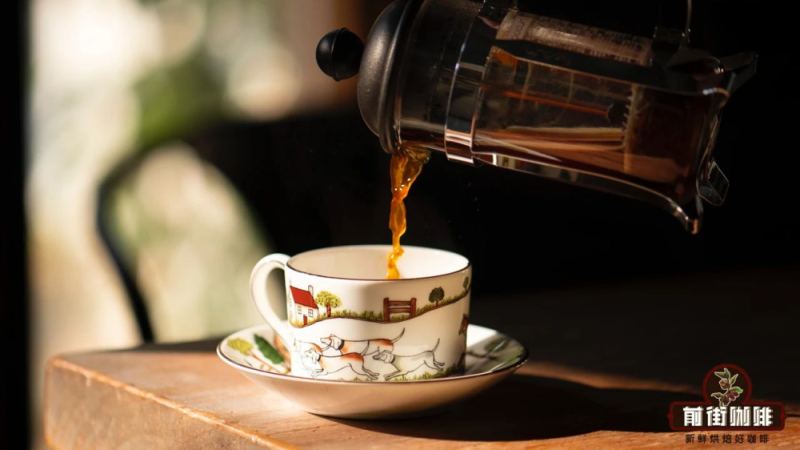
How to make coffee with a coffee maker for iced French press
To make iced coffee in a French press, use a medium-light roasted, deeply fermented bean, a set coffee-to-water ratio, and a fixed steeping time, then press and pour over ice. The immersion method keeps the full body and fruit notes intact without any complex technique, which is why the press remains a common home brewer.
The history of coffee maker design starts with the French press, which appeared in France in 1850 as a glass body with a metal mesh and plunger. A piston-filter patent followed in March 1852, and a Milan company registered a modified version in the late 1920s, introducing the disc structure in 1935 that made the device widely familiar.
The French press, with its simple operation and complete flavor retention, has become a staple appliance in many coffee lovers' homes. It requires no complex techniques; steeping alone brings out coffee's rich, full-bodied feel. From Front Street's perspective, this article traces the French press's origins and structural advantages, and focuses on sharing a summer-friendly iced coffee recipe—using medium-light roasted, deeply fermented beans, paired with a specific coffee-to-water ratio and steeping time, to create a vividly fruity, ice-cold taste. The article also includes detailed step-by-step instructions and parameter suggestions for readers to reference and practice.
For more specialty coffee knowledge, follow: Front Street Coffee (Frontsteet Coffee)
Among the many home coffee brewers, the French press has arguably the lowest barrier to entry, and it's also a brewing method that preserves coffee's original flavors to the greatest extent. Coffee made this way often fully showcases the beans' rich and alluring character. The French press isn't complicated in structure, nor is its appearance particularly eye-catching, but it certainly has many merits. Today Front Street will talk about its strengths and how to use it.
The History of the French Press
The French press first appeared in France in 1850, consisting of a heat-resistant glass body (also available in clear plastic) combined with a metal filter mesh with a plunger rod. Originally it was actually used to brew black tea, so some people also call it a tea maker.
In March 1852, a metalworker from Maligin and a merchant jointly obtained a patent for a "piston-filter coffee device." The patent document described a metal can connected to a movable rod, with holes at the bottom of the rod and a layer of flannel clamped above and below. After manually pulling the movable rod, the rod moved within the cylindrical container. The inventor wrote at the time: "Press the rod all the way down, and the filtered coffee remains above the rod, clean and clear."
However, it wasn't until the late 1920s, after a Milan company registered a patent for a modified version of the French press, that this device gradually became familiar to the public. In the years following the patent registration, the company progressively improved the French press's design. In 1935, they introduced a perfected version—the disc structure at the bottom of the plunger was fitted with a spring, allowing the disc to stay flush with the container's bottom. Although the French press began to gain popularity, its rise in the United States took some effort. In the early 1980s, some Americans followed the British in using the French press; some called it a cafetiere, while others called it a "French piston coffee maker."
If you just want a simple cup of coffee, the French press is a pretty good choice—because it relies on immersion extraction, it doesn't demand much in terms of pouring technique or technical details.
French Press Iced Coffee Brewing Guide
If you want a sweet-and-tart glass of iced coffee on a hot summer day, Front Street recommends choosing medium-light roasted coffee beans processed with deeper fermentation methods, such as natural, honey, or anaerobic processing. This time Front Street used the Front Street Finca La Divisa · Sidra from our bean list; the iced coffee made with it has an explosively fruity character, with grape, passion fruit, and apricot flavors particularly prominent. The extraction parameters are as follows:
Dose: 30g
Coffee-to-water ratio: 1:10
Grind size: 9 on the Ek43, 85% passing a No. 20 sieve, like fine granulated sugar.
Water temperature: 100°C
Steeping time: 9 minutes
Specific steps:
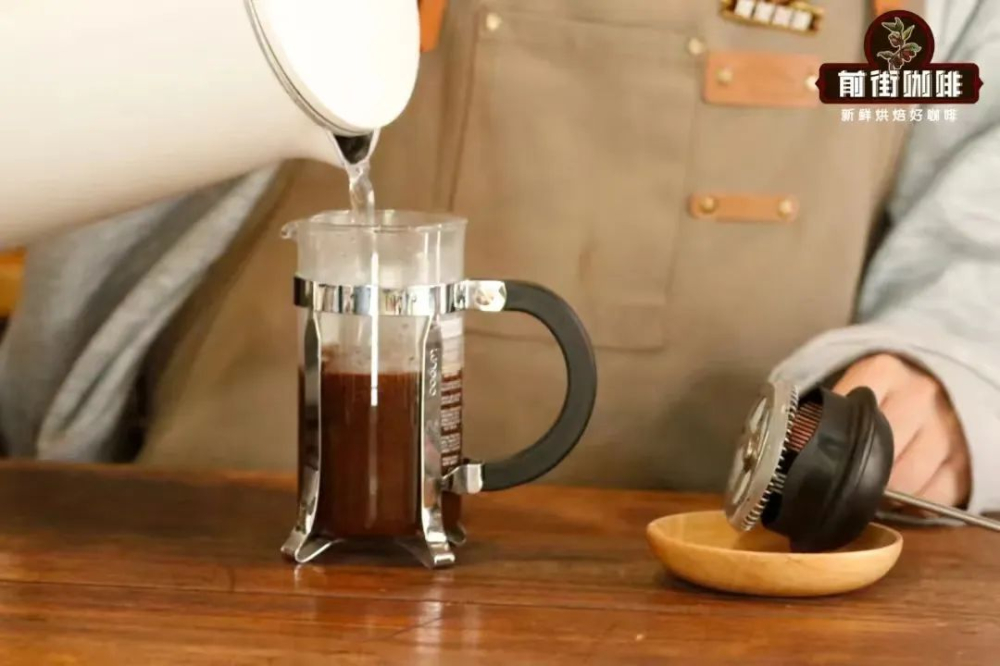
①: First, pour all the coffee grounds and an appropriate amount of hot water into the French press, and stir about 10 circles with any tool. Then start the timer and let it sit for four minutes.
②: After four minutes, use a tool to push the coffee grounds floating on the surface down into the water, then wait again—this time for five minutes.
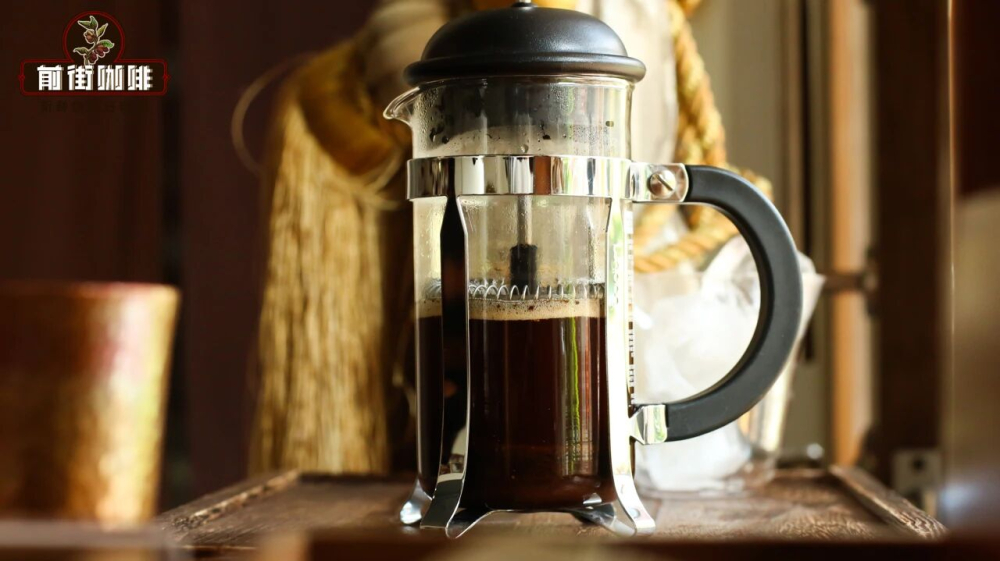
③: After five minutes, put the French press lid on and push the filter mesh down to the surface of the coffee.
④: After completing the above steps, take a cup filled with ice cubes (Front Street used 120g of ice here) and slowly pour the coffee over the ice. This is to reduce the fine grounds poured out and avoid an overly rough mouthfeel.
When the coffee is almost all poured, stir once more with any tool, and you can enjoy a rich, delicious, refreshing, and heat-relieving iced coffee.
To learn more about specialty coffee, follow: Front Street Coffee (Frontsteet Coffee)
The above content is compiled by CoffeeHunters, a coffee news website.


