







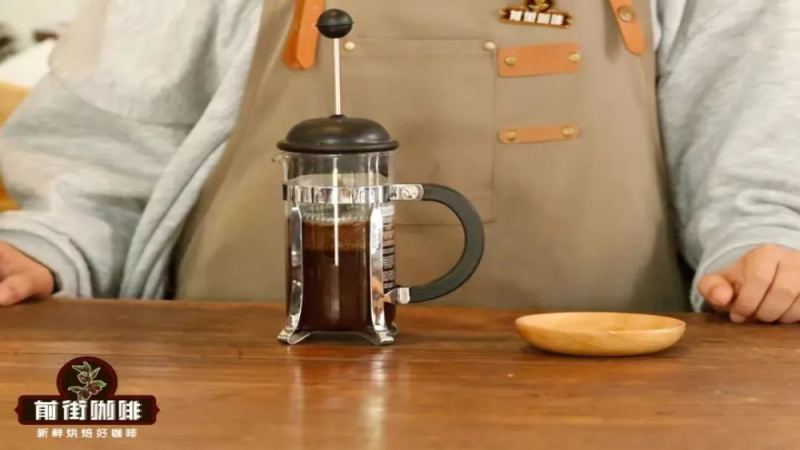
How Does a French Press Bring Out Golden Mandheling?
A French press brews Golden Mandheling into a rounded, sweet black coffee without needing precise pouring skills. The method relies on three controls: the coffee-to-water ratio, the water temperature, and the steeping time. Immersion extraction gives the cup a fuller mouthfeel and clearer sweetness than drip methods, which suits the medium-dark roast profile of this Indonesian single-origin bean.
The device first appeared in France in 1850, starting as a tea vessel with a plunger and filter screen before a piston-filter coffee version was patented in 1852. Because grounds stay in contact with water the whole time, a French press works well with medium-dark beans; adjust grind and steep time to keep extraction in the golden cup range.
To easily enjoy a good cup of coffee at home, a French press is a simple and practical choice. It doesn't require complicated equipment, nor does it demand precise pouring techniques. As long as you master the coffee-to-water ratio, water temperature, and steeping time, you can brew a smooth, sweet black coffee. This article starts with the origin and improvements of the French press, explains why it suits medium-dark roasted beans, and recommends Front Street Coffee's PWN Golden Mandheling. Then it breaks down the brewing process and cleaning tips step by step, so you can get a rich cup that aligns with the golden cup concept in the most effortless way.
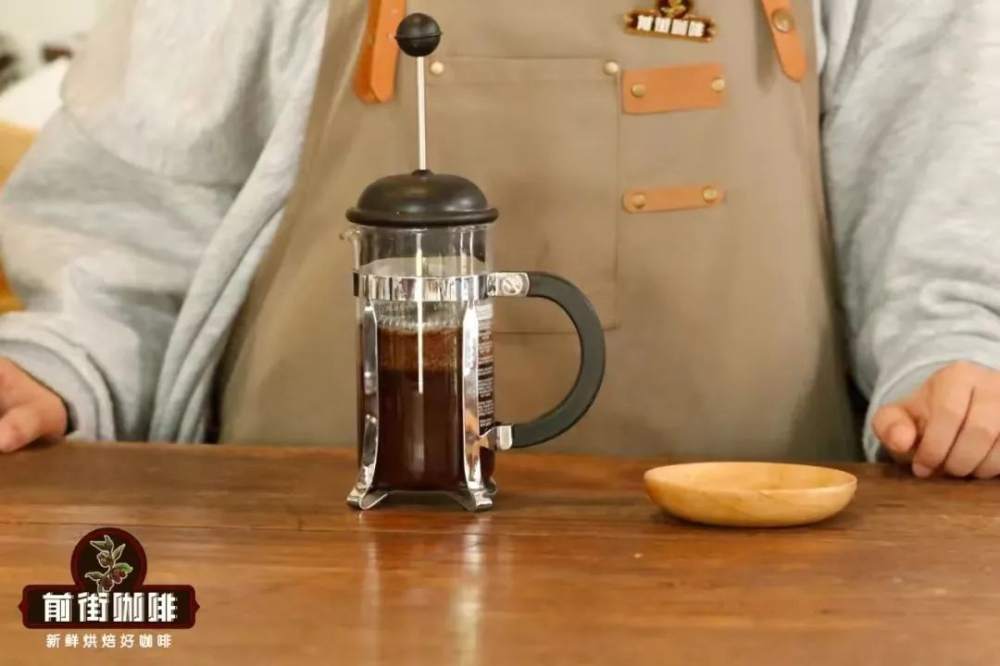
Just bought a bag of freshly roasted beans but haven't decided how to brew them yet? That's when a French press comes in especially handy. It doesn't need a bunch of complicated gear, doesn't rely on any pouring skills, and you don't have to dial in parameters to the decimal—yet it still makes a tasty single-origin coffee.
After all, no matter the brewing method, the goal is always the same: to get a delicious cup of coffee.
I once heard someone say, "Pour-over is so ceremonial, while a French press looks neither high-end nor refined." But think about it—isn't brewing coffee all about getting great taste? Whether it's pressurized, drip, or immersion, the essence is letting coffee grounds and water fully contact, extracting the right amount of solubles, and ending up with an aromatic cup that helps you relax.
Compared to drip methods like pour-over, French press coffee has a rounder mouthfeel and more pronounced sweetness. Whether you just woke up or are tired from work, quickly brewing a cup to wake you up or help you unwind is a comfort in itself.
The Origin and Popularity of the French Press
The French press first appeared in France in 1850. Its predecessor was actually a tea-making vessel, which had a plunger rod and a filter screen matching the container's diameter, designed to keep tea leaves from pouring into the cup with the liquid. Later, coffee drinkers discovered that the same structure could brew coffee, and it produced a much cleaner cup than boiling directly.
Afterward, a craftsman and a businessman partnered to found the "Smith" company. They made detailed adjustments to the French press and in 1852 patented a "piston-filter coffee device," naming it the "French Press." However, early sales were poor because after pressing the filter screen, it couldn't stay balanced. When pouring coffee, if you didn't hold down the plunger, fine coffee grounds would still slip through the gaps into the cup.
By the late 1920s, a Milan company registered an improved patent, adding a spring to the disc structure at the bottom of the piston and the filter screen. This allowed the plunger to stay flush with the bottom after being pressed, giving coffee particles no chance to escape. In the following years, the company refined the overall design and began mass production and sales, and people gradually appreciated the convenience of brewing coffee with a French press.
What Beans Are Suitable for a French Press?
Just like brewing tea, a French press uses immersion extraction, where coffee grounds contact hot water for a period. Therefore, what it highlights is not the layered complexity of floral and fruity acidity, but rather body and oiliness. So medium-dark roasted beans are more suitable.
If you're not a fan of acidity, go for Front Street Coffee's PWN Golden Mandheling. This single-origin coffee is close to a dark roast with low acidity. When brewed in a French press, Front Street PWN Golden Mandheling offers unique flavors of spices, dark chocolate, toasted bread, caramel, and sandalwood, with a very high body and rich, long-lasting aroma.
How to Brew Coffee with a French Press?
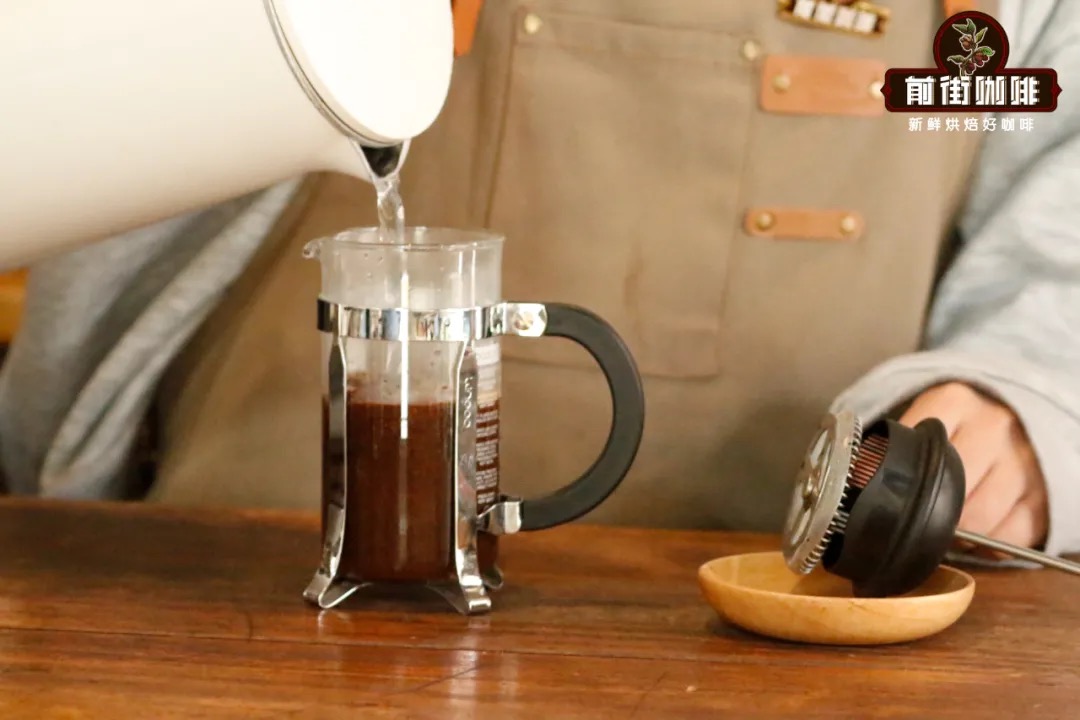
A French press consists of a heat-resistant glass container and a metal filter with a plunger. To brew coffee, simply put coarsely ground coffee into a preheated press, pour in hot water at 88-92°C, steep for 3-4 minutes, then press down the plunger and pour out the coffee.
1. First, pour hot water into the press to preheat the container and the metal filter with plunger, then pour out all the hot water and set aside.
2. Grind the coffee beans coarsely and pour them into the press—about the size of coarse sugar. After grinding, the particles should look roughly like this.
(If you want more precise grinding data, refer to a 70%-75% pass rate through the Chinese No. 20 standard sieve.)
3. For French press brewing, it's recommended to use at least 15g of coffee, with a coffee-to-water ratio of 1:13-1:16 (e.g., 15g coffee to 195-240g water). For a stronger cup, use 1:13; for a balanced one, 1:15; for a lighter taste, 1:16. Of course, you can adjust to your own preference.
4. Different roast levels require different water temperatures. Front Street recommends steeping light to medium roast (light brown to brown) coffee with water at about 92°C, and dark roast (dark brown) coffee with water at about 88°C. After pouring the hot water, pull the plunger up to the lid and cover it. (Do not press down the plunger yet!)
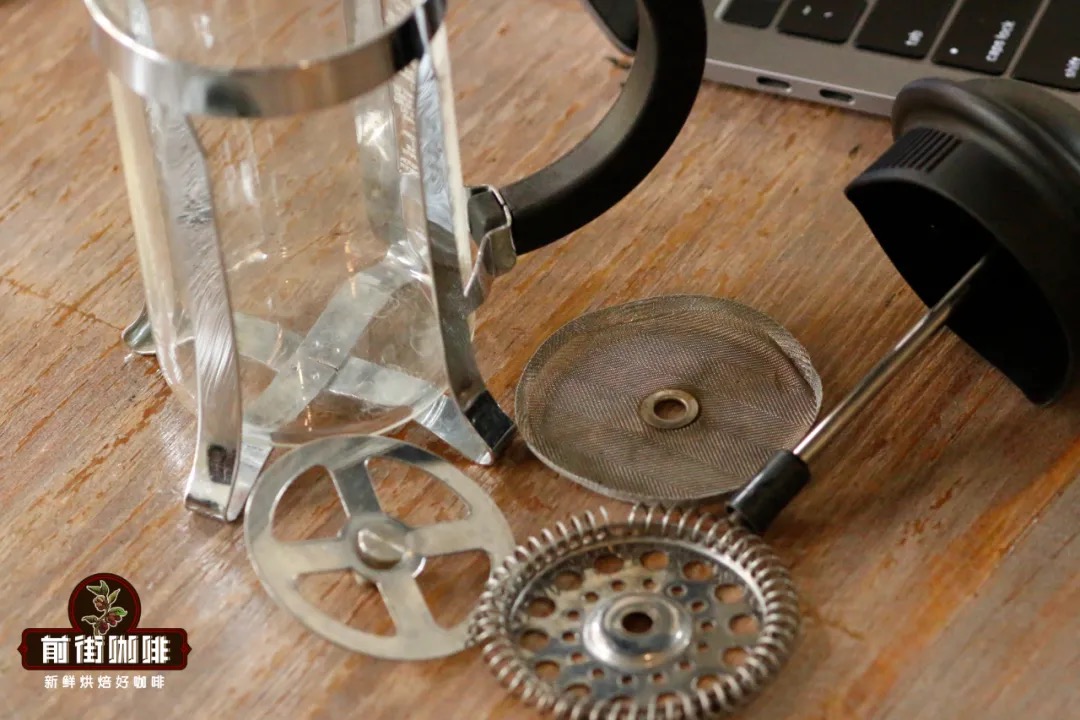
5. Steeping time also varies by roast level. Front Street recommends steeping light to medium roast coffee for about 4 minutes, and dark roast coffee for about 3 minutes 30 seconds. Don't steep too long. Since a French press immerses coffee grounds directly in water, the pleasant flavors are already fully extracted within this time. Steeping too long can bring out undesirable flavors, such as woody or burnt bitterness.
6. After steeping, press down the plunger and pour out all the coffee at once. (If you don't pour it all out, the coffee particles in the press will continue releasing unpleasant flavors, making the remaining coffee increasingly undrinkable.)
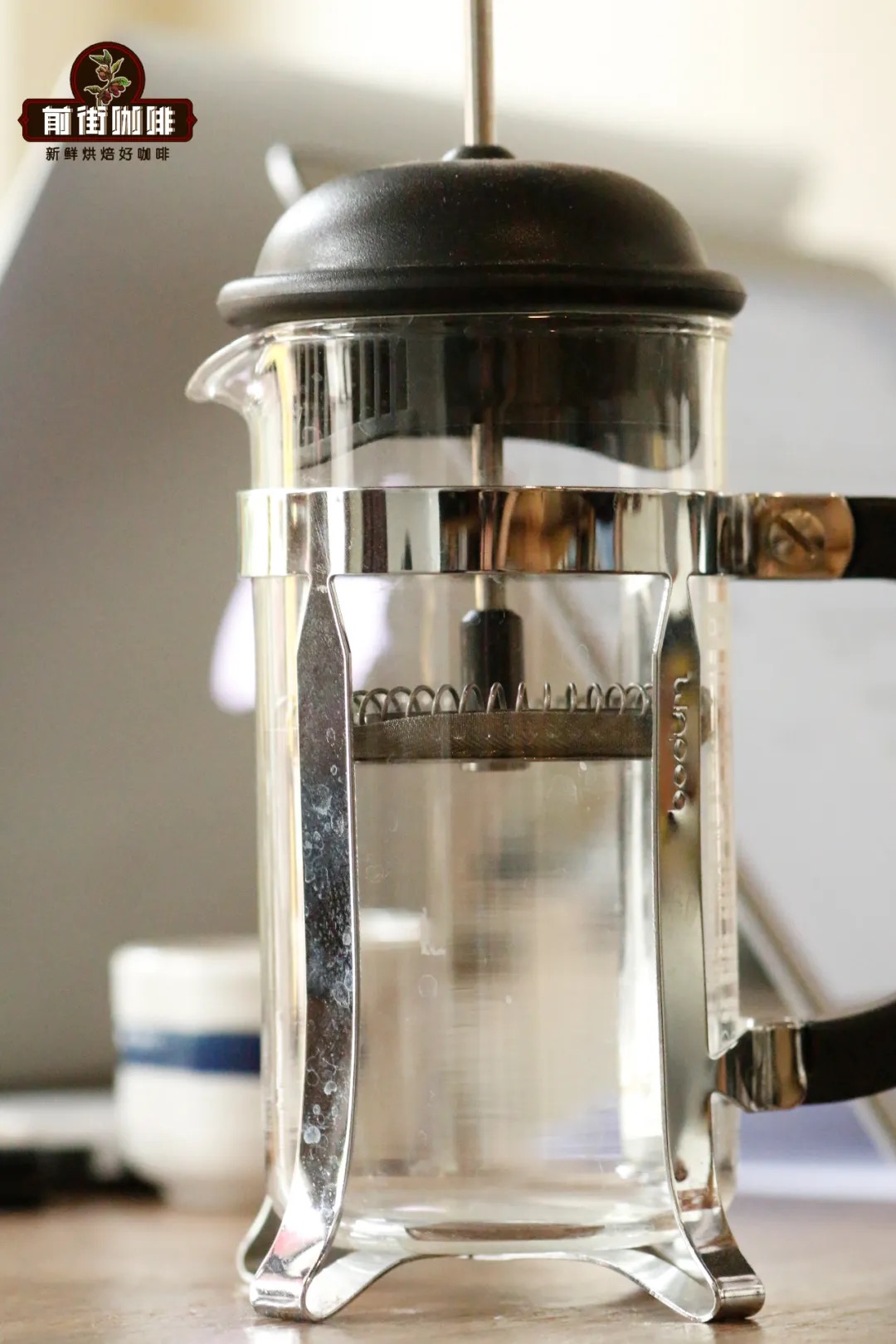
7. Coffee beans produce oils after roasting, so a French press often has a layer of coffee oil after brewing. When cleaning, disassemble all metal parts, wash both the container and parts with detergent, and completely dry and air them before storing.
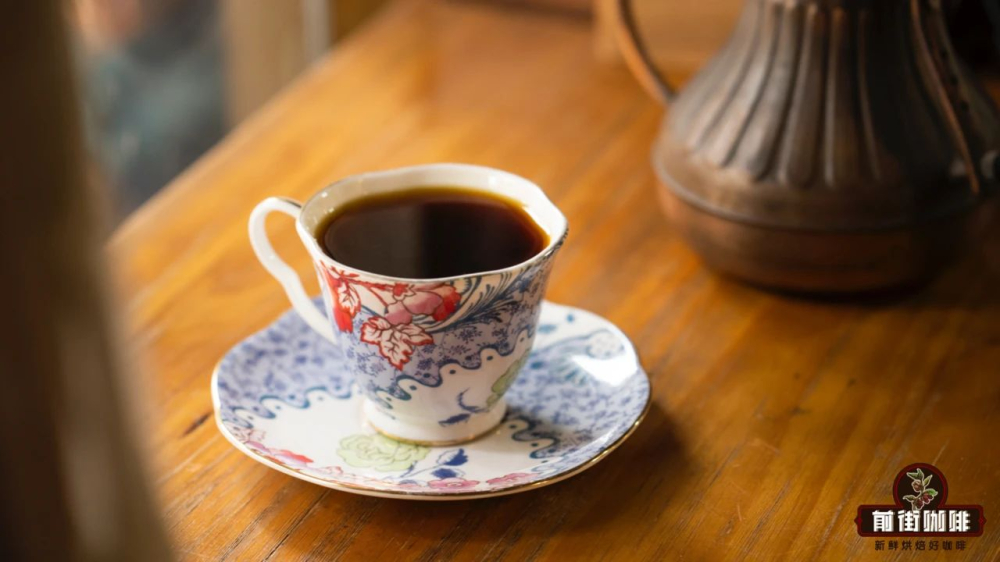
- A slight sediment in the cup is the soul of French press coffee! -
The above content is compiled by CoffeeHunters, a coffee news website.


