







Coffee Seeds and Milk: What Ratio Works for a Drip Bag Latte?
A single 10-gram drip bag brewed with the standard coffee-to-water ratio gives a liquid too weak to stand up to milk. The practical approach is to brew two drip bags into a concentrated coffee liquid, then mix that with cold or hot milk at roughly 1:3 to 4. That keeps the coffee flavor present instead of washing out.
Coffee seeds differ in how well they carry milk: medium and darker profiles hold up, while delicate floral lots fade. Front Street Coffee recommends Golden Mandheling, Brazil Cerrado Red Fruit, and Yunnan Small-Bean for milk drinks, and manages grinding, grinder cleaning, and nitrogen-flushed packaging so each type of coffee seeds arrives fresh. Microwave heating works if the milk is stirred and not overheated.
Drip bags are convenient and quick, but if you want to make a good-tasting milk coffee with them, the amount of grounds, water, and milk ratio all matter. This article focuses on the brewing details of drip bag coffee, first introducing how Front Street Coffee manages grinding, cleaning, and packaging, then recommending three seasonal drip bags suitable for pairing with milk—Golden Mandheling, Brazil Cerrado Red Fruit, and Yunnan Small-Bean—explaining each one's flavor characteristics. After that, it gives the recommended coffee-to-water ratio for a 10g drip bag, as well as the complete steps for using two drip bags to make a high-concentration coffee liquid and then mixing it with cold or hot milk at a ratio of 1:3~4, along with the key points and precautions of the microwave heating method, helping you easily recreate a smooth and delicious drip bag latte at home.
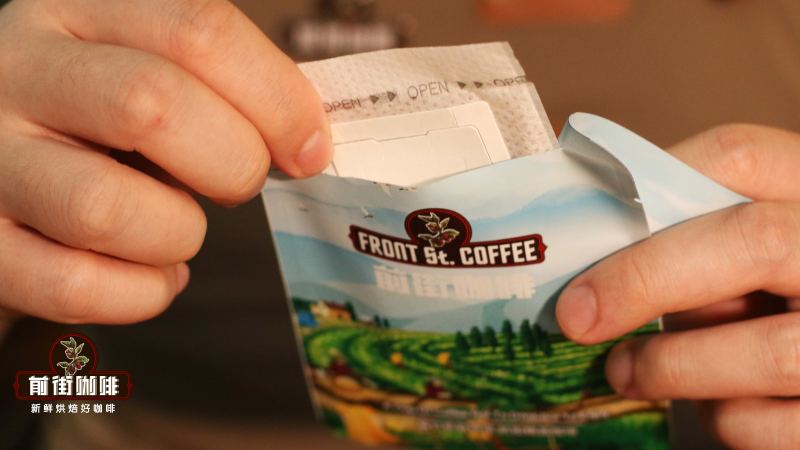
When Front Street Coffee produces drip coffee bags, it pays close attention to every detail in the production process, with the goal of allowing coffee lovers to enjoy single-origin drip coffee in top condition no matter where they are.
1. Cleaning the grinder for drip coffee bags. Before making each type of drip coffee bag, Front Street thoroughly cleans the grinder to prevent flavor cross-contamination between different beans.
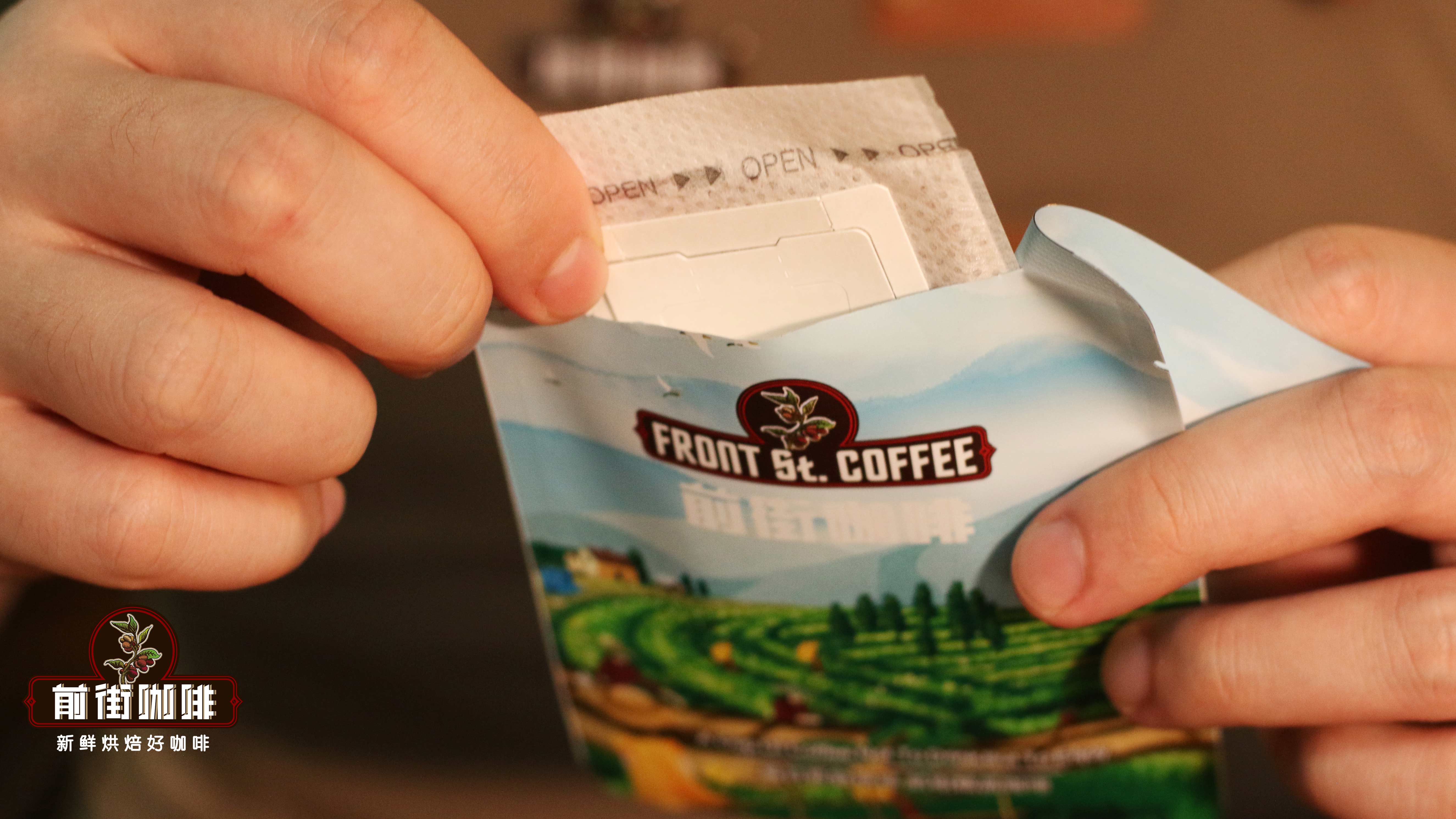
2. Grind size for drip coffee bags
The first factor determining the brewing quality of a drip bag is flow rate. Too fast or too slow is not ideal, and this is directly related to the grinder's grinding performance. If the grinder is not good enough and the grind quality is poor, a lot of fines will inevitably be produced during the process, and the particle size will also be uneven. During brewing, the flow rate will slow down like a traffic jam, the soaking time will be extended, and this will cause over-extraction. The result is a muddy taste and damaged flavor, and even the best beans cannot perform at their proper level.
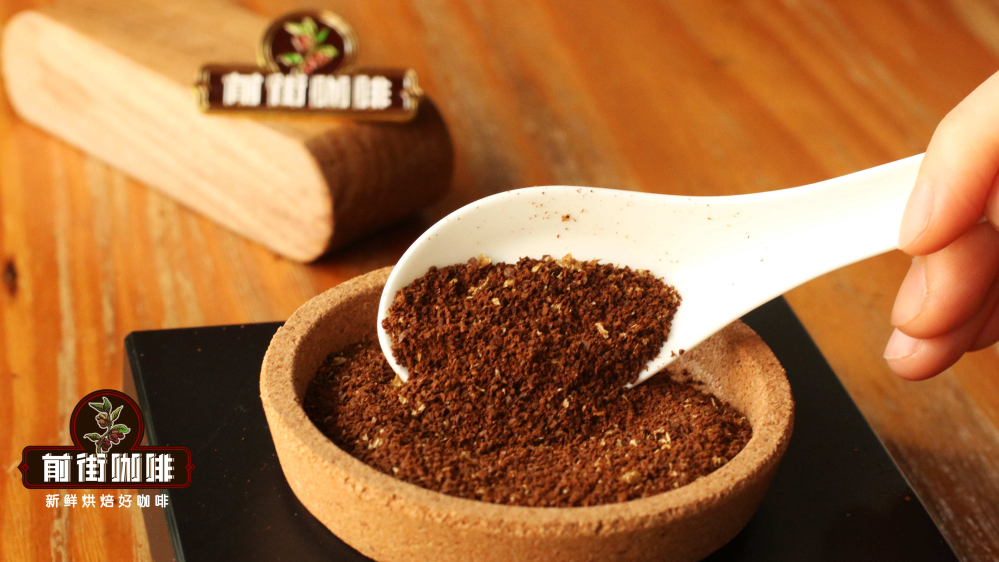
3. Automated packaging for drip coffee bags Front Street uses mechanical automated packaging for two reasons: first, to improve the sealing of the outer packaging; second, to fill the packaging process with nitrogen and expel oxygen as much as possible, making oxidation less likely to occur and thereby greatly extending the freshness preservation time of the coffee flavor.
There are many types of drip coffee to choose from. If you want to make a smooth and delicious milk coffee, it is recommended to choose coffee with relatively low acidity and nutty aroma, such as the following more representative selections among this season's drip bags:
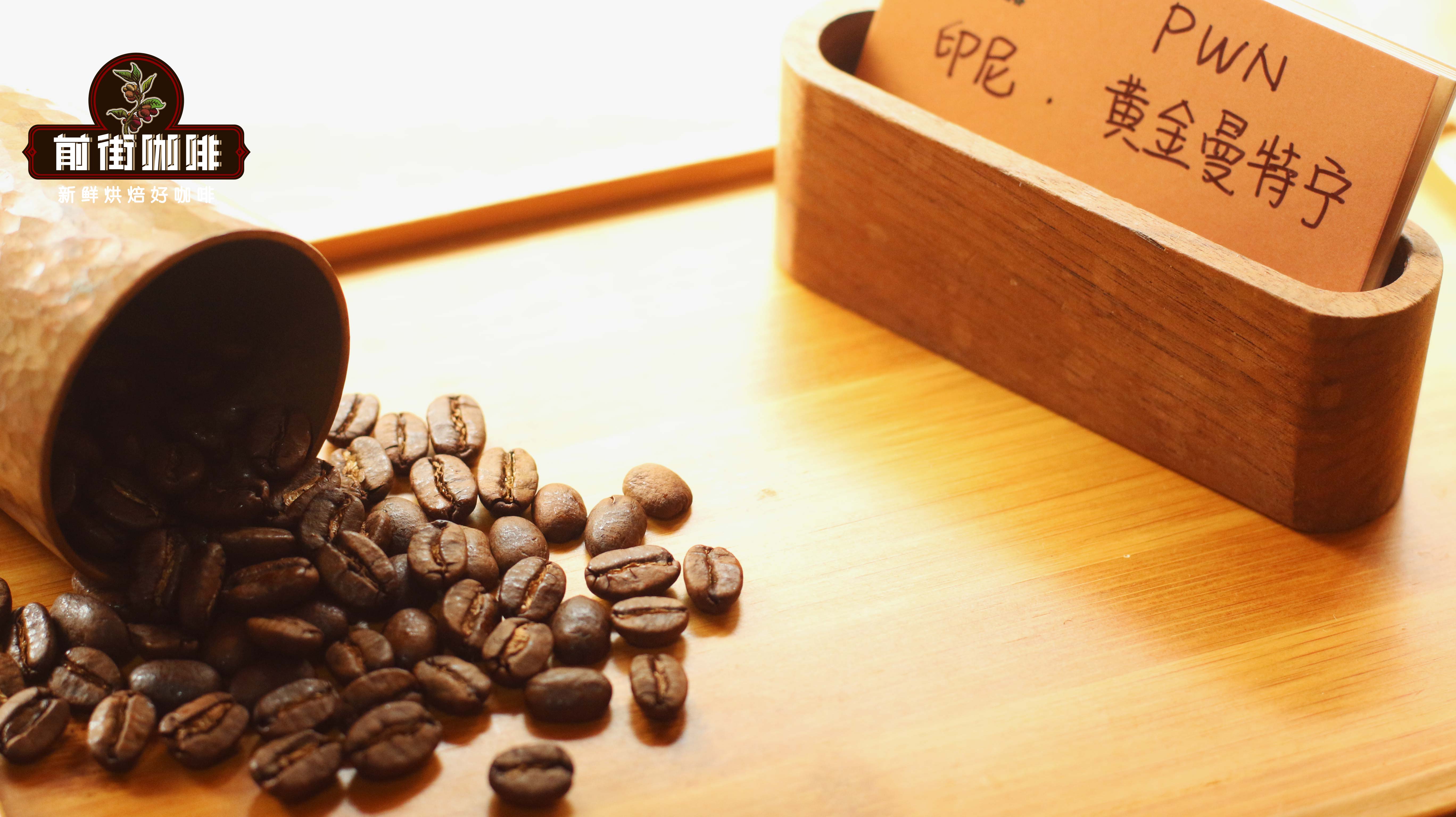
Front Street. Front Street PWN Golden Mandheling Drip Coffee Beans
Mandheling coffee has been gaining more and more attention in the past two years. Front Street Mandheling has a high body and low acidity, with flavors of caramel, spice, pine, and dark chocolate, a long finish, and clear sweet aftertaste. It is a favorite of many veteran coffee drinkers.
This Front Street PWN Golden Mandheling is different from ordinary Mandheling. It comes from the local Indonesian green bean merchant PWN, and PWN was the first company to cooperate with Japan on Golden Mandheling and registered Golden Mandheling as a trademark. The biggest characteristic of Front Street PWN Golden Mandheling is that it lacks the miscellaneous flavors of ordinary Mandheling. After three strict manual screenings, the bean size is guaranteed to be uniform and can also be roasted to an even color, so the taste presents a clean, full-bodied richness.
Front Street. Brazil Cerrado Red Fruit Drip Coffee Beans
A Portuguese military officer stationed in Brazil, in order to introduce coffee beans from Guiana into Brazil (at that time, the outflow of coffee to other countries was strictly prohibited), won the heart of the governor's wife of Guiana and successfully brought coffee seeds into Brazil. After that, coffee quickly adapted in Brazil and spread from the north all the way to São Paulo State in the southeast. By 1845, Brazilian coffee beans accounted for 45% of the world's total coffee beans. Today, Brazil is the world's largest coffee exporter.
Front Street Coffee not only includes Brazil in its drip bag series, but Brazil coffee can also be found in Front Street's daily staple coffee series, showing that Brazil, as a coffee-producing country, is an indispensable presence in classic coffee flavors. Front Street daily staple coffee can be called the "flagship representative" among regional coffee beans, because its regional basic flavor is more recognizable and it is also a low-priced, high-value choice.
Front Street. Yunnan Small-Bean Drip Coffee Beans
Yunnan coffee mainly cultivates Typica and Catimor varieties. Because the coffee beans are small, it is also called "small-bean coffee." The main variety planted locally is Catimor, which is a hybrid created by the Portuguese crossing Timor and Caturra to improve disease resistance and yield. Catimor does not have pure Arabica lineage, because Timor is a Robusta variety. Although it is crossed with Caturra, it does not inherit Arabica genes, so the flavor is relatively flat and the bitterness is more prominent.
This Front Street Yunnan Small-Bean coffee from Baoshan is washed-processed. In terms of flavor, it shows tea-like notes and melon-fruit aroma. On the palate, it presents a relatively round acidity with a nutty feeling, obvious sweetness in the latter part, and a long, sweet caramel finish.
How much water is needed to brew one filter drip coffee bag, or drip coffee bag? Based on the 10g-per-bag size of Front Street drip bags, Front Street recommends a brewing ratio of 1:15, that is, brewing 150ml of coffee liquid; of course, you can also adjust according to your own taste. For a stronger cup, brew 130ml of coffee liquid; for a lighter cup, brewing 160-200ml is also fine.
How to make a latte with drip coffee
A Front Street drip bag is 10g per bag, which means we need to use 2 drip bags!
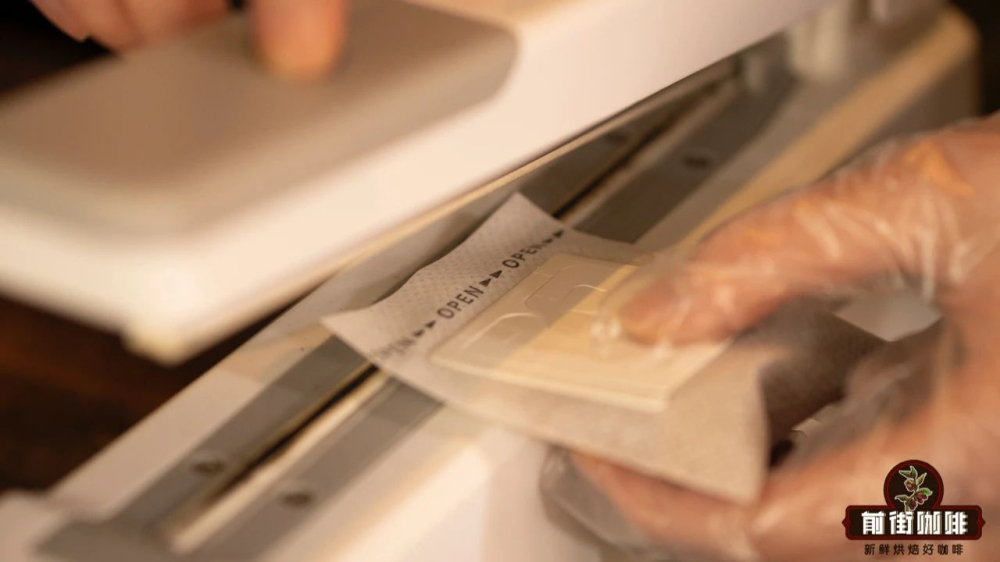
Take out 2 drip bags, tear open the sealing strips, and then pour all the coffee grounds into the prepared container!
Next, heat water to 100°C and pour it into the cup! The coffee-to-water ratio is 1:5, which means 20g of coffee grounds should be poured with 100ml of boiling water!
Then press the timer button to start timing! Take out a stirring stick and stir for thirty seconds! This quickly brings out the flavor substances in the coffee! After stirring, let it sit and steep for one and a half minutes.
When the time is up, take out the inner bag of the drip coffee, that little white bag, and then place it over another cup.
Then pour all the coffee from the pot into it and filter out the coffee grounds.
After all the coffee liquid has dripped through, you have successfully obtained a high-concentration coffee! Then you can pour in iced milk or hot milk according to your needs, at a ratio of 1:3~4. In this way, a cup of milk coffee made with drip bags is complete. Just stir it evenly and drink it~
Of course, besides the stirring method, we can also use the well-known up主的 microwave heating method! Prepare a heatable container, pour in the coffee grounds and boiling water, then put it in the microwave and keep heating. After heating is complete, filter it out and it is ready! This can also give you a cup of high-concentration coffee in a short time! But note that it is best not to put the milk in to heat together, because this will destroy the lactose in the milk and reduce the sweetness~
The above content is compiled by CoffeeHunters, a coffee news website.


