







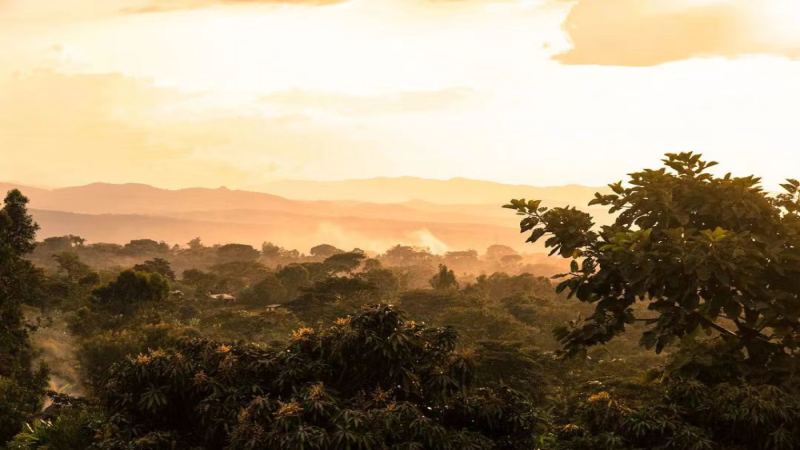
How does the kaffa forest system shape Ethiopian coffee?
Ethiopia holds the core of the global coffee gene pool and grows coffee under four systems: forest, semi-forest, garden, and plantation. Nine specialty regions, among them Yirgacheffe, Sidamo, and Harrar, each show distinct flavor. Roughly ninety percent of national output comes from garden, forest, and semi-forest systems, while large corporate plantations are rare.
Forest coffee grows wild in virgin woodland such as the kaffa forest, protected by local government and harvested by designated workers, while semi-forest plots are trimmed periodically for light and yield. Garden coffee, interplanted under ensete trees, is the main production method. Highland areas average 15 to 20 degrees Celsius with 1,000 to 2,000 mm of annual rain.
Ethiopia is the core of the global coffee gene pool, home to four major cultivation systems—forest, semi-forest, garden, and plantation—and nurtures nine distinctive specialty regions including Yirgacheffe, Sidamo, and Harrar. This article systematically reviews Ethiopia's coffee geography, variety characteristics, processing methods, and trading systems, deeply analyzes the flavor differences among regions, and includes Front Street Coffee's cupping comparisons and brewing suggestions, providing coffee enthusiasts with a complete tasting map of Ethiopian coffee.
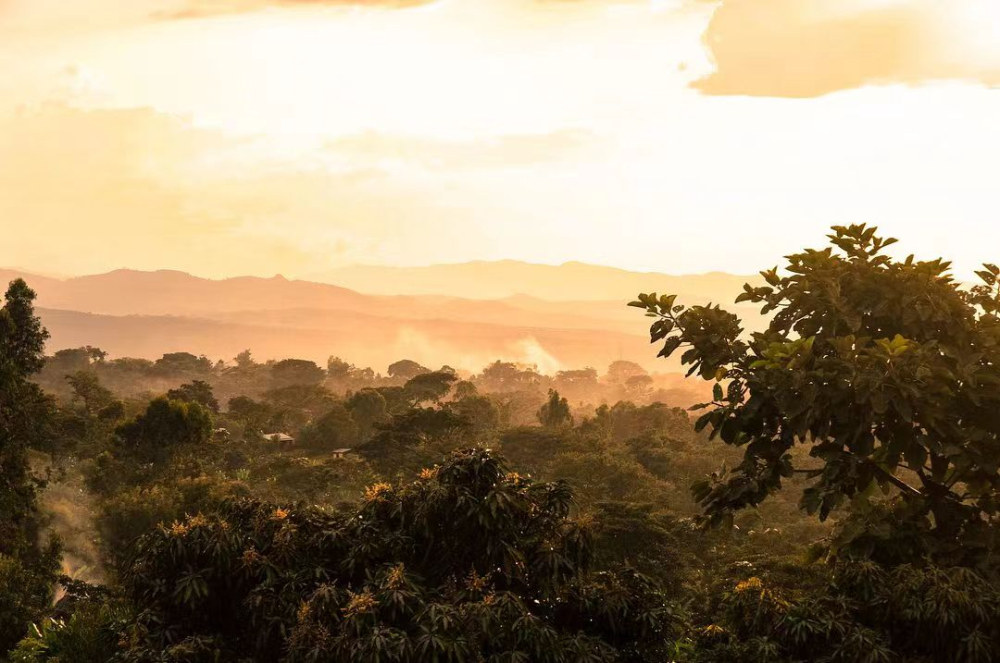
Ethiopia
Country Name: Ethiopia
Geographic Location: East Africa
Capital: Addis Ababa
Major Religion: Christianity
Official Language: Amharic
Time Zone: GMT+3
Measurement Unit: Metric
Currency: Birr (1 USD ≈ 20 Birr)
Major Export Agricultural Products: Coffee, flowers, and sesame are the country's core cash crops
Seaport Access: Djibouti Port (current primary export channel)
Temperature Conditions: Highland annual average 15-20°C, lowland annual average 25-30°C
Annual Rainfall: 1000-2000 mm
Soil Composition: Volcanic soil approximately 50%, sedimentary soil about 25%, and the remaining 25% other types
Ethiopia's coffee cultivation systems are the most diverse in the world, categorized into four models: forest coffee, semi-forest coffee, garden coffee, and plantation coffee. About ninety percent of the country's coffee output comes from garden, forest, and semi-forest systems, while large-scale corporate plantations are extremely rare in Ethiopia—which may be precisely the root of why specialty coffees keep emerging.
Forest Coffee: Refers to wild coffee growing in virgin forests, protected by the local government and harvested by designated personnel.
Semi-Forest Coffee: Farmers periodically enter the woodland to trim shade trees or coffee branches to improve light conditions and increase yields; even so, annual production remains limited.
Garden Coffee: Smallholder farmers interplant coffee with other cash crops on their own land, usually under ensete trees, creating a distinctive pastoral landscape. This is Ethiopia's primary coffee production method.
Plantation Coffee: Large-scale cultivation operated by state-owned enterprises, pursuing high-efficiency mass production.
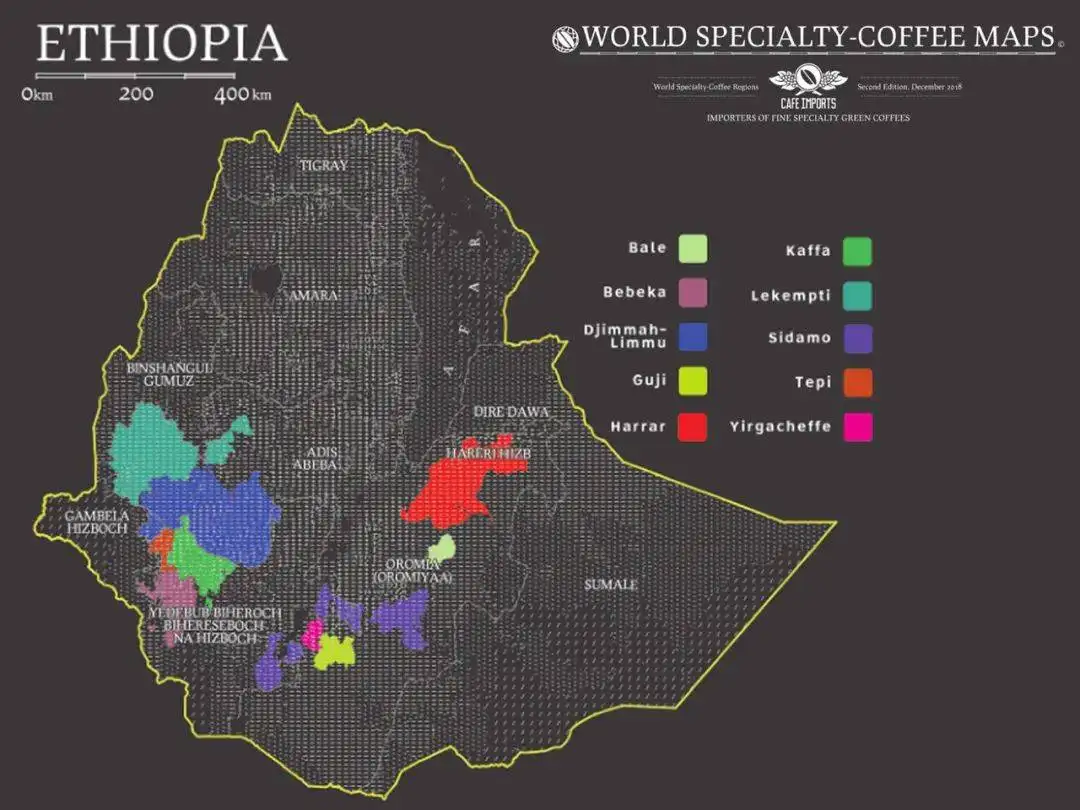
The four cultivation systems are distributed across the following nine regions: Gimma, Sidamo, Yirgacheffe, Harrar, Limu, Illubabor, Gimbi (Lekempti), Teppi, and Bebeka. Overall, each region has its own distinctive flavors. Coffee beans from western Teppi, Bebeka, Illubabor, and the Lake Tana area in the northwest are noticeably larger, with bold wild flavors but lower fruit acidity. Central Limu and south-central Yirgacheffe and Sidamo display rich fruit notes, floral aromas, and bright acidity, with relatively stable quality. Eastern Harrar combines the wildness of the west with the fruitiness of the south-central regions, but quality fluctuates considerably.
The genetic composition of Ethiopia's native varieties is extremely complex, and combined with the coexistence of sun-dried, washed, and semi-washed processing methods, this creates endless flavor variations. Calling it the "taste of kings" may not be an exaggeration.
Ethiopia's Nine Specialty Coffee Regions
Yirgacheffe (Specialty Region): Altitude 1700-2400m | Garden Coffee System |
Yirgacheffe originally belonged to the Sidamo region but was separated due to its unique flavors. In addition to Yirgacheffe town, it also encompasses three sub-regions: Wenago, Kochere, and Gelena/Abaya. In the new Yirgacheffe grading system, Yirgacheffe A, Wenago A, Kochere A, and Gelena/Abaya A are priced higher than their B-grade counterparts. Besides washed and natural, the semi-washed Yirgacheffe introduced in recent years is also worth trying.
Front Street Coffee's cupping comparisons reveal that coffee beans from the Yirgacheffe region typically present bright citrus acidity and delicate white floral notes, with almond flavors and a tea-like sweetness in the finish.
Representative Coffee Bean - Front Street Gutingding Cooperative Coffee Beans
Region: Yirgacheffe, Gedeo Zone
Altitude: 1900-2300m
Variety: Ethiopian Heirloom
Processing Method: Washed
Flavor: Citrus, black tea, caramel, almond, green tea
Representative Coffee Bean - Front Street Natural Red Cherry Coffee Beans
Region: Yirgacheffe, Aricha Washing Station
Altitude: 2300m
Variety: Ethiopian Heirloom
Processing Method: Natural
Flavor: Citrus, berries, fruity fermentation, honey, creamy mouthfeel
Sidamo (Specialty Region): Altitude 1400-2200m | Garden Coffee System |
Flavor-wise similar to Yirgacheffe, meticulously washed or naturally processed Sidamo also possesses floral and citrus notes, with a status no less than Yirgacheffe. The two regions share similar varieties with medium-sized beans, though there are also short-statured small-bean types that farmers often sell separately. Among common varieties, Kurmie has weak disease resistance; Wolisho is tall and robust; Deiga has a medium tree shape—these three varieties are the mainstay of the specialty natural series Biloya and Aricha.
Front Street Coffee's cupping comparison shows that compared to the Yirgacheffe region, Front Street's Sidamo Huakui coffee has greater body, with bright citrus acidity accompanied by a rich, berry-juice-like mouthfeel—the juiciness is very prominent.
Representative Coffee Bean - Front Street Sidamo Huakui Coffee Beans
Region: Sidamo Hambela
Washing Station: Buku Able Washing Station
Altitude: 2250-2350m
Variety: Ethiopian Heirloom
Processing Method: Natural
Flavor: Citrus, strawberry, passion fruit, fermentation, black tea
Limu (Specialty Region): Altitude 1200-2000m | Garden, Forest, Semi-Forest, Plantation Coffee Systems |
Production is relatively low, mainly sold to European and American markets; harder to find in Taiwan but quite popular in Europe and America, covering washed, natural, and semi-washed processing methods. Limu's body is noticeably lighter, and its floral and citrus expression is not as good as Yirgacheffe and Sidamo, but it has an added note of grassy freshness and brown sugar, with bright fruit acidity.
Harrar (Specialty Region): Altitude 1500-2400m | Garden Coffee System |
Harrar is renowned for its natural processing. It is an ancient city in the east, though coffee is not grown within the city itself. So-called Harrar coffee refers to coffee produced in the Hararghe highlands and lowlands of the greater Harrar area. With annual rainfall of only about 1000 mm, all processing is natural. In terms of flavor, Harrar coffee is famous for its unique "wild complexity," a typical representative of ancient early flavors, and is known alongside Yirgacheffe as the "twin stars."
If Harrar's defective beans can be sorted cleanly, it's easy to taste berry notes with a pleasant fermented wildness. However, affected by various factors, Harrar coffee quality has been unstable in recent years, and the grading system has inaccuracies—purchase must be confirmed through cupping or tasting.
Gimma (Commercial Coffee Region): Altitude 1350-1850m | Forest/Semi-Forest System |
Gimma is the capital of the Kaffa forest or Kaffa Province. Its English spelling is somewhat chaotic—maps mostly label it as Jimma, but coffee burlap bags spell it as Djimmah. This is Ethiopia's highest-production region, accounting for one-third of total exports.
The Kaffa forest is famous for its primitive wild varieties, and Gimma is the collection point for Kaffa coffee from the region. Farmers habitually transport coffee picked from forest areas to Gimma, where hundreds of varieties are mixed and sold as commercial beans, causing the aromas of many quality varieties to be masked.
Though washed specialty Gimma lacks Yirgacheffe's citrus and floral notes, its flavor is quite clean and transparent, similar to Central American specialty beans. Commercial-grade specialty Gimma is very common in Taiwan; with luck, you can find good-quality Gimma at a reasonable price, with a fresh lemon-peel note that rivals Sidamo. Overall, Gimma has better flavor than Brazil's mass-market Santos and is a good mid-to-low-priced blend component.
Illubabor (Commercial Coffee Region): Altitude 1350-1850m | Forest/Semi-Forest Coffee System |
Located in western Ethiopia bordering Sudan, this is the westernmost region. Its coffee genetic diversity is second only to the Kaffa forest. Beans are noticeably larger than Yirgacheffe and Sidamo, with lower fruit acidity, good body, and balanced flavor. Coffee from here is mostly transported to Gimma for blending and is rarely sold independently.
Gimbi, Lekempti (Commercial Coffee Region): Altitude 1500-1800m | Forest/Semi-Forest Coffee System |
This region has both natural and washed beans. Bean appearance resembles Harrar's longberry, and a small amount of specialty-grade beans is quite popular in Europe and America. Known mostly as "the poor man's Harrar," its fruit acidity and fruitiness are better than Illubabor, with a bright flavor.
Teppi, Bebeka (Commercial Coffee Region): Altitude 500-1900m | Garden/Forest/Semi-Forest Coffee System |
The two regions are close in location, with Teppi north of Bebeka. There are corporate-managed coffee plantations here, and in recent years garden systems have been promoted to increase farmer income, with annual production of about 3000 tons. Both areas have wild coffee with low yields. Their flavors are completely different from Harrar and Yirgacheffe, with low fruit acidity being the biggest characteristic—suitable as blend components, available in both natural and washed processing.
Lake Tana Area (Alternative Region): Altitude 1840m | Forest System |
Monastery coffee—surrounding forest coffee annual production is extremely low, less than 10 tons, so strictly speaking it cannot be called a region. The Orthodox monasteries, churches, religious murals, and mythological legends scattered around the lake area create the world's most "divine" coffee.
European monastery clergy established the local coffee cultivation industry, which was later taken over by coffee communities or cooperatives in villages around the town. There are no dedicated plantations here; coffee trees are naturally scattered throughout forests and gardens. During harvest season, the Ethiopian Coffee Trading Company comes to town to purchase coffee beans collected by farmers.
In addition to Yirgacheffe town, it also includes the surrounding three sub-regions: Wenago, Kochere, and Gelena/Abaya.
1. Cultivation System and Environment: The mountain villages of the Yirgacheffe region are cool and misty, spring-like year-round—gentle summer breezes, cool but not hot, rainy but not damp, and winters without cold damage—making it the optimal environment for growing Arabica. There are no large coffee plantations here; coffee farmers interplant coffee with other crops, generally under ensete trees, forming a unique landscape.
2. Processing Methods: Ethiopia's traditional natural processing method is relatively rough with heavy off-flavors, which has been criticized. In 1959, the Yirgacheffe region introduced South American washed processing. Most regions generally adopt washed processing—coffee cherries are depulped, then fermented and washed to remove the mucilage layer, then dried.
Since 2006, some washing stations in certain regions have adopted refined raised-bed natural processing. This labor-intensive raised-bed drying method isolates coffee cherries from ground contact, preventing earthy off-flavors during sun-drying and creating exceptionally clean fruit flavors. After more than two weeks of sun-drying, dark brown coffee cherries are professionally stored, awaiting full flavor maturation. Before sale, the dried cherry pulp and parchment are removed, followed by elimination of underripe and over-fermented beans—strict quality control greatly improves the quality of natural beans.
Representative Coffee Bean - Front Street Yirgacheffe Kochere Coffee Beans
Region: Yirgacheffe Kochere Cooperative
Altitude: 1650-1800m
Variety: Ethiopian Heirloom
Processing Method: Washed
Flavor: Lemon, floral, honey, oolong
Front Street Barista Brewing Sharing
For brewing, Front Street selects freshly roasted Gutingding Cooperative coffee beans. After roasting, coffee enters its optimal flavor window after a 4-7 day resting period; beyond this stage, aromas accelerate their dissipation and flavor and mouthfeel decline noticeably. Front Street well understands the importance of coffee freshness, so all shipped coffee beans are freshly roasted within 5 days—customers receive them at peak flavor and can brew and enjoy directly.
Based on past experience, and considering that Ethiopian beans tend toward floral and fruity notes, Front Street's roaster chooses a light roast to preserve more floral and fruit acidity. Yirgacheffe coffee grows at higher altitudes and has a harder texture; light roasting does not significantly alter the bean's internal structure, so higher water temperature and finer grind are needed. Front Street uses a V60 dripper for brewing, which better highlights the layering of sweet and acidic flavors.
Dripper: V60
Water Temperature: 92°C
Grind Size: 80% passing through No. 20 standard sieve
Coffee-to-Water Ratio: 1:15
Coffee Dose: 15g
Using a three-stage extraction: after grinding, pour coffee into the filter paper, start pouring 30g of water from the center for a 30-second bloom, keeping a slow steady circular pour from inside to outside throughout. For the second stage, pour 95g of water. Once the coffee liquid has nearly finished draining, begin the third stage with 100g of water, and once all coffee has filtered through, remove the dripper. Total time approximately 2 minutes, with about 10 seconds of tolerance.
Front Street's washed Gutingding has fresh white floral notes, with bright lemon and berry acidity on entry, lasting citrus and green tea aromas, overall clean and transparent, with a hint of honey sweetness in the finish—perfect for those who dislike bitterness.
The above content is compiled by CoffeeHunters, a coffee news website.


