







Planning to open a coffee shop—where should you buy beans, and how should you choose them? This article centers on the bean-sourcing dilemmas faced by independent cafés and small neighborhood shops, and systematically lays out the highlights of Front Street Coffee's bean list: there are over 50 specialty beans, along with 4 hidden espresso blends. The article focuses on the widely loved washed Yirgacheffe and PWN·Golden Mandheling, including origin information, flavor descriptions, and brewing parameters, then breaks down one by one the positioning and recipe approach of the four espresso blends—Black Cocoa, Specialty, Commercial, and Warm Sun—and finally summarizes practical considerations for buying coffee beans: check the roast date, grasp the optimal tasting window, choose beans or ground coffee, and pick beans according to your extraction method, helping you find a reliable source for coffee beans.
When preparing to open a coffee shop of your own, there are always a few questions that are especially troubling. For example: through what channels should an independent café source its beans? Which beans are more suitable for a neighborhood coffee shop? Are there any coffee bean brands that handle both wholesale and retail and are worth recommending? Where can you buy authentic coffee beans? And what should first-time shop owners pay attention to when choosing beans?
This article will address these questions one by one.
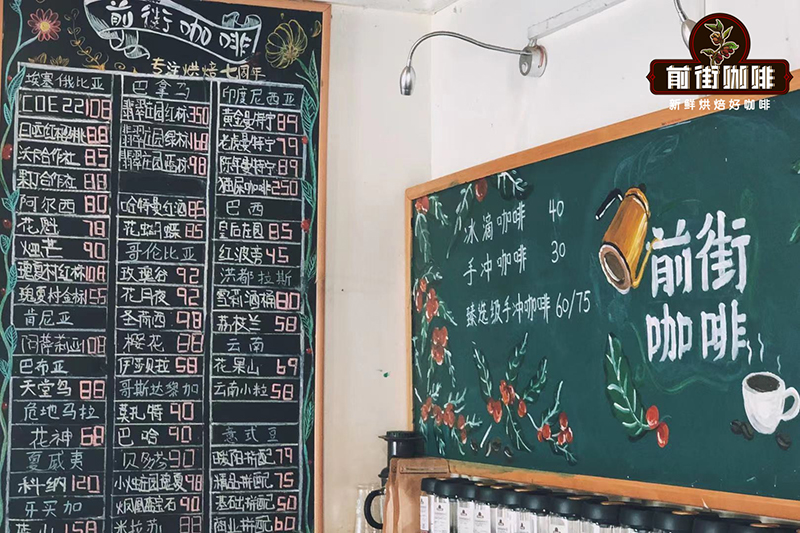
Open Front Street Coffee's bean list and you'll find that not only does it keep more than 50 specialty coffee beans year-round, it also quietly hides 4 espresso beans. Next time you visit Front Street, observant friends might want to keep an eye out.
Front Street Coffee · Specialty Bean Series Introduction
From everyday observation, among Front Street's many beans, the best-selling one is undoubtedly that washed Yirgacheffe with lemon-like acidity.
Yirgacheffe from Ethiopia has long been renowned worldwide. Whenever people talk about "bright acidity and fresh-flavored specialty coffee," it is often the first thing that comes to mind.
This washed Yirgacheffe from Front Street is quite outstanding in freshness. Whether sold in stores or on Taobao, the roast date is kept within 5 days, safeguarding quality from the very source. Friends who frequently visit Front Street's Taobao store have probably already noticed: orders placed the same day can arrive the next day! That's right—this is the next-day delivery logistics solution specially adopted by Front Street Coffee, with the goal of getting freshly roasted beans into everyone's hands as quickly as possible~
Now that we've brought up Yirgacheffe, let's take the opportunity to introduce two beans from Front Street that come from this region!
Front Street Coffee—Ethiopia·Gedeb Coffee Beans Origin: Gedeo Zone, Yirgacheffe Altitude: 1,900 to 2,300 meters Variety: Heirloom Processing Method: Washed
Front Street Ethiopia·Gedeb Flavor Presentation At high temperatures, you can taste berries, honey, cream, citrus, and a juicy mouthfeel, with bright acidity; as the temperature drops slightly, it shifts to cream and citrus, with a smooth texture, while the berry notes remain.
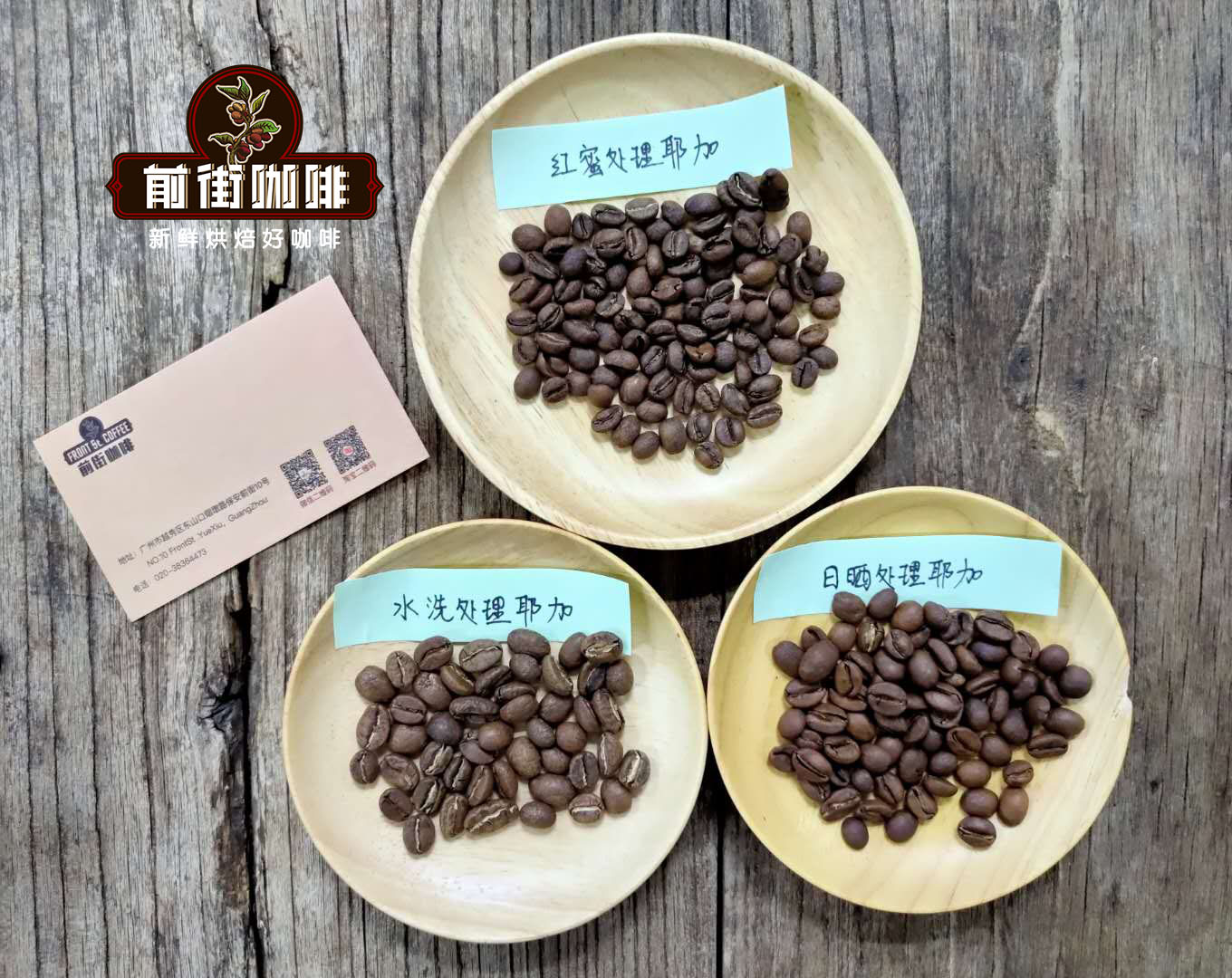
Front Street Coffee—Yirgacheffe Aricha Cooperative Red Cherry Beans Producing Country: Ethiopia Region: Yirgacheffe Processing Station: Aricha Altitude: 2,300 meters Variety: Local Heirloom Processing Method: Natural Grade: G1
Front Street Yirgacheffe Aricha Cooperative Red Cherry Beans Flavor Presentation Notes of berries, citrus, lemon, and sweet orange intertwine, with an overall prominent sweetness; the finish reveals caramel and cream notes, while a faint black tea aroma lingers at the end.
You may be curious: "Besides Yirgacheffe, what other beans from Front Street Coffee are worth trying?" One answer is Front Street PWN·Golden Mandheling—also deeply loved by many customers.
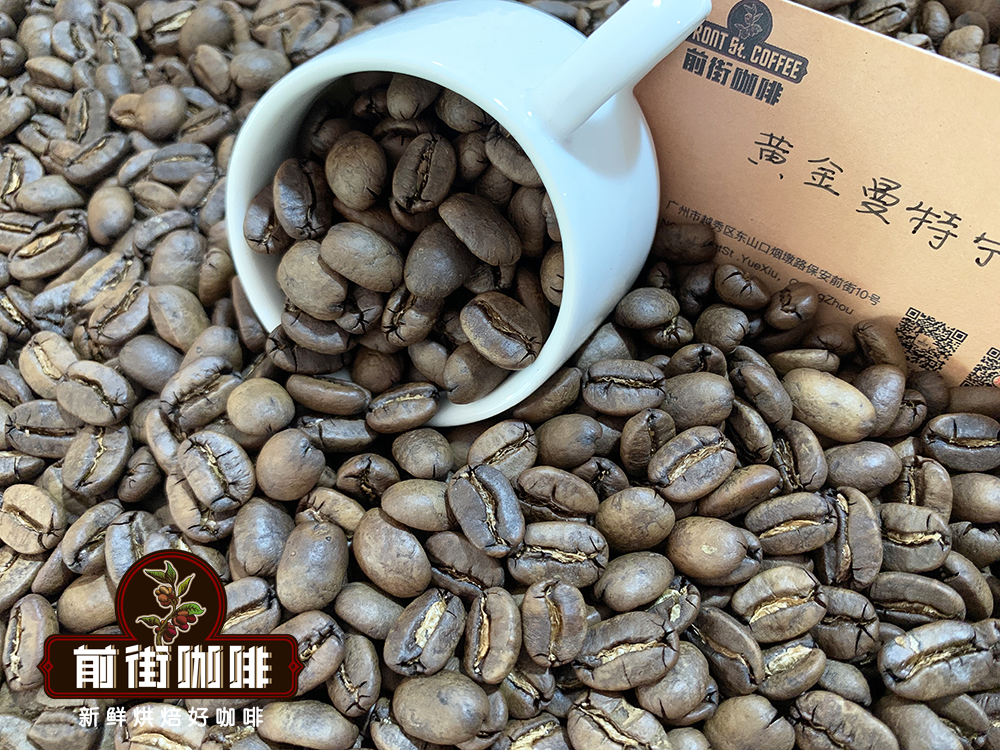
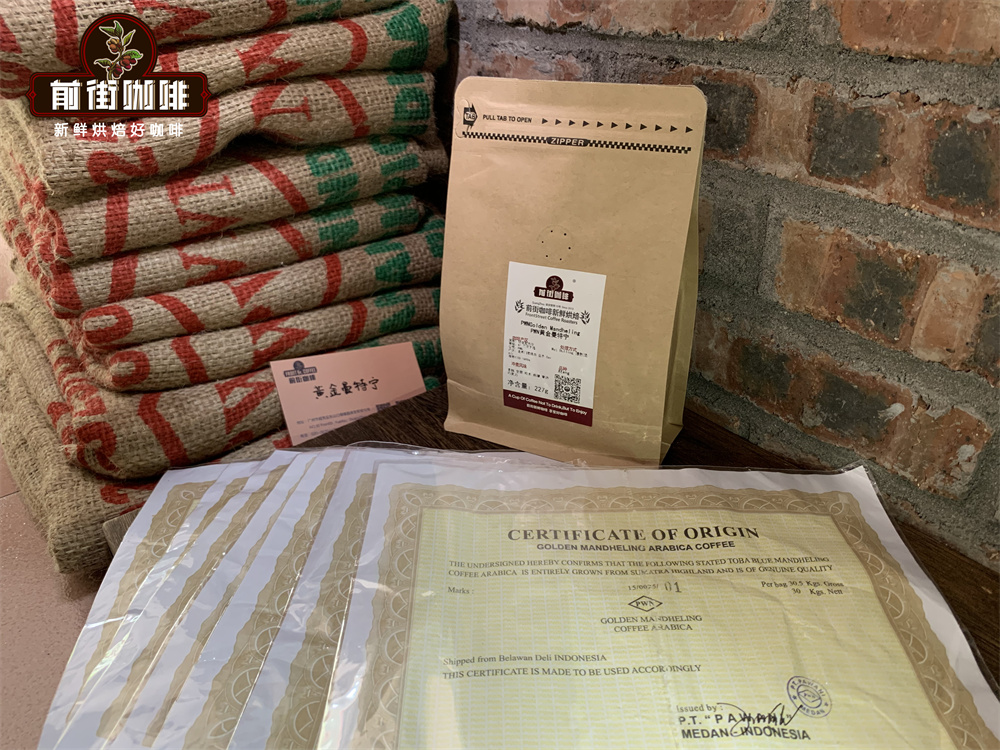
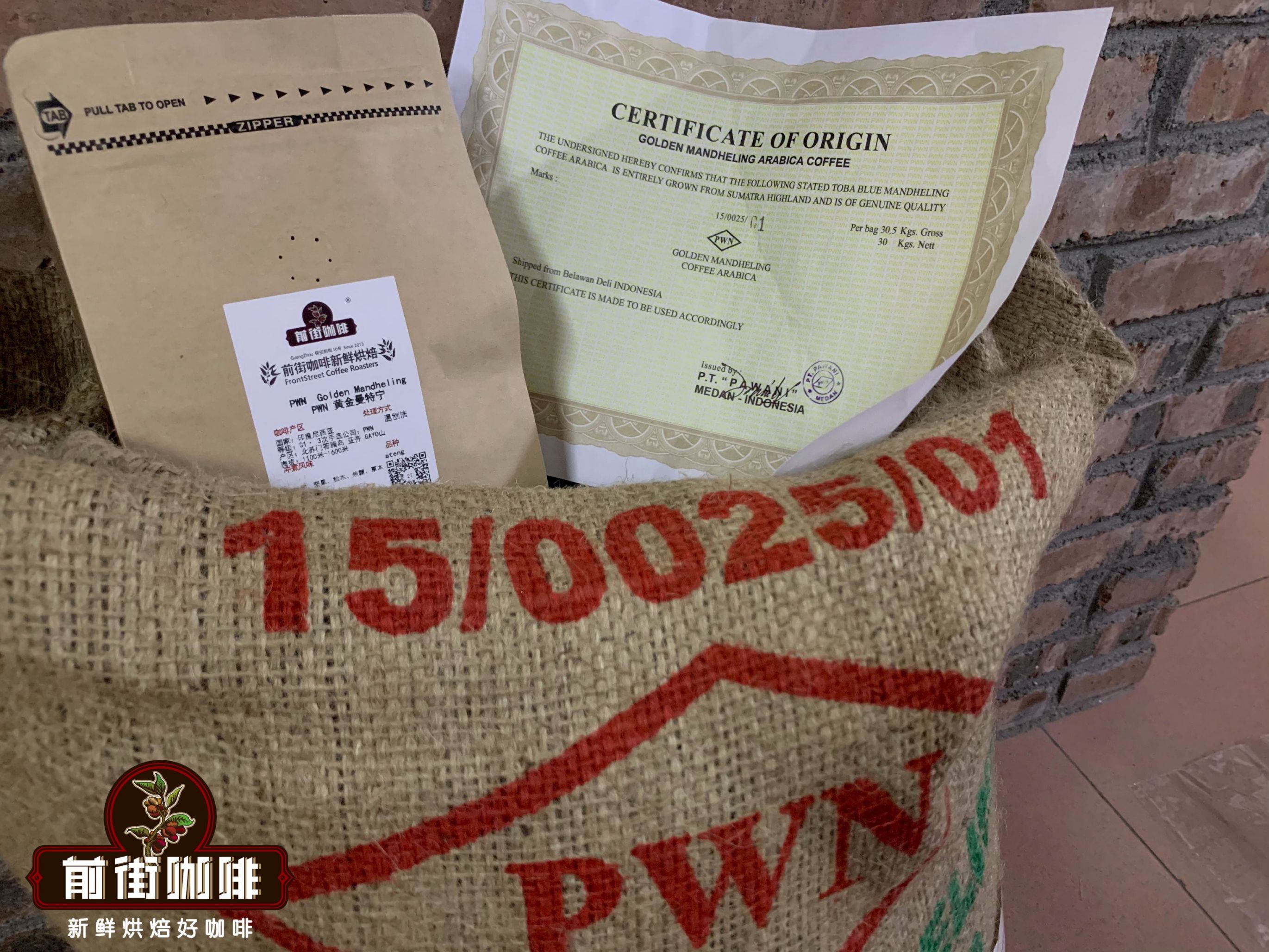
This Front Street PWN·Golden Mandheling is screened at 18 mesh and above, with no more than 3 defective beans per 300 g of green beans, reaching the highest grade G1; the beans are dark green in color and neatly flat in shape. After such rigorous screening at every stage, this Golden Mandheling sheds the earthy, muddy off-flavors common in ordinary Mandheling, entering the mouth cleaner and more translucent, with even more prominent sweet aromatics.
It is worth mentioning that the first party to register "Golden Mandheling" as a trademark was not a Japanese company, but an Indonesian local company that cooperated with a Japanese firm in the early years and handled Mandheling exports—PWN.
What the Japanese company registered was Gold Top Mandheling. In terms of flavor, the two are actually quite similar; however, since they belong to different brands and each has its own marketing strategy, it is not surprising that market reputations have diverged. As for which of the two Golden Mandhelings is better, that is simply a matter of opinion.
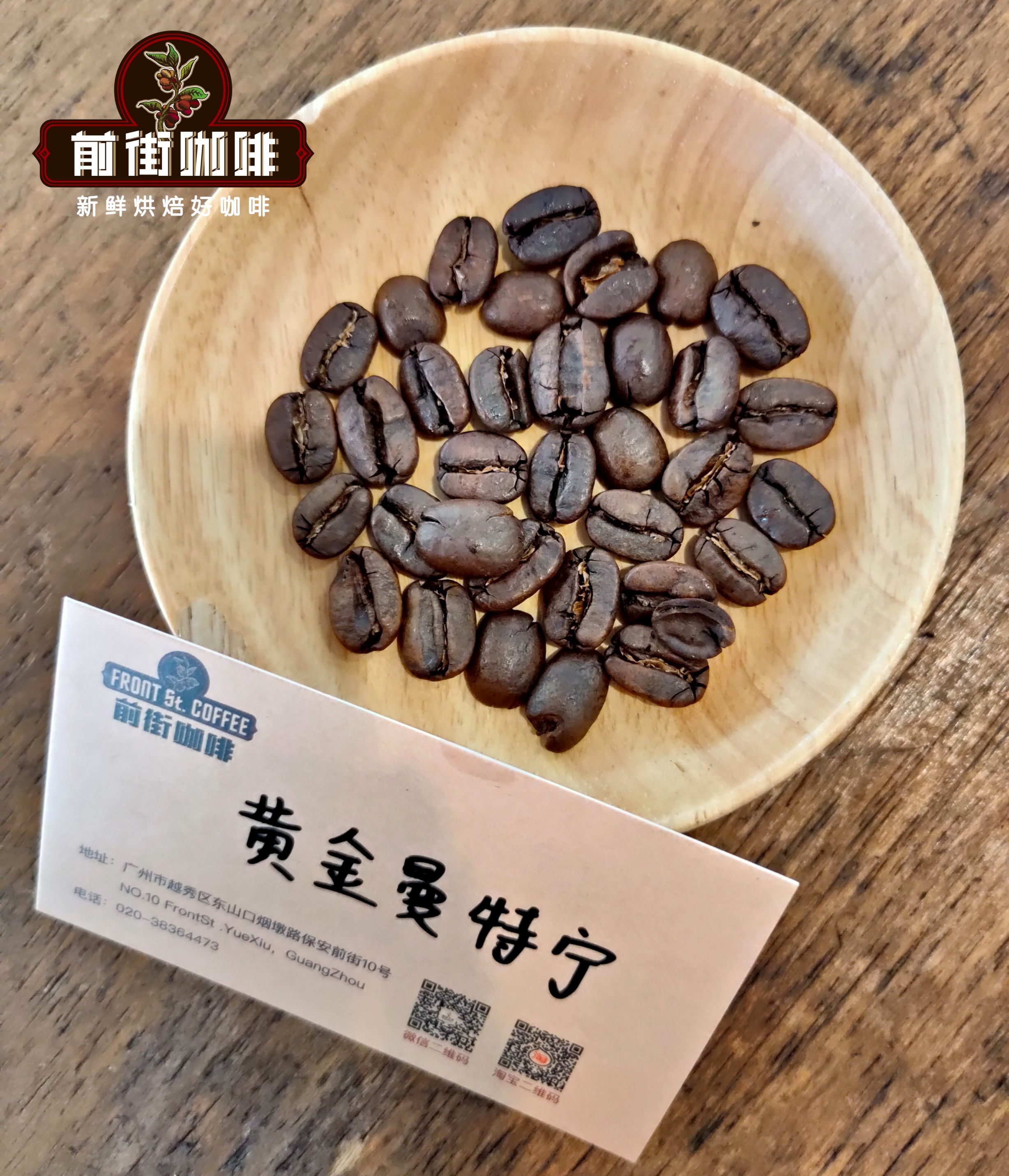
Front Street Coffee—PWN·Golden Mandheling Growing Region: Gayo Mountain, Aceh, Sumatra Altitude: 1,100 to 1,600 meters Variety: Ateng Grade: G1 (hand-sorted three times) Processing Method: Wet-hulled
Front Street PWN·Golden Mandheling Flavor Presentation On the palate you can catch notes of spices, pine, herbs, caramel, nuts, and chocolate, rich and varied in layers, mellow yet still clean, with extremely high balance; the nutty and caramel aromas are abundant, with a thread of chocolate running through, and a long finish.
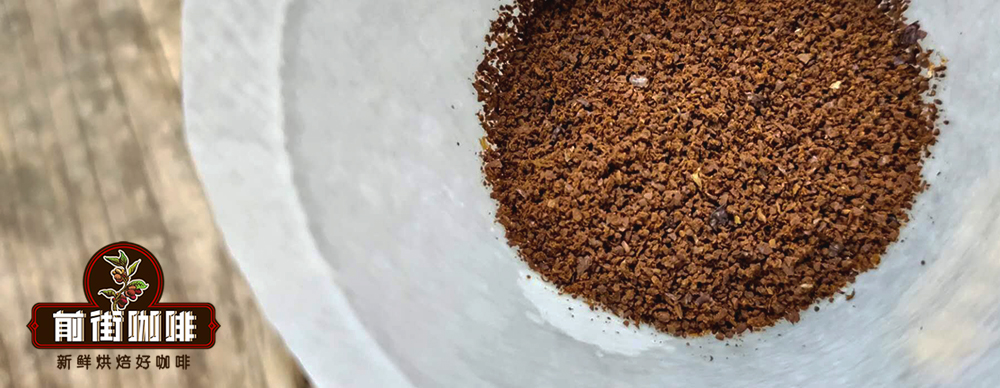
Front Street PWN·Golden Mandheling Brewing Parameters Reference Brewing Device: Kono dripper Water Temperature: 88°C Coffee Dose: 15 g Coffee-to-Water Ratio: 1:15 Grind Size: based on a No. 20 standard sieve, 70%–75% passing rate
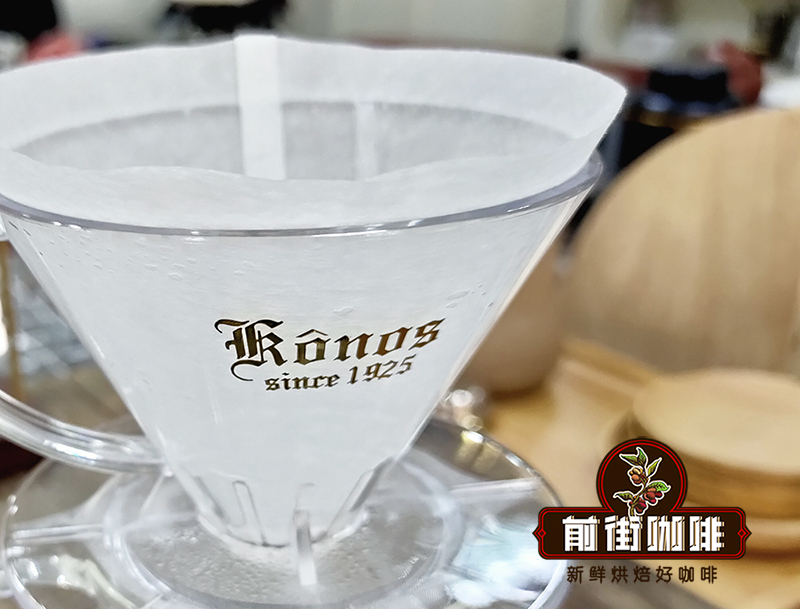
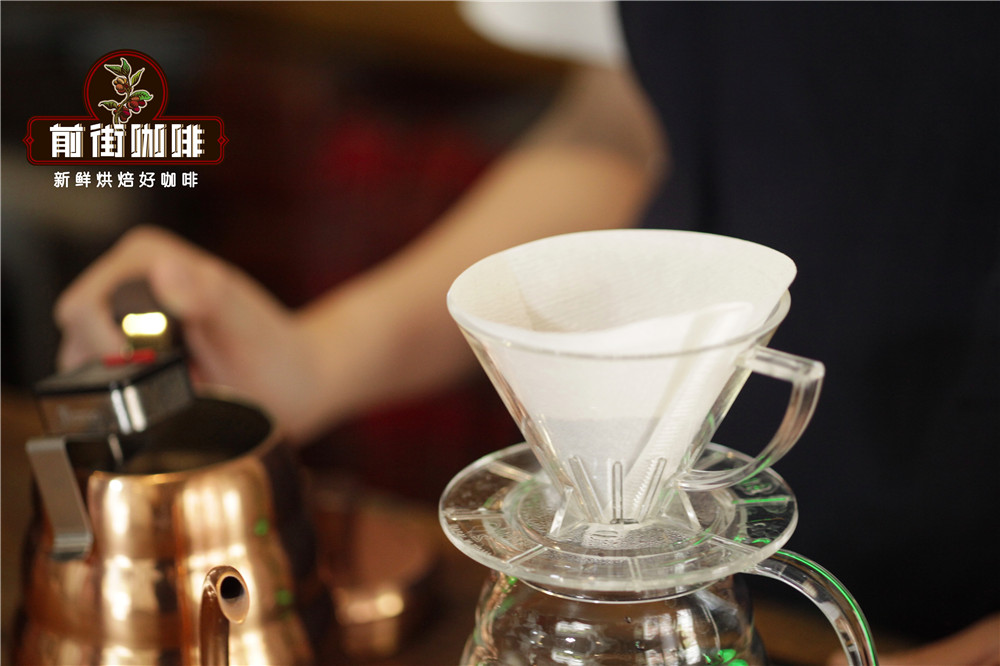
Why choose the Kono dripper? Because it has few ribs and they are concentrated at the bottom, allowing the filter paper to cling tightly to the wall of the dripper, thereby restricting airflow and lengthening the contact time between water and the coffee bed, so the coffee grounds are extracted more fully and body is enhanced as well.
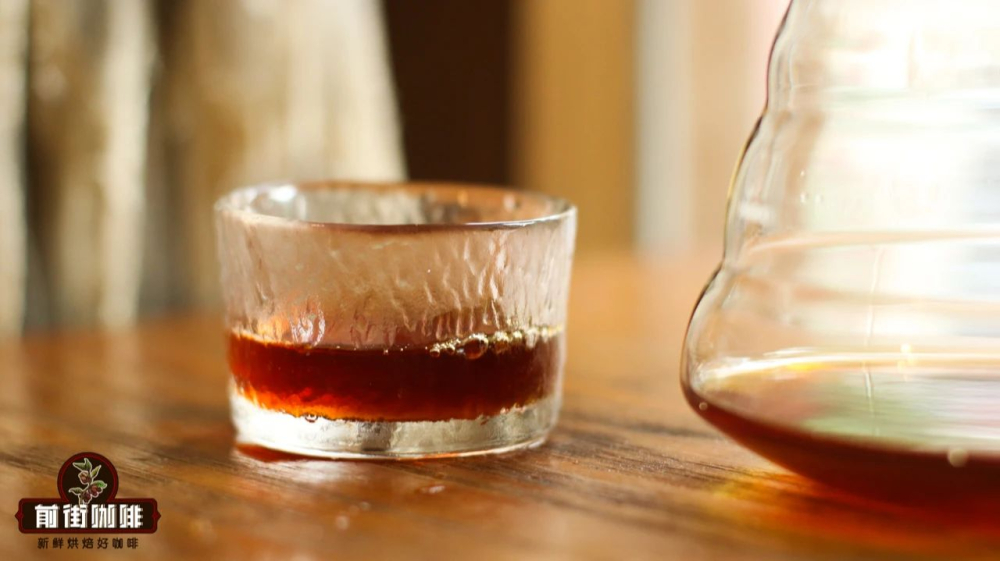
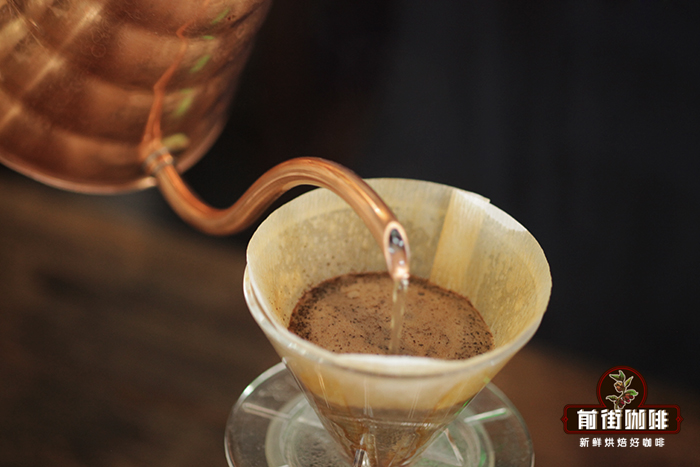
Front Street Coffee uses a staged extraction approach when brewing: first pour 30 g of water and let it bloom for 30 seconds, then pour in a small stream in circles, stopping at 125 g for a stage break; when the water level drops and the coffee bed is about to be exposed, continue pouring until 225 g and stop; when the bed is about to be exposed again, remove the dripper (timing from the start of the bloom). The entire extraction process takes about 2 minutes 00 seconds.
Front Street Espresso Blend Beans Explained in Detail (with Specific Recipes)
What is a blend? Simply put, it is mixing green coffee beans from different regions together. What is the point of doing this? First, it keeps the flavor stable; second, it creates new flavors that a single origin can hardly present. The several espresso beans currently sold by Front Street all belong to the blend category, including the espresso moka pot bean highly recommended by many baristas—Front Street Black Cocoa Blend—as well as Commercial Blend, Specialty Blend, and Warm Sun Blend.
1/ Front Street "Black Cocoa" Base Espresso Blend Bean Flavor Presentation: Cream, Nuts, Chocolate
The value for money of Front Street Black Cocoa Base Bean is quite outstanding. Front Street uses balanced Brazilian beans as the base, then adds Yunnan beans—whose overall performance is slightly weaker than Brazilian beans—to harmonize, ultimately presenting the most universally appealing flavor direction. Whether you are a newcomer just getting into coffee or a heavily seasoned veteran, you can easily accept this espresso bean.
It uses a medium-dark roast. When used to make espresso, it has a slight acidity and clean sweetness on entry, with a finish mainly of nutty flavors, giving an overall impression that is gentle rather than aggressive; the crema is moderate, enough to handle the daily latte output needs of most shops.
As mentioned earlier, this specialty espresso bean from Front Street has excellent stability and outstanding quality, making it very suitable for independent cafés as a daily production bean; and Black Cocoa Base Espresso Bean is another high-value option Front Street has prepared for everyone. After all, shop operation can never avoid the word "cost"—keeping expenses within a reasonable range while ensuring stable output is every shop owner's wish. Front Street Black Cocoa Blend is precisely such an espresso bean with outstanding value for money, composed of Brazilian beans and Yunnan beans. The beans from these two origins both lean toward nutty notes, with the Brazilian beans giving this base blend a fuller mouthfeel and richer crema.
2/ Front Street "Specialty" Espresso Blend Bean Flavor Presentation: Aromatic and smooth, nutty, with prominent sweetness when paired with milk
If a customer neither prefers flavors that are too assertive nor is keen on single-origin coffee, while still caring about coffee quality, then this specialty espresso bean would be an ideal choice. Front Street Specialty Blend also follows a medium-dark roast profile, using balanced Brazilian beans as the main body, supplemented by Colombian beans with soft fruit acidity and a nutty finish, making the flavor very classic.
This blend is also the bean used in Front Street's own stores—it has been in use since about half a year after opening. When designing the recipe, our approach was to use American beans as the main body, strengthen the overall nutty and sweet aromatics, while avoiding excessive bitterness as much as possible.
3/ Front Street "Commercial" Espresso Blend Bean Flavor Presentation: Aromatic and smooth, nutty, with prominent sweetness when paired with milk
This blend has rich crema and a substantial mouthfeel on entry, with caramel-like sweetness and flavors of nuts, cocoa, and dark chocolate; the balance between acidity and sweetness is good, with only a hint of bittersweetness, and the finish is quite long. A small amount of Robusta beans is added to the recipe, making the crema even more abundant, but the proportion is very low and does not noticeably alter the overall flavor.
Front Street named it "Commercial Blend Bean" because it performs impressively whether brewed as an Americano or made into a milk coffee, and combined with its affordable price, it is very suitable for commercial cafés. This bean's espresso has extremely rich crema, is smooth on entry with a slight bitterness, and has outstanding body.
4/ Warm Sun Blend Bean Flavor Presentation: Vanilla, Cream, Citrus, and Fermented Wine Aroma
In addition to the Specialty Blend and the barista-favored moka pot bean Black Cocoa Blend, Front Street also has a more distinctive blend—the roaster combines Honduras beans with natural Yirgacheffe, redesigning roasting curves for each respectively, then blending them post-roast into one new bean called "Warm Sun Blend."
With specialty coffee growing increasingly popular, Front Street's baristas noticed in daily operations that many customers were no longer satisfied with the word "stability" that the Specialty Blend provided. Front Street therefore reconsidered: perhaps it was time to launch more fresh blends and inject vitality into store offerings.
After repeated adjustments, this Warm Sun Blend officially entered Front Street's bean list in 2019, and the original Specialty Blend in stores was replaced by it. In the view of Front Street's baristas, these three blends each have their own positioning: Specialty Blend represents the pursuit of stability, Black Cocoa Blend focuses on high value for money, and Warm Sun Blend emphasizes breakthroughs in flavor. With different goals, the customers each suits are naturally different too.
The uniqueness of Warm Sun Blend comes from the Honduran sherry barrel-aged beans in the recipe: the coffee cherries first undergo part of the washing process, then are placed into sherry barrels for low-temperature fermentation, and finally dried. It is precisely this process that gives the sherry beans their distinctive wine aroma. Front Street's roaster then adds natural Yirgacheffe at a ratio of 40%, supplementing the blend's acidity and making the layering more three-dimensional.
Front Street fine-tunes brewing parameters daily according to the actual condition of the beans, for example using 20 g of coffee to extract 40 g of espresso liquid, with the time controlled between 26 and 28 seconds. Espresso made with these parameters has acidity, bitterness, and body all at just the right medium level, overall balanced, with black cocoa and citrus clearly distinguishable in flavor, while the aftertaste retains a fermented wine aroma. Made into an Americano, you can taste distinct winey chocolate and citrus acidity; used for a latte, it presents flavors like vanilla cream and wine-filled chocolate.
Front Street Coffee Mini-Class · Further Reading The richer the crema, the easier the latte art Espresso is the base of a latte. When making a hot latte, baristas often "casually" present exquisite latte art on top, and delicate, rich crema is obviously more conducive to latte art.
Espresso with crema can integrate more fully with milk foam and is also more stable, which greatly affects the fineness and formation of latte art patterns. If the espresso lacks crema, latte art can still be done, but the patterns often appear stiff and the appearance is relatively rough.
When Buying Coffee Beans, Keep These Points in Mind Roast (Production) Date—when buying beans, be sure to check the roast date first. Front Street Coffee's beans usually have the roast date printed on the back of the bag, making it easy to confirm freshness.
For freshly roasted coffee beans, the optimal tasting period is within 30 days after the resting period (4–7 days) ends. After this stage, the flavor gradually dissipates, eventually leaving only a woody taste. The first to be lost are volatile compounds such as floral and fruity aromas, while water-soluble components such as sugars, nuts, and chocolate are relatively stable and not easily volatilized.
Therefore we usually remind customers: the optimal tasting period for beans starts on the 4th day after roasting and ends on the 30th day. Of course, even after the optimal tasting period, it does not mean the bag of beans cannot be drunk, only that the flavor performance will be somewhat compromised. Here it is necessary to distinguish the optimal tasting period from the shelf life: the shelf life of roasted coffee beans is usually between 6 and 12 months. So when buying roasted beans, it is not that the fresher the better (you still need to allow resting time), but do not store them so long that you forget to enjoy them. When purchasing, pay attention to the roast date and plan to finish them within the corresponding period to avoid waste.
Do you prefer whole roasted coffee beans or ground coffee?—Both have their advantages
As mentioned earlier, the optimal tasting period for roasted beans is within 30 days after the resting period (4–7 days). But once ground into powder, the aroma begins to weaken, and the rate of flavor loss accelerates, so the optimal tasting period after grinding shortens to within 20 days.
Whole coffee beans are better at locking in flavor compounds, and grinding fresh before brewing allows the flavor to be fully presented; ground coffee wins for convenience. For friends who do not have grinding tools on hand (a quality grinder is expensive and not small), having the shop grind for you is undoubtedly the first choice. However, pre-ground coffee will accelerate the loss of flavor compounds, and its flavor performance will inevitably be inferior to freshly ground.
Although ground coffee is indeed convenient to use, Front Street still recommends grinding beans right before brewing~ In addition, when buying beans, it is best to finish one bag before buying the next, because whether beans or grounds, freshness is crucial!! If you have a habit of drinking coffee often, or pursue a more refined taste, you might as well first get a hand grinder or a small electric coffee grinder. As long as you compare the taste of pre-ground and freshly ground coffee, as long as there is still a choice, you will definitely embrace fresh grinding.
The extraction method determines which bean to buy—first clarify how you make coffee If you use equipment such as an espresso machine, Turkish pot, or moka pot that relies on pressure or heat for extraction, Front Street recommends espresso beans; If you prefer methods such as pour-over, French press, cold drip, or cold brew, then single-origin pour-over beans will be a more suitable choice.
At present, the two most mainstream categories on the market are espresso beans and pour-over beans. This does not mean espresso beans cannot be used for pour-over, nor that pour-over beans cannot go into an espresso machine. Every coffee shop customizes different roasting curves according to its own extraction methods and equipment characteristics. Therefore, espresso beans may perform excellently in lattes and Americanos, but may not taste good when switched to pour-over; conversely, the same principle applies to pour-over beans used for espresso (so don't assume single-origin beans will definitely taste good as espresso).
Why choose Front Street's coffee beans? Reason one: Front Street's roasted bean selection is rich enough. When opening a small café, the range of beans available to the owner is actually quite limited—if there are too many bean options in-store but consumption cannot keep up, freshness becomes hard to guarantee. This is a hurdle small and micro cafés can never avoid.
Reason two: from a practical standpoint, many operators simply are not in a position to try every kind of bean, and the fact that Front Street offers a wide variety of beans happens to solve this problem for small shops.
For a growing coffee business, finding a suitable bean supplier is self-evidently important, and establishing a trusting cooperative relationship is even more crucial. Moreover, roasting and coffee-making belong to different professional fields, each supported by systematic theory. Specialized fields have specialized experts—why not leave professional matters to professionals?
The above content is compiled by CoffeeHunters, a coffee news website.


