








How Do You Choose Coffee From Other Countries for Pour-Over?
The processing method shapes flavor as much as origin does, and the natural process is the oldest technique still in use. Early Ethiopian natural lots were sold as G3 grades, while today's specialty naturals are commonly G1. Choosing pour-over beans means deciding first between washed and natural: washed lots give consistent, region-typical cups, while naturals push fruit sweetness and heavier body forward.
Ethiopia's Sidamo and Yirgacheffe regions are useful reference points, since their natural lots typically show berry and stone-fruit notes. Comparing them against coffee from other countries helps clarify what processing adds versus what the green coffee bean itself contributes. Tasting a washed and a natural lot side by side from the same region is a practical way to learn the difference.
The processing method plays a pivotal role in shaping coffee flavor, and among them, the natural process, as the oldest traditional technique, has increasingly gained attention in the specialty coffee world in recent years. From the perspective of Front Street Coffee, this article systematically reviews the evolution of the natural process—from early Ethiopian G3 grades to today's G1 specialty natural beans—and uses the Huakui coffee bean as a case study to detail its origin, flavor characteristics, and pour-over parameter recommendations. It also compares the differences between washed and natural processing methods to help coffee enthusiasts more clearly understand the unique charm of natural coffee. Whether you are a beginner just getting into pour-over or a seasoned drinker looking to enrich your flavor experience, you will gain practical bean-selection insights from this article.
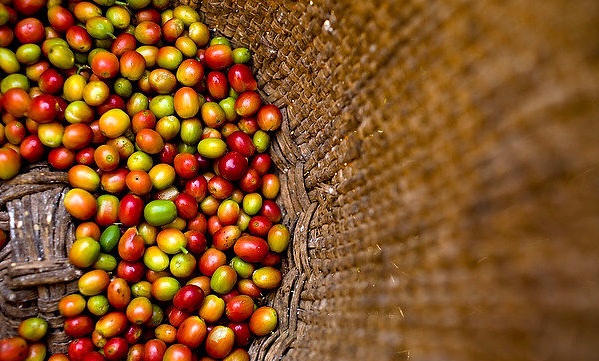
The processing method plays a pivotal role in shaping coffee flavor—it could even be said that without understanding the processing method, one cannot truly understand the taste of a cup of coffee. Today, Front Street is here to talk about the topic of coffee processing methods.
The washed process can be said to be Front Street Coffee's most preferred method, because washed beans have always performed consistently and also serve as a "litmus test" for the quality of a producing region. When selecting beans from various coffee-producing countries in Central and South America, Front Street Coffee usually prioritizes cupping washed coffee beans first, screening out the lots that best express the regional flavor.
What exactly is the natural process? When introducing processing methods, Front Street Coffee often mentions that processing is essentially the process of separating coffee beans from the fruit, and the natural method can be considered one of the oldest and most traditional processing methods.
Compared to the washed process, the natural process is easier to understand. The most primitive approach is commonly seen among smallholder farmers: coffee farmers spread the harvested coffee cherries directly on the ground to dry, and after the fruit's moisture content drops to a certain level, they peel away the pulp to extract the coffee beans.
However, this rough-and-ready approach often leads to a significant decline in green bean quality, and naturally the flavor is less than satisfactory. A typical example is Ethiopia's early green bean grading system—in an era when coffee flavor was not yet valued, the country mainly graded green beans by defect rate, specifically the number of defective beans contained in every 300 grams of green beans: G1 requires no more than 3 defective beans, G2 is 4 to 12, and so on.
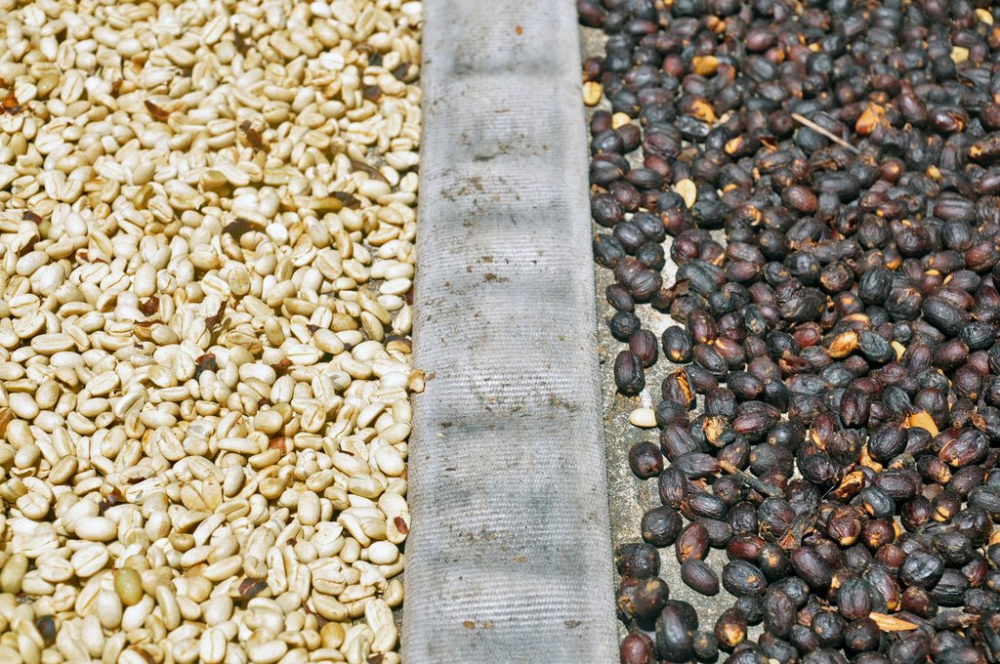
The washed coffee beans that can be exported and reach our everyday shops are mostly G1 and G2 grades, but at the time, natural coffee beans could at best reach G3, meaning at least 13 defective beans in every 300 grams of natural green beans.
Fortunately, as natural processing techniques have continued to advance and improve, Ethiopian natural coffee beans can now also reach G1 grade. Among them, Huakui is the most representative example—this natural bean from the Guji Hambela producing region displays a distinct dark berry character, with a complex and full mouthfeel that is unforgettable. The natural process gives this bean a rich body and a pleasant fermented aroma.
The Charm of the Natural Process
Although Front Street Coffee has a particular fondness for the washed process, it is equally fond of naturally processed coffee beans. Not only us—many estates and well-known producing regions also favor the natural method. Twenty years ago, Front Street Coffee was surprised to discover that the Blue Mountain producing region had actually begun trying to produce naturally processed Typica coffee beans. In the past, when we evaluated Blue Mountain, we often said it had a balanced and stable flavor, high quality, and consistency, which was thanks to its insistence on producing only washed Typica varieties—and this dedication also earned Blue Mountain coffee its status today. However, times have changed, and as the concept of specialty coffee continues to spread, Blue Mountain coffee faces new challenges. So starting in 2019, the Blue Mountain producing region began experimenting with natural processing and invited well-known estates to provide technical guidance, ultimately launching naturally processed Typica Blue Mountain coffee in 2020.
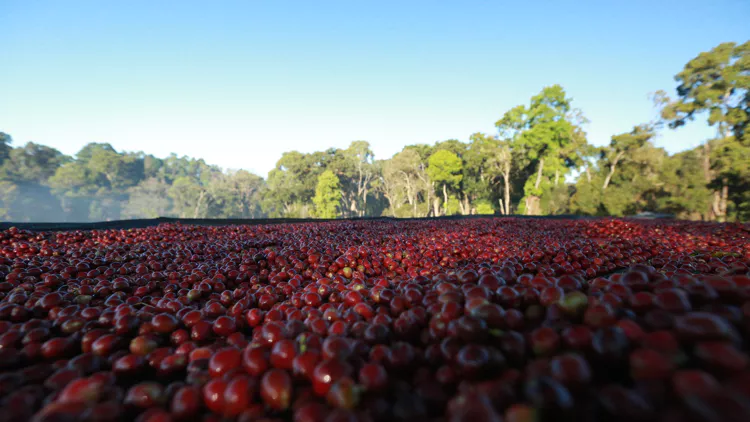
It is clear that even Blue Mountain has yielded to the market's enthusiasm for natural coffee. Although natural processing is riskier and highly dependent on weather, carefully crafted natural coffee often brings generous returns—a complex, full mouthfeel and delicate berry notes. The formation of these notes comes from keeping the pulp and skin on during sun-drying in the processing, so the sugars in the pulp are absorbed by the coffee beans, thus developing such alluring flavors.
The Specialty Natural Process
For green coffee beans refined through the specialty natural method, coffee farmers pick fully ripe coffee cherries from native forests, ensuring each cherry is intact and undamaged, keeping the pulp and skin, and then using raised beds for sun-drying. On one hand, this completely isolates the beans from off-flavors caused by contact with soil; on the other hand, it also improves the drying efficiency of the coffee cherries, more fully presenting the coffee's original fruit flavors.
Front Street's New-Season Natural Huakui Coffee Beans
Country: Ethiopia Region: Sidamo · Guji Altitude: 2250–2350 m Variety: Local heirloom varieties Processing: Natural process
Flavor: Floral, jackfruit, dried fruit, apricot, juicy
Front Street Coffee brewing recommendation: Dripper: Hario V60 #01 Water temperature: 90–91°C Dose: 15 g Coffee-to-water ratio: 1:15 Grind size: 80% passing a Chinese standard No. 20 sieve

To fully extract the fruity acidity of Yirgacheffe and Sidamo, Front Street uses a higher water temperature and a finer grind for extraction, but to avoid over-extraction caused by high temperature, it pairs this with a faster-flow dripper, such as the V60. The V60 dripper has a 60-degree cone shape, and this angle allows the coffee grounds to gather together; when pouring, the water flow also automatically converges toward the center of the dripper, ensuring enough contact time between water and coffee grounds to extract the ideal coffee liquid. In addition, the ribs on the inner wall of the V60 dripper form a clockwise spiral extending from the bottom all the way to the top, leaving ample space between the filter paper and the dripper for better flow, and combined with the large hole at the bottom, the flow rate is faster than many other drippers.
Front Street brewing method: In the first stage, pour 30 g of water for a 30-second bloom, then pour 95 g (the scale reads about 125 g), finishing the pour in about 1 minute. When the water level drops to two-thirds of the coffee bed, pour the remaining 100 g (the scale reads about 225 g), finishing the pour in about 1 minute 40 seconds to 1 minute 45 seconds. The drip finishes at 2:00–2:10; remove the dripper and extraction is complete.
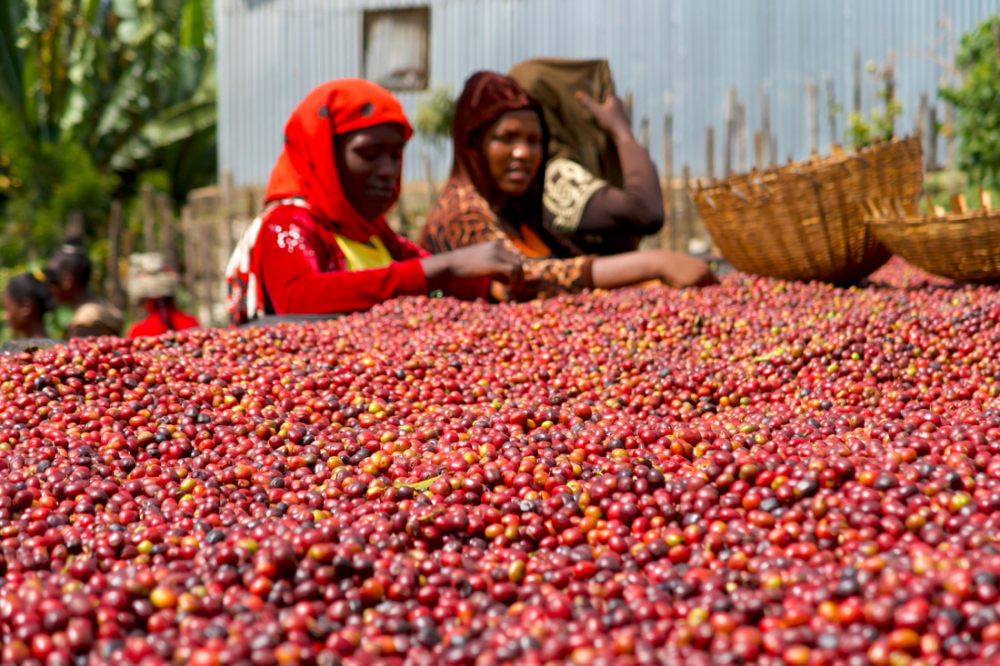
Compared with washed processing, natural beans have a more abundant fruity aroma and a higher body.
The above content is compiled by CoffeeHunters, a coffee news website.


