







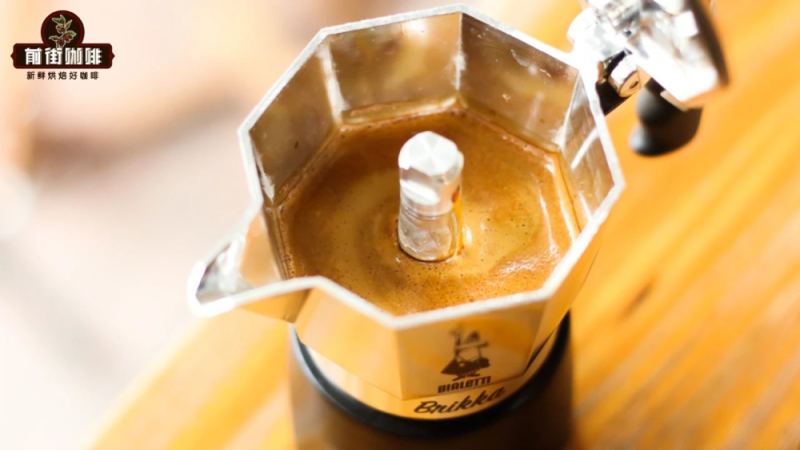
Does a Moka Pot Really Produce Espresso?
A moka pot does not make true espresso, but it can brew a concentrated, full-flavored coffee that approaches espresso style. It works with three parts: a base holding water, a filter basket holding ground coffee, and an upper chamber collecting the result. Steam pressure in the base pushes hot water up through the grounds and into the upper chamber, producing a dense cup without the pressure of a professional machine.
Valve design changes the outcome. Single-valve moka pots let coffee flow straight out through the top of the tube, giving lower concentration and less crema. Double-valve moka pots add a pressure-regulating valve that stays closed until steam pressure builds, then sprays the coffee out, producing higher concentration and a richer crema layer. Grind size and heat control both affect how much crema ends up in the cup.
The moka pot is a device many coffee lovers keep at home, but can it actually make espresso? And how does it differ from a professional espresso machine? From Front Street's perspective, this article takes an in-depth look at the moka pot's structure, the difference between single-valve and double-valve models, and its extraction principle, while comparing it with espresso. It also shares practical brewing methods for boosting the crema and recommendations for Front Street's specialty blend coffee beans, helping you understand the moka pot's pros and cons more fully and master the techniques for making a cup of coffee close to the espresso style.
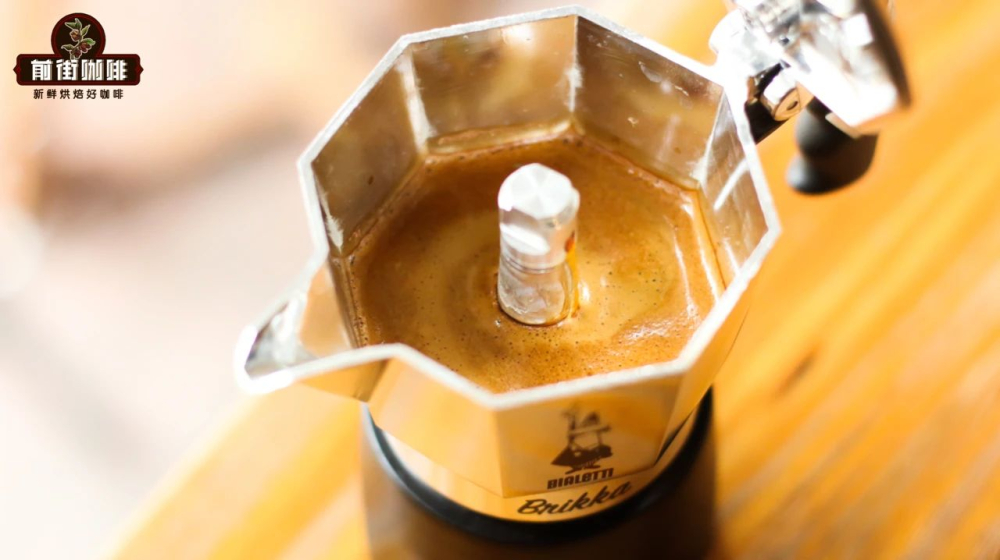
When people mention the moka pot, many know it can brew rich, aromatic coffee, but they often wonder: does the coffee it makes really count as espresso? If not, what are the differences between the two? Today, Front Street will guide you through a comparison of the similarities and differences between the moka pot and espresso from multiple angles.
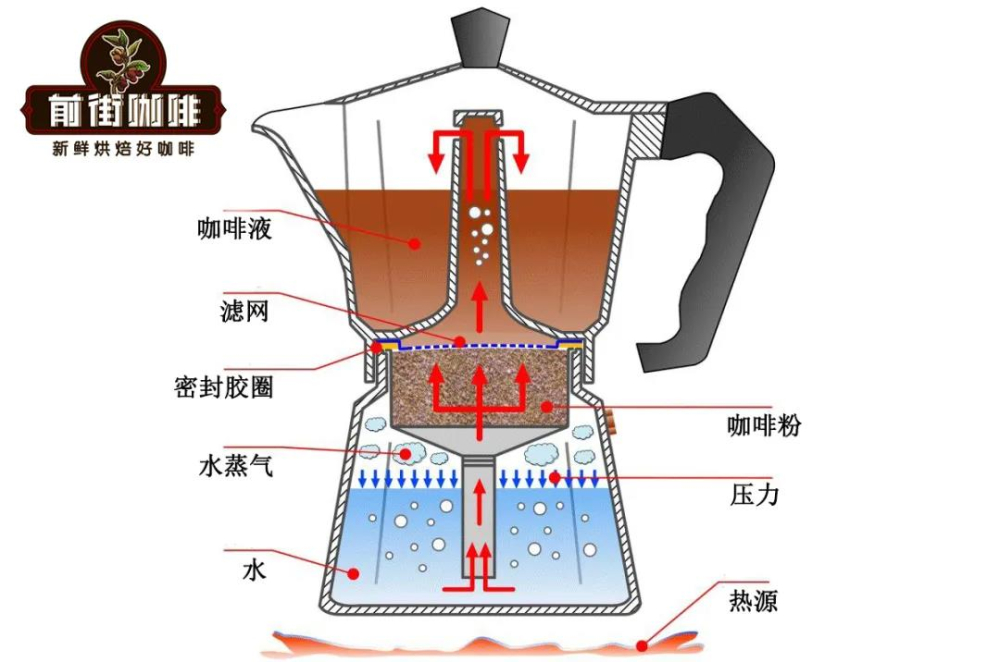
The moka pot can brew full-flavored coffee. Let's first look at its construction. The moka pot consists of three main parts: the upper chamber, the filter basket, and the base. The base holds water, the filter basket holds finely ground coffee, and the upper chamber collects the extracted coffee. The moka pot's extraction principle is not complicated: it relies on the steam pressure generated when the lower chamber is heated. When the pressure is sufficient to penetrate the coffee grounds, the hot water is pushed up into the upper chamber, brewing rich coffee.
Through the images provided by Front Street Coffee (FrontStreet Coffee), you can intuitively see the moka pot's internal structure and extraction process.
Moka pots also come in two types: single-valve and double-valve. A double-valve moka pot can produce more crema than a single-valve one. Single-valve means the coffee flows directly out through two small holes at the top of the tube; double-valve adds a pressure-regulating valve on top of the tube, which normally blocks the outlet and only opens when the steam pressure reaches a certain level, letting the coffee spray out. The flavor of coffee brewed with the two types of valves also differs: single-valve moka pots produce coffee with lower concentration and less crema, while double-valve moka pots produce higher concentration and richer crema.
Placing the moka pot directly on a stovetop and using steam pressure for extraction—this method is commonly called a direct-fire espresso maker. With its elegant appearance, the moka pot has attracted many enthusiasts. It can brew sufficiently rich coffee, and the result still has the concentration and flavor characteristics of Italian espresso.
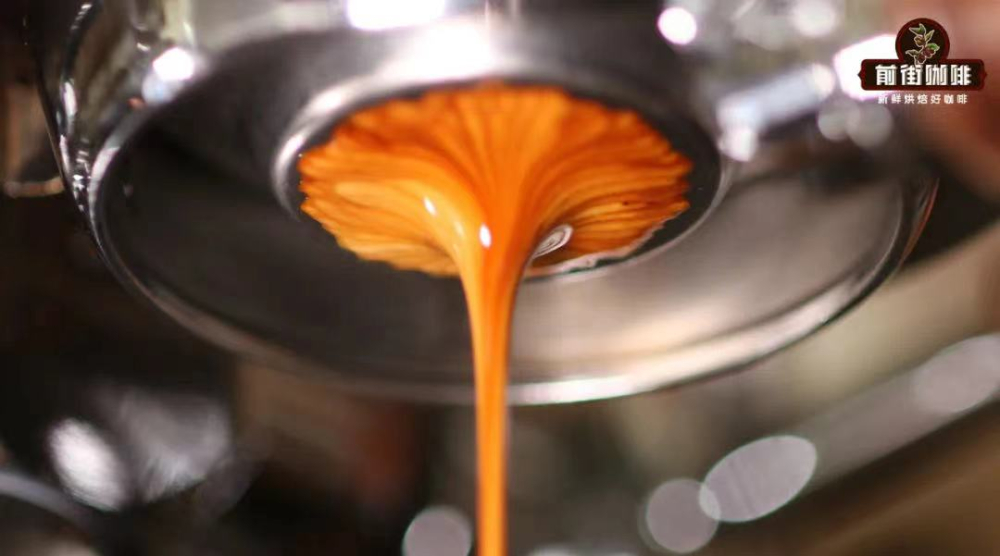
Espresso, on the other hand, requires a dedicated espresso machine—the one in coffee shops that can shoot out steam. Its extraction principle is to heat the water in the boiler to produce steam, and using steam pressure, force 94°C hot water at 9-10 bar of pressure rapidly through very finely ground coffee, extracting a honey-thick coffee liquid.
In the early stage of extraction, the coffee liquid is brownish-red with a concentrated, smooth texture. Over time, the color gradually shifts to golden yellow, then to pale golden yellow. Because the pressure is far higher than that of a moka pot, espresso is also more concentrated, with richer layers of flavor when used to make Americano or latte.
The pros and cons of the moka pot
The moka pot extracts coffee using a simple principle: it relies on the steam pressure generated inside the lower chamber. When the steam pressure is high enough to penetrate the coffee grounds, it pushes the hot water up into the upper chamber. Coffee extracted with a moka pot has a bold taste, both acidic and bitter, and has crema. Therefore, the moka pot's greatest advantage is that it is small, convenient, and easy to carry—a must-have for those who love going up mountains and into the sea. It is tough and impact-resistant, and it can brew decent-quality coffee. It is simple to operate, and ordinary people can master the technique of brewing coffee with it. Moreover, it can easily brew rich coffee with golden crema.
But its drawbacks are also very obvious: the upper limit of flavor with a moka pot is low—it is neither as clear and bright as pour-over coffee nor as rich and delicate as what an espresso machine produces. That is why moka pots are almost nowhere to be seen in specialty coffee shops, but as a home coffee device, it is a very beginner-friendly product.
The moka pot's coffee extraction principle
The moka pot extracts coffee using the steam pressure generated inside the lower chamber (about 1.5-3.0 atmospheres of pressure). When the steam pressure is high enough to penetrate the coffee grounds, it pushes the hot water up into the upper chamber. On the way up, the hot water passes through the coffee grounds in the filter, extracting the essence of the coffee very quickly. The extracted coffee essence has a bold taste, both acidic and bitter, and is the coffee device closest to espresso.
What equipment is needed to make a cup of espresso with a moka pot
1. Moka pot 2. Gas stove and stove rack, or an induction cooker 3. Coffee beans 4. Grinder
[Front Street Specialty Blend Coffee Beans]
Blend: Brazil + Colombia
Composition ratio: 7:3
Roast level: Medium-dark roast
Flavor description: chocolate, cream, nuts, butter, caramel
[Brewing method]
(1) First, put cold water in the base.
(2) Put the coffee grounds into the filter basket, filling it to about 9/10 full, and gently tap the edges so the coffee grounds are compact and level.

(3) Tighten the upper and lower chambers to prevent the coffee from overflowing during the process.
(4) Place the moka pot on a small gas burner or induction cooker to heat. Start with medium heat. When you hear a hissing sound, turn the heat to low, and the coffee will naturally flow out slowly.
(5) When the sound turns to a faint bubbling sound, turn off the heat to avoid over-extraction. The rich, aromatic coffee is now ready.
[Small reminders]
(1) The moka pot belongs to the espresso brewing method, so the concentration is relatively high, and it is usually paired with milk foam or fresh milk.
(2) It is suitable for finely ground coffee, and the brewing result will be even better!
(3) Please avoid heating the moka pot empty, to prevent damage to the pot's structure.
(4) A moka pot that has been used must be cleaned to prevent fine grounds from affecting the filter holes and rubber components.
(5) Never brew a pot of coffee to taste right away with a brand-new moka pot. It is best to boil plain water twice first before starting to use it to make coffee!
Now it's time to taste the delicious coffee.
The most basic way to drink it is as an Americano with water—no sugar and no milk, it couldn't be better as a fat-loss coffee.
Of course, you can add fresh milk directly, and then the taste becomes just like the latte in a coffee shop. If you want to add fresh milk, heat the milk to about 60 to 65°C, and it will present a perfect fusion of milk and coffee. In this way, a complete latte is ready.
Of course, adding some ice and condensed milk to imitate a Vietnamese coffee is no problem either. Stir the espresso liquid into the condensed milk, then add ice. In winter, just add condensed milk directly and add an appropriate amount of hot water according to how strong you want it.
Front Street believes that everyone's taste is different, so you can add according to personal preference. Of course, you can also try more other flavors. For example, many baristas recommend espresso beans such as Front Street Dark Cocoa Blend, Front Street Specialty Blend, and Front Street Commercial Blend. All of these can be used to make espresso, and each has a different taste. The more you try, the more enjoyment coffee can bring you.
The above content is compiled by CoffeeHunters, a coffee news website.


