







What is kopi luwak coffee and how is it brewed?
Kopi luwak coffee is made from beans that a civet swallows and passes through its digestive tract, where gut flora ferment them before they are excreted with the feces, cleaned, and roasted. Authentic wild beans can sell for up to 7,000 RMB per jin, so brewing mistakes are costly. The cup is thick and syrupy, with earthy, gamey notes and a faint mint-like coolness that lingers.
For hand-brewing, use a Kono Meimon dripper, 15 grams of coffee, a 1:15 coffee-to-water ratio, a grind with 70 percent passing a No. 20 sieve, and water at 87-88°C. A three-stage pour develops the body. The fermentation that defines the luwak coffee taste is why Indonesian beans carry such a heavy, earthy character and leave a cool sensation after drinking.
Kopi Luwak is arguably one of the rarest high-end coffees in the world, with authentic wild beans selling for up to 7,000 yuan per jin, and any improper brewing is a tremendous waste. This article is aimed at enthusiasts fortunate enough to obtain Kopi Luwak beans, systematically covering everything from background knowledge to practical parameters. Front Street Coffee will guide you through the unique flavors brought by civet fermentation and explain the pour-over method in detail: the reasons for choosing the Kono Meimon dripper, 15 grams of coffee powder, a 1:15 coffee-to-water ratio, a grind size with 70% passing through a No. 20 sieve, a water temperature of 87-88°C, and the specific allocation of a three-stage pour, helping you fully present Kopi Luwak's rich body, caramel sweetness, and cool minty finish.
Kopi Luwak holds an extremely special position among many premium coffee beans. Authentic wild Kopi Luwak beans can reach a price of 7,000 RMB per jin. Precisely because of this, if something goes wrong during brewing, the cost of the loss is extremely high. So, if you are lucky enough to get a portion of Kopi Luwak beans, how exactly should you brew them to avoid disaster?
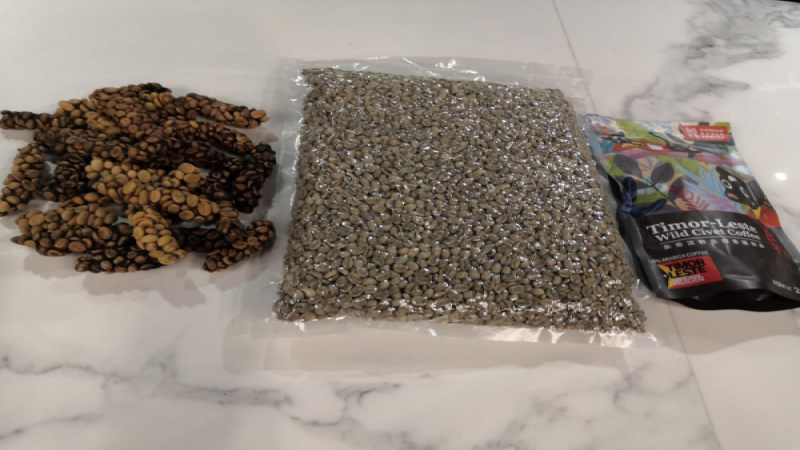
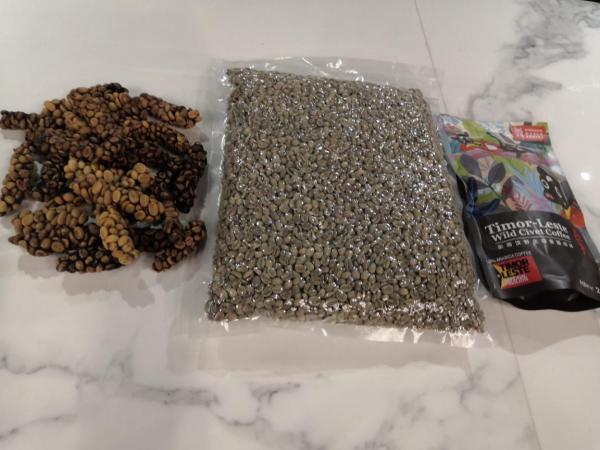
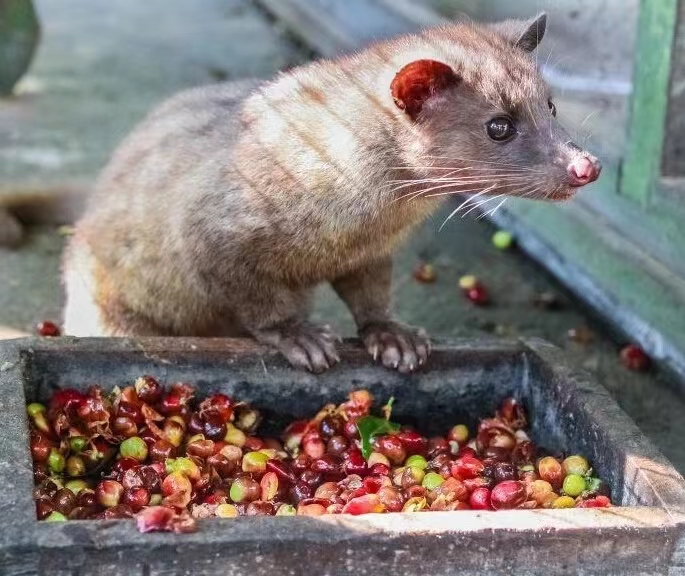
Front Street will first briefly review the origins of Kopi Luwak. The formation process of this coffee bean is as follows: after the civet swallows the coffee cherries, the coffee beans remain in its digestive tract, where specific flora in the intestines create a unique fermentation environment, and the coffee beans themselves cannot be digested, eventually being excreted with the feces. Coffee beans that have undergone fermentation in the civet's stomach and intestines develop a distinctive flavor, with an especially thick and mellow mouthfeel.
Coffee produced in Indonesia often carries earthy notes and a medicinal taste, and its body ranks among the top of all producing regions. Kopi Luwak's earthy, gamey smell is even more prominent, and its thickness even approaches that of syrup, giving off a rather unique aroma. After drinking it, a faint mint-like coolness remains in the mouth, a "signature taste" that ordinary coffee does not have. After one cup, whether you take a deep breath or hold a sip of cold water in your mouth, you can clearly feel a cool sensation from the mouth to the throat, as if you had just finished dissolving a mint throat lozenge.
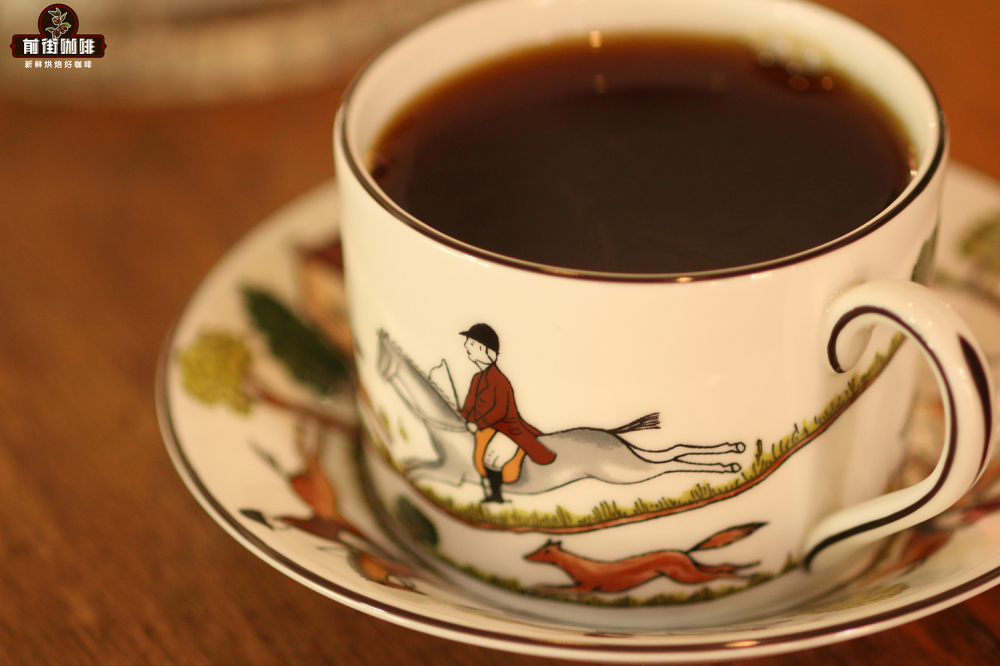
How should Kopi Luwak be brewed to taste good? Front Street's recommendation is to use the pour-over method to complete the extraction.
Regarding the choice of dripper, Front Street selected the Kono Meimon dripper. The most notable design of this dripper is that the guiding ribs extend from the bottom all the way to the middle of the cone, while the upper part is a smooth inner wall. As a result, once the filter paper fits against the dripper, water cannot "quietly" bypass the coffee grounds, thereby enhancing the body of the final brew.
The amount of coffee powder used by Front Street this time is still 15 grams. It is not that the more coffee powder, the better, nor that the less, the better; the specific amount should be determined according to the size of the dripper. The dripper used by Front Street is suitable for 1 to 2 servings, and a reasonable brewing dose is between 15 and 20 grams. Operating outside this range will involve a certain degree of difficulty.
As for the coffee-to-water ratio, Front Street recommends 1:15. Although some people advocate using 1:13 or an even smaller ratio, Front Street has already explained in previous articles that there is no inevitable connection between concentration and body, and coffee that is too strong can also make people uncomfortable. Therefore, a 1:15 coffee-to-water ratio can also very well showcase Kopi Luwak's rich texture and special aroma.
In terms of grind size, Front Street uses the standard of 70% passing through a No. 20 sieve. When brewing Kopi Luwak, the grind particles should be slightly coarser than for light-roasted beans. The reason is that Kopi Luwak is a dark roast, and the bean structure is relatively loose, making it easier to absorb water and release flavor compounds. If it is ground as fine as light-roasted beans, it is very easy to extract burnt bitterness; conversely, if it is ground too coarse, the coffee will become bland and tasteless, with a mouthfeel as thin as water.
As for water temperature, Front Street recommends brewing between 87 and 88°C. The reasoning is similar to that for grind size: water that is too hot easily brings out burnt bitterness, while water that is too cool makes the coffee seem flat and produces an unpleasant sharp acidity.
The brewing technique uses a three-stage pour. Pouring in three stages can better present Kopi Luwak's rich mouthfeel and caramel-like sweetness. The specific allocation of water for each stage is: the first stage, the bloom, pours 30 milliliters; this step must completely wet all the coffee grounds, allowing them to fully degas and laying the foundation for the subsequent extraction of flavor compounds; the second stage pours 100 milliliters; the final stage pours 95 milliliters, used to enhance the coffee's sweetness, ultimately presenting an overall substantial, rich mouthfeel, along with caramel sweetness and flavors interwoven with chocolate and nuts.
The above content is compiled by CoffeeHunters, a coffee news website.


