







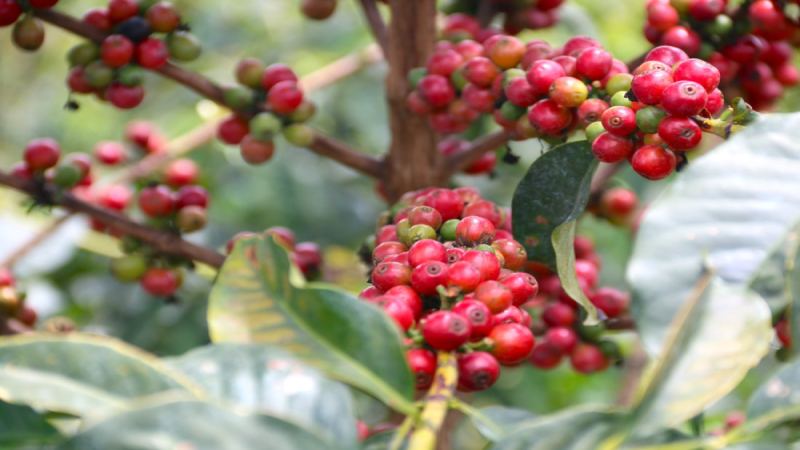
How does the Kenyan coffee grading system work?
Kenyan coffee is graded mainly by screen size, running from AA and AB down to PB and E, with AA representing the largest screen category. Beyond size, the country's reputation rests on bright fruit notes, a full body, and the K72 washed processing method. Core growing regions such as Nyeri, Kirinyaga, and Muranga supply most of the lots sold as specialty coffee.
Kenya's coffee sector developed through deliberate structure rather than chance. The British introduced coffee from Réunion Island in 1883, and the Scott Agricultural Laboratories, founded in 1922 and the source of the SL28 and SL34 variety names, selected those two from 42 varieties for local growing conditions. Government support and a refined grading system later pushed Kenyan beans into the specialty market.
Kenyan coffee is world-renowned for its bright fruit notes and full body, making it a favorite among many coffee enthusiasts. This article systematically outlines the grading standards for Kenyan coffee, explaining each tier from AA and AB to PB and E, and provides an in-depth analysis of its unique K72 washed processing method. It also introduces the altitude, varieties, and harvest periods of core producing regions such as Nyeri, Kirinyaga, and Muranga, as well as the brewing parameters and flavor profile of Front Street Coffee's recommended Kenyan Cherry Tomato coffee beans, offering coffee lovers a complete guide to Kenyan coffee.
For more specialty coffee knowledge, please follow our WeChat public account: Front Street Coffee (FrontStreet Coffee)
When it comes to African coffee, Ethiopia and Kenya are always mentioned together. Today, Front Street Coffee (FrontStreet Coffee) will take you on a deeper look into Kenyan coffee. High-quality Kenyan coffee boasts a rich aroma, abundant fruit notes, and a full body. Its unique fruit flavors—like a blend of blackberry and grapefruit—captivate many veteran coffee enthusiasts.
Kenya is located in East Africa, neighboring Ethiopia, the birthplace of coffee. Although Kenya did not truly begin cultivating coffee until nearly the 20th century, with coffee beans almost circling the globe before returning to Africa, Front Street Coffee (FrontStreet Coffee) believes that despite its late start, Kenya's coffee industry has developed quite rapidly. During British colonial rule, both the establishment of cultivation mechanisms and the refinement of the grading system propelled Kenyan coffee beans step by step into the specialty coffee market. Today, Kenyan specialty coffee enjoys a prestigious international reputation, which Front Street Coffee (FrontStreet Coffee) attributes to the following aspects:
1. Establishment of cultivation mechanisms. In 1883, the British introduced coffee to Kenya from Réunion Island. In 1922, Kenya established the Scott Agricultural Laboratories (Scott Labs, from which the names SL28 and SL34 originate), dedicated to coffee cultivation research. Over more than a decade after its founding, the lab selected SL28 and SL34 from 42 coffee varieties as suitable for local growing regions, laying a solid varietal foundation for the coffee industry.
2. Government emphasis. In 1931, the Kenya Planters' Cooperative Union and the Kenya National Coffee Board were successively established, providing guidance for the coffee industry at both the grassroots and national levels. In 1937, the Nairobi Coffee Exchange was founded, launching Kenya's coffee auction system.
3. Determination of the grading system. Kenya grades coffee based on bean size and cupping results. According to bean size, shape, and hardness, the grades from highest to lowest are AA or AA+, AB, PB, C, E, TT, and T. For green beans in the AA and AB grades, exporters also add cupping results for special grading (not officially recognized by the Kenyan government), from highest to lowest: TOP, PLUS (+), and FAQ.
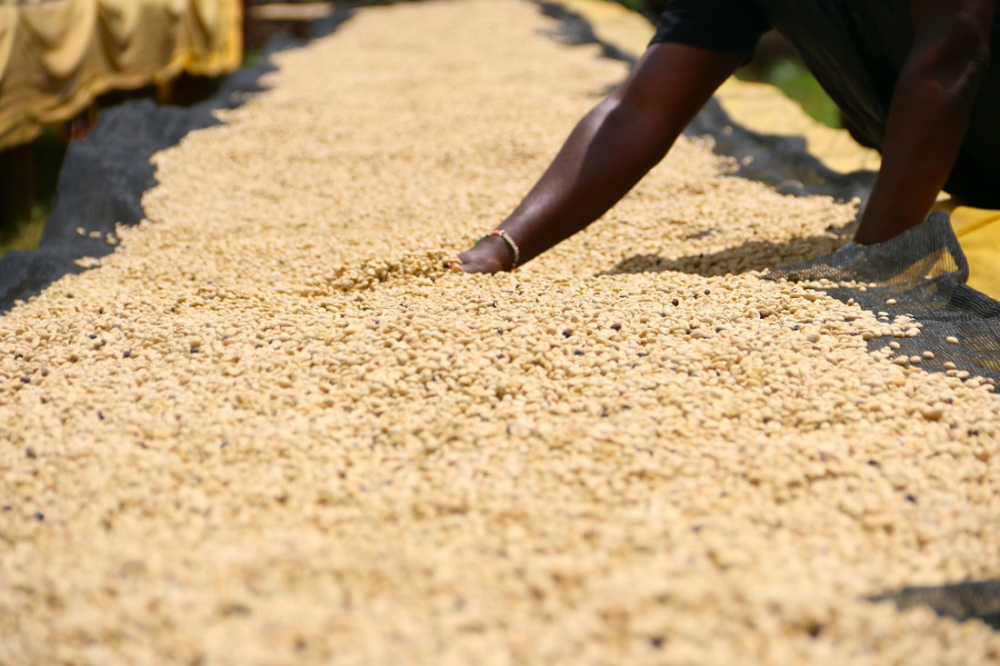
4. The K72 processing method. The signature acidity of Kenyan specialty coffee is inseparable from its unique processing method. In conventional washed processing, fully ripe cherries are selected, pulped to remove skin and flesh, then placed in water tanks to ferment and remove mucilage, a process that typically does not exceed 36 hours—but in Kenya, fermentation lasts as long as 72 hours. After fermentation, the beans are dried until moisture content drops to 12%. Front Street believes that Kenya's unique washed processing method better showcases the bright acidity and full juicy mouthfeel of the coffee beans.
[Kenyan Coffee Grading System] AA Plus (AA+): AA grade with exceptionally excellent cup quality (flavor, mouthfeel). AA: Screen Size 17-18. AB: Screen Size 15-16, accounting for the majority of production. C: Screen Size smaller than AB. TT: Lightweight beans blown out by airflow sorter from AA and AB grade beans. T: Lightweight beans blown out by airflow sorter from C grade beans. E Elephant Bean: Large mutant beans formed by two beans fused together, also known as Elephant ear. PB Peaberry: Classified by shape, unrelated to flavor or weight.
For green coffee beans in the AA and AB grades, a special grading based on cupping results is also added (not officially recognized by the Kenyan government, set by exporters), from highest to lowest: TOP, PLUS (+), and FAQ. The Kenyan Athalia on Front Street Coffee's (FrontStreet Coffee) bean list reaches the TOP level in flavor grading. However, as mentioned earlier, this is not an officially recognized grading system, and not every Kenyan single-origin coffee bean Front Street Coffee (FrontStreet Coffee) sources carries a flavor grade, so there's no need to overthink it. Generally speaking, reaching AA or AB grade already implies默认 superior quality in flavor.
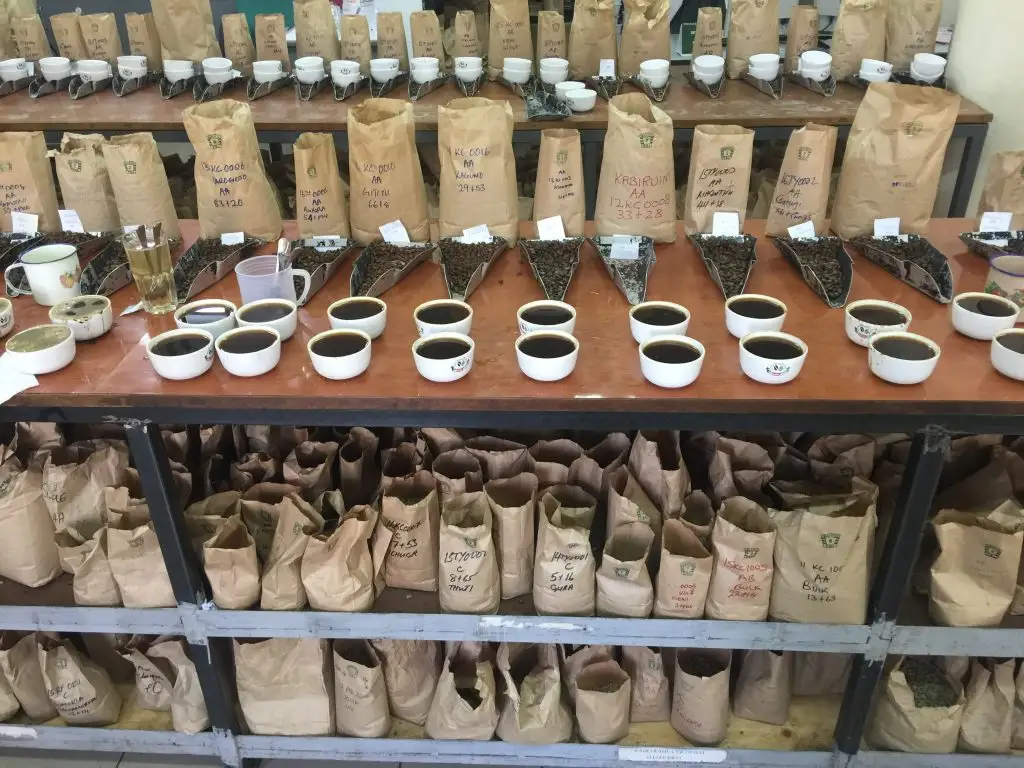
[Kenyan Coffee Producing Regions] Kenya's coffee producing regions are mainly distributed in the central and western areas. Major central regions include Kiambu, Nyeri, Kirinyaga, Muranga, Embu, Machakos, Ruiru, and Thika; western regions include Kisii and the Bungoma area on Mt. Elgon.
Front Street Coffee (FrontStreet Coffee) updates the coffee origins on its bean list regularly, and Kenya is no exception. Last month, Front Street Coffee (FrontStreet Coffee) sourced a batch of Kenyan coffee beans from different regions, and through roasting, cupping, and pour-over tasting, it became clear that each region has its own unique characteristics. The specialty coffee regions mainly come from the following: Nyeri, Kirinyaga, Murang'a.
Nyeri
The Nyeri producing region is located in central Kenya, home to the extinct volcano Mount Kenya. The red soil here nurtures Kenya's finest coffee. Agriculture is extremely important in this area, with coffee being the main crop. In Nyeri, cooperative societies made up of smallholder farmers are more common than large estates. Altitude: 1,200 to 2,300 meters Harvest period: October to December (main season), June to August (secondary season) Varieties: SL-28, SL-34, Ruiru 11, Batian.
Muranga The Muranga producing region belongs to Central Province and has about 100,000 coffee farmers. This inland region was where the first missionaries chose to settle, as the Portuguese barred them from living in coastal areas. It is another region benefiting from volcanic soil, and smallholder coffee farmers also outnumber estates. Altitude: 1,350 to 1,950 meters Harvest period: October to December (main season), June to August (secondary season) Varieties: SL-28, SL-34, Ruiru 11, Batian
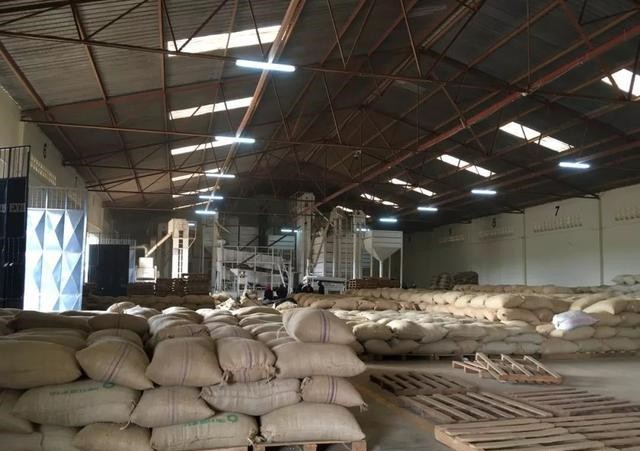
Kirinyaga The Kirinyaga producing region sits on the slopes of Mount Kenya, adjacent to Nyeri, and is world-famous for its intense, layered, and full-bodied coffee, recognized alongside Nyeri as one of Kenya's two best producing regions today. Producers in this region are mostly smallholder coffee farmers who join cooperatives; the cooperatives act as integrators, providing washing stations where farmers deliver their coffee cherries for processing. Altitude: 1,300 to 1,900 meters Harvest period: October to December (main season), June to August (secondary season) Varieties: SL-28, SL-34, Ruiru 11, Batian.
In addition to the regions above, the Thika region—where Front Street's Cherry Tomato on the bean list comes from—is also abundant in specialty coffee. This bean undergoes K72-hour washed processing, with varieties SL-28 and SL-34, featuring distinct floral notes and a juicy mouthfeel, making it a daily staple coffee for many. Those interested can purchase at Front Street stores or the Front Street Tmall flagship store.
[Front Street Kenyan Cherry Tomato Coffee Beans]
Region: Thika, Kenya
Washing Station: Athalia
Processing Method: Washed
Altitude: 1,550–1,750 meters
Varieties: SL28 & SL34
Front Street Coffee (FrontStreet Coffee) recommends pour-over as the extraction method
Brewing Recipe
Coffee dose: 15g | Coffee-to-water ratio: 1:15 | Water temperature: 89–92°C | Time: 2 minutes | Grind: EK43S #10
Bloom with 30g of water for 30 to 35 seconds, then pour to 125g at around 1 minute. When the water level drops halfway, pour the remaining water, finishing the pour at around 1 minute 30 seconds to 1 minute 40 seconds. After the 2-minute drawdown completes, remove the dripper.
Flavor Description: Distinct berry, dark cocoa, syrupy, medium-high acidity, medium bitterness, clean, medium finish.
The above content is compiled by CoffeeHunters, a coffee news website.


