







Thecharm of pour-over coffee lies in the ability to adjust various subtle parameters, regulate the extraction variables at different stages, and obtain coffee with the flavor and mouthfeel you enjoy. Front Street Coffee believes that the coffee-to-water ratio is a very important parameter affecting pour-over coffee. Mastering the coffee-to-water ratio not only makes extraction more stable, but also allows the flavor to present better results.
What is the coffee-to-water ratio for pour-over?
During the pour-over process, after water comes into contact with coffee grounds, water acts as a solvent, helping to dissolve the soluble flavor substances in the coffee. The coffee-to-water ratio is essentially about how much water we use to release those flavor substances. The so-called coffee-to-water ratio is the ratio of coffee grounds to total water volume, which can directly affect the strength of the coffee. No matter which brewing method is used, Front Street Coffee will first determine the coffee-to-water ratio before extraction. For example, Front Street Coffee's store output generally uses 15 grams of coffee grounds for a single cup, with a 1:15 coffee-to-water ratio, meaning a total of 225ml of hot water is poured.
When all other parameters remain unchanged, the more water poured, the lower the coffee's strength and the more dispersed the taste; the less water poured, the higher the strength and the more concentrated and heavy the coffee flavor. In addition, the more water poured, the higher the coffee's extraction yield, and the more soluble substances are obtained. (Extraction yield is the proportion of soluble substances extracted from the coffee relative to the weight of the coffee grounds.) As pouring continues toward the later stages, the extraction efficiency continuously decreases, and undesirable bitter substances are released, thereby affecting the final coffee's taste. Therefore, we need to find the appropriate coffee-to-water ratio for coffee in order to adjust to the optimal strength and extraction yield.
How do you find the best coffee-to-water ratio?
The coffee-to-water ratio is usually determined based on experience, and there is no strictly fixed requirement. For example, when Front Street Coffee's store outputs Jamaica Blue Mountain coffee and wants to present a balanced-strength mouthfeel, it uses a 1:15 coffee-to-water ratio. But when outputting Hacienda La Esmeralda sun-dried Red Label coffee, Front Street Coffee hopes to make the flavor clearer and the acidity brighter, so Front Street Coffee uses 1:16 for extraction. Based on Front Street Coffee's past brewing experience, beginners just starting with pour-over are recommended to start with a ratio of 1:15 to 1:18, that is, 15 grams of coffee for a single serving corresponding to 225-270ml of water.
The coffee-to-water ratio is not the only factor determining coffee flavor, so we also need to understand various parameters: extraction time, water temperature, grind size, pouring method, the functional properties of the dripper and filter paper, and so on all affect the final taste. If you have already begun learning about the relationships among the various pour-over parameters, then fixed variables such as coffee-to-water ratio and water temperature will become variable factors that can be adjusted up or down to make the coffee taste better.
Why pour in stages?
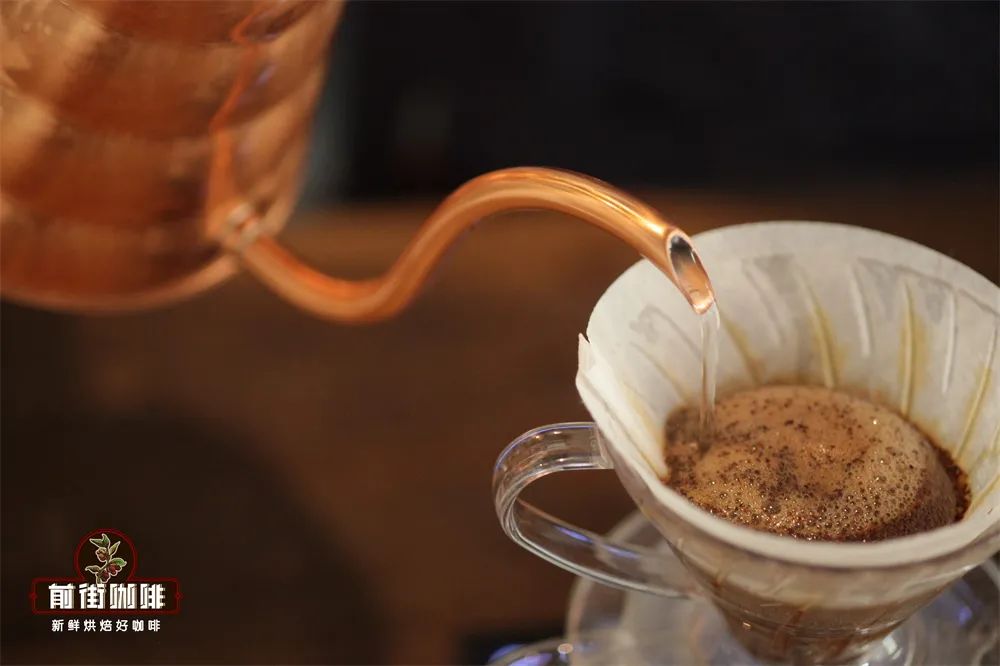
Usually we see baristas pause midway while pouring during pour-over, waiting for the water level to drop before continuing to add water. This is staged extraction.
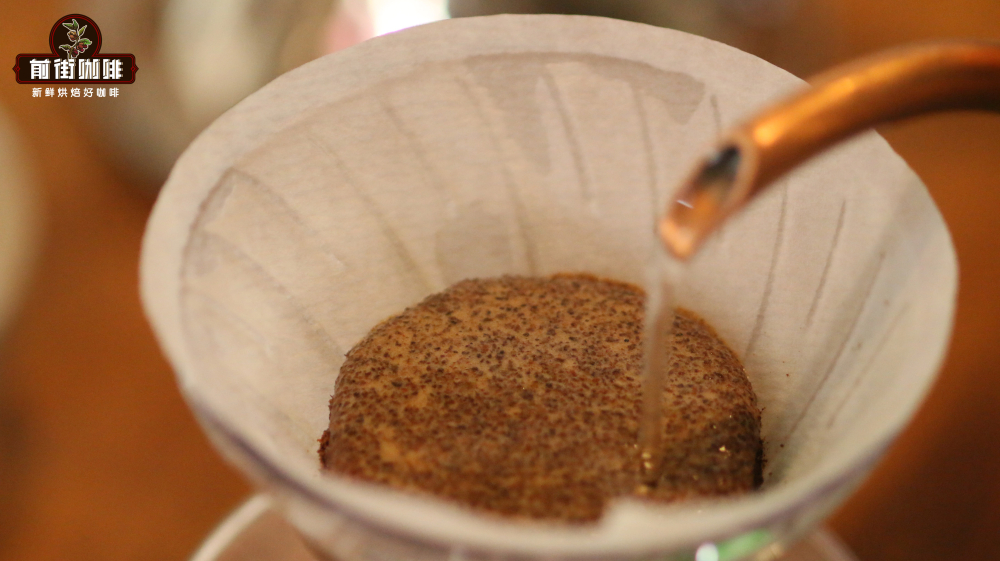
In the first stage, a small amount of hot water is poured to moisten the coffee grounds, with the purpose of releasing internal gases and avoiding affecting extraction in subsequent stages. This step is what we call "blooming." The most common blooming method is to pour twice the amount of water as the coffee grounds and let it bloom for 30 seconds. For example, with Front Street Coffee's 15 grams of coffee grounds, use 30ml of water to bloom. This is also the easiest "blooming formula" for beginners to grasp. Staged pouring is counted by whether there is a pause in pouring after the blooming stage. For example, if the pouring after blooming is divided into two stages, then including blooming it is a total of "three-stage pouring," and so on; if the pouring after blooming has no pause and is completed all at once, it is called "one-pour method."
The reason baristas use staged extraction is that during the pour-over process, the extraction rates of different substances in coffee are different. The order in which flavors are released by high-temperature hot water is acidity, sweetness, then bitterness. In staged pouring extraction, apart from the blooming stage, under the same coffee-to-water ratio, the more stages there are, the less water is poured in each stage, the more times the coffee bed is washed and agitated, and the higher the extraction yield.
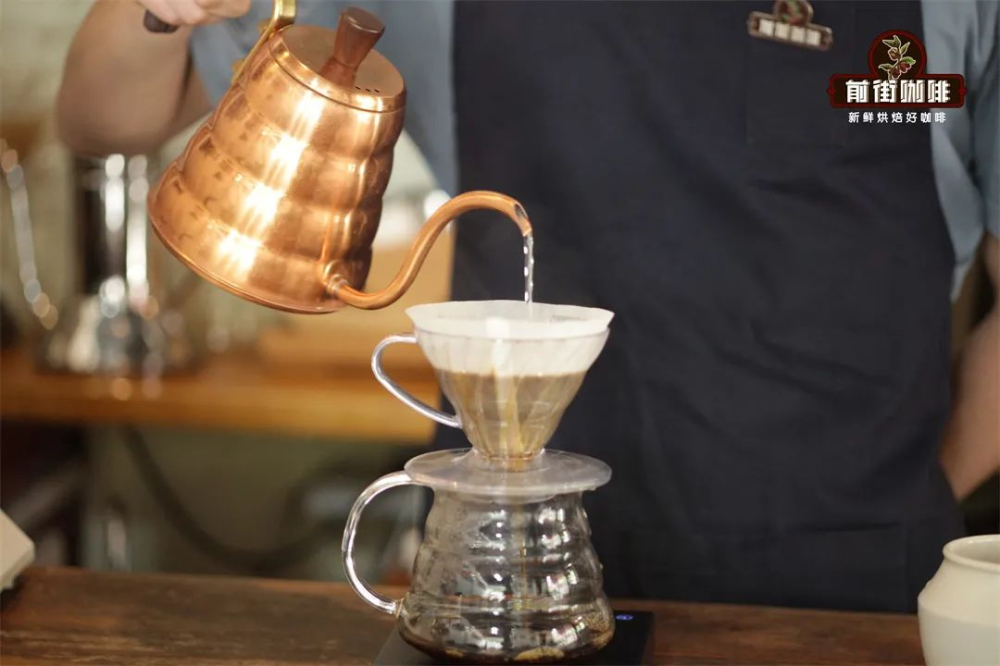
In addition, an increase in the number of stages extends the total extraction time, and the more coffee substances released at each stage, the richer the flavor layers. But Front Street Coffee wants to remind everyone of one point: the more stages, the longer the operation takes, increasing the risk of over-extraction. The large-molecule substances in the later stage of coffee are more easily released, and the sweetness is instead masked. From this it can be seen that more stages of pouring are not necessarily better. So how should staged pouring be calculated?
It is recommended to use the three-stage pour-over method.
Based on past brewing experience, Front Street Coffee recommends that newcomers just starting out use the three-stage pouring method. Three-stage extraction helps more fully dissolve flavor substances during extraction, increases mouthfeel layers, and at the same time avoids over-extraction caused by too long steeping. If using 15 grams of coffee grounds, a 1:15 coffee-to-water ratio, and 225ml total water, the three-stage water amounts are divided as: 30ml, 95ml, 100ml, and the weights shown on the electronic scale are: 30g, 125g, 225g.
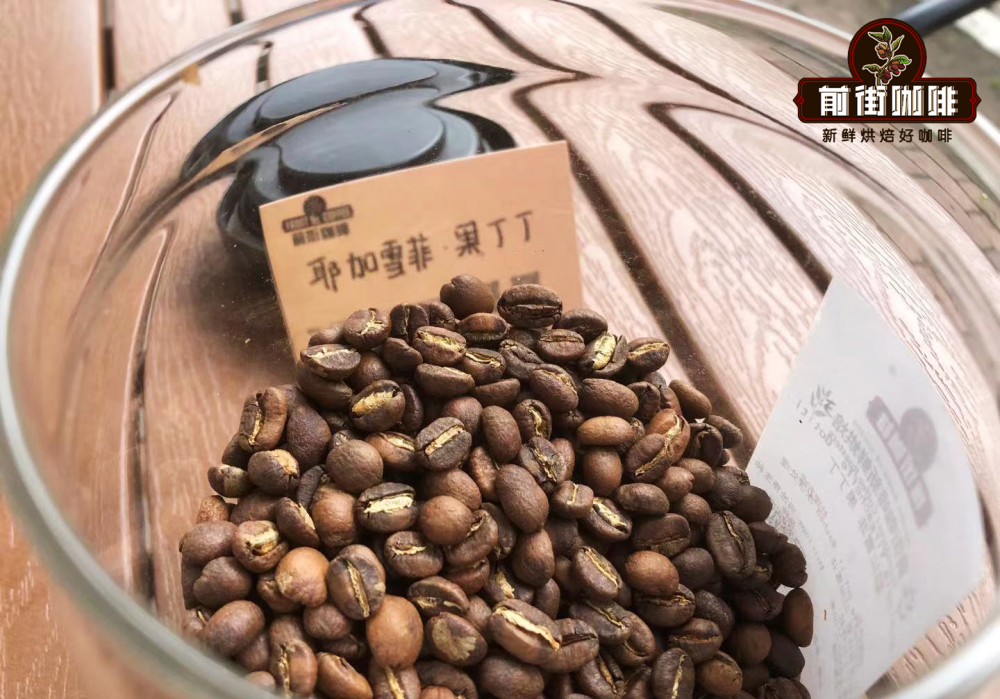
Here Front Street Coffee selects its own roasted washed Yirgacheffe Gedeb Cooperative coffee beans, paired with a Hario V60 dripper for brewing. The V60's spiral rib design allows the coffee grounds to degas better, maximizing the activation of the volatilization and dissolution of aromatic and acidic substances. Because Yirgacheffe uses a light roast, the coffee beans are harder in texture and require high-temperature hot water of 92°C-93°C to stimulate the floral and fruity notes in the coffee.
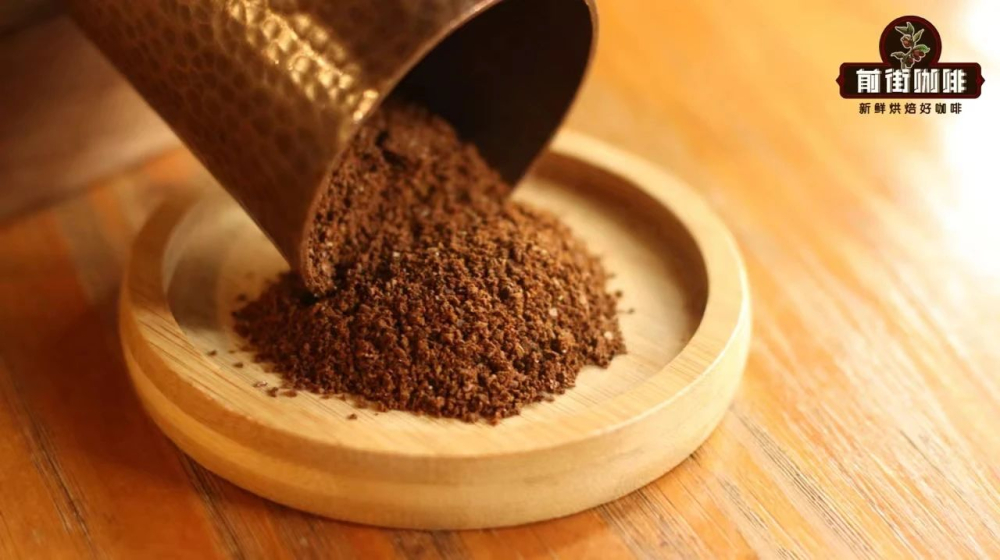
For grind size, Front Street Coffee recommends a medium-fine grind (78% passing rate on China standard No. 20 sieve), a coarseness similar to fine granulated sugar. Too coarse a grind cannot extract mellow, rounded flavor substances, and the brewed coffee will appear thin; too fine particles are prone to over-extraction under high water temperature, and the brewed coffee is prone to bitterness.
As for the brewing ratio, Front Street Coffee believes 1:15 to 1:16 are both acceptable. If you want a richer mouthfeel, use 1:15; if you want to feel the floral sweetness more clearly, you can use 1:16 to let the flavor spread out more.
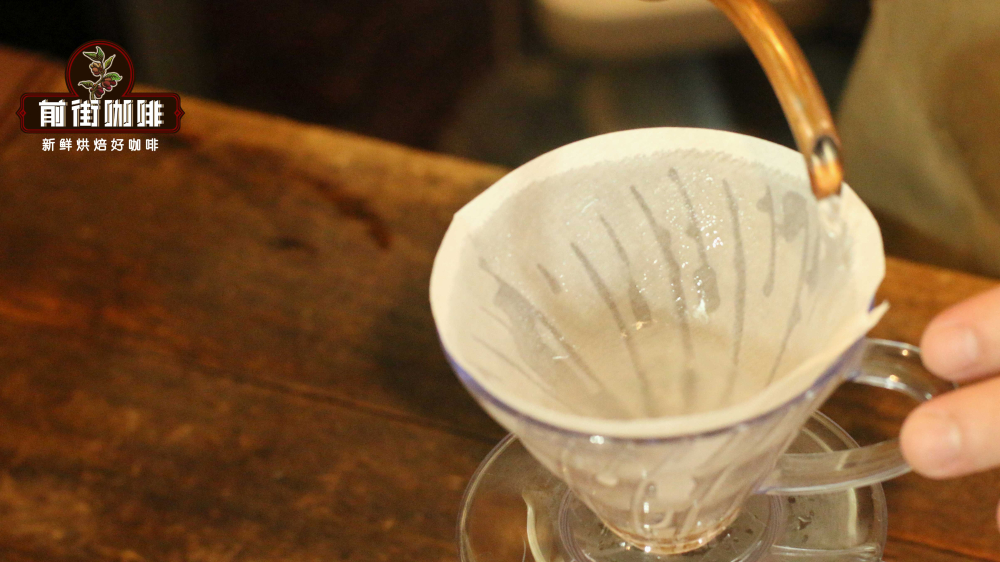
First place the folded filter paper into the dripper, wet it with water so it fits the dripper more closely, pour water into the server below, pour 15 grams of ground coffee into the dripper, and tare the electronic scale.
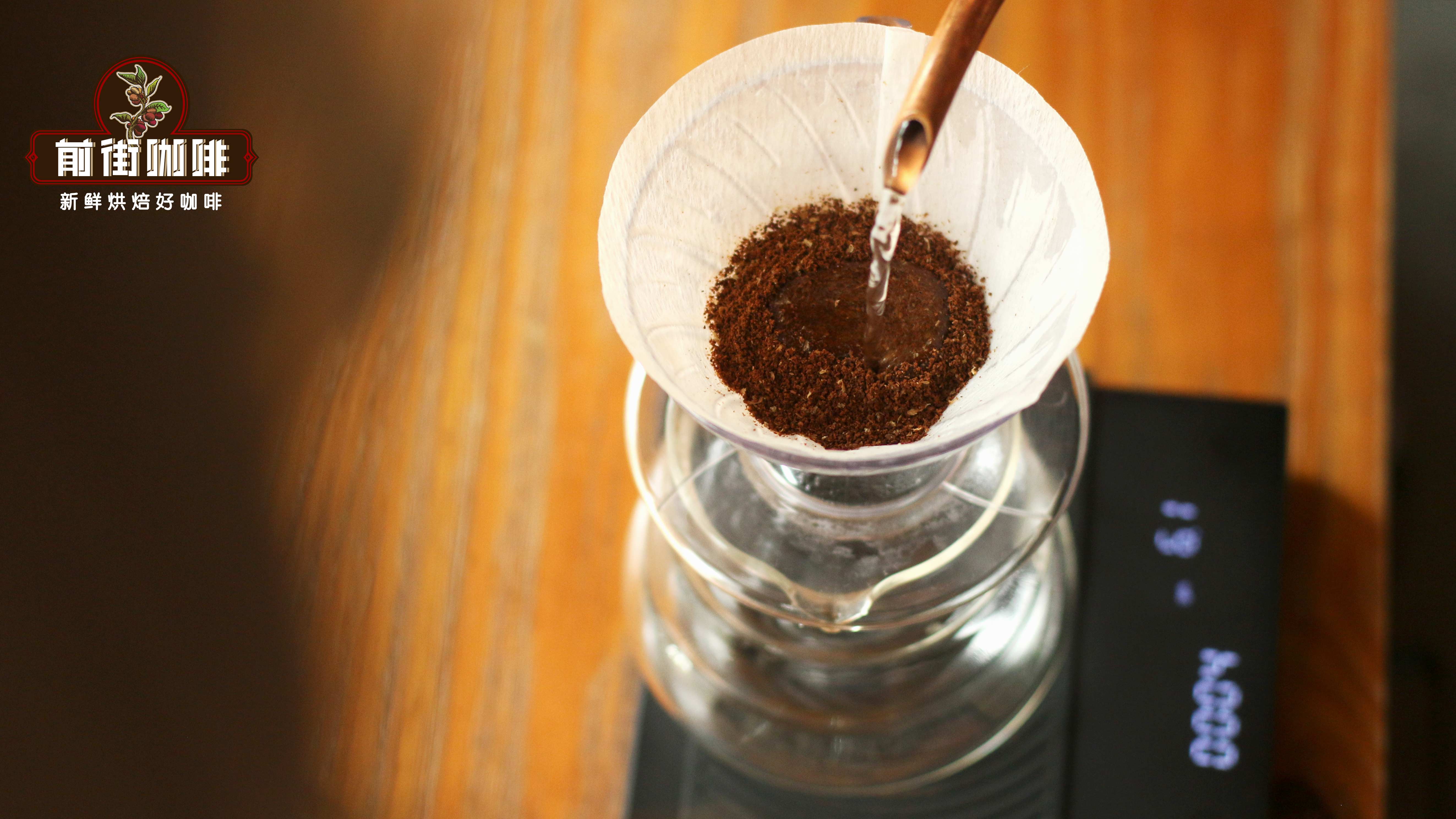
In the first stage, pour 30g of water to bloom for 30 seconds. Start timing at the same time as pouring. Throughout, pour with a small stream from the center point and begin spiraling outward, making sure to moisten the entire coffee bed.

After 30 seconds, begin pouring the second stage of 95g of water steadily with a slightly larger stream, with the purpose of lifting the entire coffee bed. The water column should be poured vertically and evenly. At this point the timing scale shows 125g, and pouring is completed at around 55 seconds.
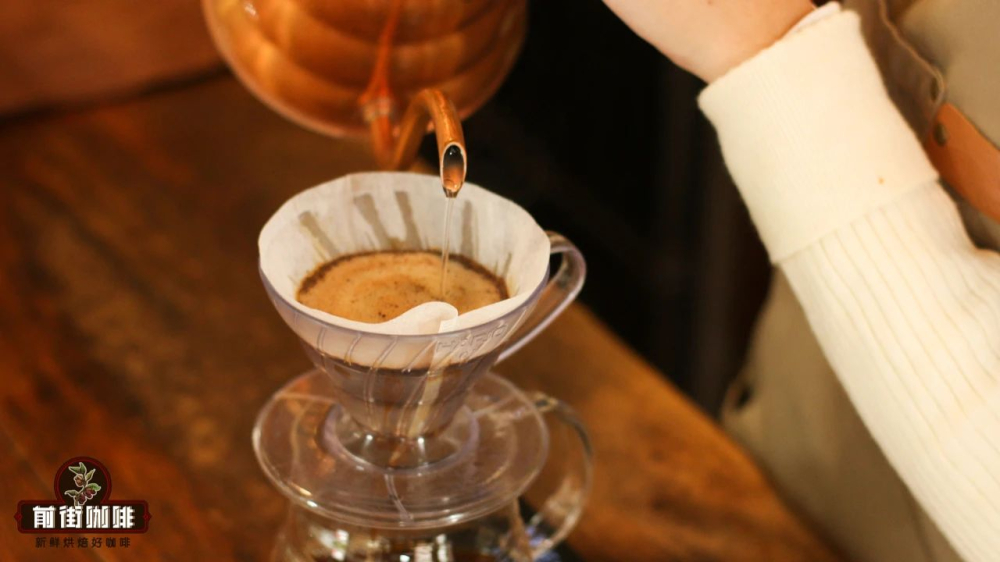
When the liquid level drops to the halfway point, begin pouring the third stage of 100 grams with a small stream in a small spiral, trying to control the stream from spiraling too widely, as it can easily disturb the coffee bed and cause under-extraction. The final total poured water is 225 grams, and the drip completion time is about 2 minutes. After removing the dripper, swirl the coffee liquid in the server to even it out and it is ready to taste.

The amount of water poured in each stage is not fixed and unchanging. We can adjust it according to our accumulated pour-over experience and our understanding of the coffee beans. Front Street Coffee understands coffee brewing as an experiment with a scientific foundation. To learn pour-over well, we need to deeply investigate and understand the true meaning of each brewing parameter. Only then can we easily find experimental methods and establish a brewing framework suitable for ourselves.
For professional coffee knowledge exchange and more coffee bean information, please follow Coffee Workshop (WeChat public account cafe_style)
For more specialty coffee beans, please add the private WeChat of Front Street Coffee (FrontStreet Coffee), WeChat ID: qjcoffeex
The above content is compiled by CoffeeHunters, a coffee news website.


