







Why Does Jamaican Blue Mountain Coffee Cost So Much?
Jamaican Blue Mountain coffee commands high prices because production is limited and quality control is strict. Grown between Kingston and Port Antonio, with the Blue Mountain range rising to 2,256 meters, the cool, misty climate, abundant rainfall and well-drained fertile soil create a balanced cup with mild acidity, sweetness and bitterness.
Jamaica sets precise standards for the coffee certified under the Blue Mountain name, which is why cheap products labeled Blue Mountain flavor differ from the real thing. Useful checks include taste, certification, origin, packaging, grade, appearance, grind and aroma, along with the estate background and washed processing behind authentic lots.
Jamaican Blue Mountain coffee is hailed as one of the most prestigious rare coffees in the world, known for its balanced acidity, sweetness, and bitterness, along with a smooth, full-bodied mouthfeel. However, the market is flooded with low-priced products labeled "Blue Mountain flavor," and just how do they differ from authentic Blue Mountain coffee? From the professional perspective of Front Street Coffee, this article systematically examines the origin conditions and certification system of Blue Mountain coffee, and shares eight practical methods for verifying authenticity, covering dimensions such as taste, certification, origin, packaging, grade, appearance, grind, and aroma. It also introduces the rainforest-certified estate background of Front Street Blue Mountain No. 1, the washed processing flow, and recommended brewing parameters for the Kono dripper, helping coffee enthusiasts gain a comprehensive understanding of this legendary coffee.
\n\nFor more specialty coffee knowledge, please follow the WeChat public account: Front Street Coffee\n\nJamaican Blue Mountain coffee enjoys an extremely high reputation in the global coffee world, and is also an extremely rare variety with very limited production. Its fame lies in the ingenious balance achieved among acidity, sweetness, and bitterness, with a smooth entry and full body. Jamaica has established strict and precise standards for Blue Mountain coffee, making its quality standards far beyond those of other coffees. Authentic Blue Mountain coffee was introduced to Jamaica in the 18th century, with production areas roughly distributed between Kingston in the south and Port Antonio in the north. The highest point of the Blue Mountain Range reaches 2,256 meters, making it one of the highest mountain systems in the Caribbean. The local climate is cool, shrouded in mist, with abundant rainfall, fertile soil, and excellent drainage, and it is widely recognized as an ideal zone for coffee cultivation. It is precisely these natural conditions that create the outstanding quality of Blue Mountain coffee.\n\nHowever, counterfeit or inferior Blue Mountain coffee often appears on the market, making it difficult for consumers to distinguish. Faced with the uneven quality of the domestic coffee market, it is necessary for us to remain vigilant, master relevant knowledge, and become familiar with the distinctive characteristics of Blue Mountain coffee in order to effectively judge authenticity. The first thing to note is that many coffee beans are labeled "Blue Mountain flavor" rather than "Blue Mountain coffee." "Blue Mountain flavor" products may contain only a tiny amount of Blue Mountain coffee, or may simply be instant products with a "mellow bitter taste," so their prices are extremely low and they cannot be mentioned in the same breath as genuine Blue Mountain coffee.\n\n
\n\nToday Front Street Coffee brings you eight methods for testing Blue Mountain coffee:\nFirst: Taste the flavor.\nFor coffee experts, the taste buds are the most persuasive. Blue Mountain coffee has a smooth mouthfeel and gives a mellow impression, very perfect; while fake Blue Mountain is either thin in mouthfeel or overly stimulating, always failing to find the most balanced feeling.\n\n
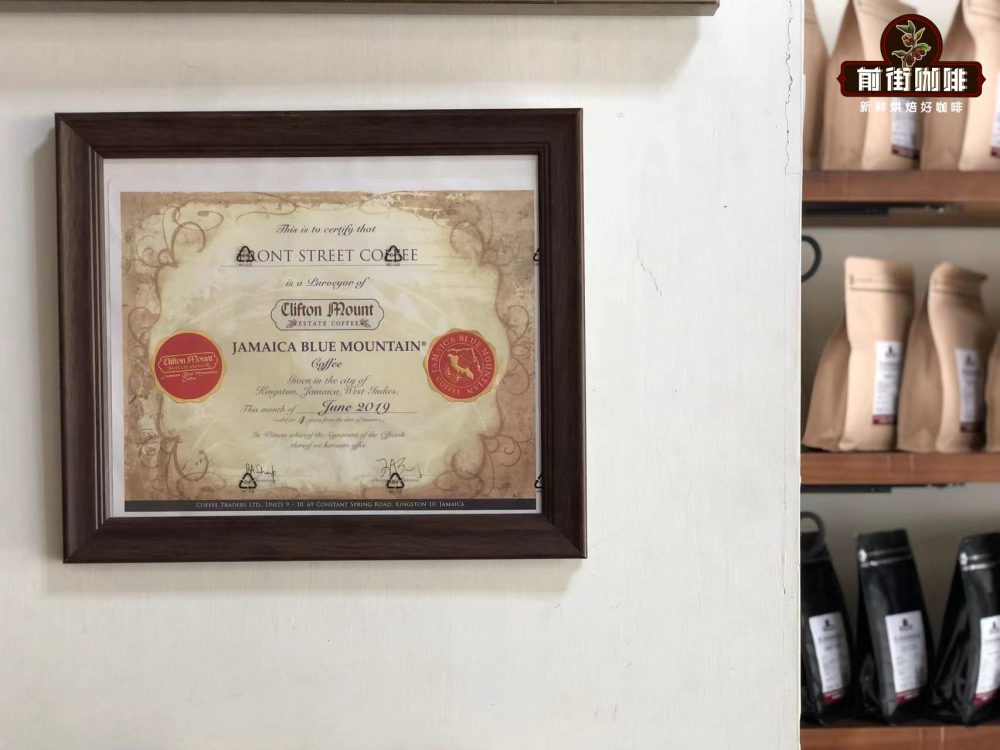
\n\nSecond: Certification by the Jamaica Coffee Industry Board.\nAs mentioned earlier, authentic Jamaican Blue Mountain coffee has strict standards. In Jamaica, only enterprises confirmed and approved by the Coffee Industry Board are qualified to export Blue Mountain coffee. The Jamaica Coffee Industry Board (CIBOJ) was established on June 2, 1950, under the Coffee Industry Regulation Act of 1948, aiming to encourage the development of the Jamaican coffee industry and promote the welfare of those engaged in it. It is responsible for: licensing Jamaican coffee processors and dealers, establishing or reviewing coffee quality standards, being the sole exporter certifying Jamaican coffee exports and green coffee beans, and also providing advisory services to farmers and other industry stakeholders.\n\n
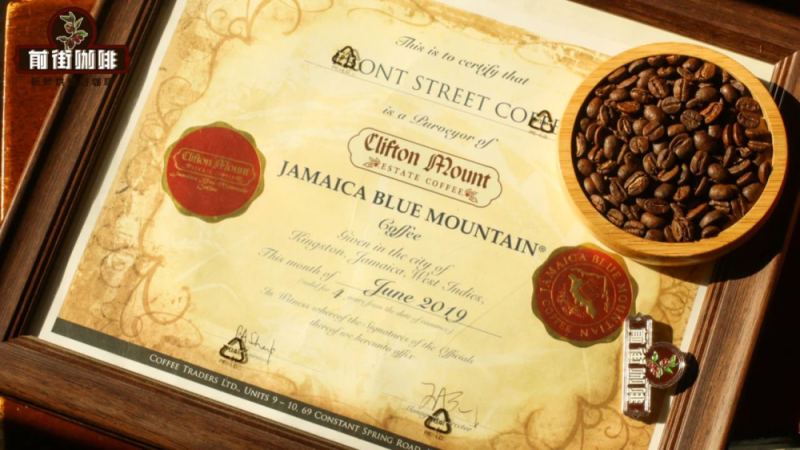
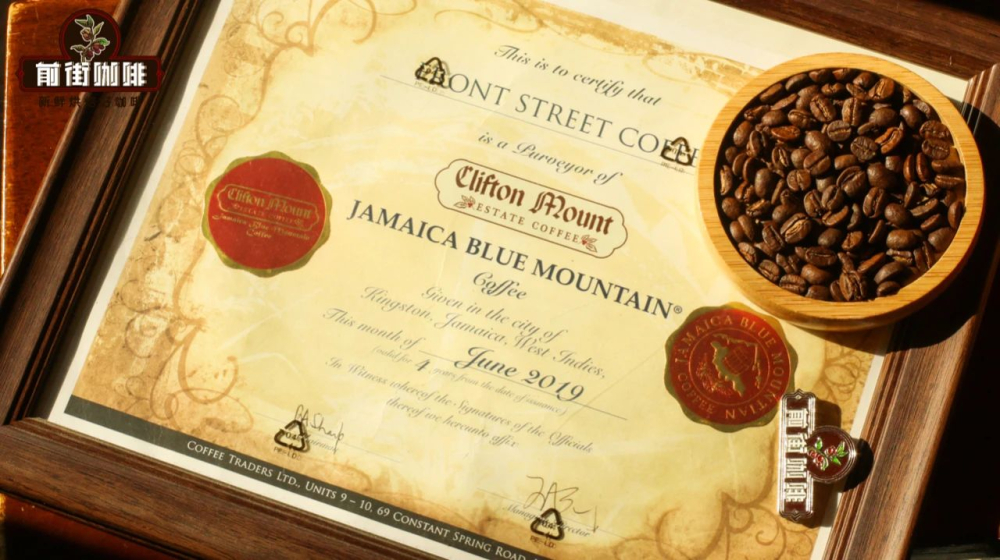
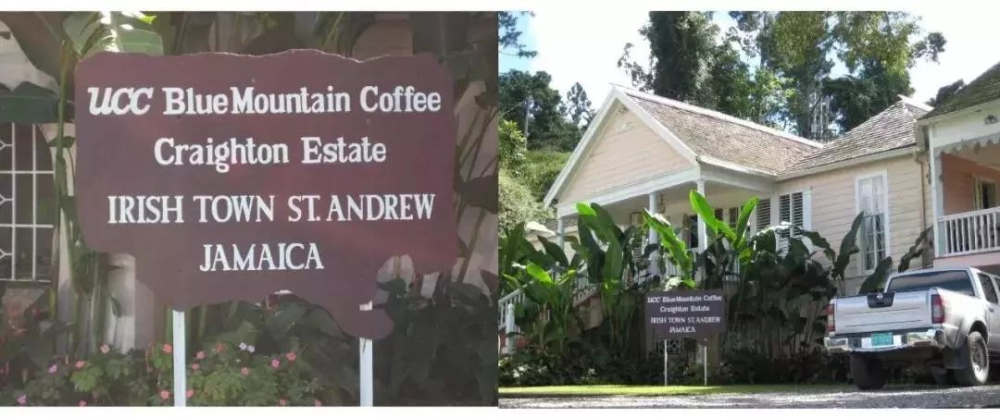
\n\nOn January 1, 2018, the functions of CIBOJ were taken over by the newly established Jamaica Agricultural Commodities Regulatory Authority (JACRA), which is responsible for the regulation, promotion, standardization, and development of the agricultural products industry. The certificate for Front Street Coffee's Jamaican Blue Mountain coffee is hung at the store entrance, displayed to customers and helping spread this knowledge.\n \nThird: Confirm the place of origin.\nSome friends may think this is a pointless statement—Blue Mountain coffee, of course its place of origin is Jamaica, is there any need to confirm it? True enough, but do not forget that Blue Mountain coffee sold in Asia was once monopolized by Japan's UCC company, so almost all of it bears the UCC company trademark, which is why confirming the production area is very important.\n\n
\n\nFourth, inspect the packaging.\nLong ago, the packaging of authentic Jamaican Blue Mountain coffee was sealed aluminum foil, with the outer packaging being burlap sacks. But in recent years, green beans are mostly packed in original wooden barrels, and Jamaica is the only country in the world today that still retains coffee packaging in wooden barrels. Many counterfeit Blue Mountain coffees on the domestic market also use wooden barrel packaging for a one-pound quantity, and the barrels are even treated with paint. Just think: coffee is a food that wins by taste. Once it is tainted with the smell of paint, how can anyone appreciate it? Jamaicans would not be that foolish, would they?\n\n
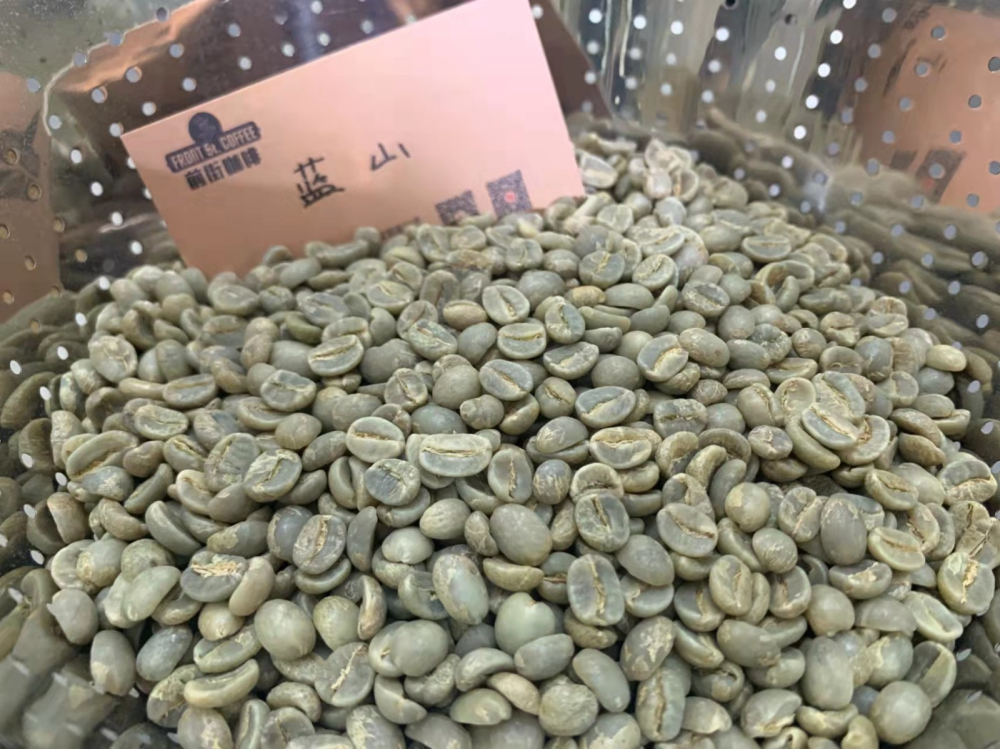
\n\nFifth, check the grade.\nBlue Mountain coffee is divided into five grades: Blue Mountain No. 1, Blue Mountain No. 2, Blue Mountain No. 3, Blue Mountain PB, and Jamaica High Mountain coffee. Counterfeit Blue Mountain on the domestic market often bears labels such as AAA, AA, A, and G1, which are completely unrelated and must be fake, because these grades of Blue Mountain coffee have never existed.\n \nSixth, inspect the appearance.\nThe green beans of authentic Jamaican Blue Mountain coffee are bluish-green, neat in shape, medium to slightly small in size, with both ends of the bean slightly upturned. After roasting, the volume expands, and the bean shape is plump and rounded.\n\n
\n\nSeventh, grinding condition.\nBlue Mountain coffee grows at medium to high altitudes, and its green bean cytoplasm structure is relatively loose. When ground with a manual grinder, there is an obvious crisp feeling, with almost no resistance or hardness.\n \nEighth, distinguish the aroma.\nBlue Mountain coffee has a rich fruity aroma plus chocolate aroma (some also consider it creamy aroma). After roasting, Blue Mountain coffee beans have a rich, steady aroma, while so-called Blue Mountain coffee blended with other varieties has a frivolous aroma, lacking steadiness, and dissipates very easily.\n\n
\n\nThe Front Street Blue Mountain No. 1 coffee provided by Front Street Coffee has a certificate issued by the Jamaica Coffee Board. In addition, the wooden barrel packaging Jamaican Blue Mountain coffee beans bears the mark of a green frog. This is because Front Street Coffee specifically selected a Jamaican Blue Mountain No. 1 coffee estate with rainforest certification, namely Clifton Farm, and Jamaica is the only production area that uses wooden barrels to pack green beans.\n\nThe washed processing method uses washing and fermentation to remove the skin, pulp, and mucilage. Farms using the washed method must build washing channels and be able to introduce a continuous supply of fresh water. During processing, the skin and pulp are first removed, then the beans are fermented for 12–18 hours. After fermentation is complete, the beans are placed in channels and moved back and forth, using the friction of the beans and the force of flowing water to wash the coffee beans until they are smooth and clean. After washing, at this point the coffee beans are still wrapped in the parchment layer, with a moisture content of 50%, and must be sun-dried to reduce the moisture content to 12–14%. Then the coffee beans are sorted and placed in special warehouse stacks for storage. These procedures must be strictly controlled; otherwise, the quality of the coffee will be affected.\n\n
\n\nRecommended brewing parameters for Front Street Blue Mountain coffee:\n\nFront Street Coffee mainly uses the Kono dripper for brewing demonstrations. Front Street Coffee chose the Kono dripper mainly because Blue Mountain coffee uses a deep roast level, and high temperatures can easily lead to over-extraction, so Front Street Coffee chose 88°C for the water temperature. At this temperature, if a V60 dripper or other faster-flow dripper is used, it can easily lead to under-extraction, while Kono has few and short ribs, which can block the gap between the filter paper and the dripper, increase the residence time of the water flow, and have an immersion function. Therefore, after comprehensive testing of all brewing parameters, Front Street Coffee ultimately chose the Kono dripper.\n\n
\n\nDripper: Kono dripper, water temperature: 88°C, dose: 15 grams, coffee-to-water ratio: 1:15, grind size: medium-fine grind (75% passing through China standard No. 20 sieve)\n\nUse staged extraction, blooming with twice the amount of water as the coffee powder, that is, 30 grams of water for 30 seconds. The reason the blooming process is needed is to allow the coffee powder to release internal carbon dioxide gas, thereby making the later extraction more stable. Pour in a small stream in a circular motion until 125 grams, then pause, continue pouring until 225 grams and stop. After the water in the dripper has dripped through, remove the dripper. Start timing from the beginning of pouring, with an extraction time of 2'00". Next, pick up the entire cup of coffee and swirl it to mix evenly, then pour it into a cup for tasting.\n\n
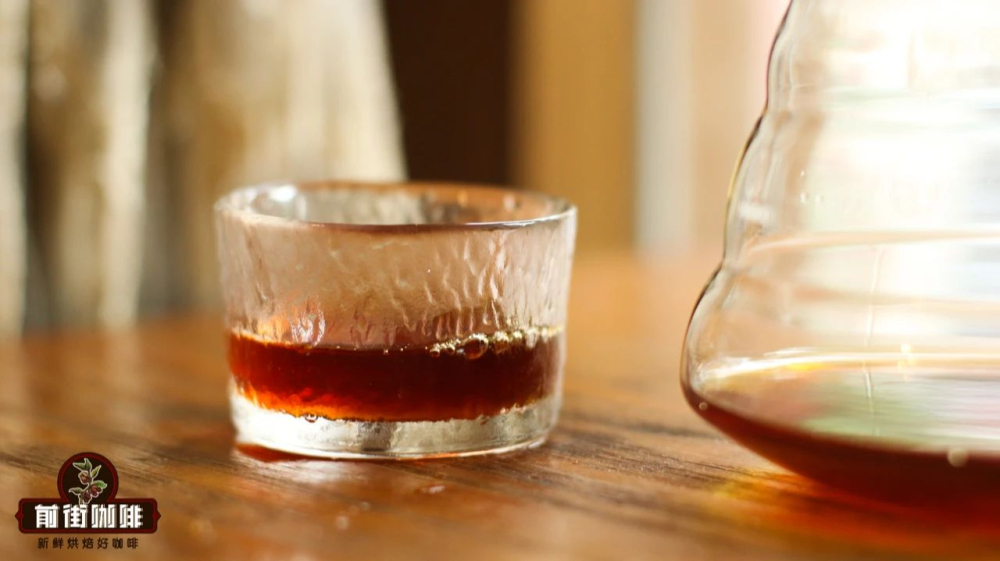
\n\n[Front Street Washed Blue Mountain Coffee]\nRich in dark chocolate and nutty flavors, with a creamy, smooth mouthfeel and a balance of acidity, sweetness, and bitterness.
The above content is compiled by CoffeeHunters, a coffee news website.


