







How Do Moka Pots Work and Which Valve Type to Pick?
Moka pots are stovetop brewers that use steam pressure to push hot water up through a bed of ground coffee. The device has three parts: a lower chamber for water, a filter basket for coffee, and an upper chamber that collects the finished brew. Internal pressure reaches roughly 1.5 to 2 bar, far below the 9 bar of a standard espresso machine.
Two valve designs exist. A single-valve moka pot lets coffee flow straight from the tube holes, giving lower concentration and less crema. A double-valve pot adds a pressure-regulating valve that opens only once steam builds, producing higher concentration and richer crema. Choose capacity by the marked number of cups and use medium-dark roasted beans.
The moka pot is a common direct-fire espresso device in Italian households, extracting rich coffee through steam pressure. This article starts with its structure and principle, compares the differences between single-valve and double-valve models in terms of crema and concentration, includes capacity selection advice, and explains in detail the medium-dark roasted beans recommended by Front Street Coffee and the complete brewing steps.
The moka pot is a very common espresso brewing tool in Italian households. It is placed directly on a stove to heat, relying on the pressure generated by steam to complete extraction, so it is also called a direct-fire espresso pot. With its delicate and attractive appearance, the moka pot has drawn many enthusiasts, and it can also brew coffee that is rich enough.
First, let's get to know the structure of the moka pot. It consists of three parts: the upper chamber, the filter basket, and the base. The lower chamber is used to hold water, the filter basket holds finely ground coffee, and the upper chamber collects the extracted coffee liquid. The extraction principle is not complicated—after the lower chamber is heated, steam pressure is generated. When the pressure is enough to penetrate the coffee grounds layer, hot water is pushed into the upper chamber, thus brewing aromatic, rich coffee.
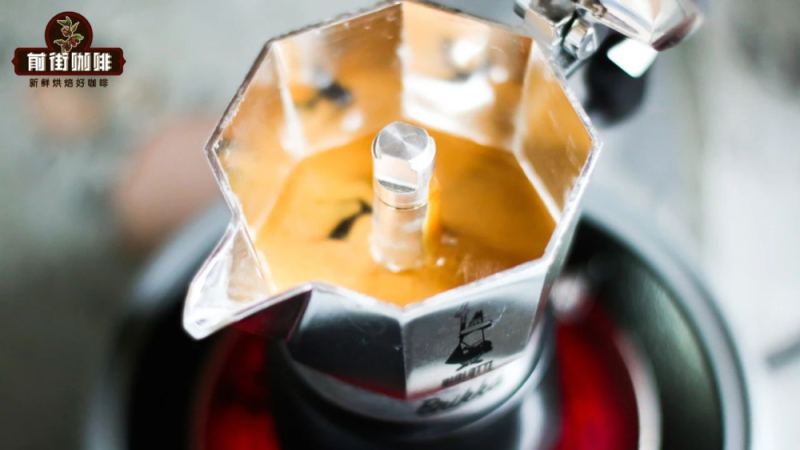
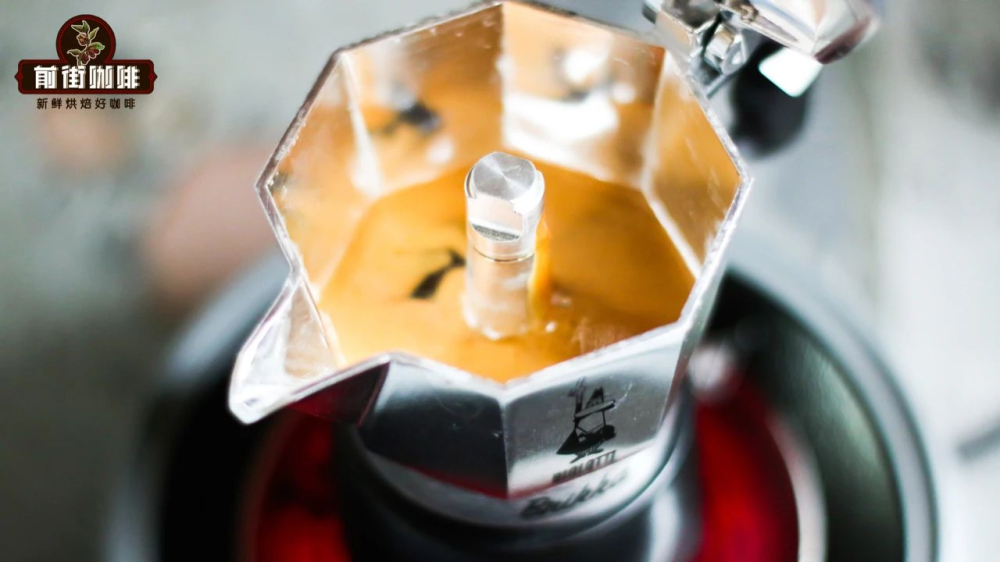
Although the pressure of a moka pot (1.5-2 bar) is far lower than that of an espresso machine (9 bar), it can still extract coffee crema, and the taste is quite rich. Through the following images from Front Street Coffee, the internal structure and extraction principle can be presented very intuitively.
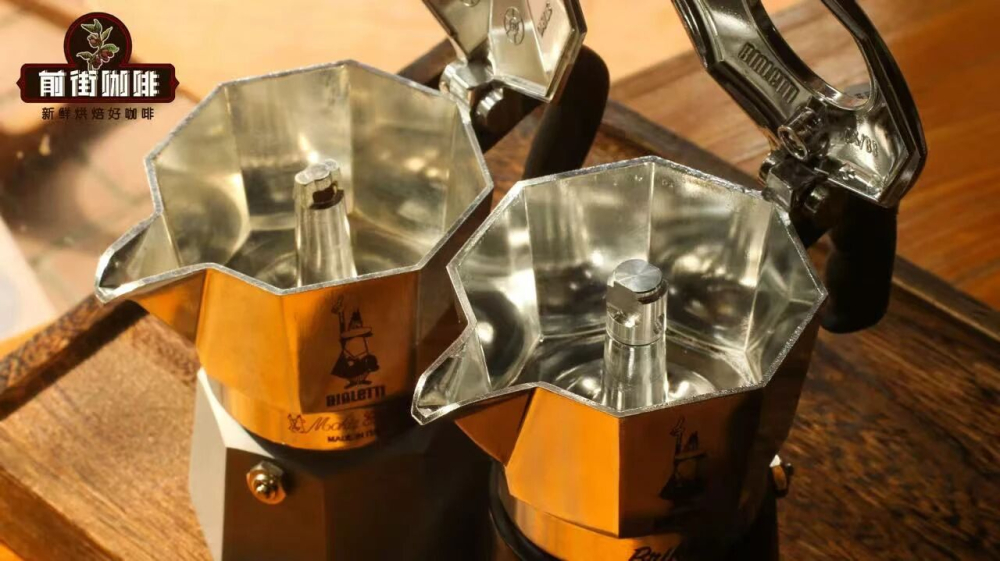
Moka pots come in two types: single-valve and double-valve. The double-valve version can produce more coffee crema than the single-valve one. So-called single-valve means the coffee liquid flows out directly from two small holes at the top of the tube; double-valve adds a pressure-regulating valve on the basis of the tube. This valve normally blocks the outflow hole, and only when steam pressure accumulates to a certain level can it be pushed open, letting the coffee liquid spurt out.
The flavors brewed by the two valve types also differ: single-valve moka pot coffee has lower concentration and less crema, while the double-valve type has higher concentration and richer crema.
The capacity of a moka pot is generally marked in "cups" or "servings." Common specifications on the market include 1, 2, 3, 6, 9, 12, and 18 servings. One cup of coffee requires about 30–40 ml of espresso. For single or double use, you can choose the smallest size of 1–2 cups; if you usually like to share with friends, 3 servings is more suitable; if a family needs to make more than three cups each time daily, then you can consider a large multi-serving model, and the price will be correspondingly higher.
The moka pot lets pressurized steam pass directly through the coffee puck, extracting the essence of the coffee. Paired with medium-dark roasted beans, the finished product has a strong aroma and prominent bitterness, with a thin layer of coffee oil floating on the surface—this is exactly the source of the alluring flavor of Italian coffee.
If you want to make silky crema, you need to choose medium-dark roasted coffee beans. If you prefer the sweet aroma of nuts and chocolate, you can buy Front Street Coffee Brazil Queen's Estate, Front Street Coffee PNG Bird of Paradise, and Front Street Coffee PWN Golden Mandheling; if you pursue higher body and golden crema, Front Street Coffee Classic Blend and Front Street Coffee Commercial Blend are also good choices. At home, you can easily make rich moka pot coffee.
Front Street Coffee PNG Bird of Paradise Coffee Beans
Country of origin: Papua New Guinea
Estate: Sigri Bird of Paradise Estate
Altitude: 1600-1800m
Processing method: Washed processing
Variety: Typica
Grade: AA
The process of making coffee with a moka pot:
1. Fill the lower chamber with cold water up to the valve level, and cover with the filter.
2. The grind size for a moka pot is slightly coarser than for espresso. You can refer to the gap size of the filter screen in the basket to ensure the particles will not fall into the lower chamber. Use your hand to form a ring around the filter basket, add coffee grounds into it, fill until a small mound bulges in the middle, and after the surrounding gaps in the basket are filled with grounds, directly place on the upper chamber and tighten. If you observe carefully, you will find that the upper filter screen is slightly concave, so there is no need to worry at all about filling it too full; on the contrary, this method happens to leave no gaps in the filter basket, reducing the probability of channeling.
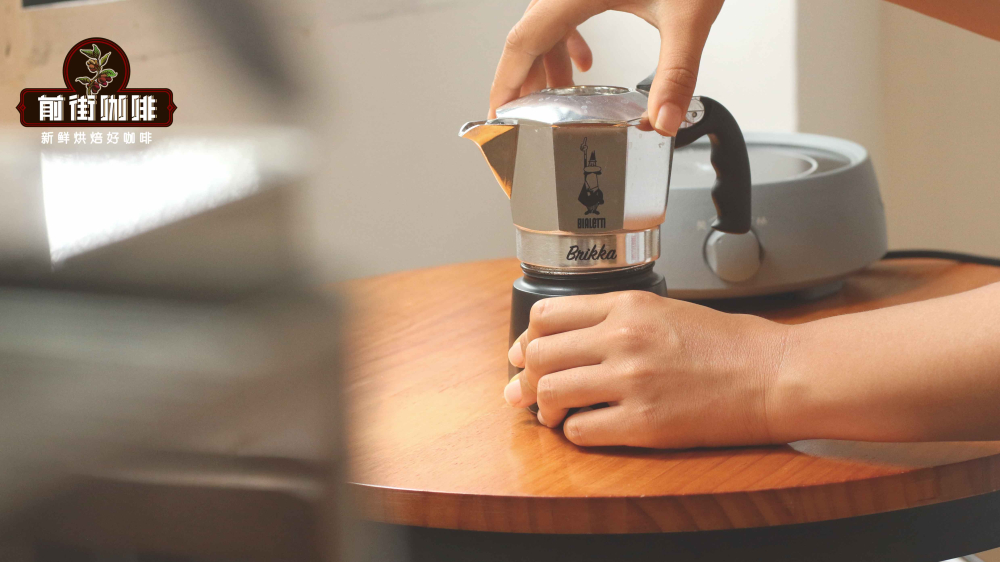
3. Put the filter basket into the lower chamber, tighten the moka pot, place it on an electric ceramic stove, and heat over high heat, making sure to use low heat;
4. When the moka pot heats up to a certain point and emits a clear gurgling and sputtering sound, after about 3–4 minutes, you can turn the electric ceramic stove to low heat and open the lid of the upper chamber.
5. When the coffee liquid in the upper chamber has come out halfway, turn off the electric ceramic stove. The residual heat and pressure of the moka pot will continue to push the remaining coffee liquid into the upper chamber.
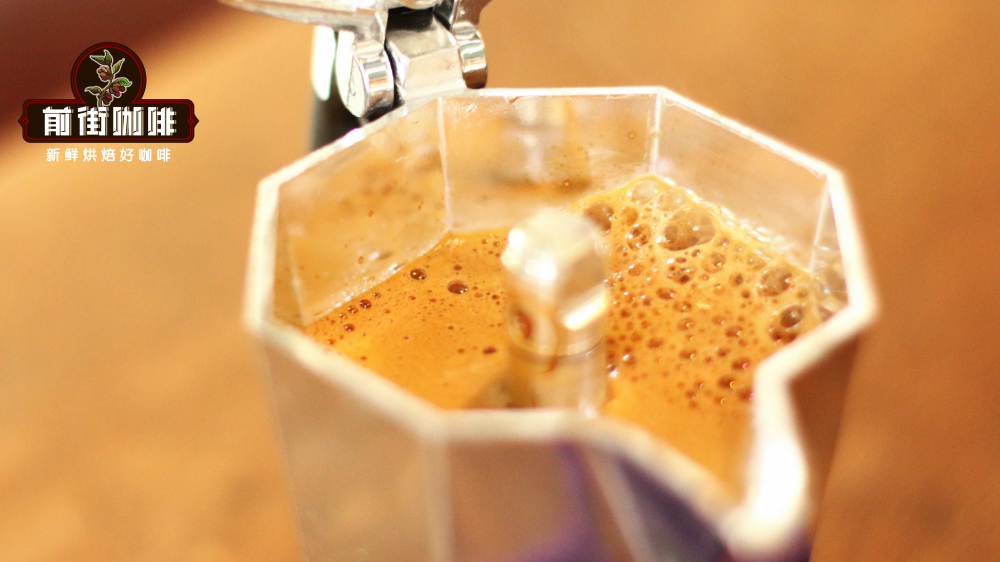
6. Once all the coffee liquid has been extracted into the upper chamber, it can be poured into a cup and enjoyed. Coffee extracted by a moka pot is very rich and can even extract Crema. It can also be mixed with an appropriate amount of water or milk for a better flavor. The operation is just that simple, but it still requires more practice. Front Street believes that although using a moka pot is not complicated, you must carefully control the grind size of the coffee grounds and various small details in order to extract a relatively perfect cup of coffee.
The above content is compiled by CoffeeHunters, a coffee news website.


