







How Does Brazil's Coffee Grading System Work in Practice?
Brazil, the largest coffee-producing country, grades its beans on three dimensions: defect rate, screen size, and cup performance. Most coffee farms sit at low altitude on flat, non-volcanic soil, which gives beans a shorter growing cycle, larger size, lower density and less flavor complexity than high-grown lots. Grades help sort that wide range of quality.
Mechanized harvesting collects fruits of different ripeness together, so defect counts weigh heavily in the score. As the specialty wave grew, higher-altitude regions in southern Brazil improved variety selection, picking and green bean processing. Front Street's Brazil Cerrado daily bean shows how to set dripper, water temperature, grind and pouring technique for a medium-dark roast.
Brazil, as the world's largest coffee-producing country, has a grading system and flavor characteristics that have always been a focal point for coffee enthusiasts. This article systematically reviews the producing regions, mainstream varieties, and processing methods of Brazilian coffee, and provides a detailed interpretation of the three-dimensional grading system centered on defect rate, screen size specifications, and cup performance. At the same time, using the example of Front Street Coffee's Brazil Cerrado daily bean, it explains how to set brewing parameters according to the characteristics of medium-dark roasted coffee, including dripper selection, water temperature, grind size, and pouring technique, helping readers comprehensively understand the complete picture of Brazilian coffee from origin to cup.
Brazil in South America enjoys a global reputation for its outstanding coffee quality, rich aroma, and soft mouthfeel. It is both the country with the largest coffee production and a leading giant in export volume, and has long been known as the "Coffee Kingdom." Front Street Coffee has always believed that, in addition to its considerable output, Brazilian coffee also maintains highly stable quality, and its balanced flavor is often used in espresso blending formulas. All three of Front Street Coffee's espresso blends include coffee beans from Brazilian producing regions.
Brazilian Coffee Producing Regions
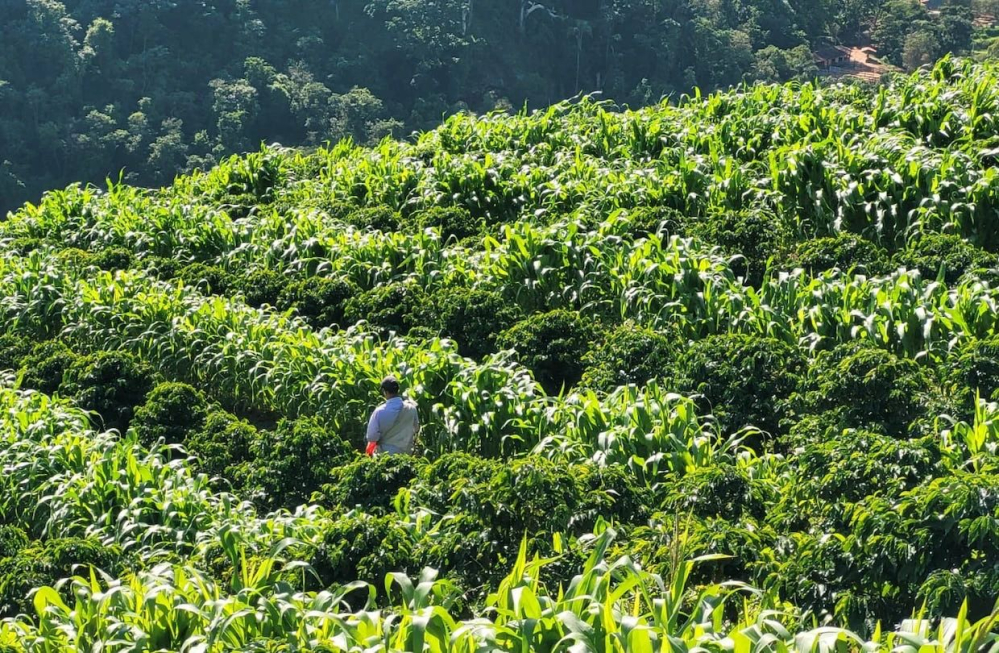
Brazil is located in the tropical zone, with terrain mainly consisting of flat land and a lack of high-altitude mountains. The vast majority of coffee farms are distributed in low-altitude areas with non-volcanic soil, and there is also insufficient shade trees. These conditions lead to short growth cycles for Brazilian coffee beans, relatively large bean size, lower density, and limited flavor complexity. In addition, the use of mechanized large-scale harvesting collects fruits of different ripeness together, making it difficult for the overall quality of Brazilian beans to stand out. With the rise of the specialty coffee wave, various coffee competitions have been held one after another, and higher-altitude producing regions in southern Brazil began to focus on improving coffee quality, with upgrades and improvements made in variety selection, field cultivation, fresh fruit picking, and green bean processing.
Brazil's coffee-growing areas are mainly concentrated in seven states, among which Minas Gerais and São Paulo in the southeast produce the best-quality coffee. The Cerrado region in Minas Gerais is the first coffee-producing region in Brazil to obtain origin certification, and almost all the coffee it produces is Arabica, which tends to have better flavor performance. As a mature coffee-producing region, Cerrado is also the earliest area in Brazil to achieve coffee commercialization, and many exporters have established large plantations there. The Brazilian daily bean launched by Front Street Coffee is selected from the famous Cerrado region.
The original intention of Front Street Coffee in offering daily beans is to allow friends who are new to coffee to understand the characteristics presented by different origins, processing methods, and varieties by tasting the representative flavors of classic producing regions, thereby enriching their coffee knowledge. As a pivotal coffee power, Brazil is naturally included by Front Street Coffee in the core lineup of daily beans.
Brazilian Coffee Varieties
The coffee varieties planted in Brazil are quite diverse. In the early period, the ancient Typica was dominant, but because of its low yield, many coffee farmers gradually abandoned it and turned to cultivating higher-yielding varieties. In the mid-nineteenth century, after the Bourbon variety was introduced from Réunion Island, it began to be promoted on a large scale.
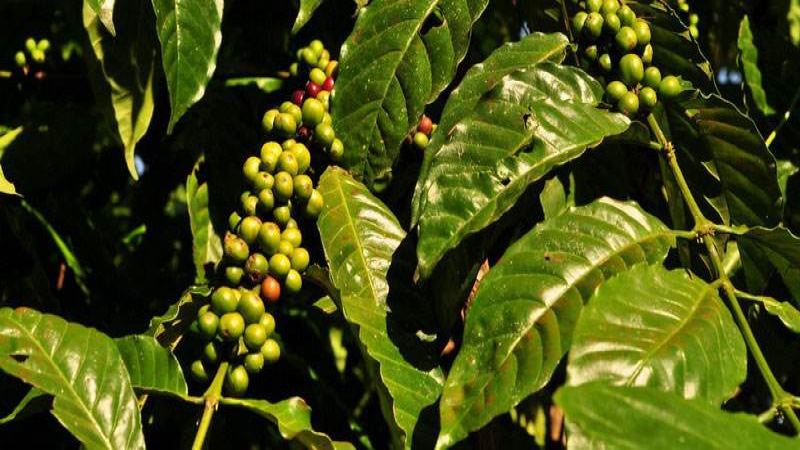
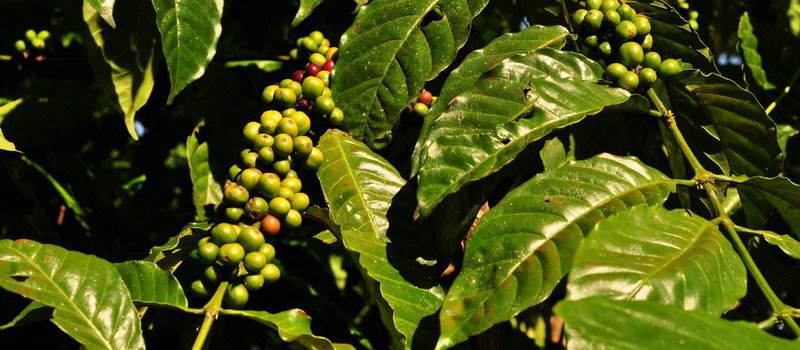
Also an ancient variety, Bourbon differs from Typica in that its leaves are broader and its growth is denser. Its yield is about thirty percent higher than Typica, and the beans are rounder and shorter, with berry-like acidity, a thick creamy body, and obvious aroma. Its acidity is prominent, but its disease resistance is likewise relatively weak. This Front Street Coffee Brazil Cerrado daily bean uses Red Bourbon, whose fruit turns red when ripe; in addition, the coffee on Front Street Coffee's bean list from Queen's Farm in Brazil's Mogiana region uses the refined Yellow Bourbon variety, with a mellow mouthfeel and aromas of dark chocolate and creamy peanut.
Processing Methods
Brazil's harvest season coincides with the dry season, making it very suitable to use natural drying for green beans. Traditional natural processing spreads all the fruit on the ground, which easily causes the coffee beans to pick up earthy and woody off-flavors, leading to unstable quality. After 1990, Brazil began promoting the semi-washed method, also called semi-wet hulling. This first uses water channels to remove defective beans and floating fruits, then uses machinery to remove the skin, pulp, and part of the mucilage, followed by washing, and finally drying in the sun or in a drying room. The semi-washed method saves more water and labor than the washed method, significantly improving the quality of Brazilian coffee and presenting a cleaner flavor and mouthfeel.
Brazilian Coffee Grading System
As Front Street Coffee mentioned earlier, because Brazil is mainly production-oriented and has a large span of producing areas and high output, using a single standard for grading can easily lead to uneven quality among export batches. Therefore, the grading of Brazilian coffee green beans is mainly carried out around three dimensions: proportion of defective beans, screen size, and cup flavor.
1. Grading by Number of Defective Beans
This is assessed by the "deduction method" based on the number of defective beans contained in every 300 grams of green beans. Brazil adopts the New York grading standard, namely NY, and according to the proportion of defects it can be divided into NY2, NY2/3, NY3, NY3/4, and so on. The smaller the number, the lower the defect rate and the higher the grade. Among these, lots with a deduction below 4 points belong to NY2, which is the highest level. Because NY.1 requires that there be not a single defective bean, such a strict batch cannot be supplied stably, so Brazil sets NY.2 as the highest grade.
2. Coffee Bean Size and Screen Number
Size is screened using sieves based on 1/64 inch, with sizes covering different specifications from 14 to 20. The screen number corresponds to the short side of the coffee bean, that is, its "width." The largest screen number for Brazilian coffee beans is 19, but the output is scarce, so 17/18 is regarded as the highest grade.
3. Cup Flavor and Mouthfeel
After completing the classification of defects and size, Brazilian coffee green beans are roasted and graded according to Cup of Excellence cupping scores from the two categories of mouthfeel and flavor. According to mouthfeel performance, they can be divided into five types: Strictly Soft, Soft, Softish, Hardish, and Rioy. Cup flavor grades are divided into: Fine cup (FC), Fine, Good Cup (GC), Fair Cup, Poor cup, and Bad cup. Among these, Fine Cup (FC) and Good Cup (GC) are relatively common.
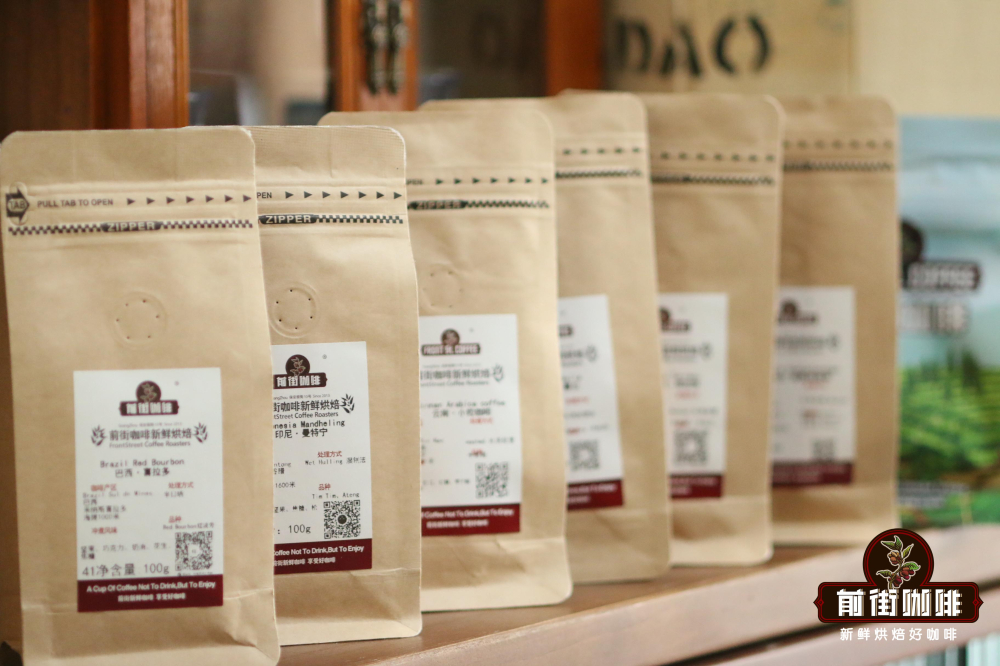
Taking the above points together, the packaging bag of Front Street Coffee's Brazil Cerrado coffee green beans is printed with "Brazil NY.2SC – 17/18 FC Cerrado," meaning it comes from the Cerrado region of Brazil, has a size of 17 to 18 screen, has high-quality cup flavor, a very smooth mouthfeel, and a defect rate grade of NY.2.
Brewing Flavor of Brazilian Coffee
Many friends ask Front Street Coffee how to brew medium-dark roasted beans like Brazilian coffee so that they taste good. Front Street Coffee believes that to brew a coffee well, you need to first understand the characteristics of the coffee itself, and then set the brewing parameters accordingly. You can refer to Front Street Coffee's brewing approach.
To brew out the various flavors indicated on the coffee bean packaging, Front Street Coffee believes freshness is crucial. Roasted coffee beans have an optimal flavor period, and once the peak aroma stage is missed, the flavor becomes difficult to extract. The beans shipped by Front Street Coffee are all freshly roasted within 5 days, with the aim of allowing everyone to enjoy the fullest optimal flavor period.
Front Street Coffee usually uses the KONO dripper to extract medium-dark roasted coffee beans. The upper half of the KONO dripper is a smooth curved surface, which makes the filter paper fit more tightly. Compared with the v60 dripper, its extraction method is mainly immersion-based, which can increase the overall concentration of the coffee and enhance its body. Besides KONO, common Kalita trapezoidal drippers, flannel, and other slower-flow devices are also suitable.
In addition, medium-dark roasted coffee has undergone a certain degree of roasting, so the internal structure of the beans is fluffier than that of light-roasted coffee and absorbs water better. To avoid over-extraction, Front Street Coffee chooses a grind size with a 75% pass rate on a No. 20 standard sieve, paired with a water temperature of 88°C, and uses Front Street Coffee's usual three-stage pouring.
Pour-over parameters: water temperature 88°C, grind size referring to coarse sugar (75% pass rate on No. 20 standard sieve), 15 grams of coffee beans, powder-to-water ratio 1:15, three-stage extraction.
In the first stage, gently pour in 30 grams of water for blooming, with a blooming time of 30 seconds; in the second stage, pour water to about 125 grams, evenly and steadily circling outward. When the coffee liquid drops to half, pour the final stage of water to 225 grams, and wait for all the coffee liquid to finish dripping. The total extraction time is usually about 2 minutes.
Brewing flavor: This Front Street Coffee Brazil Cerrado daily bean has aromas of nuts, chocolate, and caramel, with an obvious sweet aftertaste, an overall rounded mouthfeel, and a stable and lasting chocolate flavor.
Professional coffee knowledge exchange. For more coffee bean information, please follow Coffee Workshop (WeChat public account cafe_style).
For more specialty coffee beans, please add the private WeChat of Front Street Coffee (FrontStreet Coffee), WeChat ID: qjcoffeex.
The above content is compiled by CoffeeHunters, a coffee news website.


