







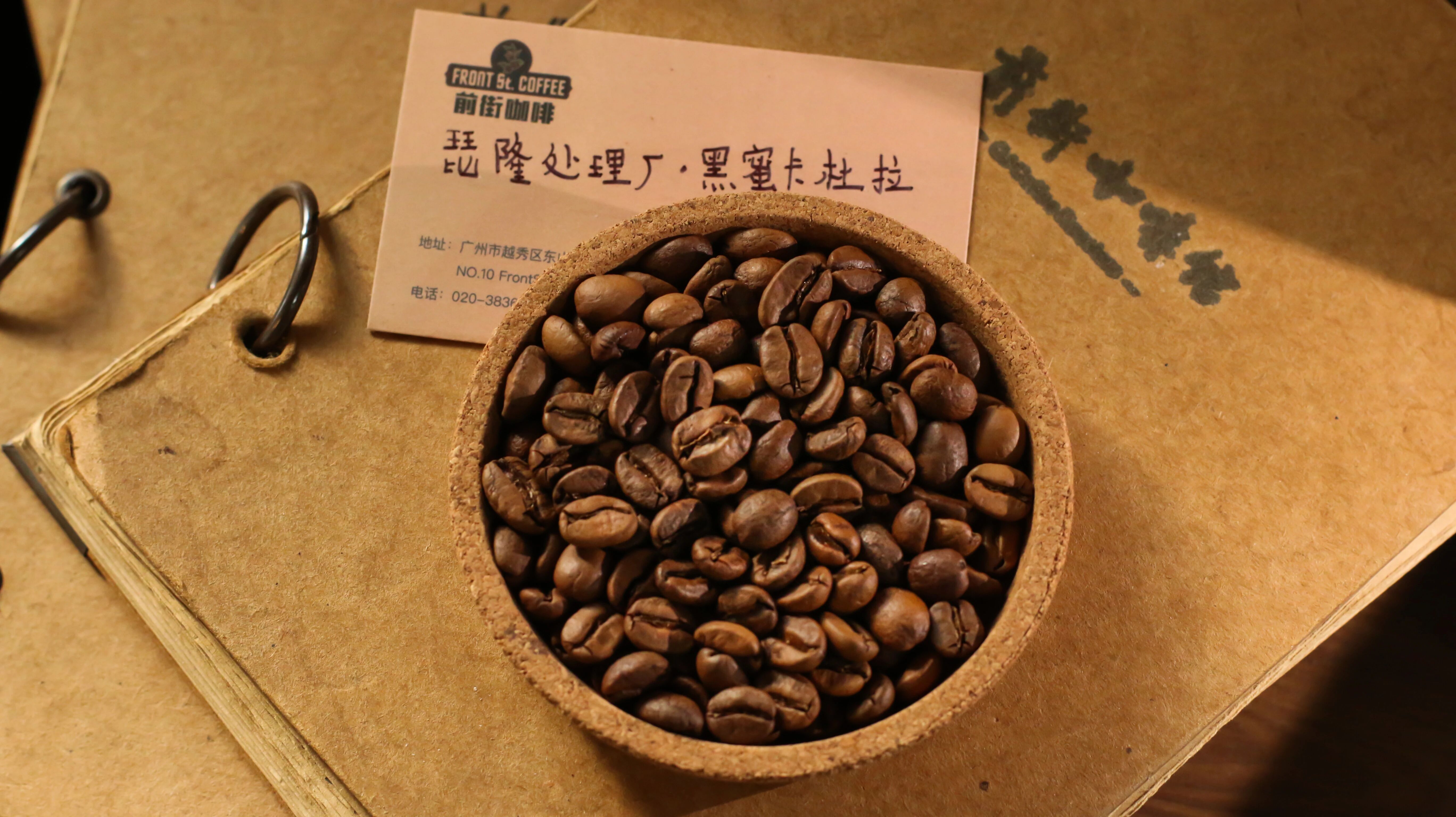
Costa Rica is the birthplace of the honey processing method, and with this technique it has secured an important position in the international specialty coffee market. This article focuses on a newly introduced Front Street coffee: a black honey processed Caturra from the Pilon Processing Plant. It first outlines the Pilon Plant's regional background and altitude advantages, then reviews the origins and cultivation characteristics of the Caturra variety, followed by a systematic explanation of honey processing and black honey processing, including the specific procedures and differences in mucilage retention. Finally, through roasting and cupping, it presents the bean's true flavor performance in dry aroma and tasting, including grape, berry, floral notes, and a slight fermented sensation, helping coffee lovers understand where the abundant sweetness brought by black honey processing comes from.
Front Street Costa Rica Specialty Coffee Estate Bean — Front Street Blackberry Coffee Bean
Region: Costa Rica, Tarrazu Region
Processing Plant: Pilon Processing Plant
Altitude: 1,800 meters
Processing Method: Black Honey Processing
Variety: Catuai
Flavor: Grape, berry, floral, slight fermented sensation
"Sweetness" is a quality that can significantly elevate a coffee bean. In the course of selling coffee beans, Front Street often encounters customers expressing a desire for "a more pronounced sweetness." When listing coffees with outstanding sweetness, Costa Rica's honey processed beans are often many people's first choice.
The honey processing method originated in Costa Rica, and the honey processed coffee produced there has a particularly distinct sweetness, which has helped Costa Rica establish a firm foothold in the global coffee market.
Recently, Front Street took a liking to a black honey processed Caturra from Costa Rica's Pilon Processing Plant. Today, let's experience together just what kind of layers of sweetness honey processing can give to coffee.
Pilon Processing Plant
The Pilon Processing Plant is located in Costa Rica's renowned Tarrazu region and is jointly managed by Edgar Urena, Efrain Mendez, and their family members. Here, Front Street will first give a brief introduction to Tarrazu. The Tarrazu region lies in a volcanic zone and is a prime piece of land for growing coffee in Costa Rica.
The local climate is humid, the volcanic soil is fertile, the altitude is quite high, and the surrounding dense forests provide natural shade for the coffee, making it an exceptionally favorable growing area.
The Pilon Processing Plant happens to be located on the edge of the town of Leon Cortez in Tarrazu, with coffee grown at an altitude of about 1,700–1,800 meters. According to Costa Rica's coffee grading standards, coffee produced at this altitude belongs to the country's highest SHB (Strictly Hard Bean) grade. From this, it is easy to infer that the coffee produced by the Pilon Processing Plant has considerable potential. (At the 2018 World Brewers Cup, a Japanese competitor won the championship with coffee from the Pilon Processing Plant, fully confirming this.)
Caturra
This time, Front Street selected the black honey processed Caturra from the Pilon Processing Plant. Front Street has frequently shared this variety recently, so you are probably already fairly familiar with it. It is a descendant of the old Bourbon variety and, because of its high yield, excellent flavor, and relatively easy cultivation, has become a highly sought-after star variety in Central American producing regions.
Caturra was first discovered in the early 20th century at a plantation in Minas Gerais, Brazil, because one group of genes in the planted Bourbon underwent a mutation that made the plant's stature shorter.
Because of its small size, the locals used the Guarani word "Caturra," meaning "small," to name this new variety, which is transliterated as Caturra.
The reason Caturra is high-yielding is also related to its short stature: it can be planted compactly at twice the density of other varieties, making harvesting and management more convenient. At the same time, it can be exposed directly to sunlight and is not as delicate as other Arabica varieties that need shade trees to block a large amount of sunlight, so it is also called "sun-grown coffee."
Combined with its excellent flavor performance, Caturra quickly became one of the main planted varieties in Central American countries once it was released. Front Street's bean list includes a large number of Caturra varieties, such as Front Street Panama · Butterfly, Duncan Estate · Caturra, and this time's selected black honey processed Caturra from the Pilon Processing Plant.
You may already be very familiar with honey processing, but when it comes to black honey processing, many friends may still be relatively unfamiliar. Next, Front Street will share just what kind of processing method black honey processing actually is.
Black Honey Processing
Front Street will first briefly introduce honey processing. Honey processing is an improvement on Brazil's pulped natural process and is a processing method that can both shorten coffee drying time and save water resources.
When using honey processing, coffee farmers first pour the fresh coffee cherries into a tank for flotation, removing defective beans and bad fruit that are not sufficiently ripe, then use specialized equipment to remove the skin and pulp, allowing the beans with mucilage still attached to undergo a period of "dry fermentation." After fermentation is complete, the beans are transferred to drying beds to be sun-dried. When the moisture content drops to a certain level, the beans can be hulled or moved into storage to await export.
The "honey" in honey processing actually refers to the sticky state presented by the sugary substances in the mucilage after fermentation, which easily reminds people of honey, and this processing method is therefore named "honey processing."
Honey processing is actually a general term, and according to differences in the amount of mucilage retained, it is further divided into white honey, yellow honey, red honey, and black honey.
During the pulping stage of honey processing, coffee farmers can freely adjust the amount of mucilage retained according to the desired degree of fermentation. Because mucilage is rich in sugar, the more that is retained, the darker the color of the coffee beans after drying. White, yellow, red, and black are named precisely according to the final color of the coffee beans after drying based on the degree of mucilage retention.
Black honey has the highest mucilage retention among the four, with almost no mucilage removed, and it also takes the longest to dry, usually requiring more than 14 days of sun-drying. During drying, in order to avoid too-rapid water loss leading to insufficient sugar transformation, coffee farmers use covers to properly shade the sunlight, giving the substances a longer conversion time and ensuring that the sugar can be better absorbed by the beans. For this reason, coffee processed as black honey has a very rich flavor and especially abundant sweetness.
When Front Street observed the green beans of this Pilon Processing Plant black honey Caturra, it found that because more mucilage was retained and its distribution was not very uniform, the color of the green beans showed obvious inconsistency, and when smelled, a rich fermentation aroma could be detected.
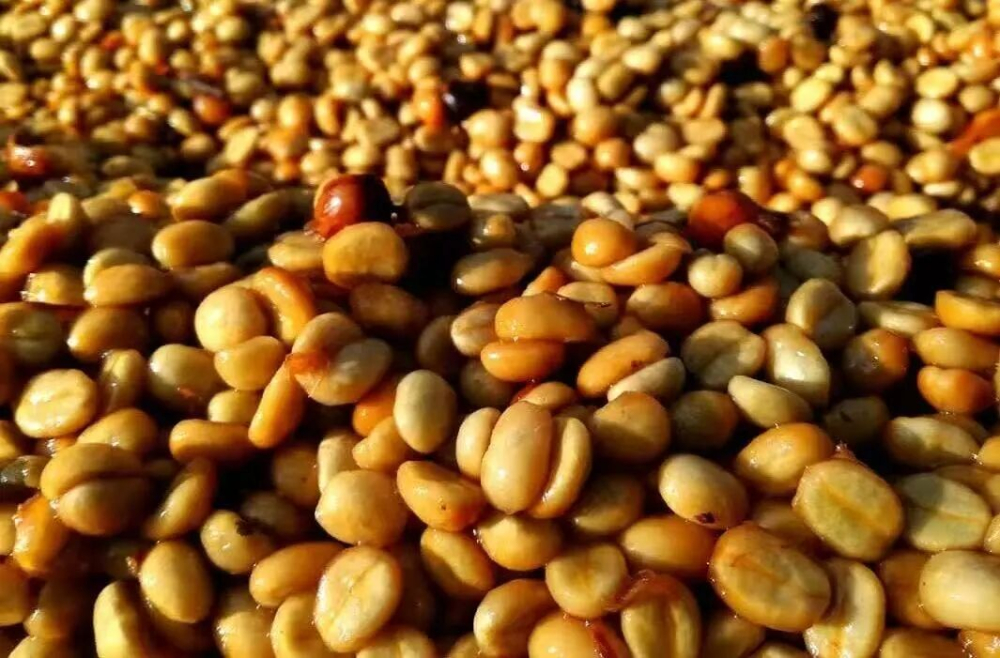
In order to fully showcase the characteristics of this black honey processed bean while highlighting the coffee's sweetness, Front Street decided to use a medium-light roast and conducted a cupping tasting right away.
In terms of dry aroma, after grinding this Pilon Processing Plant black honey processed Caturra, one can smell clear berry and grape sweetness, accompanied by a faint floral scent and a slight fermented sensation. The aroma is rich and solid, and very pleasant to smell.
During tasting, Front Street perceived through slurping the coffee's elegant fruity acidity and sweetness. At the high-temperature stage, it presented notes of grape, green grape, and berry, along with subtle floral notes and a faint fermented sensation. As the temperature dropped slightly, one could taste a delicate acidity similar to apricot, as well as a creamy sweetness. The finish was like fruit wine, and the overall mouthfeel was clean with a long aftertaste.
The above content is compiled by CoffeeHunters, a coffee news website.


