







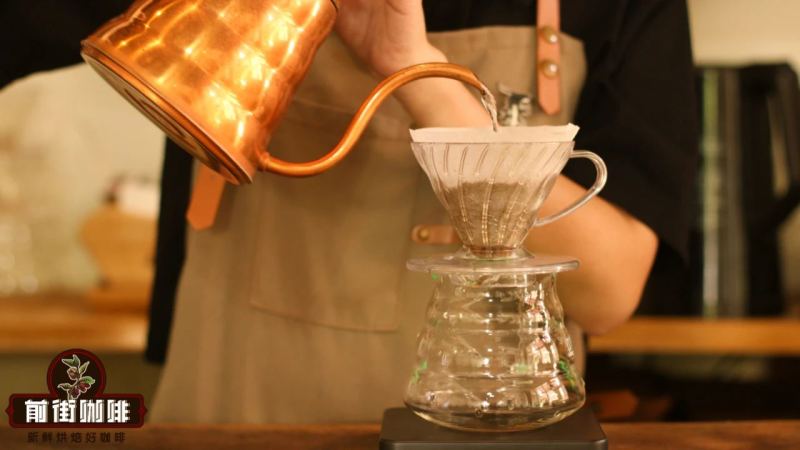
What is "pour-over coffee"?
Coffee beans undergo a series of chemical reactions during high-temperature roasting, producing various aromatic compounds. Brewing coffee is essentially about using water and equipment to release these aromatic components. Pour-over coffee involves first grinding the coffee beans into powder, then pouring hot water to contact the coffee bed, "dissolving" out the substances in the coffee. Essentially, it uses a dripper with filter paper or other tools to filter out the coffee grounds, preventing them from entering the server, resulting in a cup of clearblack coffee.
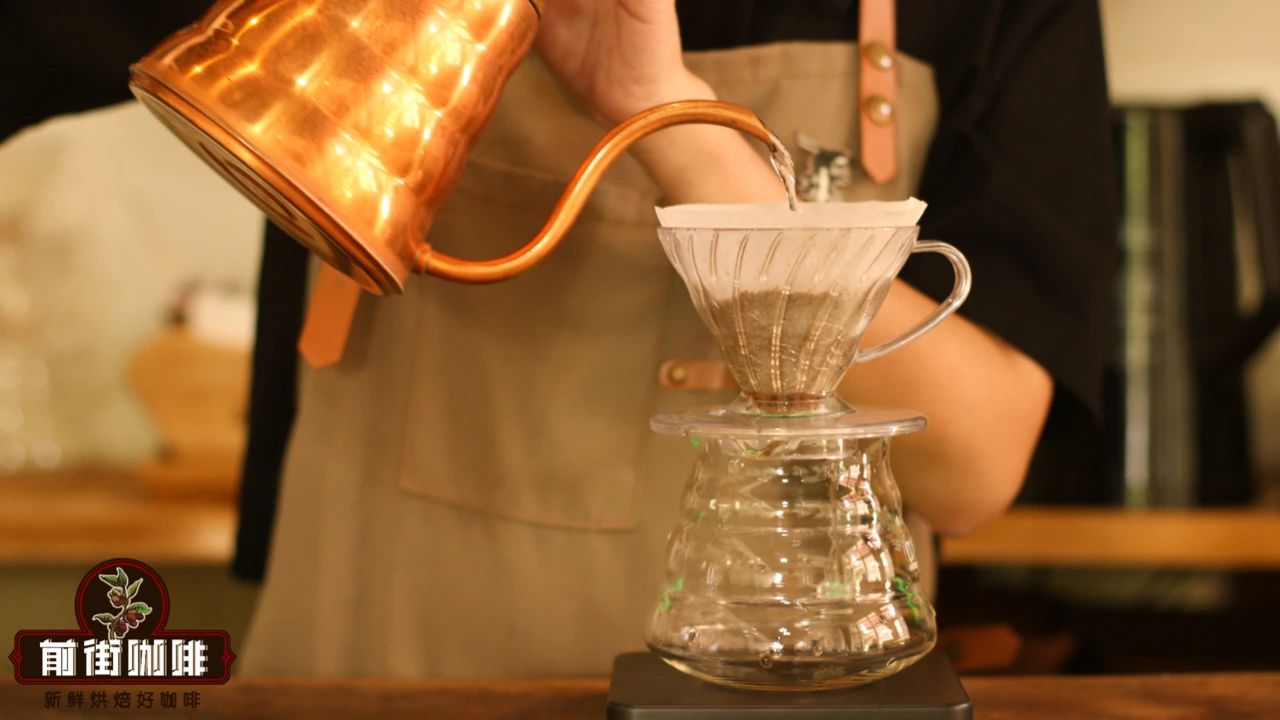
It's important to know that from bean selection to extraction, every step and process has more or less impact on the flavor of pour-over coffee. Therefore, to brew a cup of pour-over coffee, based on Front Street's brewing experience, besides high-quality coffee beans, Front Street believes you need at least these pieces of equipment: a gooseneck kettle for pouring water, a dripper and filter paper for filtering coffee grounds, a server, a grinder for grinding coffee beans, a scale for recording water volume and time, and a thermometer for measuring water temperature.
How to make pour-over coffee?
Delicious coffee naturally cannot be separated from good ingredients—high-quality coffee beans. Front Street recommends choosing coffee beans in their optimal flavor window of 4-30 days after the roast date, which is more conducive to stable extraction, and the pour-over coffee flavor will be fuller. Here, Front Street uses the classic Yirgacheffe as the brewing subject to demonstrate how to brew a delicious pot of coffee~

To make homemade pour-over coffee at home, we first need the following equipment: gooseneck kettle, dripper, server, grinder, filter paper, scale, and thermometer.

The grinder plays a very important role in pour-over, usually divided into two types: manual grinders and electric grinders. Regardless of which grinding equipment you choose, the goal is to get uniformly ground coffee powder. The coarseness of the coffee grounds directly affects the taste of the coffee. If the grounds are too coarse, it's easy to under-extract and the taste will be weak; if too fine, it's easy to over-extract and the taste will be bitter. To adjust the grind size, Front Street uses a tool—the Chinese No. 20 0.85mm standard sieve. For medium-light roasted coffee beans, Front Street consistently uses a 75-80% pass-through rate, while for medium-dark roasted coffee beans, Front Street uses 70-75%.

Here, Yirgacheffe is a high-altitude coffee bean with a medium-light roast. Front Street wants to extract more abundant aromatic compounds, so we choose a grind size with an 80% pass-through rate on the No. 20 standard sieve, corresponding to a setting of 10 on the EK43s grinder used in the store.
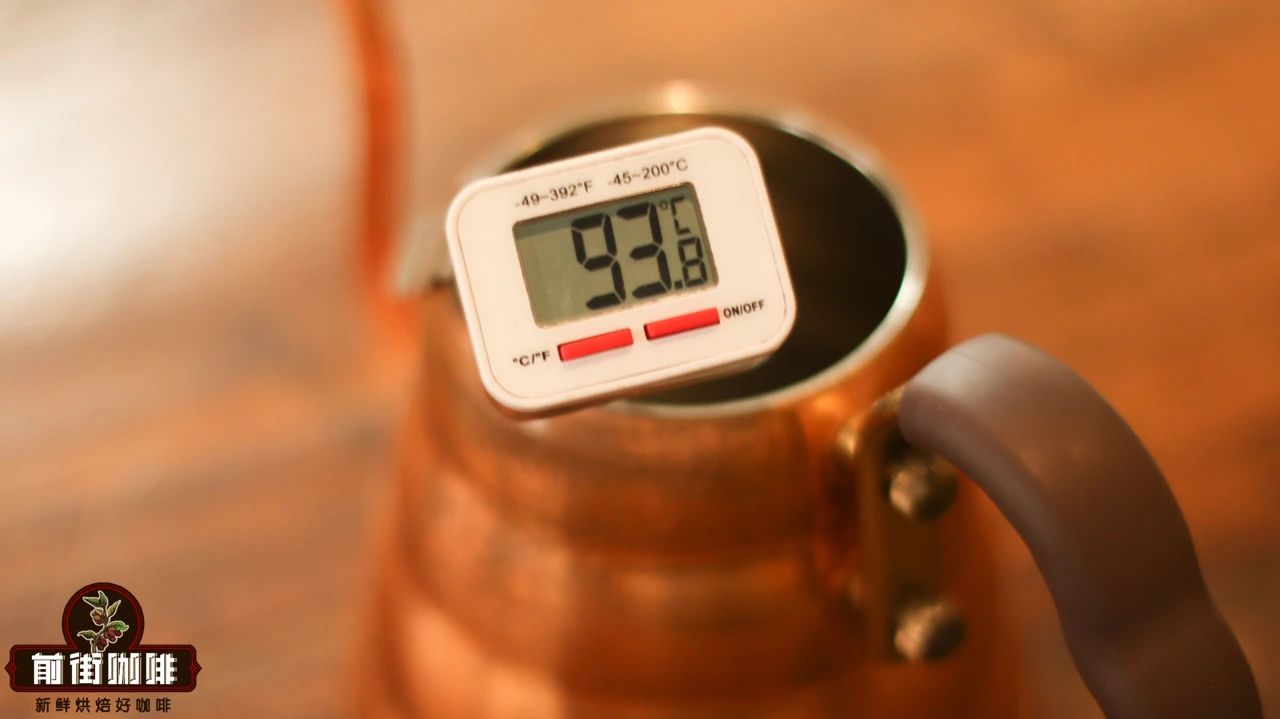
The thermometer is for measuring the temperature of the hot water. Water temperature plays a similar role to grind size: the higher the water temperature, the higher the extraction efficiency, the easier it is to release various compounds, and the higher the concentration. If you use near-boiling hot water for brewing, it's easy to extract unpleasant bitter compounds. Therefore, for brewing medium-dark roasted coffee beans, Front Street uses different brewing parameters than for light roasted coffee beans. So for medium-dark roasted coffee beans, Front Street recommends 87-90°C, while light roasted coffee needs a higher water temperature to stimulate aroma, so 91-93°C is used.
There are many styles of coffee drippers on the market, and different styles have different brewing effects. Corresponding filter paper is needed to separate coffee grounds. Front Street Coffee stores use Hario V60 and KONO drippers for daily production. The V60 dripper is mainly responsible for producing coffee beans with a lighter roast level, while the KONO dripper is responsible for producing coffee beans with a darker roast level. Here, the Front Street Coffee barista will use a resin V60 dripper to extract Yirgacheffe coffee.

The V60 dripper body has spiral ribs connecting the top and bottom and a large circular hole in the center, which speeds up the flow rate of water. The spiral-shaped exhaust grooves lengthen the water flow path, increasing the contact time between coffee grounds and hot water. Each stream of water converges along the grooves toward the center point of the dripper, concentrating the pressure on the coffee grounds, resulting in a coffee with richer layers.
The gooseneck kettle is used to steadily pour hot water into the coffee grounds. A fine-spout kettle can pour a stable stream of water, more evenly washing the coffee bed to release flavor compounds. The scale allows us to control the total water volume and extraction time, with the purpose of brewing according to the originally designed brewing plan. Front Street recommends buying a fast-display electronic scale with a timing function, or simply searching for "pour-over coffee scale" to purchase one.
What is a brewing technique?
On online media, we can see various pour-over water pouring techniques, such as one-pour, three-stage, four-six, etc. Various techniques can make the flavor expression in the cup different. Based on past brewing experience, Front Street recommends that beginners use the three-stage pouring method. Three-stage extraction is conducive to more fully dissolving flavor compounds during extraction, increasing the layering of taste, while avoiding over-extraction caused by too long steeping.
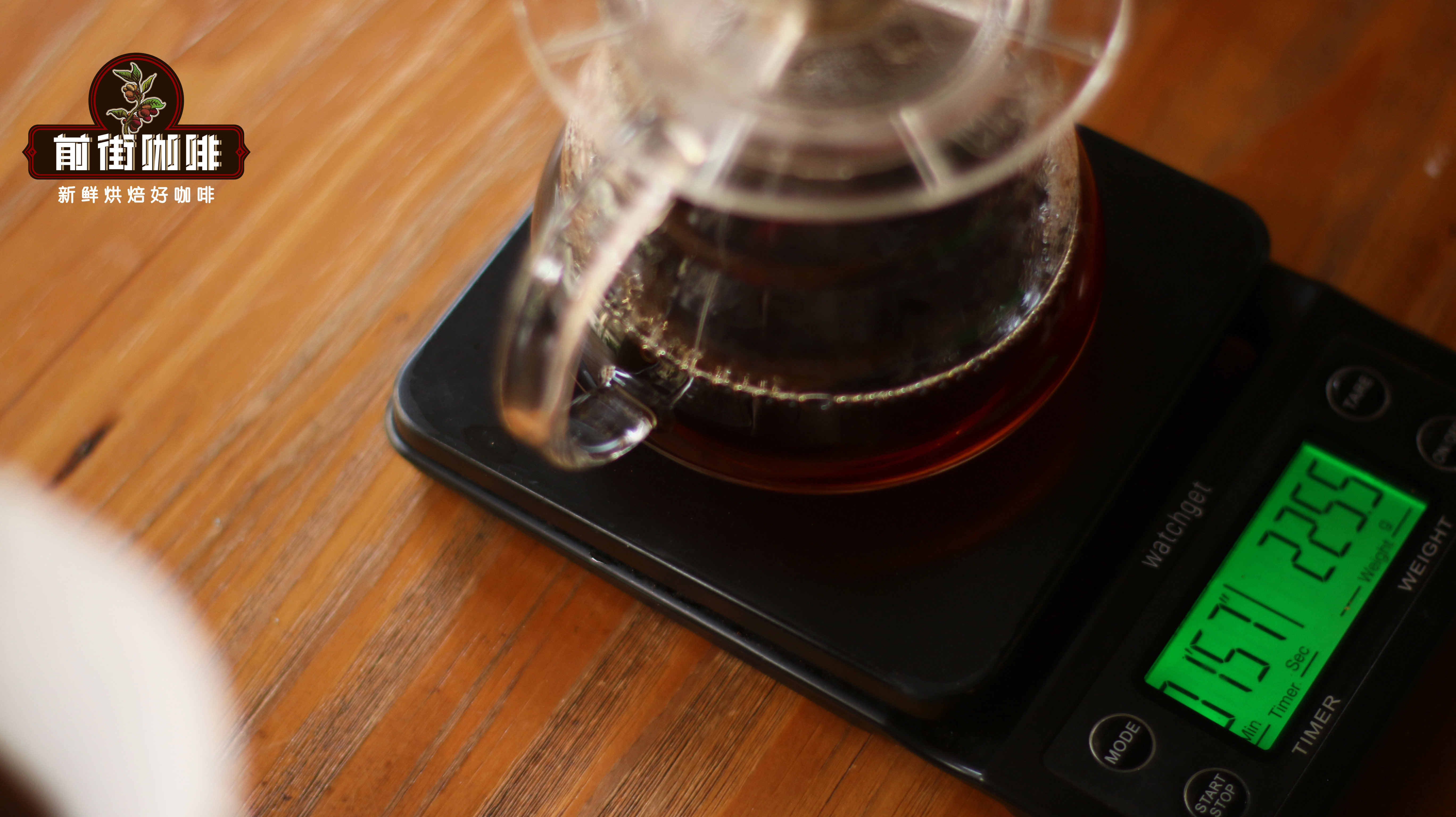
If using 15 grams of coffee powder, 1:15 coffee-to-water ratio, 225ml total water, the three-stage water amounts are: 30ml, 95ml, 100ml. The weight displayed on the scale would be: 30g, 125g, 225g.
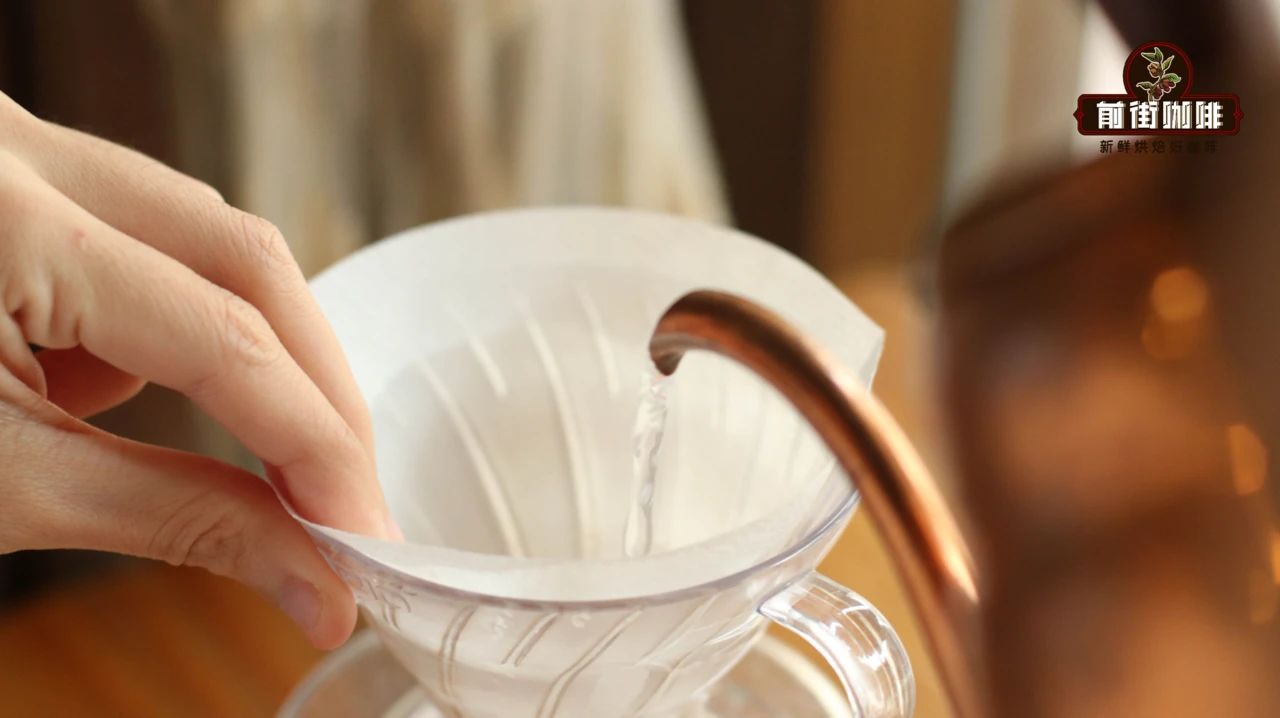
Fold the filter paper and fit it snugly against the dripper. Use a small amount of water to wet the filter paper while making them fit better, then pour out the water in the server. Next, pour 15 grams of ground coffee into the dripper and tare the scale.

For the first stage, pour 30g of water for a 30-second bloom. Start timing as you pour. Use a small stream, pouring from the center point outward in circles, making sure to wet the entire coffee bed.

After 30 seconds, begin pouring the second stage of 95g of water with a slightly larger but steady stream, with the purpose of raising the entire coffee bed. The water column should be poured vertically and evenly. At this point, the scale shows 125g, and pouring should be completed in about 55 seconds.
Some people find making cold drip coffee troublesome, so iced pour-over is also a great solution. Iced pour-over is almost the same as the hot pour-over above, except the water amount is adjusted from 225 (1:15 coffee-to-water ratio) to 150 (1:10 coffee-to-water ratio), and about 75-100g of ice is placed in the server.
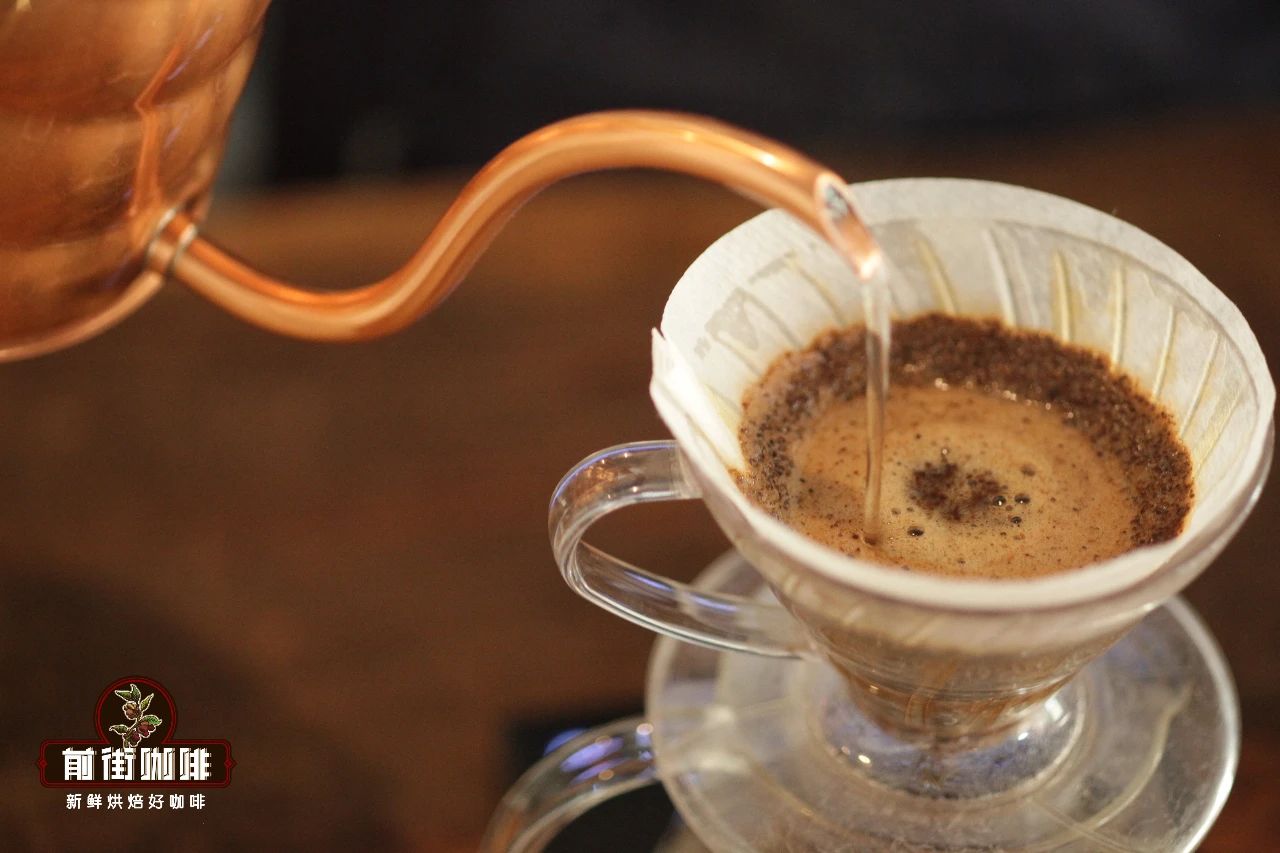
When the liquid level drops to the halfway point, begin pouring the third stage of 100g with a small stream in small circles, trying to control the stream from circling too widely, which could easily disturb the coffee bed and cause under-extraction. The final total water amount is 225g, and the drip completion time is about 2 minutes. Remove the dripper, swirl the coffee liquid in the server to mix evenly, and it's ready to taste.

The water amount for each stage is not fixed. We can adjust based on our accumulated pour-over experience and our understanding of the coffee beans. Front Street believes there are thousands of ways to brew a delicious cup of coffee. As long as we learn and practice more, mastering the various pour-over parameters is not difficult.
The above content is compiled by CoffeeHunters, a coffee news website.


