







What makes Kona coffee from Hawaii distinctive?
Kona coffee grows on the Big Island of Hawaii at roughly 300 to 1,100 meters, below the altitude usually required for specialty coffee, yet its cup is prized for a clean, mild, balanced flavor. Spanish advisor Don Francisco de Paula Marin brought the first plants in 1817, but the crop only took hold after coffee arrived from Brazil in 1825.
About 950 farms across Kauai, Oahu, Maui, Molokai, and the Big Island grow coffee today, mostly small family operations, covering around 7,900 acres. Bourbon arrived in the late 1820s, and a formal coffee grading system later sorted Kona beans by bean size and defects. Washed Typica from Kona remains the common pour-over pick.
Kona coffee comes from the Big Island of Hawaii. Although it is grown at an elevation of only 300 to 1,100 meters, which does not meet the usual altitude standards for specialty coffee, it is renowned for its unique flavor and is considered one of the world's top coffees. This article reviews the introduction history of Hawaiian coffee, the industry's ups and downs, its washed processing method, and the grading system for Kona beans, and also introduces the Typica beans from Queen Farm selected by Front Street Coffee. From variety and elevation to brewing parameters and flavor description, it presents the charm of this island coffee in a comprehensive way, and is suitable for coffee lovers interested in pour-over brewing and origin stories.
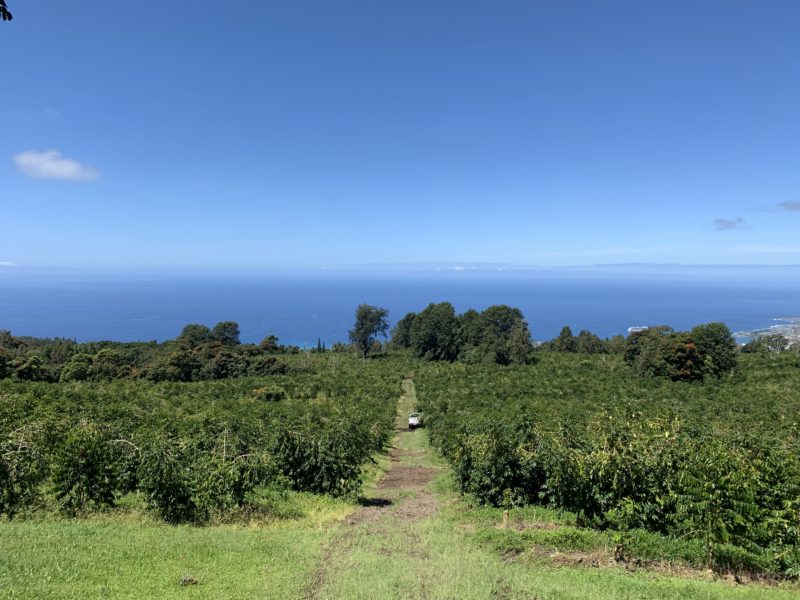
When it comes to coffee produced under island climate conditions, Hawaiian Kona beans are a name that cannot be avoided. Hawaii's coffee-growing areas are located at elevations of only 300 to 1,100 meters, which does not meet the altitude threshold commonly used for specialty coffee. However, there are always exceptions, and the Kona coffee produced in this region is praised by many as the world's most perfect coffee bean.
According to Front Street Coffee's understanding, Hawaii Island, the home of Kona coffee, was not actually the original birthplace of coffee. In 1817, Don Francisco de Paula Marin, the first Spanish advisor, brought coffee plants to Hawaii, but the first wave of cultivation did not succeed. It was not until 1825, when Oahu mayor Chie Boki introduced coffee from Brazil to Manoa Valley, that it truly took root.
After that, coffee gradually spread across the Hawaiian Islands. Today, about 950 farms on Kauai, Oahu, Maui, Molokai, and the Big Island grow coffee, most of them small family-run farms. In the early days, only men were allowed to work in the coffee fields, and later women also took part. These farms cover a total planted area of 7,900 acres.
In 1813, the first batch of coffee plants was transplanted to Oahu, but at that time sugar production far exceeded coffee and became farmers' main source of income. By the late 1820s, Bourbon variety coffee was introduced to the Big Island, and over the following decade, the first coffee-focused estates were established one after another.
However, the development path of Hawaii's coffee industry was not smooth. In 1858, coffee production on Kauai came to a complete halt because of blight. At the same time, competition from the sugar industry and landowners switching to sugarcane to increase profits led to large numbers of plantations being abandoned and then divided into smaller farms. After the United States occupied these islands in 1898, protective tariffs on coffee were removed, the market shrank further, and more farmers turned to growing sugarcane. This situation continued until the 1980s, when coffee production only slowly recovered after sugar prices fell.
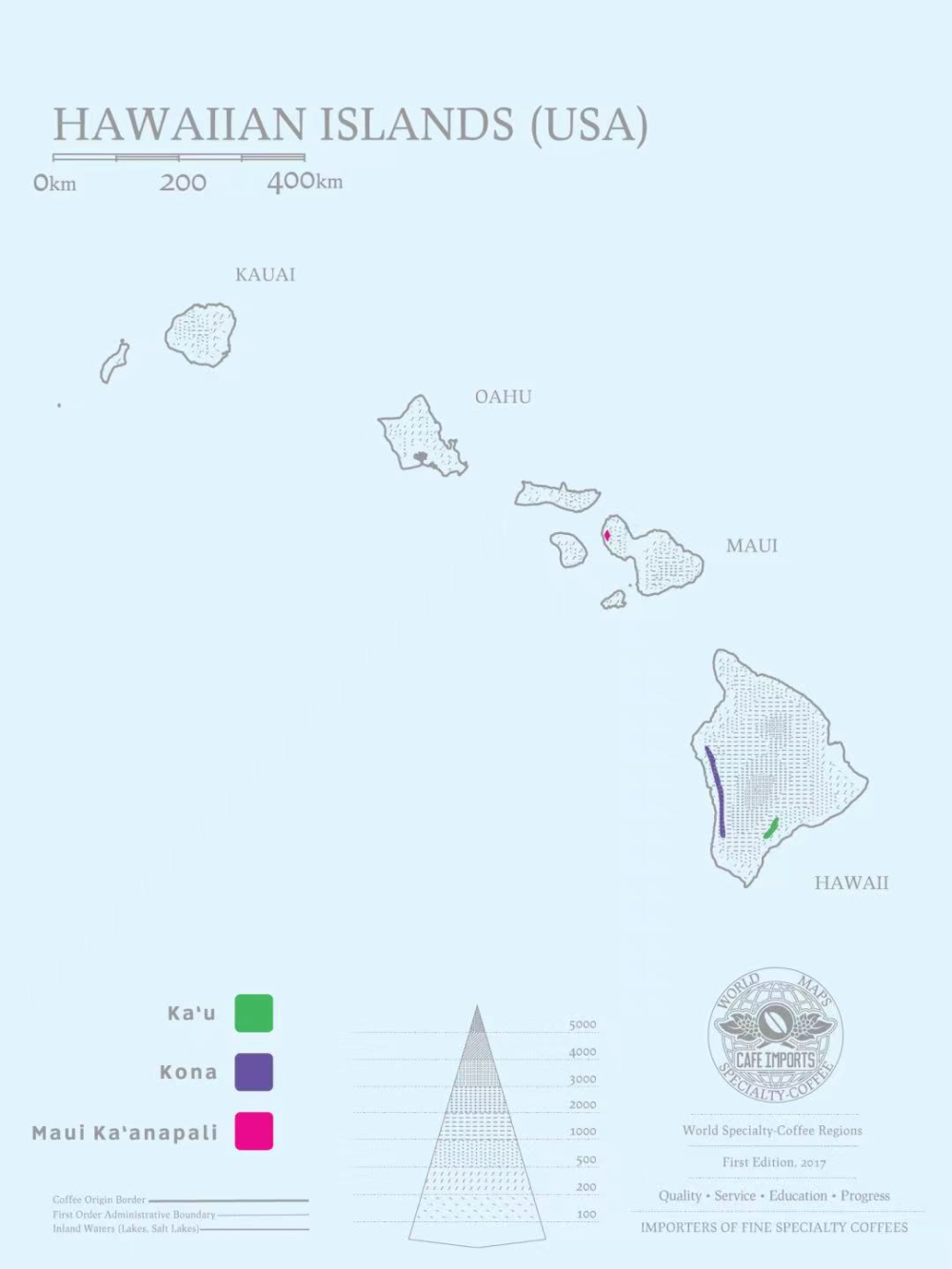
At present, there are 12 coffee-producing regions across the Hawaiian Islands, among which Kona is the best known. Because of limited output and relatively high production costs, demand for Kona beans in the specialty coffee market continues to rise, and prices have approached those of Jamaican Blue Mountain. High-quality Kona beans are becoming increasingly difficult to buy. Although Hawaiian coffee is generally not cheap, its traceability is guaranteed.
Hawaiian Coffee Processing Methods
Hawaii mainly uses the washed method to process coffee beans. The key difference from the natural method is that it uses fermentation to remove the mucilage layer. After fermentation and demucilaging are completed, fermentation bacteria and impurities may remain on the surface of the beans, so another wash is required. This step consumes a relatively large amount of water, after which the fruit is dried and hulled.
Hawaii Kona
Farm: Queen Farm
The Kona coffee beans of Front Street Coffee come from the well-known Queen Farm. The farm won second place in the 2009 and 2011 Gevalia (Hawaii KONA cupping competition) Cup Grand Prix. Of the coffee beans produced by the farm, 70% are rated as top Extra Fancy specialty beans, and their quality is widely recognized. Even the slightly lower-grade specialty beans have an aroma comparable to that of Extra Fancy beans, drawing praise from roasters.
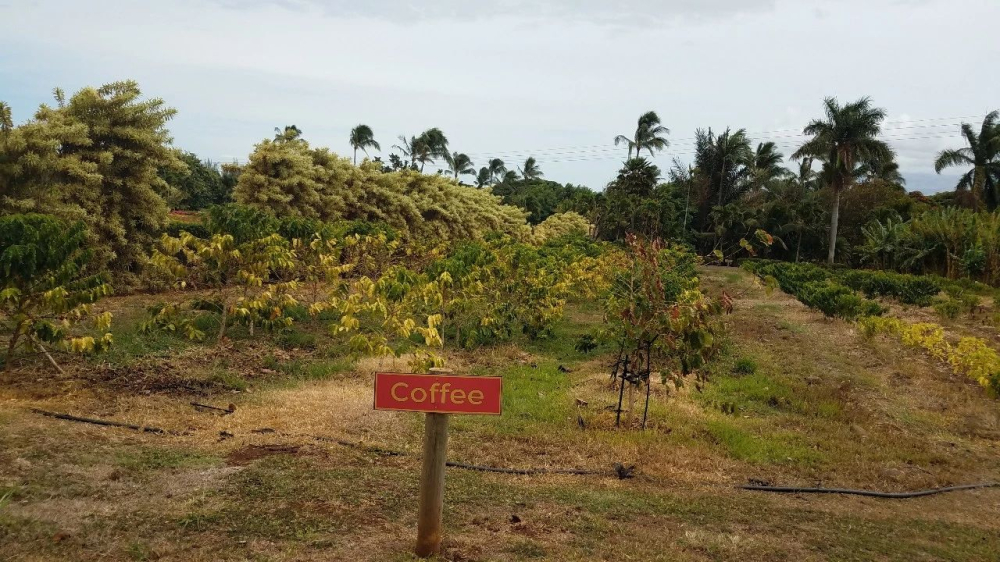
Among the Hawaiian coffees commonly seen on the market today, in addition to the Kona region on the Big Island, coffee estates on Maui, Kauai, and elsewhere are also beginning to attract attention. Common Hawaiian coffee varieties include Typica, Mocca, and Catuai.
Kona Coffee Grading System
KONA coffee beans are mainly graded by bean size and are divided into Type 1 and Type 2. Front Street Coffee purchases Type 1, which refers to standard coffee beans. Within this category, Kona beans are further subdivided into five grades: Extra Fancy, Fancy, Number One, Select, and Prime. The first three grades of Hawaiian coffee beans are blue-green in color, like jade, with uniform bean size. Extra Fancy, the highest grade, has the largest bean size and is produced in small quantities. Because defects are strictly controlled and manual sorting is required, it is regarded as the finest of the finest.
Front Street Coffee: Hawaii KONA Kona Coffee Beans Region: Kona Queen Farm Elevation: 1,100 m Variety: Typica Processing Method: Washed Flavor: Walnut, Nuts, Chocolate, Cream, Peanut, Caramel
Front Street Coffee Brewing Suggestions:
In the pour-over brewing process, Front Street always emphasizes that the freshness of coffee beans is crucial. Only freshly roasted coffee beans can release rich flavors to the greatest extent. To ensure freshness, Front Street Coffee guarantees at shipment that the coffee beans were freshly roasted within 5 days. The freshness of coffee beans has a clear impact on flavor performance.
The core philosophy of Front Street roasting is “freshly roasted good coffee.” We are committed to making sure every customer who places an order receives the freshest coffee beans. Usually, the resting period for coffee beans is 4 to 7 days, so that when customers receive them, they are exactly at their peak flavor stage. However, from the perspective of understanding coffee, even if the resting period is not sufficient, you can still try brewing it and experience how the aroma of the coffee beans changes at different stages.
Front Street Parameters for Brewing Hawaiian Kona Coffee :
Dripper: KONO
Water Temperature: 88-89°C
Coffee-to-Water Ratio: 1:15
Grind Size: Fine granulated sugar consistency / (73% passing through China No. 20 standard sieve)
The brewing method uses three-stage extraction. Use twice the amount of water relative to the coffee grounds for blooming, that is, 30 grams of water for a 30-second bloom. Pour in a small stream in a circular motion until 125 grams, then pause. When the water level is about to expose the coffee bed, continue pouring until 225 grams and stop. (Start timing from the beginning of the bloom.) The extraction time is 2 minutes.
Kona Coffee Bean Characteristics Description :
This Kona coffee bean from Front Street Coffee has a stunning appearance. After brewing, it gives off the aroma of walnut and nuts, with a soft acidity like berries. The sweetness is like caramel, and the mouthfeel is clean and silky like cream. It has rich layers and leaves an endless aftertaste.
The above content is compiled by CoffeeHunters, a coffee news website.


