







How did Catimor change Yunnan coffee cultivation?
Catimor is the most widely planted coffee variety in Yunnan, and it reached that position because of disease resistance rather than cup quality. Bred to withstand coffee leaf rust, it spread quickly through Yunnan's growing areas and gave the region a reliable, high-yielding arabica variety base while traders and roasters worked on improving its flavor.
Coffee cultivation in Yunnan traces back to 1904, when a French missionary planted a tree at Zhukula Village in Binchuan. Planting then moved through three periods: the 1950s, the 1980s, and the early 2000s. Growers later refined picking, washing, and roasting, and washed Catimor from the Baoshan area now shows cleaner, sweeter flavor.
Yunnan small-batch coffee has drawn increasing attention from domestic coffee lovers in recent years, and Catimor, as the most widely planted coffee variety in Yunnan, has an origin and flavor evolution worth exploring in depth. This article will sort through the three historical stages of coffee cultivation in Yunnan, analyze the disease-resistant breeding background of the Catimor variety and the improvement process of its flavor characteristics, and also introduce Front Street Coffee's experience growing Typica on its self-built estate in Lincang, Yunnan, as well as the brewing parameters and flavor performance of washed Catimor from the Baoshan production area, helping readers gain a comprehensive understanding of the current variety situation and quality improvement of Yunnan coffee.
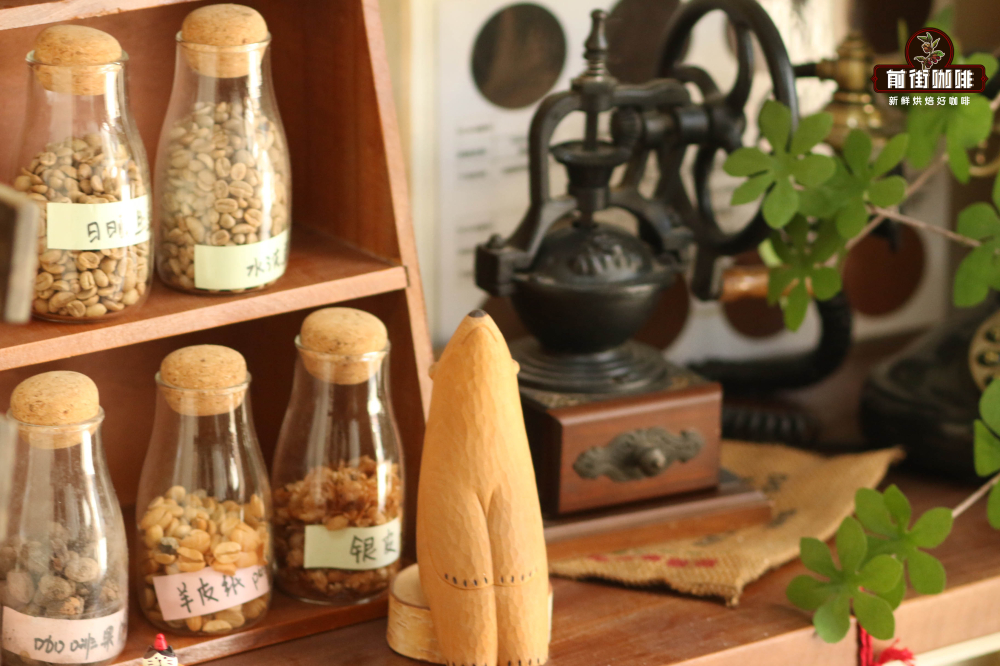
Nowadays, as the reputation of domestic products keeps rising, locally produced coffee beans have also become a target that everyone rushes to pursue. Thinking back to childhood, when the protagonist in a film or TV drama walked into a cafe, what came out of their mouth was "a cup of Blue Mountain"; but now, working in a cafe, I hear more and more coffee lovers push the door open and say, "Give me a cup of Yunnan small-batch coffee." Front Street has also encountered many such customers. Although Front Street's bean list has more choices with a fresh and delicate flavor, they have always had a special fondness for Yunnan coffee beans.
China is originally the birthplace of tea and has long been dominated by tea drinking. The reason coffee could sweep the globe is inseparable from the fact that Europeans and Americans traveled everywhere. Compared with many coffee-producing countries in the world, China's history of coffee cultivation is not very long, and can be traced back at the earliest to the late Qing Dynasty.
According to the "Binchuan County Gazetteer," in 1904, a French missionary was ordered to go to Zhukula Village in Binchuan, Yunnan, to preach and build a Catholic church, and planted a coffee tree beside the church.
After that, coffee cultivation in Yunnan roughly went through three key periods: the 1950s, the 1980s, and the early 21st century.
In the 1950s, in order to repay debts to the Soviet Union, the national foreign trade department actively sent personnel door to door to purchase Yunnan coffee beans. At that time, Yunnan small-batch coffee, because of its outstanding flavor, was rated first-class in London, England, in the late 1950s.
By the 1980s, with the implementation of the reform and opening-up policy, international brands such as Nestle and Starbucks entered Yunnan to purchase green beans. In order to expand purchase volume, Nestle promoted the cultivation of the higher-yielding but mediocre-flavored Catimor variety locally. For coffee farmers, the higher the yield, the more income, so many people cut down elegant-flavored Typica coffee trees and switched to planting the more productive Catimor. For a time, Yunnan coffee bean varieties were mainly Catimor, and Catimor coffee production occupied a dominant position in Yunnan's total coffee output.
Entering the 21st century, as more and more people became wealthy, the concept of specialty coffee also spread to mainland China. People began to pursue more refined coffee flavors, and more and more local coffee companies and growers started to improve cultivation techniques and post-processing methods, allowing the public to experience a different kind of Yunnan specialty coffee.
Friends who have studied coffee varieties should be familiar with the name Catimor. Many Yunnan coffee varieties seen today are mostly Catimor. In the last century, many important coffee-producing areas suffered from coffee leaf rust. Once a coffee tree was infected, the yield would decrease in mild cases and the tree would die in severe cases. To overcome this problem, in the 1950s, researchers hybridized the leaf-rust-resistant Robusta variety with the Arabica variety Caturra, thereby creating the Catimor variety with strong disease resistance and high yield.
Because Catimor carries some Robusta genes, while inheriting high-yield characteristics, it also inevitably inherited unpleasant flavors such as the earthy fishiness of Robusta. Taiwanese specialty coffee master Han Huaizong, in "Specialty Coffee Studies," described Catimor's flavor as a "devil-like finish."
It takes four to five years for a coffee tree to grow from a seedling to being able to bear fruit. If Catimor is cut down and replanted with Typica, it means no harvest during those four or five years, which is truly unbearable for farmers who grow coffee.
In recent years, with the continuous improvement of coffee varieties, cultivation management, and processing techniques, the flavor of Yunnan small-batch coffee has improved significantly. Several Yunnan small-batch coffees obtained by Front Street Coffee, even if the variety is Catimor, the "devil-like finish" has gradually disappeared.
Although Yunnan small-batch coffee is mostly of the Catimor variety, the enthusiasm of coffee lovers still outweighs the "devil-like finish." Friends often come to ask Front Street Coffee which coffee production area in Yunnan tastes good. The main areas in Yunnan, China, where specialty coffee is grown are: Baoshan, Pu'er, Xishuangbanna, Dehong, Lincang, and Simao. Most of the Yunnan coffee beans on Front Street Coffee's bean list come from the Baoshan production area and the Lincang production area.
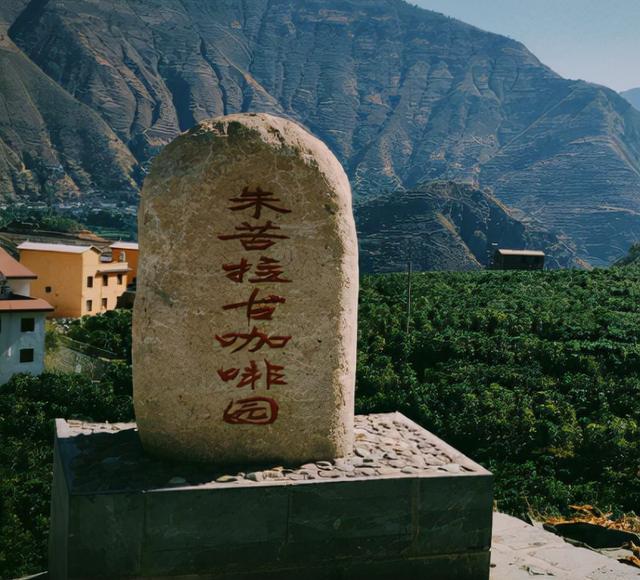
Among them, the Yunnan coffee beans from the Lincang production area come from the Front Street Coffee estate established locally by Front Street Coffee in Lincang, Yunnan, where Typica coffee beans are grown. Front Street Coffee had already set foot in coffee cultivation long before opening a store at Dongshankou in Yuexiu, Guangzhou. In line with specialty coffee's emphasis on varieties and growing environment, Front Street Coffee's estate in Yunnan mainly grows Typica, the oldest Arabica variety, and also a small amount of Bourbon.
Around 2018, Front Street Coffee's estate began to have harvests one after another. By the 2020/2021 harvest season, Front Street Coffee's estate already had a certain output of Typica coffee beans. In 2021, the sun-dried Typica coffee beans produced by Front Street Coffee's own estate were sold only in Front Street stores. Because the output that year was limited, they sold out in less than half a year. Front Street Coffee also received praise from many coffee lovers for this bean.
In the 2021/2022 harvest season, Front Street Coffee's estate reached a Typica coffee bean output of 600 kilograms, and it is currently available for purchase at Front Street Coffee stores and on its Taobao store.
Because the coffee variety on Front Street Coffee's estate is Typica, and it uses the traditional sun-drying processing method, its flavor has a soft acidity like plum berries, a rich nutty tone, a brown-sugar-like sweetness, and a black tea-like tea body. Overall, this coffee has a very full flavor and mouthfeel, fitting the characteristics of Yunnan small-batch coffee: rich but not bitter, fragrant but not harsh.
As one of the important specialty coffee production areas, Yunnan also occupies a place in Front Street Coffee's daily bean series. The daily bean series, with its affordable price, allows many coffee beginners to quickly understand the terroir of production areas, and it is widely praised. One coffee bean produced in Yunnan in Front Street's daily bean series comes from washed Catimor in the Baoshan production area. As Front Street mentioned earlier, with the rising popularity of specialty coffee, people's improvements in coffee varieties, cultivation management, and processing techniques have brought a qualitative leap in flavor and mouthfeel even for the Catimor variety.
When roasting this bean, Front Street Coffee's roaster used a medium roast level in order to highlight its nutty tone and full mouthfeel.
Many fans of Front Street Coffee, after getting the Yunnan small-batch coffee beans they have long dreamed of, will ask Front Street Coffee's baristas how to brew them to bring out the flavor of Yunnan coffee beans to the fullest. The brewing parameters Front Street Coffee uses when serving Yunnan small-batch coffee are as follows:
Dripper: Hario V60
Water temperature: 88 degrees Celsius
Dose: 15 grams
Coffee-to-water ratio: 1:15
Grind size: 75% passing through China standard No. 20 sieve
Coffee beans freshly roasted within 5 days of shipment by Front Street, after a 4-to-7-day resting period, still contain sufficient carbon dioxide in the bean body. Front Street recommends performing a blooming step during brewing to promote gas release. The blooming time can be determined according to the expansion of the blooming "hamburger," generally 30 seconds.
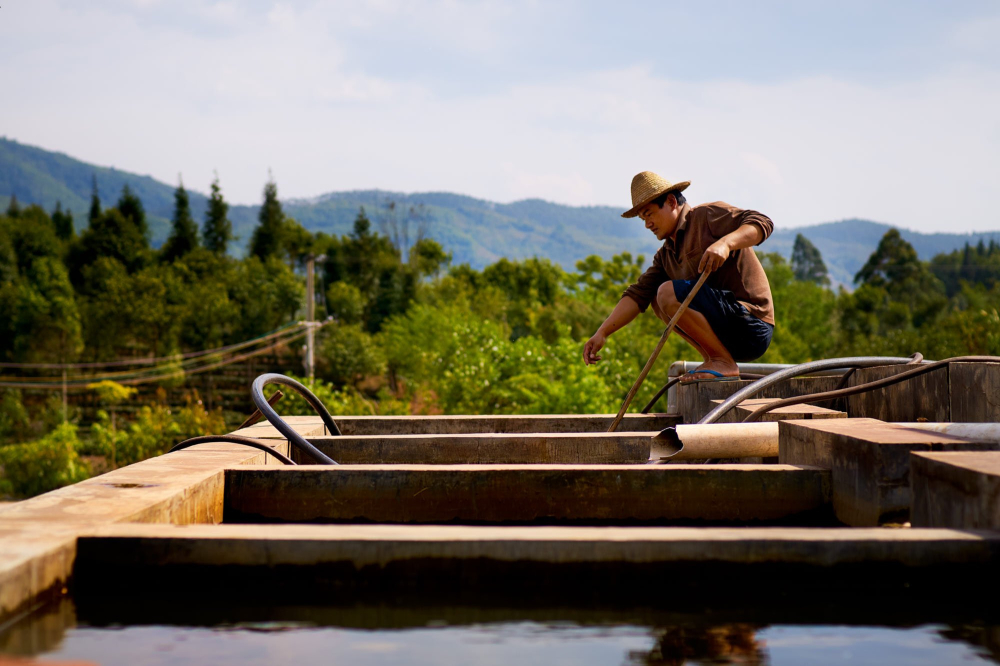
First pour 30 grams of hot water and bloom for 30 seconds, then pour from the center point in a fine stream and slowly circle to 125 grams. When the water level in the dripper drops to the point where the coffee bed is about to be exposed, continue pouring in circles to 225 grams. The total extraction time is about 2 minutes.
For more coffee bean information, please follow Coffee Workshop (WeChat public account cafe_style)
For professional coffee knowledge exchange, please add WeChat ID kaixinguoguo0925
The above content is compiled by CoffeeHunters, a coffee news website.


