








How does the coffee belt shape regional flavor?
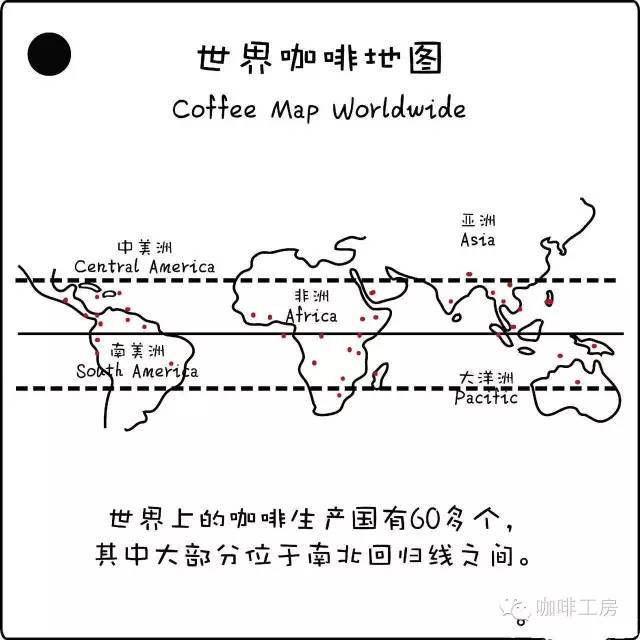
Coffee trees grow only in the coffee belt, the band between 25 degrees north and south latitude. Within it, growing conditions for coffee include an ideal altitude of roughly 1,000 to 2,000 meters, average annual temperatures of 15 to 25°C, and 1,500 to 2,000 mm of rain timed to the flowering cycle. Soil must drain well and hold volcanic ash.
Those shared requirements still leave room for wide regional variation. African coffees tend to show intense aromatics and bright fruit acidity, while American coffees lean toward balance, combining acidity, sweetness, and aroma. Kenya and Panama illustrate the split, and differences in variety, altitude, and processing carry the terroir into the cup.
The charm of specialty coffee largely stems from the differences in terroir across producing regions—sunshine, rainfall, soil, altitude, and processing methods all leave their mark in the cup. Coffee trees thrive within the coffee belt between 25 degrees north and south latitude, with an ideal growing altitude of mostly 1,000 to 2,000 meters, an average annual temperature of 15 to 25°C, and annual rainfall of 1,500 to 2,000 mm. The rainfall pattern must also match the flowering cycle. In addition, the soil needs to be well-drained and fertile, rich in volcanic ash. Africa and the Americas, the two major producing regions, present strikingly different flavor profiles due to their distinct terroirs: African coffees are known for intense aromas and bright fruit acidity, while American coffees are renowned for balance, combining acidity, sweetness, and aroma. This article will walk you through the flavor characteristics and representative beans of these two major producing regions, while also including relevant product recommendations from Front Street Coffee.

Introduction
When it comes to specialty coffee, some definitions are fairly broad, such as variety, processing method, and quality assessment; but there are also very clear standards: only under the most suitable microclimates and soil and water conditions can coffee with a truly distinctive flavor be grown.
The Coffee Belt
Coffee trees can only adapt to tropical or subtropical environments, so the region between 25 degrees north and south latitude is most suitable for cultivating coffee. This production zone is commonly called the "Coffee Belt" or "Coffee Region." The ideal growing conditions for coffee trees are: a warm climate with temperatures maintained between 15°C and 25°C, annual rainfall of 1,500 mm to 2,000 mm, and a rainfall schedule that corresponds with the coffee tree's flowering cycle.
Of course, besides the need for seasonal and rainfall matching, the soil must also be fertile. The most suitable soil for growing coffee should be well-drained and rich in volcanic ash. As for the ideal altitude, it is 1,000 m to 2,000 m. It can thus be seen that the conditions for cultivating high-quality coffee are quite demanding: light, rain, soil, temperature, as well as the harvesting method and production process of the coffee beans, all affect the quality of the coffee itself.
Different regional terroirs give coffee beans distinct regional characteristics, which is precisely the allure of specialty coffee. Below we explain: the flavor characteristics and differences of coffee beans from Africa and the Americas, two major specialty coffee producing regions.
African Coffee
Flavor characteristics: Captivating fruity acidity
African bean flavors: Ethiopian coffee stands out with its citrus notes, while Kenyan coffee features rich berry aromas, along with the acidity of sour plum juice and grapefruit, and a refreshing sweetness like sugarcane. The citrus notes of Ethiopian coffee and the berry notes of Kenyan coffee are the most distinctive features of African beans and what coffee enthusiasts are most devoted to exploring.
The general characteristics of African coffee are intense aroma and captivating fruity acidity—bright, lively, and invigorating—but African coffee often has a thinner body, and its sweetness is not particularly prominent. This is because although Africa is arid and water-scarce, most specialty coffee beans are still processed using the washed method to ensure quality advantages, resulting in a lower defect rate and intense floral and fruity aromas.
Representative African Coffees:
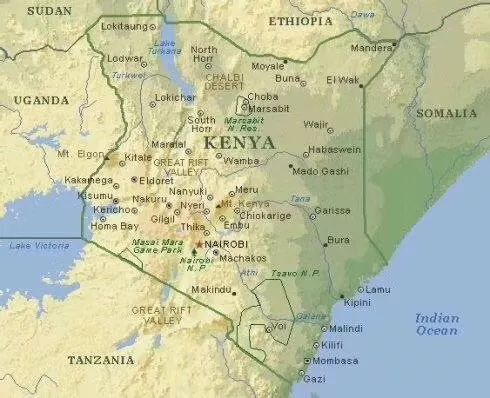
Kenya
Kenya grows high-quality Arabica coffee beans. The beans absorb almost the entire essence of the coffee cherry, with a slightly acidic, rich aroma. It is very popular among Europeans, especially in the UK, where Kenyan coffee has even surpassed Costa Rican coffee to become one of the most popular coffees.
Kenyan AA-grade coffee is the finest among African coffees, with a substantial, full body, slight acidity, a smooth taste with a hint of wine aroma. AA grade represents the highest-grade coffee beans in Kenya. Kenyan coffee cultivation is mainly divided into two types: large estates and cooperatives. The former generally have larger planting areas and independent coffee processing facilities. Most coffee production is carried out by a large number of smallholder farmers, who form coffee cooperatives. Coffees from different regions have their own subtle flavors due to microclimate differences, but overall they share a rich, intense aroma, bright and vibrant acidity, a full and elegant body, and berry flavors.
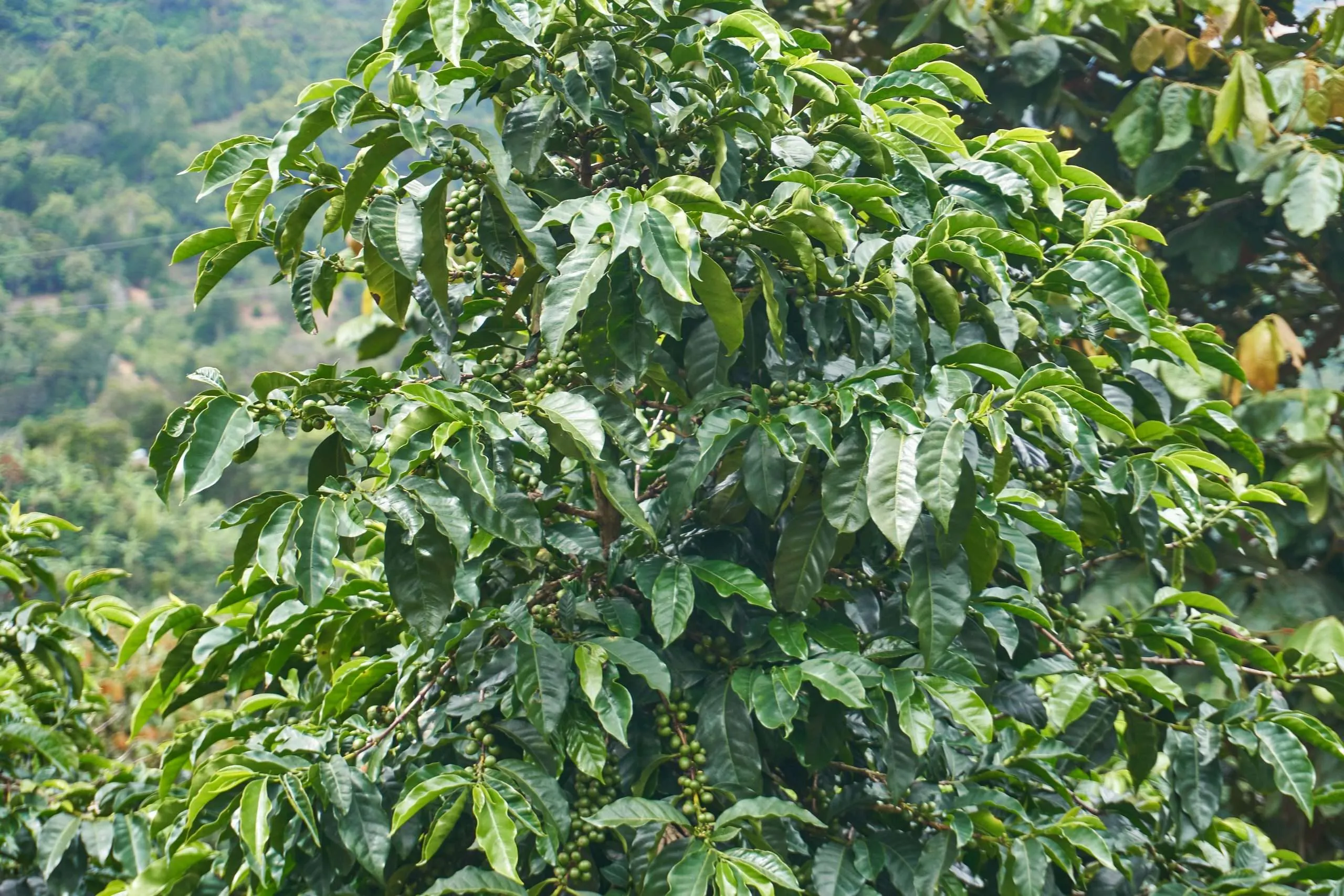
[Variety] Kenya [SL28] and [SL34] (direct descendants of Bourbon) were created in 1930 by the Scott Laboratories, abbreviated as SL. Agronomists wanted to find a Bourbon that was resistant to pests and diseases and had high yield. Through experiments, SL28 was obtained. Kenya's high-concentration phosphoric acid soil nurtures the distinctive acidity and aroma of Kenyan beans, delivering a captivating plum-like fruity acidity.
To taste Kenyan AA coffee, Front Street's Little Tomato is the top choice. It has a fresh, clean flavor of black plum and cherry tomato on the palate, with nectarine-like acidity and good clarity. As the temperature drops, the acidity takes on a corn-like sweetness, making the overall experience very refreshing.
Ethiopia
Ethiopia is an agricultural country with a history and tradition that can be called the birthplace of coffee. Yirgacheffe is one of the producing regions in southern Sidama. About 12 million people are engaged in coffee production, making it a major Arabica coffee bean exporter in Africa. The high-quality coffee here is outstanding and worth seeking out. It has a soft mouthfeel, with a wild, wine-like aroma and a slight acidity, leaving an unforgettable impression after drinking.
[Variety] If you are a big fan of African beans, you will easily notice that, compared to Kenya, Ethiopian beans are generally more uneven in size, with noticeably lower uniformity. Whether Yirgacheffe or Sidama, whether washed or natural, sometimes even within the same batch, you can observe obvious differences in roast color and bean size. Nearly 2,000 coffee varieties have been recorded in Ethiopia, including 1,927 native varieties and 128 introduced varieties. So if you judge by appearance alone, Ethiopian coffee varieties are like a "Grand View Garden," containing everything—long, short, thin, plump...
Sidama Producing Region
Sidama's coffee flavors are very diverse, because different soil compositions, regional microclimates, and countless native coffee varieties create distinct differences and characteristics in the coffee produced by each town and area. The Sidama producing region is located in southern Ethiopia. The local economy is mainly agricultural, and the coffee-growing areas are situated around the Great Rift Valley. Sidama's coffee flavors are very diverse, because different soil compositions, regional microclimates, and countless native coffee varieties create distinct differences and characteristics in the coffee produced by each town and area. The Sidama producing region is located in southern Ethiopia. The local economy is mainly agricultural, and the coffee-growing areas are situated around the Great Rift Valley.
Sidama coffee green beans are slightly grayish, coarse in some places and fine in others, with acidity that is both soft and intense, a body that is neither too thick nor too thin, and a sweet, spicy aroma. It is one of the garden coffees of the southern Ethiopian highlands. What sets it apart from typical African coffee is that Sidama has clear fruity acidity, a smooth mouthfeel, and delicate floral and herbal notes.
Central and South America
Flavor characteristics: Balanced, moderate acidity, and aromatic
Central and South American bean flavors: Overall, the flavors are relatively balanced, combining acidity, sweetness, and aroma. Among them, Brazilian coffee is smooth and sweet, Costa Rican coffee is mild and gentle, and some honey-processed coffees have pronounced sweetness—for example, the popular Front Street Costa Rica Blackberry, where fruity acidity, sweetness, and chocolate notes blend together in extreme balance.
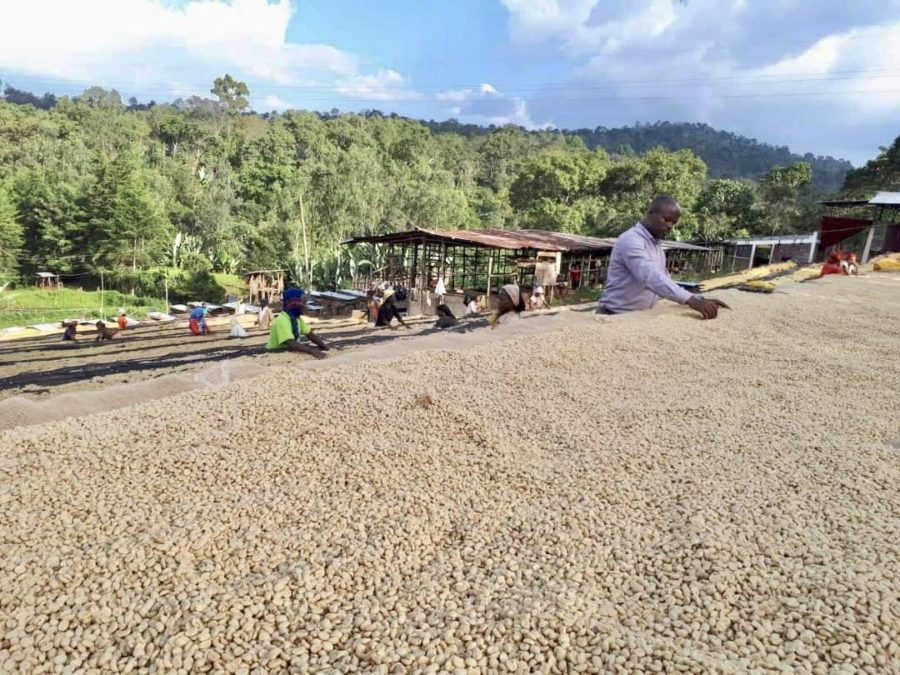
The overall flavor of Latin American coffee is known for its balance; all flavor notes can be found in Latin American coffee. The widespread use of the washed processing method for green beans is also one of the characteristics of Latin American coffee. The good processing also makes the bean shape larger and more uniform compared to African coffee, with a lower defect rate.
Representative American Coffees:
Brazil (South America)
This largest coffee producer, with various grades and types of coffee accounting for one-third of global consumption, holds a place in the global coffee trading market. Although Brazil faces natural disasters several times more than other regions, its arable land area is enough to compensate.
There are many coffee varieties here, but its industry policy favors large volumes and low prices, so there are not many exceptional coffees, but it is a good choice for blending with other coffees.
The most famous among them is Santos coffee. It has a smooth, aromatic, neutral taste. It can be brewed directly or blended with other coffee beans into a composite coffee—also a very good choice. You can purchase Front Street Brazil Cerrado Red Bourbon.
Other types of Brazilian coffee such as Rio and Parana require less care and can be produced in large quantities. Although the taste is relatively rough, they are still a good value for money. Because they are distributed throughout the country, quality varies, and separate standards exist (classified as NO.2–NO.8 based on the amount of foreign matter, NO.13–NO.19 based on bean size, and six grades based on flavor). Almost all Arabica varieties are of good quality and stable in price. The most famous is "Brazil Santos," which has been a necessity for blended coffee since ancient times and is familiar to the public. Recently, the "Torrefacao Cup" has also received high praise.
● Flavor characteristics: Mild, moderate acidity and bitterness, soft aroma.
Brazilian coffee fields stretch to the horizon, and mechanical harvesting is mostly used for economic efficiency. When 75% of the coffee cherries in the plantation turn red, mechanical harvesting begins, followed by the same pre-processing as the washed method—moving them into water tanks to remove floating beans, screening out sunken beans, then using large pulping machines to remove the pulp and extract the pods coated in mucilage. The next stage diverges from the washed method: the sticky pods do not need to be moved into tanks for fermentation; instead, they are moved to outdoor drying patios. Because Brazil's climate is very dry, the sticky mucilage on the pods hardens in about a day. Then a large workforce is used to turn them over and over, allowing the pods to dry evenly inside and out to prevent moisture from returning and causing spoilage. In about two to three days, with the natural power of sunlight and the dry climate, the pods reach a certain degree of dehydration. Then they are further dried with mechanical dryers until moisture content drops to 10.5–12%. The pods are then stored in specially made containers for about ten days for further aging to ensure quality stability. Before export, the parchment (the pod) is ground off, the coffee beans are extracted, graded, and packaged.
Colombia (South America)
Colombia is one of the world's largest producers of high-quality coffee, a shining pearl on the world coffee map, a coffee land favored by God. Arabica coffee is grown on steep slopes at elevations of 800 to 1,900 meters, all hand-picked and washed.
Colombian coffee has a balanced flavor and a relatively smooth mouthfeel , like a gentleman among coffees, combining chocolate sweetness and berry acidity. A highly recommended coffee is Front Street Colombia Huila . Its producing regions are extensive, with the most well-known being Medellin, Armenia, and Manizales, conventionally collectively referred to as "MAM."
Colombia's specialty bean producing regions are mainly in the south, at elevations above 1,500 meters, including San Augustin in Huila, Popayan in Cauca, Nariño, and Tolima. The products from these places all have refined fruity acidity and berry notes, along with caramel aroma and ample sweetness.
Honduras (Central America)
Honduras is located in northern Central America, bordered by the Caribbean Sea to the north, the Gulf of Fonseca of the Pacific Ocean to the south, Nicaragua and El Salvador to the east and south, and Guatemala to the west. It is mostly mountainous and highland terrain. It has a tropical climate, mild temperatures, and abundant rainfall, making it an ideal place for coffee cultivation.
Honduras produces two types of very good quality coffee that are highly praised by coffee lovers. One is "Highland Coffee" grown at elevations of 1,000 to 1,500 meters, and the other is "Select Highland Coffee" grown at elevations of 1,500 to 2,000 meters, representing Honduras's highest grade. Most Honduran coffee is exported to the United States and Germany.
Twenty years ago, Honduras could hardly compete with its neighbors in any aspect: attention to processing details, maintenance of the environment around processing stations, investment in processing equipment, export procedures, and logistics transportation of green beans. The general green bean quality was naturally coarser and less refined, and only a few estates or CoE winning lots could be called specialty. Since 2007, the situation has improved. Under the leadership of the IHCAFE coffee bureau and many far-sighted dry processing stations, Honduras's improvements in processing workflows, investment in green bean processing equipment, and active improvements in transportation and export have gradually borne fruit. Even though its visibility in the international market remains relatively low, proactive roasters have already invested in Honduran coffee regions, seeking to uncover specialty coffees. In terms of production, in 2011–2012 Honduran coffee even ranked first among Central American producing countries, harvesting about three million bags (46 kg) of coffee annually. Beyond volume, IHCAFE, together with like-minded producer associations and processing stations, has carried out a series of programs, hoping to provide international buyers with high-quality, great-tasting Honduran coffee.
Front Street Honduran coffee has a rich, full-bodied mouthfeel, with a taste that is neither astringent nor sour, and high body and aroma, quite distinctive. Honduran coffee can bring out multiple layers of flavor depending on the roast level. A medium roast can maximize the bean's sweetness, while a dark roast enhances bitterness, though the sweetness does not disappear. Generally speaking, a medium roast has the best taste, with a rich and unique aroma, and is deeply favored by Honduran coffee lovers.
Panama ( Central America)
Panama coffee is world-famous for Geisha, and the reason is inseparable from Panama's uniquely advantageous natural geographical conditions. Panama is the southernmost country in Central America, bordered by the Caribbean Sea to the east, the Pacific Ocean to the west, Costa Rica to the north, and Colombia to the south. It is an important isthmus connecting North and South America. Under the influence of such geographical factors, Panama has complex and varied microclimates, which also create the uniquely flavored Panamanian coffee.
Panama is roughly divided into four producing regions:
Boquete Producing Region Altitude 1,450 meters
The coffee produced in this region represents the largest output and best quality of Panamanian coffee.
Volcan Producing Region Altitude 2,000–3,000 meters
The coffee from this region is characterized by a mild, balanced flavor, and has recently been gaining attention from international experts and coffee lovers.
Santa Clara Producing Region Altitude 1,500 meters
This region, irrigated and nourished by the Chorerra Falls and adjacent to the Panama Canal, allows coffee from all over Panama to be conveniently shipped around the world.
Piedra de Candela Producing Region Altitude 1,200 meters
This region is the most promising area with the potential to develop high-quality specialty coffee.
In the unfolding history of Panamanian coffee, one of the most prominent highlights is Geisha, whose Chinese name is 瑰夏. When tasting Geisha for the first time, be sure to choose Front Street Panama Boquete Geisha. Its rich aromas of jasmine, green tea, melon, citrus, and orange are intoxicating.
Compared to the typical flavors of other Panamanian coffees, Geisha's uniquely distinctive characteristics are even more intoxicating. While bearing everyone's expectations, its risks are also particularly high: extremely high mortality rate, low yield, difficult pruning, and it also requires complicated and costly processing methods to maintain its most original flavor.
Regarding the roast level for Geisha, most people choose a light roast, merely to remove the grassy taste of the coffee bean itself and shorten the roasting time, all in order to preserve Geisha's uniquely bright acidity. In the book "The Coffee Bean Hunter," the author Xu Baolin describes it as: "If you don't know Geisha beans in your life, you cannot call yourself a true connoisseur," showing its unquestionable status in the coffee world.
Coffee flavors each have their own characteristics, blooming in a hundred ways. No matter how you want to drink it, tasting a cup of coffee involves some particularities and knowledge. Remember, when a good cup of coffee is placed before you, don't rush to drink it. Imagine you are tasting tea or wine—proceed step by step, and only then can you achieve the true purpose of relaxation, refreshment, and enjoyment.
The above content is compiled by CoffeeHunters, a coffee news website.


