







Why Do Geisha Coffee Beans Have Two Names?
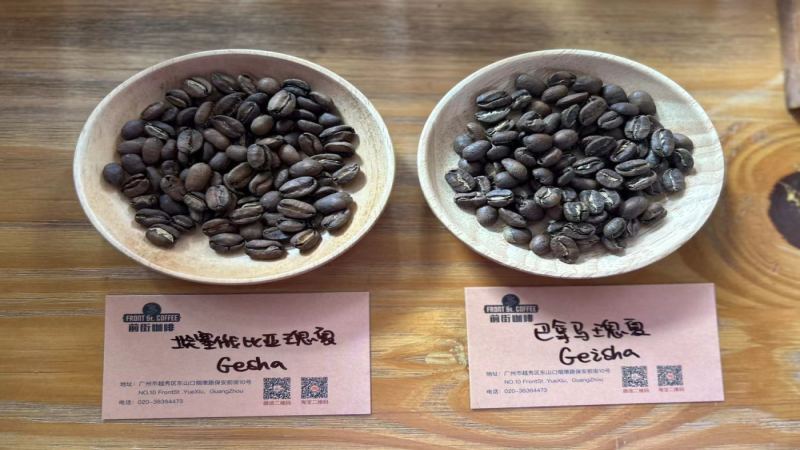
Geisha coffee beans and the early Japanese transliteration refer to the same variety, Gesha. The pronunciation sounded like the Japanese word for geisha when the variety reached Japan, and Taiwanese traders carried that translation onward. A later Chinese name was coined to move packaging and promotion away from the geisha image, which had no real link to the coffee itself.
The geisha coffee variety rose to fame at Panama's Hacienda La Esmeralda, and processing changes its cup noticeably. Natural lots tend toward heavier, fruit-forward sweetness, while washed lots show cleaner floral and citrus notes. Both styles trace back to the same plant, so the label on the bag rarely tells the whole story.
In recent years, Geisha coffee beans have gradually entered the public eye, and more and more coffee enthusiasts have begun to look up information about them. During their searches, many people have discovered that Geisha also has a Chinese alias — "Geisha coffee beans" (艺妓咖啡豆). Where exactly did these two names come from? Do they refer to the same variety, Gesha? This article will take you through the origins of the Geisha name, the history of the variety's spread, and how it rose to fame at Panama's Hacienda La Esmeralda. We will also introduce the flavor differences between Geisha/Geisha beans under natural and washed processing methods, and recommend representative products such as Front Street Coffee's Emerald Red Label, Green Label, and Wander Estate Geisha, to help you find the cup that best suits your taste.
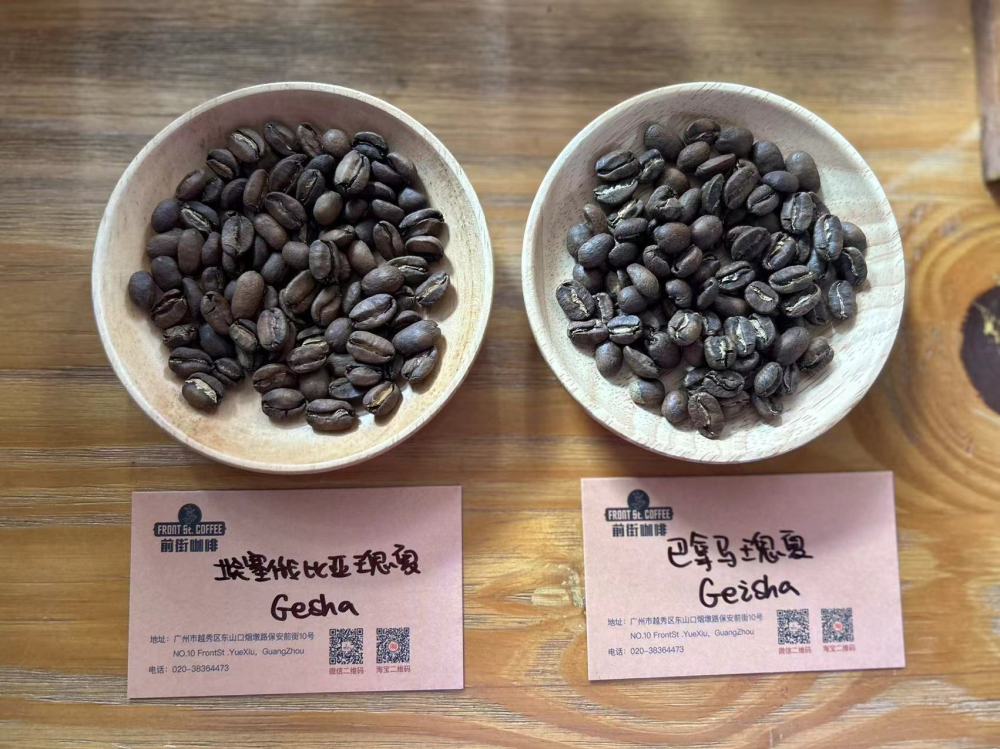
As Geisha coffee beans become familiar to more and more friends, everyone has begun gathering all kinds of information about them — and this article you are reading is surely one of the results of those searches. In the process of going through the materials, have you noticed that Geisha coffee beans actually have another Chinese name — "Geisha coffee beans" (艺妓咖啡豆)? Ultimately, no matter which name is used, they all refer to the same coffee variety, Gesha. So why does the same variety have two different Chinese names?
Originally, Gesha was called "Geisha" (艺妓) because when Japanese people first encountered the variety, they found that the pronunciation of "Gesha" was the same as the Japanese word for "geisha" (芸者), which is also translated as "geisha" (艺妓). Afterward, Taiwan began to learn about this coffee variety through the Japanese, and adopted the Chinese translation "艺妓." As for the name "瑰夏," it was coined by Mr. Yuan, the head of the mainland China region for the former Coffee Dream Green Bean Company.
Why change "艺妓" to "瑰夏"? According to information verified by Front Street Coffee, because of the influence of the word "艺妓," many coffee merchants would borrow the image of the Japanese geisha for packaging and promotion. This practice is somewhat inappropriate, especially since there is no substantive connection between the two — it is merely a similarity in pronunciation.
Therefore, by adjusting the Chinese translation of Gesha, consumers who are new to Geisha coffee can be more effectively prevented from mistakenly assuming that it is named after the traditional Japanese geisha performing art. At the same time, it is hoped that any use of orientalist imagery in marketing and referring to this coffee can be clearly avoided in the future, and that this coffee variety — which has refined flavors and is worth savoring — gains an extra touch of poetry.
The Geisha coffee variety was first "discovered" in southwestern Ethiopia in the 1930s by British colonial explorers. At the time, people did not formally name the variety; they simply recorded that these variety samples were collected from Gesha Mountain. Later, the Geisha variety was sent to research stations in Kenya and Tanzania, where it was found to have good resistance to coffee leaf rust, and so it was taken to Panama for coffee variety research and improvement.
It was not until 2003 that the Peterson family, managers of Panama's Hacienda La Esmeralda, after a concentrated harvest, were confirming coffee quality through cupping when they discovered that one batch of coffee beans tasted different from the coffee beans grown on other estates, displaying very distinctive citrus fruit notes and floral notes. So they sorted this batch of uniquely flavored coffee beans out separately and processed them independently. In 2004, they decided to process the coffee cherries from these seemingly special coffee trees separately and send them to competition, ultimately winning the championship at the 2004 BOP competition with an extremely high score.
As the discoverer of the Geisha variety, Hacienda La Esmeralda's beans are certainly not to be missed. If you want to taste the highest-grade coffee, we would recommend Front Street Coffee's Emerald Red Label and Front Street Coffee's Emerald Green Label — both will let you taste the most representative Geisha flavors; if you prefer coffee with richer sweet aromas, then choose Front Street Coffee's Wander Estate Geisha, which comes with abundant white floral fragrance and honey sweetness, leaving you feeling refreshed and delighted after drinking.
The above content is compiled by CoffeeHunters, a coffee news website.


