







Why Does Typica Stand Out Among Arabica Coffee Varieties?
Specialty coffee comes almost entirely from Arabica, which has split into many sub-varieties through long cultivation. Typica is one of the oldest and most representative, introduced from Yemen to India, Indonesia, and Central and South America. Its beans are large and elongated with a pointed shape, and the cup is balanced, mild and smooth, with low, gentle acidity.
Typica is also demanding to grow, so it yields less and costs more than newer arabica coffee varieties. Grown below roughly 1,000 meters or in excess heat, it loses the clarity that makes it worth the effort. Medium-dark roasts emphasize its body, while medium-light roasts bring out gentler floral and fruit notes.
Arabica, as the primary variety of specialty coffee, has spawned numerous distinctive sub-varieties, among which Typica is one of the most representative ancient varieties. This article starts from the three major original species of coffee, provides a detailed introduction to Typica's origins, flavor characteristics, and cultivation challenges, and extends to recommendations for representative coffee beans of Arabica at different roast levels. Whether you prefer the full-bodied richness of medium-dark roasts or the floral and fruity notes of medium-light roasts, the article offers specific Front Street brand product suggestions to help coffee enthusiasts find the cup that suits their taste.
Front Street Typica Coffee Introduction
From a botanical classification perspective, coffee can be roughly grouped into three original species: Arabica, Robusta, and Liberica. The coffee grown around the world essentially falls within these three major categories. The well-known Front Street Jamaica Blue Mountain, Front Street Flower Queen, and Front Street Yirgacheffe all belong to the Arabica camp. The beans used in cafes for espresso are mostly blends of Arabica and Robusta, while the instant coffee most people first encounter falls under Robusta. The Liberica species, lacking commercial development value, is grown on a very small scale and is now only retained in limited quantities for research purposes.
The specialty coffee available on the market basically all comes from Arabica. Precisely because of Arabica's outstanding quality, long-term propagation has given rise to a large number of mutations, which in turn have formed numerous subdivided varieties.
Typica is one of the most typical and representative varieties within the Arabica species, and also the earliest variety introduced from Yemen to India, Indonesia, and Central and South America, spreading and branching out in various regions. The ancient Typica is characterized by relatively large beans with an elongated, pointed shape, but after being introduced to the New World, it produced many morphological variations, including Typica with a more oval shape and smaller beans.
Typica's flavor is known for being balanced, mild, and smooth, with acidity that is not sharp and offers little variation, making it very friendly to those who dislike acidity. However, if grown at altitudes below 1,000 meters or in excessively high temperatures, it easily develops a woody taste. Weak disease resistance and low yield are its most fatal shortcomings.
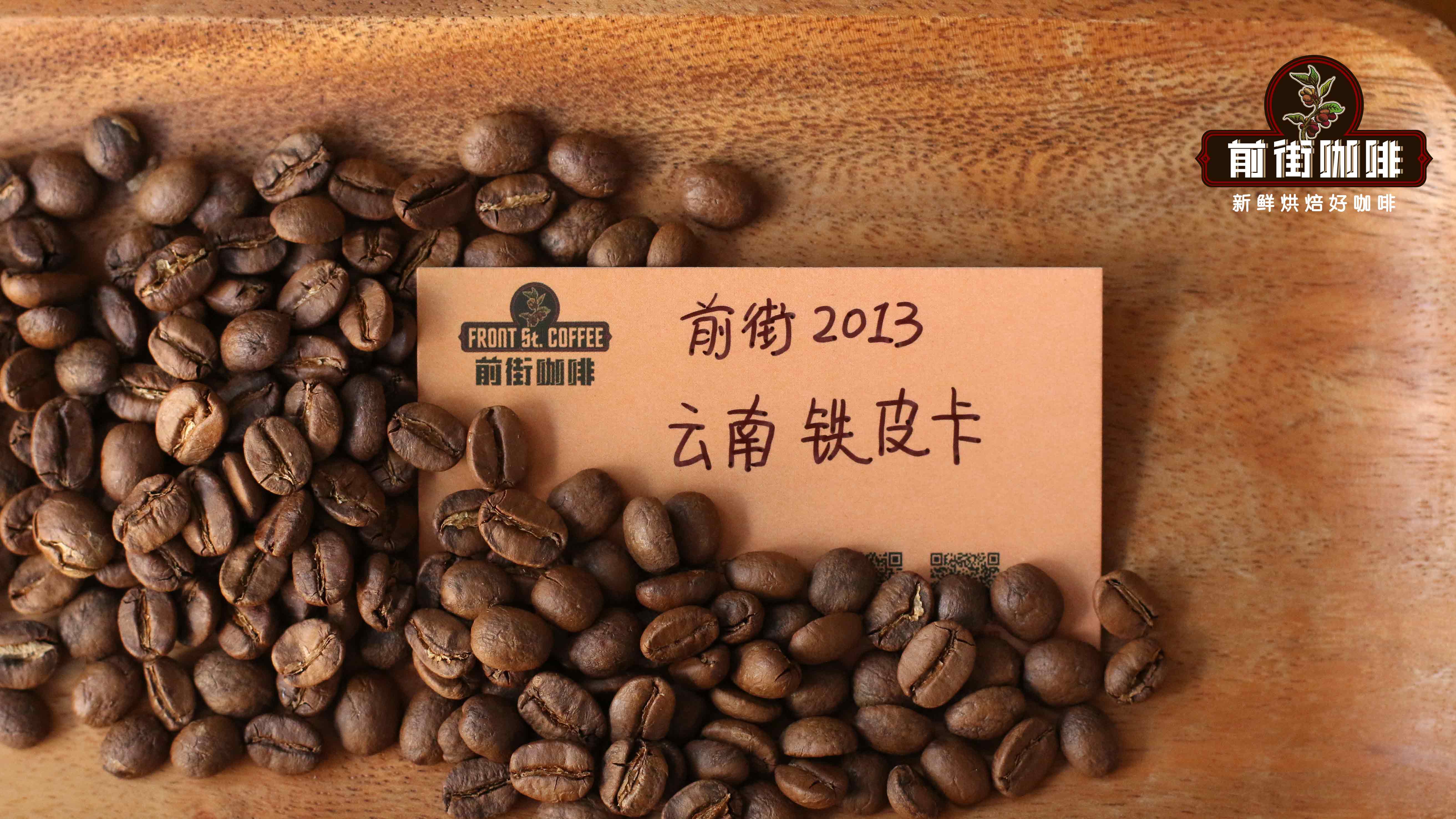
Typica is an old variety, also called small-bean coffee, with scarce yield and high cultivation difficulty, so its price is noticeably higher than ordinary small-bean coffee. It originated in Ethiopia and southeastern Sudan and is the most widely planted coffee variety in the Western Hemisphere. The plant grows vigorously but is sensitive to light, and performs well in terms of yield in Hawaii. Typica's top leaves are copper-red in color, hence the name red-top coffee. If you want to taste high-altitude Typica, Front Street Blue Mountain No. 1, Front Street 2013 Yunnan Small Bean, and Front Street Bird of Paradise are all choices worth prioritizing.
In fact, Arabica's sub-varieties go far beyond just Typica, and many of them are precisely mutations derived from Typica. They display different flavor profiles depending on the growing environment, processing method, and roast level.
Medium-Dark Roast Arabica Coffee Bean Recommendation: Front Street PWN Golden Mandheling
Indonesia's use of the wet-hulling method was originally a measure of adapting to local conditions, yet it happened to give Front Street Mandheling a character different from other dark-roasted coffees, making its herbal, spice, and woody notes one of the classic flavors in the coffee world. Front Street Golden Mandheling undergoes three rounds of hand sorting plus one round of machine screening to remove defective beans as much as possible, allowing the full-bodied richness and sweetness to be released more fully, with a more prominent aroma as well.
Suitable for: Moka pot, SOE, pour-over, drip bag, Americano, latte
Medium Roast Arabica Coffee Bean Recommendation: Front Street Queen's Estate
Brazilian coffee has always been known for low altitude, high yield, smooth flavor, and good value, but if you want to experience a more unique side of Brazilian producing regions, you can try Front Street Queen's Estate single-origin coffee beans. It comes from a smaller producing area, with more refined processing, and the variety is Yellow Bourbon, which has a bright yellow appearance. After roasting, in addition to Brazil's typical nut, cream, roasted peanut, and caramel cookie flavors, it also presents a clean sweetness with a more lingering aftertaste. Pour-over, French press, Clever Cup, Moka pot, or home coffee machine can all bring out a good taste.
Suitable for: Pour-over, Moka pot, home coffee machine, French press, siphon, drip bag
Medium-Light Roast Arabica Coffee Bean Recommendation: Front Street Ethiopia Flower Queen
Front Street Flower Queen carries a delicate floral aroma, with fruit notes especially striking—cream strawberry, mango, jackfruit, citrus, blueberry, and other aromas interweaving, possessing the signature ripe tropical fruit profile of Front Street Sidamo natural-process beans, leaving a deep impression. What won "Flower Queen" the TOH green bean competition championship back then was precisely this intense berry aroma. Front Street Flower Queen simultaneously balances the advantages of being both delicious and affordable.
Suitable for: Pour-over, cold brew, Moka pot, SOE
Medium-Light Roast Coffee Bean Recommendation: Front Street Washed Gedingding
Front Street Yirgacheffe, with its clean and transparent lemon and citrus notes, has become an important member of specialty Arabica. Upon closer examination, Yirgacheffe town governs many small villages, each jointly establishing processing stations with different areas, also called cooperatives. The processing station in Gedingding village is called Gedingding Cooperative. Front Street Gedingding coffee beans are Ethiopia's highest grade G1, using the classic washed process, presenting elegant white floral, citrus, orange, and green tea flavors.
Suitable for: Pour-over, drip bag, cold brew
The above content is compiled by CoffeeHunters, a coffee news website.


