







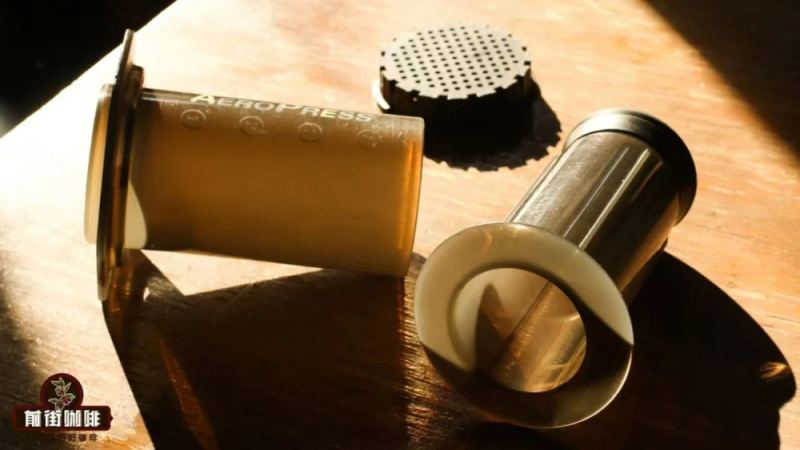
The AeroPress is a coffee brewing device that combines immersion and pressure, offering simple operation and a clean cup that has won the affection of many coffee enthusiasts. This article will start with the origins and structure of the AeroPress, outline its six major advantages and limitations, and explain key parameters such as water temperature, grind size, and coffee-to-water ratio in detail. Finally, using the inverted method to brew Front Street Costa Rica Mozart coffee beans as an example, it will present the complete steps and flavor profile, helping you easily make a clean, flavorful cup of coffee at home.
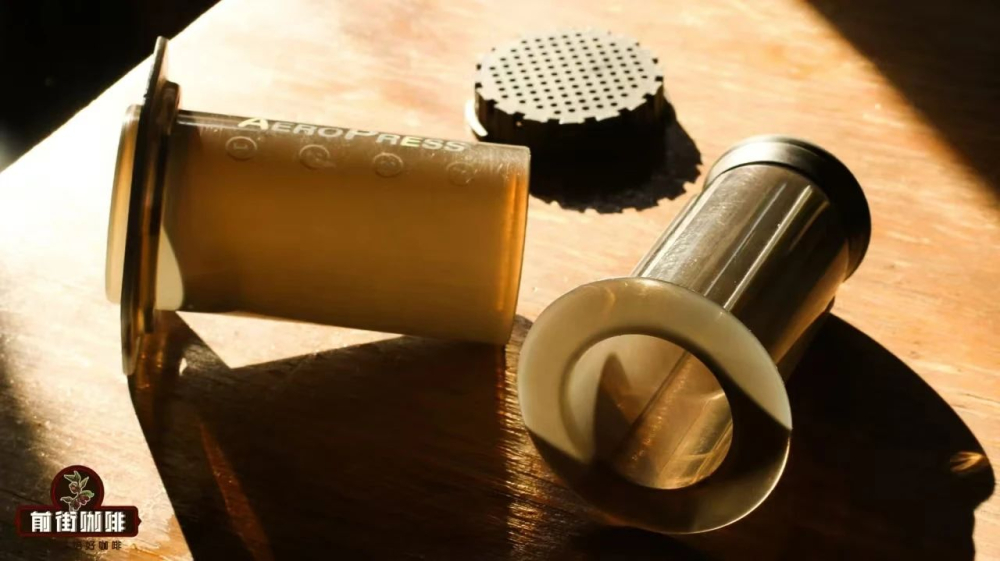
The AeroPress uses an extraction logic completely different from pour-over; it merges immersion and pressure into one. It can produce a higher-concentration coffee while also being easy to clean up, and it is not difficult to learn.
How was the AeroPress born?
In 2005, Alan Adler—an engineer, physicist, and Stanford University lecturer—felt he simply did not have the patience to fuss with a troublesome plug-in coffee maker, and he was not even willing to spend four minutes making pour-over. So after repeated experimentation, he designed this oddly shaped device that could quickly brew delicious coffee. Because it is equipped with a paper filter, it can filter out excess impurities and produce coffee with a clean flavor. It neither leaves mud-like sediment at the bottom of the cup like a French press, nor does it have a bitter taste. He then decided to put it into formal mass production, and it successfully sparked a craze among coffee enthusiasts.
The working principle and structure of the AeroPress
The AeroPress combines the immersion extraction of a French press, the paper filtration of pour-over coffee, and the pressure extraction of espresso. After stirring and mixing coffee grounds with hot water, you press the plunger to force air down, pushing the liquid through the filter cap to extract clean-flavored coffee. If you use a finer grind and less water, you can even make a decent espresso!
Its structure can be simply broken down into three main parts: the chamber, the filter cap, and the plunger. It needs to be used with paper filters or a metal filter, and it also comes with accessories such as a funnel, scoop, and stirrer for easier operation.
Six reasons you will love the AeroPress
1. First, compared with other brewing methods, the AeroPress is much more approachable. A French press is best paired with a burr grinder to avoid uneven particle size affecting the taste; pour-over coffee requires repeated practice. The AeroPress, however, requires no special skill—just pour water and press!
2. The price is also friendly. A complete AeroPress plus a year's supply of paper filters can be had for around 300 yuan. There is also a dedicated metal filter that can replace paper filters. Its pores are larger, so it will not completely block coffee grounds, but the fine residue can actually bring a richer flavor, while also saving cost and being more eco-friendly.
3. It is lightweight and durable. The plastic material will not break easily if dropped, making it very suitable to take along when traveling.
4. Brewing speed is extremely fast. There is no need for a long immersion or slow pouring; once the water is boiled, a cup of coffee can be completed in about sixty seconds.

5. The AeroPress can make excellent coffee with a clear, clean mouthfeel. If you like comparing the interesting flavor differences between single-origin coffees, the AeroPress is very good at bringing out the characteristics of the coffee.
6. Last but very important, it is extremely easy to clean. A French press still requires digging out the grounds before cleaning the residue, whereas with the AeroPress you just unscrew the filter cap and remove a whole puck of coffee like a cake, then give it a quick rinse!
So, does the AeroPress have any shortcomings?
Yes. It can only make one to two cups at a time, so it is not very suitable for brewing coffee for a large group of people. Also, its appearance is not exactly attractive, though this plastic tube that looks like a medical device has a strange appeal of its own.
The fact that the AeroPress can brew clean-flavored coffee so simply and quickly really makes you want to try it right away. Of course, the French press also has its own uniquely rich taste, and some people happen to like that bit of coffee-ground texture; how to improve pour-over skills is also a common goal pursued by many coffee enthusiasts; there are even home espresso machines on the market. In other words, there is no hierarchy among coffee devices—the flavors they present each have their own characteristics, and personal preferences vary from person to person. Perhaps you should try them all, and choose your own cup of coffee time whenever you like according to your mood and needs.
When making coffee with the AeroPress, which parameters are more suitable? 1. Water temperature: When making AeroPress coffee, the water temperature can range from 88°C to 92°C, with the specific temperature depending on the roast level of the beans and the flavor you want to present! 2. Grind size: Front Street Coffee believes it is fine to use a grind size close to that of everyday pour-over. If it is ground too fine, it is easy to extract off-flavors, and it will feel powdery on the palate; if it is ground too coarse, it is easy to bring out sharp acidity and may also result in under-extraction. 3. Coffee-to-water ratio: 1:15. If the coffee-to-water ratio is too small, the concentration will be higher and the flavor too concentrated, making it harder to perceive the coffee's flavor and making sharp acidity more likely; if the coffee-to-water ratio is too large, too many flavors will be extracted, giving the coffee an obvious woody taste and off-flavors.
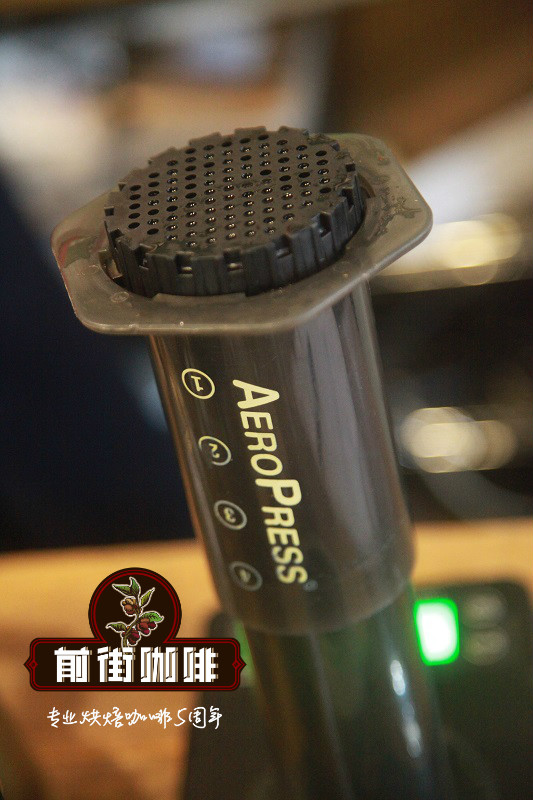
AeroPress brewing tutorial
The beans chosen this time are Front Street Costa Rica Mozart coffee beans. Brewed as pour-over, the coffee has aromas of raisins, osmanthus, candied fruit, and white chocolate, with a very high sweetness. Therefore, in addition to the AeroPress introduced today, it is also suitable for cold brew, pour-over, French press, ice drip, and many other extraction methods.
Dose: 18g Grind setting: 90% passing a No. 20 sieve (EK43s setting 7) Coffee-to-water ratio: 1:11 (about 200ml) Water temperature: 90°C Extraction method: inverted
1. Assemble the plunger and the chamber, then press the plunger down to near mark ④, and flip it upside down!
2. Add the ground coffee, then pour in an equal amount of hot water and start timing! 3. Use the stirrer to stir the coffee grounds in the chamber for ten seconds. (Slowly in circles) 4. Attach the filter cap with the paper filter to the chamber. 5. Then place the prepared container on top. 6. At one minute, flip it over, then press down to "push out" the coffee.
The Front Street Costa Rica Mozart brewed this way offers an intense aroma of pink florals and ripe berries. On the palate, there are flavors of sweet orange, cream, raisins, and candied fruit, accompanied by the sweetness of chocolate. It is rich and layered, and very impressive.
The above content is compiled by CoffeeHunters, a coffee news website.


