







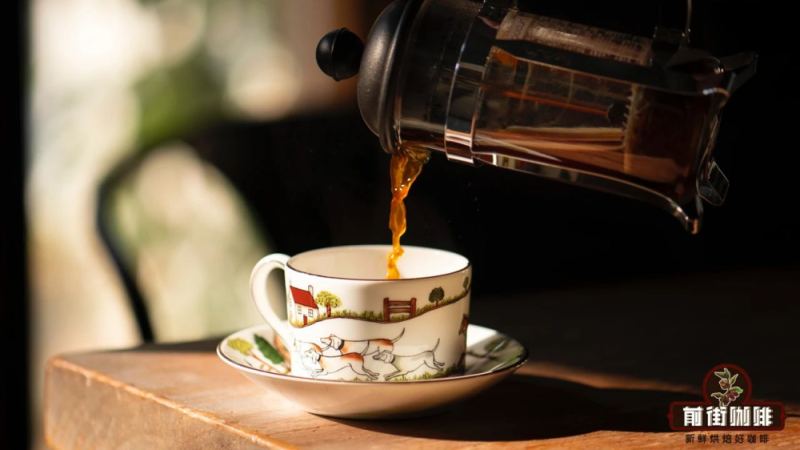
Which coffee beans suit a French press for fuller flavor?
A French press works well with coarse-ground coffee, water between 88°C and 91°C, and an immersion time of about four minutes. Immersion extraction pulls out a fuller body and more concentrated flavor than pour-over, so the beans and grind matter more than technique for beginners who have not mastered pour-over yet.
The device dates to mid-nineteenth-century France, originally for tea, and its metal mesh filter was later refined so grounds stayed out of the cup. Because time is the critical variable in immersion, longer steeping extracts more soluble material and a stronger taste, while going far past four minutes can pull out harsh, bitter compounds instead of fair coffee.
The French press is easy to operate and convenient to get started with, making it the top choice for many pour-over beginners. Thanks to its immersion extraction, it delivers a fuller body and more concentrated flavors than pour-over. So what coffee beans suit a French press? Will steeping too long make it weak or produce off-flavors? From the perspective of Front Street Coffee, this article sorts out the French press's extraction principles and flavor characteristics, and includes specific brewing parameters and a demonstration to help you easily make a delicious French press coffee.
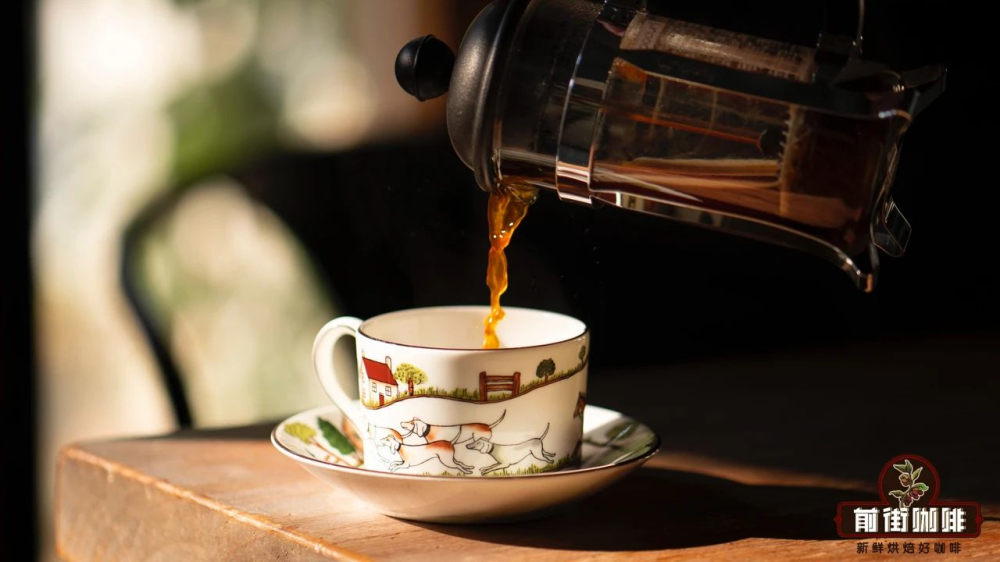
To learn more about specialty coffee, welcome to follow: Front Street Coffee (Frontsteet Coffee)
"For a complete beginner who can't do pour-over at all, which coffee device should I start with?" When faced with this kind of question, Front Street Coffee (FrontStreet Coffee) usually first brings out the French press—it has a low barrier to entry and is effortless to operate. Just what is it about the French press that wins over these coffee lovers who haven't yet mastered pour-over skills?
The Extraction Principle of French Press Coffee
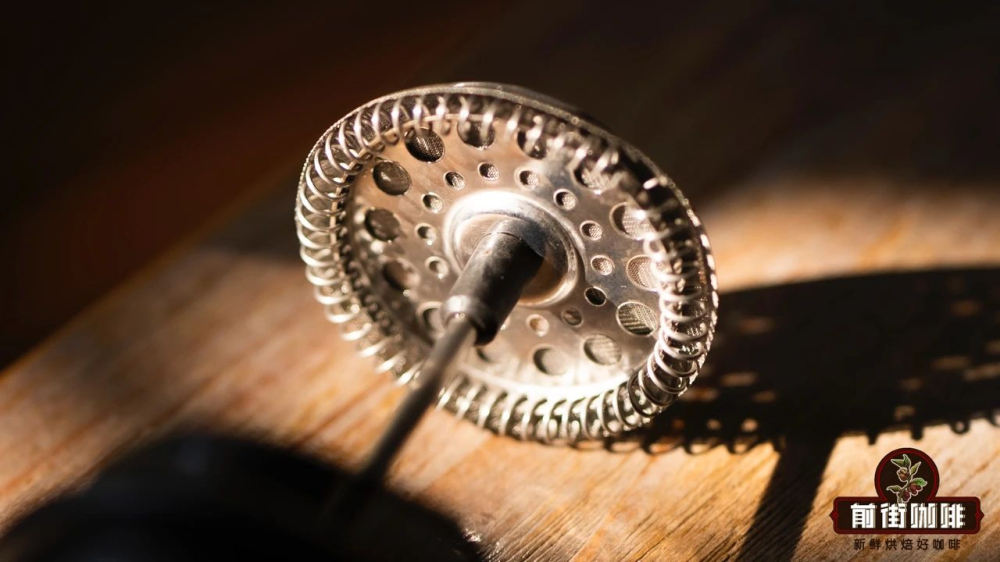
The French press was born in mid-nineteenth-century France, and its structure isn't complicated: a heat-resistant glass carafe paired with a plunger rod fitted with a metal filter mesh. It was originally designed for brewing tea, but later someone tried adding coffee grounds to it and unexpectedly found the resulting coffee had a remarkably thick body. As the metal mesh's aperture was gradually made finer, the French press also grew popular in coffee circles.
The French press mainly relies on immersion to complete extraction; within a fixed volume, a set amount of water evenly dissolves the soluble substances in the coffee grounds. Throughout the process, time is the most critical factor—the longer it steeps, the more substances are extracted, until it approaches saturation; in other words, the longer the immersion time, the stronger the taste.
At this point someone might ask Front Street: "If the French press steeps so long, won't it also extract unpleasant flavors?"
The "long time" mentioned here doesn't mean actually steeping for ten or twenty minutes. Typically, the French press's immersion time is controlled at 4 minutes, the water temperature is kept between 88°C and 91°C, and the grind is on the coarse side. Because the glass carafe has limited heat retention, the water temperature keeps dropping during immersion, and since the coffee particles are coarser, flavor compounds are released relatively slowly. 4 minutes is precisely the ideal duration for making coffee with a French press, but it's best not to exceed 6 minutes. Once the 4 minutes are up, press down the filter mesh, and then pour the coffee into another container before drinking.
What are the characteristics of coffee brewed with a French press?
Compared with drip-style pour-over, immersion-style French press coffee has a much fuller body.
The French press uses a metal mesh to block coffee grounds, and the metal mesh's aperture is larger than that of ordinary filter paper, so it retains most of the coffee oils during filtration. Front Street has also noticed that coffee made with a French press has a thin layer of oil floating on the surface. Common pour-over, by contrast, is done by pouring water through the coffee bed and high-density filter paper; when the coffee liquid passes through the filter paper, most of the oils are trapped, making the result noticeably cleaner. Although French press coffee is fuller-bodied than pour-over, the nature of the metal mesh also means quite a bit of fine powder remains, so hitting coffee grounds on the last sip is a common occurrence.
2. Coffee brewed with a French press better highlights the bean's original flavors
The French press's extraction method is similar to cupping—both are immersion-style. The advantage is that it minimizes human interference and best restores the bean's original flavors, with a more concentrated taste as well. What counts as human interference? For example, with pour-over, the height and speed of pouring can change the flavor direction, and switching to a different dripper will also produce different results. The French press has none of these variables; only three things can influence the final flavor: grind size, water temperature, and immersion time.
How do you make coffee with a French press?
This time Front Street chose Costa Rica Musician Series Mozart coffee beans; this bean carries a dried-fruit fermented aroma, white floral notes, and a prominent sweet-and-sour quality. The brewing parameters are as follows:
Dose: 15 grams Coffee-to-water ratio: 1:15 Grind size: medium-coarse grind (68% passing a No. 20 standard sieve) Water temperature: 90°C Immersion time: 4 minutes
First, preheat the French press with warm water, then pour the warm water out. Pour the ground coffee into the carafe—grind it a bit coarser—then pour in 225ml of 90°C hot water. You can pour fairly quickly (finish pouring in about 3 seconds) to make the coffee grounds tumble fully and improve extraction efficiency. After pouring, pull up the filter mesh, put on the lid, and let it steep for 4 minutes. After 4 minutes, slowly press down the plunger, pressing only to about one quarter of the carafe's depth, to avoid fine powder from the bottom churning up. Once pressed down, you can pour out the coffee and enjoy it.
That's right—making coffee with a French press is just that effortless. So how does Mozart perform when brewed with a French press?
After the coffee is poured out, Front Street smells a distinct raisin fermented aroma; on the palate it has a berry-juice-like texture, accompanied by orange blossom notes, a clear fermented character, and a sweet-and-sour quality like pineapple.
The above content is compiled by CoffeeHunters, a coffee news website.


