







Speaking ofMocha coffee, many people think of the espresso milk coffee with chocolate sauce added in coffee shops today. A small number of people think of Yemeni Mocha coffee. In this article, Front Street Coffee will explain the differences between espresso-based Mocha coffee and single-origin Mocha coffee!
What is single-origin Mocha coffee?
The Yemeni port of Mocha, from the 15th century onward for more than 300 years, served as an important port at the outlet of the Red Sea, with a status comparable to today's Port of Shanghai. The vast majority of the world's maritime freight passed through this port. Coffee was not grown near Mocha; most of its coffee came from the high-altitude areas of Yemen's central mountains. After coffee exported through the port of Mocha reached European countries, it received unanimous praise. At the time, people only knew that this coffee came from the port of Mocha, so it was also called "Mocha coffee (beans)." Subsequently, coffee exported through the port of Mocha was all sold under the name "Mocha coffee."
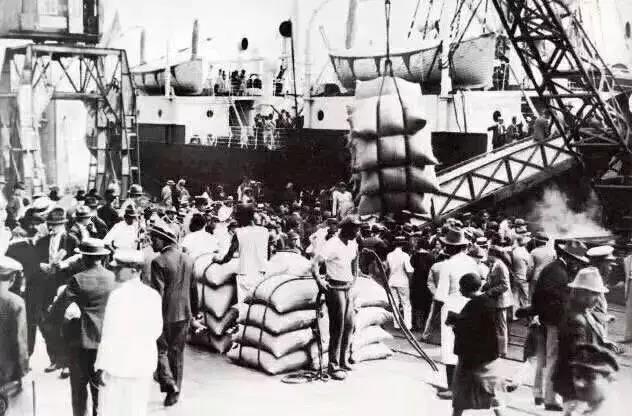
Today, the old port of Mocha has long been abandoned due to siltation (the place is now called Al Makha), becoming a historic port with only white sand beaches left. Exports shifted to the northwestern port of Hodeida. However, people had long been accustomed to the name Mocha, and the name Mocha resounded across the skies. The name has been used ever since.
Why is Yemeni Mocha coffee rarely seen on the market today?
In recent years, Yemen's continued turmoil has also severely damaged coffee cultivation, with only a small amount of Yemeni coffee emerging through the hail of bullets each year. A few years ago, Front Street Coffee was fortunate to obtain a bag of Mokha Mattari coffee, which comes from Yemen's Bani Matar region and is named after it. Yemeni coffee packaging bags are different from other burlap sacks; they are woven from a fine-porous cloth similar to flour packaging bags.

Front Street Coffee — Yemeni Mocha coffee beans
Origin: Yemen Mattari
Altitude: 1,300–1,900m
Variety: Typica, Bourbon
Processing method: Natural processing
How does Front Street Coffee roastYemeni Mocha coffee?
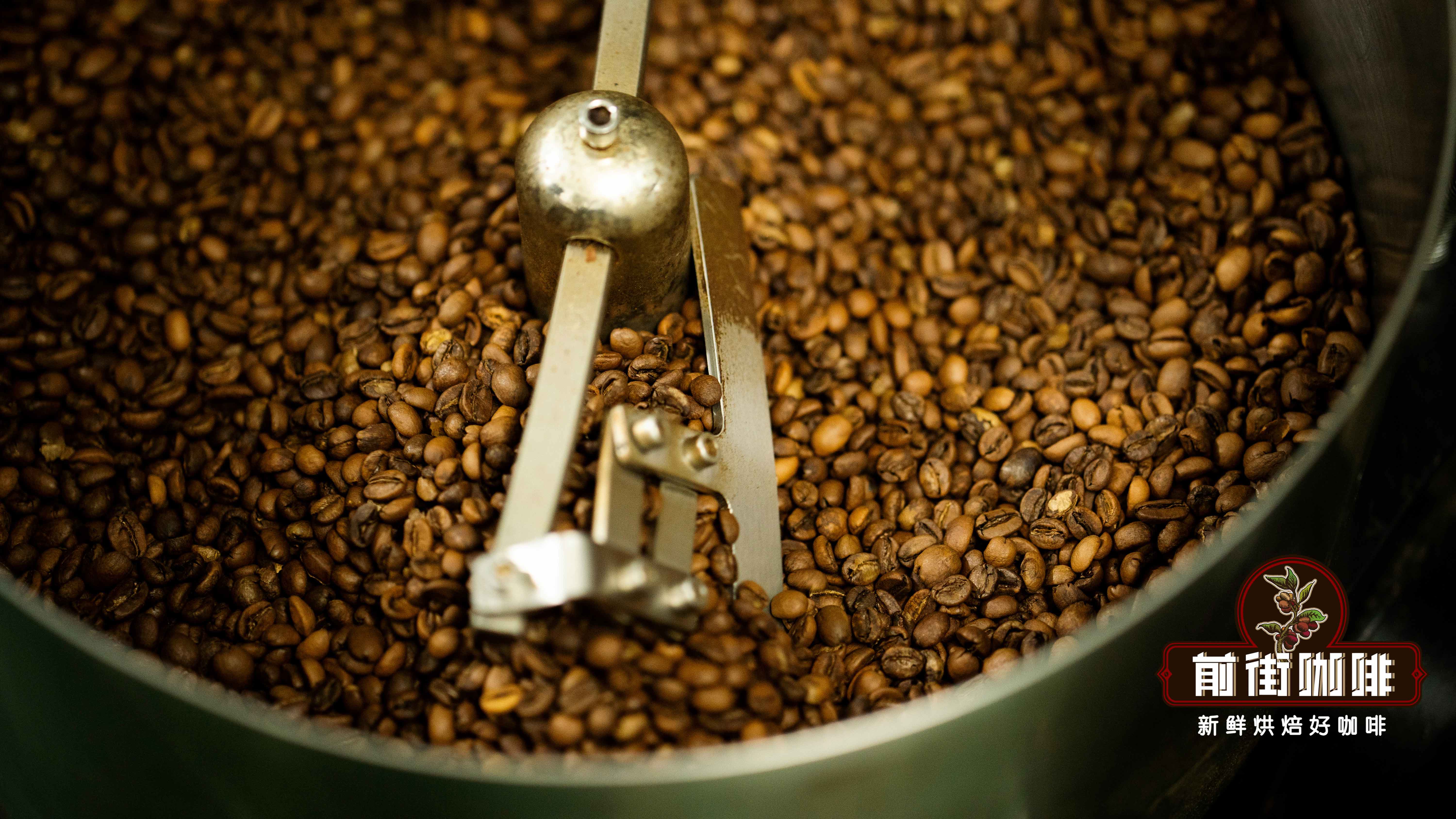
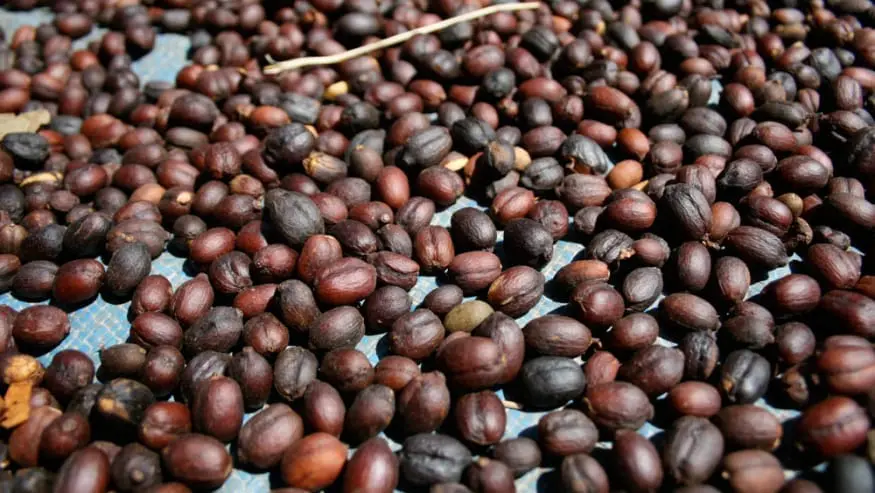
The natural processing method of Yemeni farmers is rougher than Ethiopia's. Coffee cherries are not picked even when they turn red; they are only collected after the cherries naturally dry on the branches, turn purplish-black, and fall to the ground. This differs from the refined natural processing of Yirgacheffe or Sidamo, where red cherries are picked and spread on "raised mesh drying beds." This is the main reason Yemeni coffee has such a strong wild character. However, because farmers store natural beans for varying lengths of time, almost every batch of green beans has very much "a mind of its own" in flavor. After Front Street obtained the Yemeni Mocha coffee beans, it noticed that the beans had a distinct cocoa fruity acidity. In order to express the body of Yemeni Mocha, Front Street's roaster used a medium roast on this bean to bring out the bean's own cocoa aroma characteristics and the coffee's full-bodied feel.
Yemeni Mocha is a green bean with relatively low moisture. Also, considering the beans vary in size, green beans with low moisture content should not be dropped at too high a temperature, and dehydration should be accelerated in the early stage, retaining moisture for first crack to develop flavor and mouthfeel. Preheat for 30 seconds, open the air damper to 3, and wait until the green beans turn light green or white, then open the air damper to 4; after first crack, open it to 5 (maximum).

Charge when the roaster temperature reaches 170°C, set the air damper to 3, and after 1 minute adjust the heat to 140°C with the air damper unchanged. Roast until 5'00'', at 147.2°C, when the bean surface turns yellow, the grassy smell completely disappears, and dehydration is complete. Adjust the heat to 110°C and change the air damper to 4; at the 8'00 minute mark, ugly wrinkles and dark streaks appear on the bean surface, and the toast smell clearly turns into coffee aroma, which can be defined as the prelude to first crack. At this point, listen clearly for the sound of first crack. At 8'23'' first crack begins. Reduce the heat to 60°C and fully open the air damper (adjusting the heat must be done very carefully, not so low that there is no crackling sound), and drop at 197.9°C.
How does Front Street Coffee brew Yemeni Mocha coffee?
When brewing medium-roast coffee, Front Street Coffee uses the Kono Meimon dripper. The dripper's short ribs extend the coffee extraction time and enhance the coffee's body.
Grind: medium-coarse grind (70% passing a No. 20 standard sieve)
Water temperature: 90°C
Coffee-to-water ratio: 1:15
Coffee dose: 15 grams

Front Street's staged brewing method: use 30 grams of water for a 30-second bloom, then pour in a small stream in circles to 125 grams and pause in stages; when the water level drops and is about to expose the coffee bed, continue pouring to 225 grams and stop pouring; when the water level drops and is about to expose the coffee bed, remove the dripper. (Timing starts at the beginning of the bloom.) The extraction time is 2'06".
Yemeni Mocha brewing flavor:The mid-palate complexity is layered, with a little grape acidity appearing at the changing finish in the mouth, a long spice aftertaste, a salivating, sweet, round quality with a Middle Eastern milk tea sensation that lasts for quite a while, and malt sweetness remaining at the bottom of the cup.

Is the espresso Mocha coffee commonly seen in coffee shops today related to Yemeni Mocha coffee?
Espresso Mocha coffee is made from chocolate, milk, and espresso. The blend of coffee and cocoa makes it popular with the public. This seems to have no connection to Mocha. But the earliest history of espresso Mocha coffee can be traced back to 18th-century Italy. Although there is currently no more authoritative historical evidence to support the origin of the name Mocha coffee, we might as well boldly speculate. In the 18th-century coffee world order, the Dutch brought coffee to Southeast Asia and the French brought coffee to South America. Mocha had already lost its monopoly position in coffee, and under the later Ottoman Empire, Mocha coffee's market share gradually shrank.
Less Mocha coffee flowed into Europe. At the time, the status of Mocha coffee beans in people's minds was like today's Geisha coffee beans. In order to drink coffee with a similar flavor, the appearance of espresso Mocha coffee was very likely an attempt to imitate the scarce Mocha coffee beans by adding unsweetened dark cocoa to espresso, so that the coffee's flavor expressed the feeling of Yemeni Mocha coffee.
How is today's espresso Mocha coffee made?
When making espresso, Front Street uses a warm sun espresso blend of naturally processed Yirgacheffe and Honduras Sherry barrel-fermented beans. The coffee extracted from this blend has a faint whisky aroma, the sweetness of vanilla cream, and a nutty cocoa finish. Modern Mocha coffee is usually made with milk and sweetened chocolate. Front Street uses sweetened chocolate sauce and fresh milk with high lactose content.

First add 30g of chocolate sauce and a double espresso and stir evenly, then heat and steam the milk to about 55–60°C (because the chocolate sauce dilutes the espresso's crema layer, it easily spreads apart when pouring latte art, so the milk foam thickness can bea little thicker than the milk foam for a latte, about 1.5cm, but not as thick as cappuccino foam). After that, once it is fully incorporated, create the pattern.
The above content is compiled by CoffeeHunters, a coffee news website.


