








What defines colombian coffee flavor and Huila terroir?
Colombian coffee flavor comes from high-altitude Andean growing conditions and washed Arabica, which together give a balanced, sweet cup. Colombia is the largest exporter of premium washed Arabica and one of the few origins sold worldwide under a country name, with the MAM regions and Huila single origin as the main reference points.
The Huila coffee story runs through the FNC association and the washed processing method, both of which support consistent quality. For brewing, a V60 pour-over brings out the sweetness and balance; Jesuit monks are credited with introducing coffee in the 18th century, and the crop only took a major place in world trade late in the 19th century.
Colombia is the world's largest exporter of premium washed Arabica, and one of the few single-origin coffees sold worldwide under a country name. This article starts from its historical origins, the growing conditions in the Andes, the three major MAM production regions, and the characteristics of the Huila single origin, then outlines the role of the FNC association and the washed processing method, and includes Front Street Coffee's V60 brewing parameters and tasting notes. Whether you want to understand how terroir influences flavor or are looking for a well-balanced, sweet daily drinker, this article provides complete reference information.

For more specialty coffee knowledge, please follow the WeChat public account: Front Street Coffee (FrontStreet Coffee)
At the coffee bar counter, Front Street's baristas are often asked one question: which coffee-producing region do you like best? Does terroir really shape the taste of a cup of coffee? Faced with a dazzling bean list, customers always want to order the cup that best suits their taste, so they dig into the beans' place of origin, and even try to find a standard answer in the barista's personal preferences.
In fact, taste is inherently a matter of individual preference, and opinions within the Front Street team vary as well. Some are drawn to the delicate floral and citrus notes of Panamanian beans; some are captivated by the sense of history carried by Ethiopia's oldest processing methods; and others prefer the low-acid, full-bodied expression of Asian-producing regions.
Every origin has its own irreplaceable character. To let customers experience coffees from different regions as fully as possible, Front Street invests a great deal of effort each year in green bean purchasing, gathering representative beans from each region wherever possible, so every region has a corresponding option on Front Street's bean list. Today we want to talk about a treasure of an origin worth paying attention to—one that Han Huaizong also mentioned in The Coffeeology as having uniquely favorable growing conditions. That origin is Colombia.
Colombia is the world's largest producer of premium coffee. According to legend, Colombian coffee was introduced by Jesuit monks in the 18th century, and it was not until the late 19th century that it took an important place on the world stage. Today coffee is one of Colombia's pillar industries and one of its most important sources of foreign exchange. An outbreak of leaf rust, however, could deal it a heavy blow and even endanger the entire coffee industry. In the past year alone, Colombia's coffee export value reached 2.4 billion US dollars, accounting for 7.7% of total merchandise exports, keeping it firmly in third place among the world's coffee producers. In other words, if leaf rust takes hold in Colombia, global coffee supply will tighten and coffee prices everywhere will be affected. Fortunately, Colombia's natural environment is favorable enough that it need not worry about weather disasters. Unlike neighboring Brazil, according to Front Street's understanding, coffee production there is expected to decline sharply next year due to natural factors such as frost and drought.
Colombian coffee is one of the few single-origin coffees sold around the world under a country name. In terms of quality, it has earned a reputation that other coffees find hard to match. The country is the world's largest exporter of Arabica coffee and also the largest exporter of washed beans, while very little Robusta is grown.
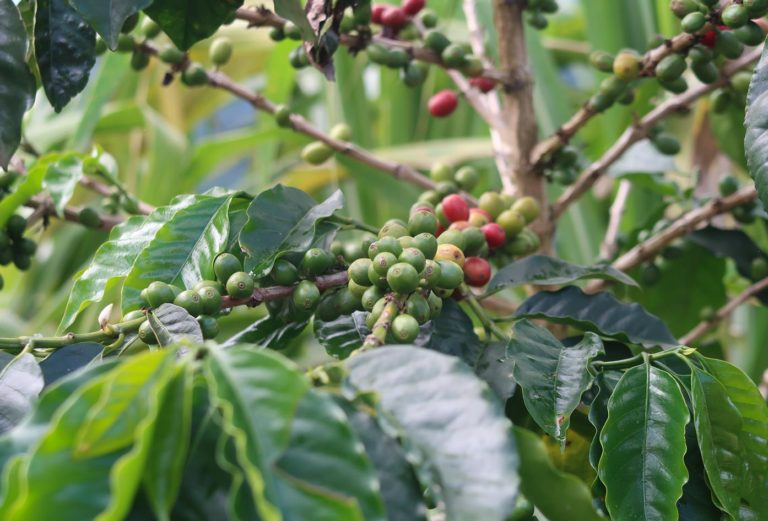
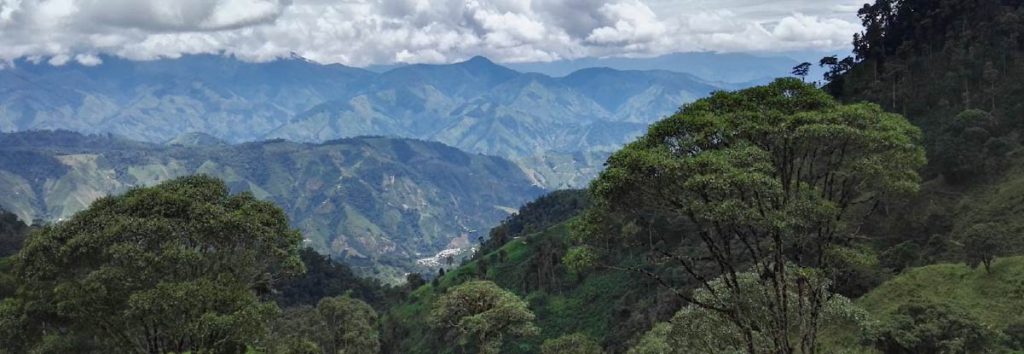
Compared with other producing countries, Colombia places greater emphasis on product development and industry promotion. This, together with its superior geography and climate, is exactly what has created the excellent quality and global reputation of Colombian coffee. Colombia's coffee-growing regions are mainly distributed along the foothills of the Andes, with a mild climate and humid air. Three Cordillera mountain ranges run north-south and extend right into the Andes. Along the highlands of these ranges, coffee farms are scattered everywhere. The terraced mountain terrain brings a diversity of climates, which means there is a harvest season throughout the year, with different varieties ripening at different times. And luckily, Colombia does not have to worry about frost damage the way Brazil does. At present, Colombia has about 2.7 billion coffee trees, of which 66% are grown on farms using modern methods, while the rest are distributed among traditionally run small farms.
When it comes to Colombia's coffee-growing regions, Front Street believes a key advantage is that it has both Atlantic and Pacific ports, which helps reduce coffee transport costs; in South America, it is the only country with this condition. Colombia's main production areas are concentrated in the Central Cordillera and Eastern Cordillera zones.
The most important plantations along the Central Cordillera are located in the Medellín, Armenia, and Manizales regions. Among these three, Medellín produces the best coffee and commands the highest prices, characterized by plump beans, rich nutrients, intense aroma, and moderate acidity. Together these three regions are called "MAM" (taken from the initials of the three main cities). Of Colombia's top coffee exports, most comes from MAM. Along the Eastern Cordillera, the two best regions are around Bogotá and farther north around Bucaramanga. Bogotá coffee has lower acidity than Medellín, but the two are comparable in quality. James Hoffmann, in his book, divides Colombia's producing regions by province, for a total of 13 coffee-growing regions.
Front Street's selected Front Street Colombia Huila daily drinker beans come from the famous Huila region, which sits on one side of the Andes near Colombia's second-highest peak, the Nevado del Huila volcano. The Huila region has a deep agricultural tradition, and its fertile volcanic soil and lush climate are very suitable for growing crops such as cassava, sugarcane, bananas, cocoa, and beans—and of course coffee. Relatively close to the equator, it harvests coffee almost year-round. The combination of fertile volcanic soil, humid climate, and altitude makes coffee from the Huila region one of Colombia's most refined single-origin beans.
In 1927, Colombia established the National Federation of Coffee Growers (Federación Nacional de Cafeteros, or FNC) to oversee quality. Although it is a private company, the association acts on behalf of the government. In addition to organizing industry affairs, it is also responsible for raising and storing funds in abundant harvest years. As coffee prices continued to fall over the past few years, the association nearly exhausted its reserves. The FNC also handles health care, education, road building, hiring cultivation technicians, conducting research, supervising product quality, directly handling 50% of total export business, and hiring marketing personnel. It is a credit-based, efficiently operating organization that looks to the future and stays close to coffee farmers and their families.
The FNC is Colombia's only official professional coffee guild and has become one of the world's largest agricultural non-governmental organizations since its founding. The association currently represents more than 540,000 coffee-farming families, promotes collaboration and joint decision-making among growers, and safeguards the interests of coffee farmers and their families. It helps Colombian coffee growers reach the necessary consensus and secures appropriate welfare for coffee farmers. The FNC also supports every area of coffee production, such as technological research and development, optimizing production costs, and improving coffee quality, and through technical support services it provides growers with technical assistance and cultivation quality assurance, ensuring that Colombian coffee growers earn better returns.
Most Colombian green coffee beans are washed processed, and small farms are equipped with machines to remove the coffee cherry skin and pulp. Farmers pour the harvested coffee cherries into them, add a small amount of water, then place the parchment beans with a little mucilage into small tiled pools or containers to ferment overnight so the mucilage layer falls away. Next they rinse them clean with fresh water and put them outdoors to dry naturally in the sun. If it rains, locals use drying machines to dehydrate the beans in a space held at a constant 50 degrees Celsius until the moisture content meets the standard, after which the beans are packed and stored.
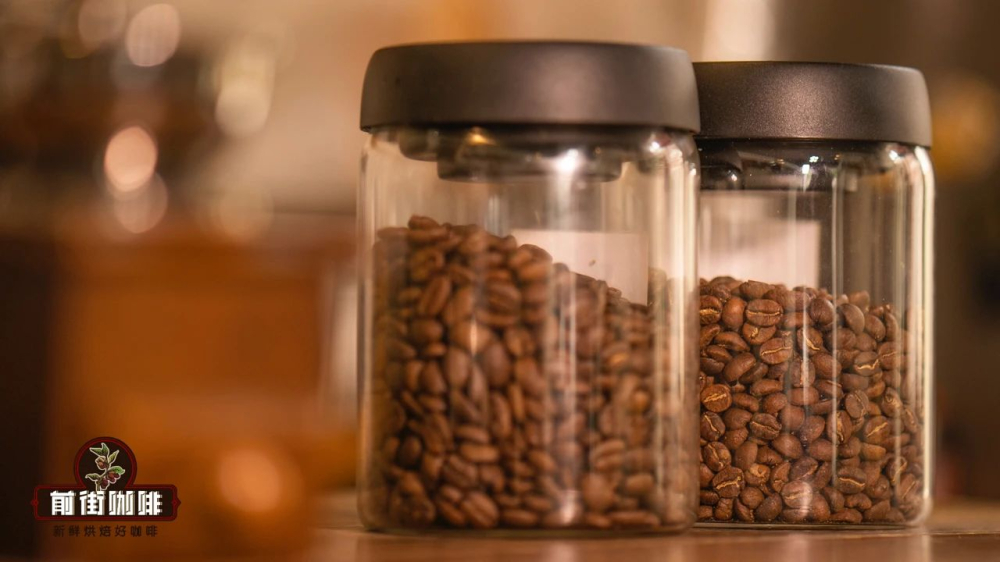
Characteristics of Front Street Colombia Huila coffee In fact, it is the standard Colombian coffee flavor: very balanced overall, with fairly pronounced sweetness. Front Street uses a medium roast.
Front Street brewing parameters:
V60 dripper
Water temperature 91℃
Water-to-coffee ratio 1:15
Coffee dose 15g
Grind size (75% passing through a Chinese No. 20 standard sieve)
Front Street brewing method: bloom with 30 grams of water for 30 seconds, then pour in a small stream in circles to 125 grams at which point split the pour; when the water level drops and is about to expose the coffee bed, continue pouring to 225 grams and stop; when the water level drops and is about to expose the coffee bed, remove the dripper; (timing starts at the beginning of the bloom) the extraction time is 2'00".
Front Street Colombian coffee tasting description : On entry, there is a strong dark chocolate flavor, with a very pronounced caramel sweetness in the finish. As the temperature drops, fruity acidity emerges, leaning toward citrus notes; it is not jarring and instead feels even more refreshing.
The above content is compiled by CoffeeHunters, a coffee news website.


