







Which signature beans define american coffee regions?
The main Central and South American coffee regions run from Brazil and Colombia through Honduras, Panama, Costa Rica, Guatemala, Peru, Ecuador, Bolivia, and Jamaica Blue Mountain. These american coffee origins generally deliver balanced, full-bodied cups, and washed versus natural processing is the clearest dividing line between their flavor profiles.
Beginners often taste only bitterness at first, so starting with balanced American or Asian beans makes the transition easier. Tasting terms matter too: professionals describe flavor direction as profile or tonality, and coffee grades and processing method both shape how a single-origin lot reads once it reaches the cup.
Coffee novices often think coffee only tastes bitter and smells aromatic, but in reality, the flavor world of single-origin coffee is far richer than imagined. This article systematically outlines the distribution of producing regions, varietal characteristics, and flavor profiles of major Latin American coffee-producing countries, covering Brazil, Colombia, Honduras, Panama, Costa Rica, Guatemala, Peru, Ecuador, Jamaica Blue Mountain, and Bolivia. Starting with the balanced, full-bodied American beans, you'll learn about the differences brought by washed and natural processing in each country, along with specific product recommendations from Front Street Coffee, helping enthusiasts build a clear framework for understanding producing regions.
Friends who are just starting to explore coffee often only taste a single coffee flavor and only smell coffee aroma—this is actually completely normal.
As your tasting experience accumulates, you'll gradually pick up on more layers of coffee flavor. In daily life, people are used to describing it as "taste" or "flavor," which corresponds to the English word "flavor." In the context of coffee tasting, professionals prefer to use the term "profile" or "tonality." To put it simply, when we say a certain bean has a floral profile, fruity profile, or caramel profile, we're describing its flavor direction.
When a cup of single-origin coffee is placed in front of you, can you really judge whether it's good or bad? What exactly are we tasting, and what are we feeling? For coffee novices just starting out, the "coffee bean flavor chart" in their minds may be very straightforward—many people only taste coffee flavor, which is completely normal.
Coffee Tasting Advanced Learning Level 1
Many people who are new to coffee think that bitter means strong, and strong means aromatic. When we encounter such customers, we usually patiently explain the diversity of flavors. But for those who have never studied coffee, especially enthusiasts just beginning to explore tasting, many reject the acidity in coffee and prefer full-bodied or even intense expressions. The key to entering the world of tasting might as well start with balanced American or Asian beans.
Let's first briefly understand the regional divisions of coffee beans:
Africa, Central and South America, Asia and Islands
Coffee beans from Central and South American producing regions have relatively moderate overall flavors. Brazilian coffee is full-bodied and rich, Costa Rican coffee is mild and smooth, with a blend of acidity, sweetness, and chocolate notes, offering excellent balance. Panamanian coffee, on the other hand, displays intense citrus aromas, jasmine fragrance, and the sweet scent of peaches and nectar, with bright and varied fruit acidity, very similar to Yirgacheffe.
Americas Producing Region Coffee
Americas Producing Region Coffee
Americas Producing Region Coffee
■ Flavor characteristics: Balanced, moderate acidity with aromatic smoothness
In 1721, French naval officer Gabriel Mathieu de Clieu braved great dangers to bring the first coffee sapling from Africa to Martinique in Latin America—this was the starting point of coffee cultivation in Latin America. At the time, France was under Bourbon dynasty rule, so the Arabica coffee grown in Latin America acquired a name that is still used today and is renowned in the coffee industry—"Bourbon." Today, Bourbon has become an important branch of Arabica coffee.
The overall flavor of Latin American coffee is known for its balance, and nearly all flavor types can be found here. The widespread use of washed processing for green beans is also one of the characteristics of this region; the good processing makes the beans larger and more uniform compared to African coffee, with a lower defect rate.
Representatives:
Brazil: Intense mouthfeel, with a chocolate aftertaste.
Colombia: Relatively light taste, good balance, nutty flavors, with fruity acidity in the aftertaste;
Jamaica Blue Mountain: Balanced acidity, sweetness, and bitterness, mild, aromatic, smooth, with black chocolate flavors.
■ Brazil (South America)
Coffee Producing Regions | Brazil Coffee Grading System and Four Common Processing Methods in Brazil
As the world's largest coffee producer, Brazil has a wide variety of coffee grades and types, accounting for one-third of global consumption, and plays a pivotal role in the global coffee trading market. Although Brazil faces natural disasters several times more than other regions, its arable land area is sufficient to compensate for these losses.
The coffee varieties here are abundant, but industrial policies favor mass production and low cost, so specialty-grade coffee is not plentiful—yet it is a good choice for blending with other coffees.
The most famous among them is Santos coffee, with a smooth, neutral flavor that can be brewed directly or blended with other coffee beans into a comprehensive coffee—it's an excellent choice.
South Minas is a hilly area at 700m-1200m elevation and was Brazil's earliest coffee-producing region. Due to rising labor costs, mechanical harvesting is now mostly used. Other types of Brazilian coffee such as Rio and Parana, which require less care and can be mass-produced, have a rougher taste but are still a good value-for-money coffee.
Due to distribution across the country with varying quality, Brazil has its own grading standards (NO.2--NO.8 by amount of foreign matter, NO.13--NO.19 by bean size, and six grades by taste). Almost all Arabica varieties are of good quality, and prices are very stable. The most famous is "Brazil Santos," which has been an essential component of blended coffee since ancient times and is familiar to the general public. Recently, "Tolma Cup" has also received high praise.
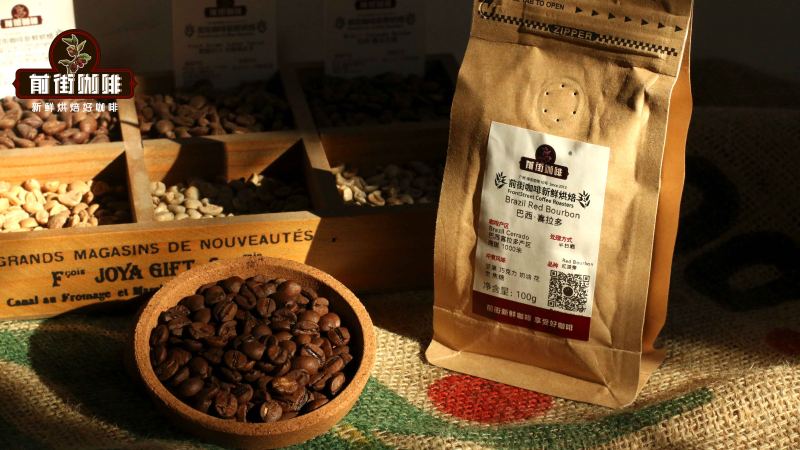
● Flavor characteristics of Brazilian coffee: Mild, moderate acidity and bitterness, soft aroma. We recommend Front Street Brazil Cerrado Red Bourbon.
■ Colombia (South America)
Colombia is one of the world's largest producers of high-quality coffee, a shining pearl on the world coffee map, and can be called a coffee land blessed by God. Arabica coffee is grown on steep slopes at elevations of 800-1900 meters, all hand-picked and wet-processed.
Colombian coffee has a balanced flavor and a relatively smooth mouthfeel, like a gentleman among coffees—moderate and proper. Its producing regions are extensive, with Medellin, Armenia, and Manizales being the most well-known, conventionally referred to collectively as "MAM."
Colombia's specialty bean producing regions are mainly in the south, at elevations above 1500 meters, including San Augustin in Huila, Popayan in Cauca, Nariño, and Tolima. The products from these places all have refined acidity and berry notes. When purchasing, Front Street Colombia Huila Coffee is the top choice—it has caramel aroma and is full of sweetness.
■ Honduras (Central America)
Honduras is located in northern Central America, bordered by the Caribbean Sea to the north, the Gulf of Fonseca in the Pacific to the south, Nicaragua and El Salvador to the east and south, and Guatemala to the west. It is mostly mountainous and highland terrain. It has a tropical climate with mild temperatures and abundant rainfall, making it an ideal place for coffee cultivation.
Honduras produces two types of very good quality coffee that are highly praised by coffee enthusiasts. One is "Highland Coffee" grown at elevations of 1000-1500 meters, and the other is "Select Highland Coffee" grown at elevations of 1500-2000 meters, representing Honduras's highest grade. Most Honduran coffee is exported to the United States and Germany.
Twenty years ago, Honduras could hardly compete with its neighbors in terms of attention to processing details, maintenance of the environment around processing stations, investment in processing equipment, export procedures, and logistics transportation of green beans. The general quality of green beans was naturally coarser and less refined, with only a few estates or CoE winning lots deserving the title of specialty coffee. Since 2007, the situation has improved. Under the leadership of the IHCAFE coffee bureau and many visionary dry processing stations, Honduras's improvements to processing workflows, investment in green bean processing equipment, and active improvements in transportation and export have gradually borne fruit. Even though international market recognition remains relatively low, proactive roasters have already invested in Honduran coffee producing regions, attempting to unearth specialty coffees.
In terms of production, in 2011-2012 Honduran coffee even held the leading position among Central American producing countries, harvesting about three million bags (46kg) of coffee annually. Beyond quantity, IHCAFE, together with like-minded production associations and processing stations, has carried out a series of programs hoping to provide international buyers with high-quality, great-tasting Honduran coffee.
Compared to other American countries, Front Street Honduras Coffee has a rich and full-bodied mouthfeel, with a taste that is neither astringent nor sour. Both its body and aroma are high, making it quite suitable for beginners. Honduran coffee can bring out multiple layers of flavor depending on the roast level. A medium roast can maximize the bean's sweetness, while a dark roast enhances bitterness but doesn't eliminate sweetness. Generally speaking, medium roast has the best taste, with rich and unique aromas, and is deeply favored by Honduran coffee lovers.
■ Panama (Central America)
Panamanian coffee is world-famous for Geisha, and the reason is inseparable from Panama's unique natural geographical conditions. Panama is the southernmost country in Central America, bordered by the Caribbean Sea to the east, the Pacific Ocean to the west, Costa Rica to the north, and Colombia to the south—it is an important isthmus connecting North and South America. Influenced by this geographical location, Panama has complex and varied microclimates, which have also created the uniquely flavored Panamanian coffee. Panama is roughly divided into four producing regions:
Boquete Boquete region, elevation 1450 meters
The coffee produced in this region represents Panama's largest output and best quality.
Volcan Volcan region, elevation 2,000-3,000 meters
The coffee from this region features a mild and balanced flavor, and has recently been gaining attention from international experts and coffee enthusiasts.
Santa Clara Santa Clara region, elevation 1500 meters
This region benefits from the irrigation of the Chorerra waterfalls, and with the nearby Panama Canal, coffee from all of Panama can be conveniently shipped around the world.
Piedra de Candela Candela region, elevation 1200 meters
This region is the most promising area with potential for developing high-quality specialty coffee.
In the evolution of Panama's coffee history, the most prominent highlight is Geisha. To drink high-grade Geisha, buy Front Street Hacienda La Esmeralda Green Label—the flavor is clear, the mouthfeel is transparent, like a floral and fruity tea.
Compared to the typical flavors of other Panamanian coffees, Geisha's unique and distinctive characteristics are even more intoxicating. While bearing everyone's expectations, its risks are also particularly high: extremely high mortality rate, low yield, difficult to prune, and it requires complex and costly processing methods to maintain its most original flavor.
Geisha's unique and distinctive bright acidity. In the book "The Coffee Bean Hunter," author Hsu Pao-Lin describes it as "If you don't know Geisha beans in your life, you're not worthy of being called a connoisseur," showing its undisputed status in the coffee world. Is Geisha's surname "Expensive"? I'm not surnamed Expensive, I'm surnamed "Geisha"!
■ Costa Rica
Coffee beans produced in Costa Rica's high-altitude regions are world-renowned: rich, mild in taste, but extremely acidic. The coffee beans here are all carefully processed, and it is precisely because of this that high-quality coffee is produced.
The famous coffee is produced in the Central Plateau, where the soil includes several consecutive layers of thick volcanic ash and volcanic dust.
Excellent Costa Rican coffee beans are called "Strictly Hard Beans," with classification standards as follows:
Strictly Hard Beans SHB (Strictly Hard Beans) at elevations above 1200 meters (3900 feet)
Good Hard Beans GHB (Good Hard Beans) at elevations of 1200-1000 meters (3900-3300 feet)
Medium Hard Beans MHB (Medium Hard Beans) at elevations of 1000-500 meters (3300-1600 feet)
Costa Rica's most sophisticated processing method—[Honey Processing]—generally produces coffee with a great balance of sweetness and fruity acidity. The flavor is generally less intense than natural-processed coffee, but more refreshing and aromatic. The key to this flavor difference comes from the sugars and acidity in the mucilage layer. During sun-drying, the sugars in the mucilage layer become more and more concentrated, and these sugars penetrate into the coffee beans.
Its three most famous producing regions are: Tarrazu, located south of Costa Rica's capital San José, as well as the Central Valley and Western Valley producing regions. Natural processing is a very traditional method that uses the fewest resources, but because there are too many uncontrollable factors, doing it well is extremely difficult.
● Flavor characteristics: Chocolate aroma and nutty flavors, moderate acidity with aromatic smoothness, plum, sweet orange, peach, pomelo, juicy mouthfeel, natural sweetness, delicate mouthfeel, overall perfect and balanced.
Coffee varieties grown in Costa Rica include Caturra, Catuai, and Villa Sarchi, and small amounts of Kenyan varieties SL28, Obata, etc. have also been introduced.
Villasarchi Villa Sarchi
Originated in Costa Rica, it is a mutation of Typica. Like Typica, the angle between the branches and trunk is 60 degrees, and the leaves are bronze-colored.
■ Guatemala
● Flavor characteristics: Bitter yet aromatic and rich, good mouthfeel
Guatemala's central region grows world-renowned, excellent-flavored coffee. The coffee beans here often carry charred notes and cocoa aromas, though their acidity is slightly stronger. Slightly acidic, aromatic, and smooth, it is the best material for blended coffee. Its classification is divided into seven grades by elevation. Coffee from higher elevations is more aromatic, while coffee from lower elevations is of lower quality.
Among the more famous is El Injerto Estate, one of the world's top coffee estates. El Injerto Estate is located on the renowned Huehuetenango plateau in Guatemala, and the Aguirre family has been growing coffee there since 1900. The estate name "Injerto" comes from a local fruit name. El Injerto Estate (also translated as Graft Estate).
[Pacamara]: A coffee variety, a hybrid discovered in El Salvador in the 1950s between Pacas (a sudden mutation of Bourbon) and Maragogype (Elephant Bean).
■ Peru
Peruvian coffee carries distinct chocolate, cream, and herbal profiles. The main varieties are Typica, Bourbon, and Catuai.
Peru's Main Producing Regions
North: Nearly 70% of Peru's coffee comes from here, mainly organic cultivation.
Central: This region is at high elevation (1200-2000m), and most coffee produced is also organically grown, with elegant and smooth acidity and a well-layered mouthfeel.
Peru adopts planned cultivation for coffee, greatly increasing production. Its rich acidity and full-bodied smoothness are the most notable characteristics. Peruvian coffee has soft acidity, medium body, and excellent flavor and aroma—it is an indispensable component in blended coffee. Outstanding Peruvian coffee has an intense aroma, smooth mouthfeel, distinct layers, rich sweetness, and beans with soft fruity acidity and intense premium dark chocolate profiles.
Front Street Peru Coffee is a Geisha variety, naturally carrying white floral notes, with bright sweet-tart flavors of citrus and nectarine. The mouthfeel is transparent, making it very suitable for pour-over black coffee.
■ Ecuador
Ecuador's varied ecosystems create rich coffee flavors, but most still display classic South American characteristics such as medium body, layered acidity, and higher sweetness. Most coffee is organically grown, and coffee from high-altitude regions has good quality.
Ecuador's Main Producing Regions
Manabi Province: This area is dry and coastal, with elevations ranging gently from 300-700m. It is Ecuador's largest coffee-producing region, with Arabica production accounting for half of the country's total.
Zamora Chinchipe Province: Located in southeastern Ecuador at high elevations of 1000-1800m, mainly producing washed Arabica with a distinct, sweet flavor carrying berry notes.
Loja Province, El Oro Province: 20% of the country's Arabica comes from this area. Due to the dry climate, the coffee beans are almost all naturally processed.
■ Jamaica Blue Mountain
When it comes to drinking coffee, many friends will immediately say, "Give me a Blue Mountain." Jamaican Blue Mountain coffee is highly famous, low in production, and has a long history—it can be said that even if you've never had specialty coffee, you've heard of Blue Mountain coffee.
The Three Main Producing Regions of Blue Mountain Coffee
The Blue Mountain region is a small area with only 6000 hectares of cultivation. It's impossible for all coffee labeled "Blue Mountain" to be grown there. Another 12000 hectares of land is used to grow two other types of coffee (non-Blue Mountain coffee): High Mountain Supreme and Jamaica Coffee.
Its grades are divided by bean size into NO.1, NO.2, NO.3, and hand-selected PB. The basic standards for NO.1 Blue Mountain green beans are beans of 17 screen size or above, defect rate below 3%, moisture content around 13%, etc. Additionally, to date, the only processing method for Blue Mountain green beans is washed—there is no natural processing or other methods.
Front Street Blue Mountain Coffee Flavor:
To drink authentic Jamaican coffee, choose Front Street Blue Mountain Coffee. Its taste is very clean, with a rich and aromatic flavor. The sweetness, acidity, and bitterness of the coffee are perfectly balanced, with no bitterness at all—only moderate and perfect acidity and a lasting fruity taste.
Bolivia
Bolivia's transportation difficulties have limited the pace of its coffee development, but the quality is by no means inferior. Bolivian beans are all of good quality, carrying distinct fruity profiles and sometimes floral notes as well.
In particular, when Japanese competitor Miki Suzuki won runner-up at the 2017 WBC (World Barista Championship) in Seoul using Bolivian Geisha, Bolivia as a coffee-producing country became more widely known. Most Bolivian beans are Typica, Caturra, and Catuai, with organic cultivation almost everywhere.
Bolivia has diverse terrain; its capital La Paz is located at an elevation of 3500 meters in the western part of the country. High elevation brings great advantages for coffee cultivation, but Bolivia's coffee industry remains weak, with annual production of only 150,000 bags.
Bolivian farmers mainly use the washed method to process green beans, and some occasionally use natural or honey processing. It's worth mentioning that because Bolivia's climate is even colder than other coffee-origin countries, many farmers use mechanical drying rather than sun-drying.
Flavor Expression
Front Street Bolivia Coffee comes from high-altitude regions, with the Java variety. After roasting, the coffee carries a deep and full sweetness, soft citrus acidity, and undulating black fruit and berry flavors. Coffee produced at relatively lower elevations displays a balanced mouthfeel, excellent chocolate sweetness, soft acidity, and malt and dried fruit flavors.
After broadly understanding the characteristics of American beans, drinking coffee is like tasting wine—you can pay extra attention to the coffee's "body," whether it's full and heavy or light, whether it's as thin as water or as thick as syrup. Whether the coffee's acidity is dull, lively, or intense. Finally, you can consider the coffee's aftertaste and overall complexity.
The above content is compiled by CoffeeHunters, a coffee news website.


