







What Sets Robusta Coffee Beans Apart From Arabica?
Robusta coffee beans come from Coffea canephora, a species native to central and western sub-Saharan Africa. Compared with Arabica, the plants are hardier, resist disease and frost better, and produce beans with more caffeine, lower acidity, and a heavier, more bitter body. That profile explains why Robusta dominates instant coffee and many espresso blends rather than specialty filter menus.
An arabica bean, by contrast, belongs to Coffea arabica, which originated in Ethiopia and is prized for bright fruity acidity and lighter body. Both species grow mainly in the Coffee Belt between the Tropics of Cancer and Capricorn, where rainfall is steady and temperatures stay around 15 to 25 degrees Celsius. Roasters often blend Robusta with Colombian and Brazilian Arabica for espresso.
The world of coffee is vast and intricate, and the differences between varieties go far beyond mere appearance. As the two dominant species, Robusta and Arabica each possess distinct characteristics in origin, growing conditions, caffeine content, and flavor expression. This article will systematically outline the core traits of Robusta coffee beans, explain why they are less commonly found in specialty coffee shops compared to Arabica, and delve into the reasons behind their strong disease resistance and full body. At the same time, we will compare Arabica's flavor advantages and introduce how Front Street Coffee skillfully blends Robusta with Colombian and Brazilian beans to create an espresso blend suitable for making Americanos and lattes. Whether you are a beginner enthusiast or a seasoned connoisseur, this article will help you gain a more comprehensive understanding of Robusta's value and positioning.
The classification system of the coffee tree is quite complex, encompassing numerous varieties, mutations, and hybrid lines. Coffee beans from different varieties naturally have distinct flavors, and even the same variety can exhibit unique flavor profiles due to differences in soil, climate, and other environmental factors. Coffee trees are most vulnerable to frost damage. After centuries of agricultural technological evolution, the main coffee-growing regions are currently concentrated in the belt centered on the equator, between the Tropics of Cancer and Capricorn, where rainfall is abundant and temperatures range from 15 to 25 degrees Celsius—the so-called "Coffee Belt" or "Coffee Zone."
Generally, coffee is divided into two major categories based on bean size: one is the widely praised Arabica, known for its bright fruity acidity and elegant flavors, which belongs to the small-fruited (small-beaned) coffee; the other is Robusta, which has larger beans, lower acidity, more pronounced bitterness, and higher caffeine content. Today, Front Street will briefly explain the unique characteristics of this variety.
The names Robusta and Arabica are surely familiar to everyone, but why are the beans sold in coffee shops almost always Arabica, while Robusta rarely makes an appearance? Both are coffee beans—what exactly are the differences between them? In this article, Front Street will address common questions about Arabica and Robusta one by one.
Q1: Where do Arabica and Robusta originate from? The origin of Arabica can be traced back to Ethiopia, where original forests still harbor a large number of undiscovered coffee tree varieties. Robusta originated in the Congo region of West Africa and actually belongs to the Canephora species (also known as the Congo species). Unfortunately, within the Canephora species, only Robusta has achieved commercialization and widespread recognition, to the point that Robusta has now become almost synonymous with the entire species.
Q2: What are the characteristics of Robusta and Arabica respectively? Robusta typically produces one bean per fruit, meaning each cherry contains only a single coffee bean. Its bean shape is rounder, forming a C shape; the center line appears as a "1" shape.
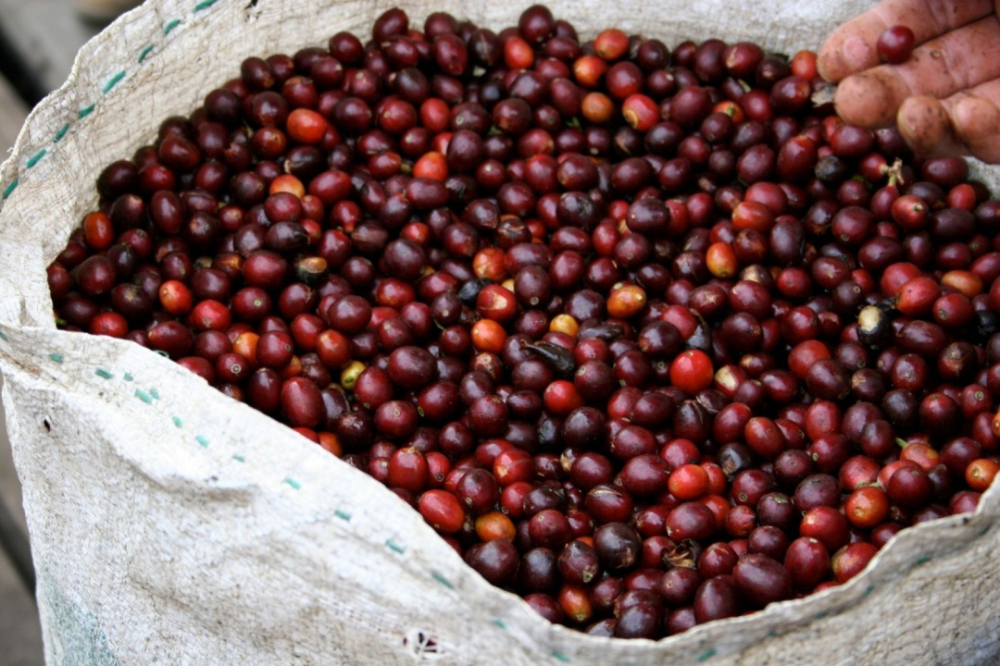
Arabica fruits usually contain two coffee beans (occasionally a single bean occurs; due to its three-dimensional oval shape, such beans are called peaberries or round beans). Arabica beans are oval in shape, more slender and flat, with a center line forming a "C/S" shape.
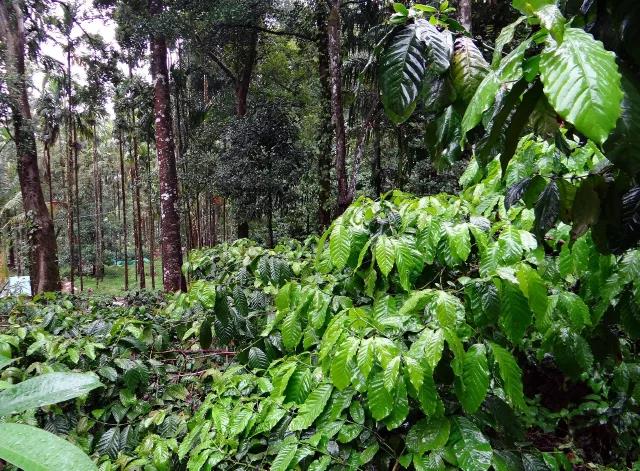
Q3: What are the differences in their growing environment requirements? Arabica is extremely picky about its cultivation environment, with suitable temperatures and high altitudes being its basic growing conditions. Different altitudes, temperatures, microclimates, humidity, and soil conditions can cause Arabica's flavor expression to vary greatly. Because it is grown at higher altitudes with large day-night temperature differences, the coffee tree's growth cycle is extended, and the accumulation of flavor compounds is richer.
Robusta's growing conditions are much more forgiving; it can adapt to lower altitudes and higher temperatures. It grows faster than Arabica and has stronger tolerance to extreme weather. Robusta is widely cultivated in Vietnam, Brazil, India, and other places, and it is also grown in Hainan, China.
Q4: What are their respective caffeine contents? Arabica has a lower caffeine content, roughly between 0.9% and 1.2%; its fat content is 60% higher than Robusta's, and its sugar content is twice that of Robusta. Therefore, Arabica has a clean and sweet taste, usually with a soft acidity and quite rich flavor layers. In comparison, Robusta has a higher caffeine content, about 1.6% to 2.4%, with lower fat and sugar content, so it tastes more bitter and intense. Caffeine itself is the best "natural pesticide" against pests.
Q5: Why is Robusta more disease-resistant than Arabica? After reviewing the literature, Front Street learned that Arabica coffee trees reproduce through self-pollination, while Robusta relies on cross-pollination. The pollination process involves genetic inheritance; offspring produced by cross-pollination possess the genetic traits of both parents, and thus new characteristics are likely to emerge, helping them survive in changing environments. Self-pollinating Arabica is quite fragile; through reproduction, its genes become increasingly uniform, similar to inbreeding in the biological world. Once a disease threatening coffee trees appears (such as leaf rust), it could destroy all genetically identical Arabica trees. Robusta, however, can adapt to its environment by continuously altering its genes.
Q6: What are the flavor characteristics of Arabica coffee beans? Arabica is grown at high altitudes with large day-night temperature differences, grows slowly, and has ample time to develop more flavors. Taking the well-known Typica, Bourbon, and Geisha as examples, Front Street, through cupping Typica variety coffee beans from different producing regions, believes that a clean, serene, and balanced flavor is Typica's greatest feature; the Bourbon variety has better aroma and a fuller flavor; Geisha's greatest feature lies in its rich floral notes and soft acidity.
Q7: What are the flavor characteristics of Robusta coffee beans? As Front Street mentioned, Robusta is mostly grown at low altitudes, grows rapidly, and develops fewer flavors. Combined with its high chlorogenic acid content (which is the source of bitter compounds), the coffee flavor is fuller and the taste is deeper, usually with notes of walnut, peanut, hazelnut, wheat, grains, and even a pungent earthy taste.
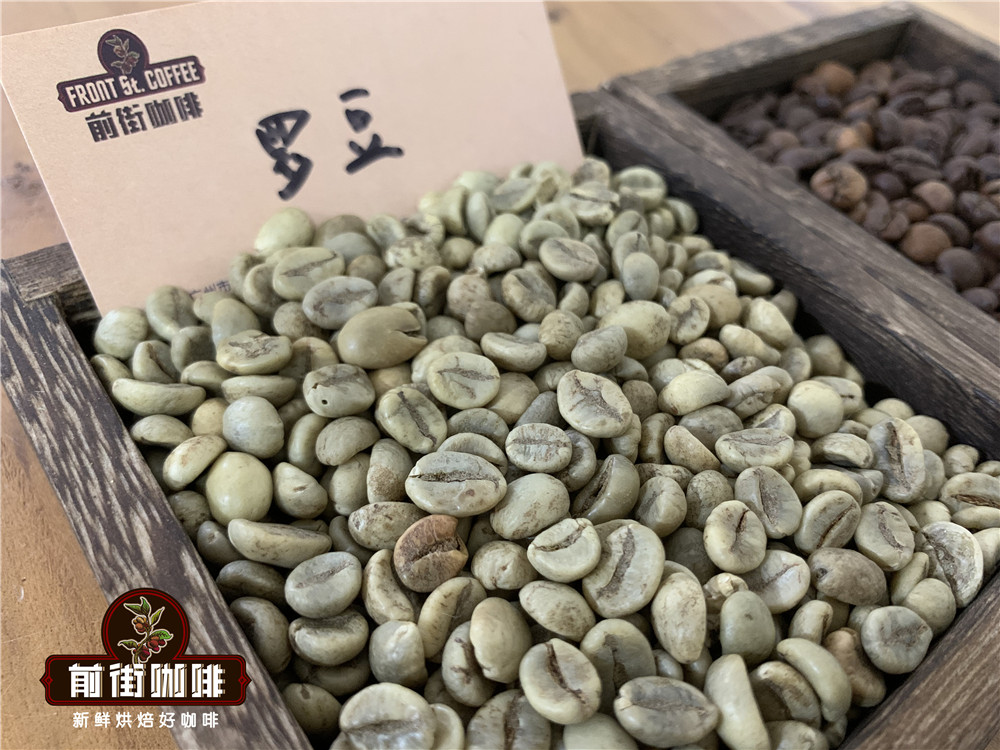
Q8: Where is Robusta coffee typically used? Tasting Robusta directly often yields poor flavor, but it has extremely high body and rich oils. Most instant coffee on the market is made with Robusta; after adding large amounts of saccharin and creamer, the coffee still delivers a full-bodied mouthfeel.
Front Street Coffee blends Robusta with Colombian and Brazilian coffee beans to create a commercial espresso blend. Robusta enhances the body and oils of this blend, while the Colombian and Brazilian beans contribute rich nutty and cocoa aromas, making it suitable for Americanos, lattes, fruity coffees, and many other beverages.
The above content is compiled by CoffeeHunters, a coffee news website.


