







How to Drink Arabic Coffee and Brew Yirgacheffe Drip Bags
Yirgacheffe is a coffee-growing region in southwestern Ethiopia, split from Sidama in 2010 because its beans showed distinct floral and citrus notes. To drink it as a drip bag, use roughly 10 grams of coffee to 150 milliliters of water at 90 to 93 degrees Celsius, pouring in slow stages so the bed stays even.
The area sits at high altitude with annual temperatures of 15 to 25 degrees Celsius and a wide day-night swing, conditions that suit Arabica trees. Unlike Arabic coffee vs Turkish coffee, which often involves boiling and cardamom, drip bags rely on a washed Ethiopian bean and a gentler pour to keep the fruit and floral notes intact.
Yirgacheffe is one of Ethiopia's most recognizable coffee regions, and with its fresh floral and fruity notes and consistent quality, it has become the starting point for many coffee lovers getting into specialty coffee. This article begins with the background of Yirgacheffe's origin, explains why it was separated from Sidama to become its own region, and introduces its classic flavor characteristics. At the same time, the article will break down the brewing steps for drip bag coffee in detail, including the coffee-to-water ratio, water temperature control, and pouring rhythm, to help you easily recreate a delicious cup of Yirgacheffe at home. The article also recommends Front Street. Yirgacheffe Gudingding and Front Street. Yirgacheffe drip bag coffee, making it convenient for daily purchase and drinking.
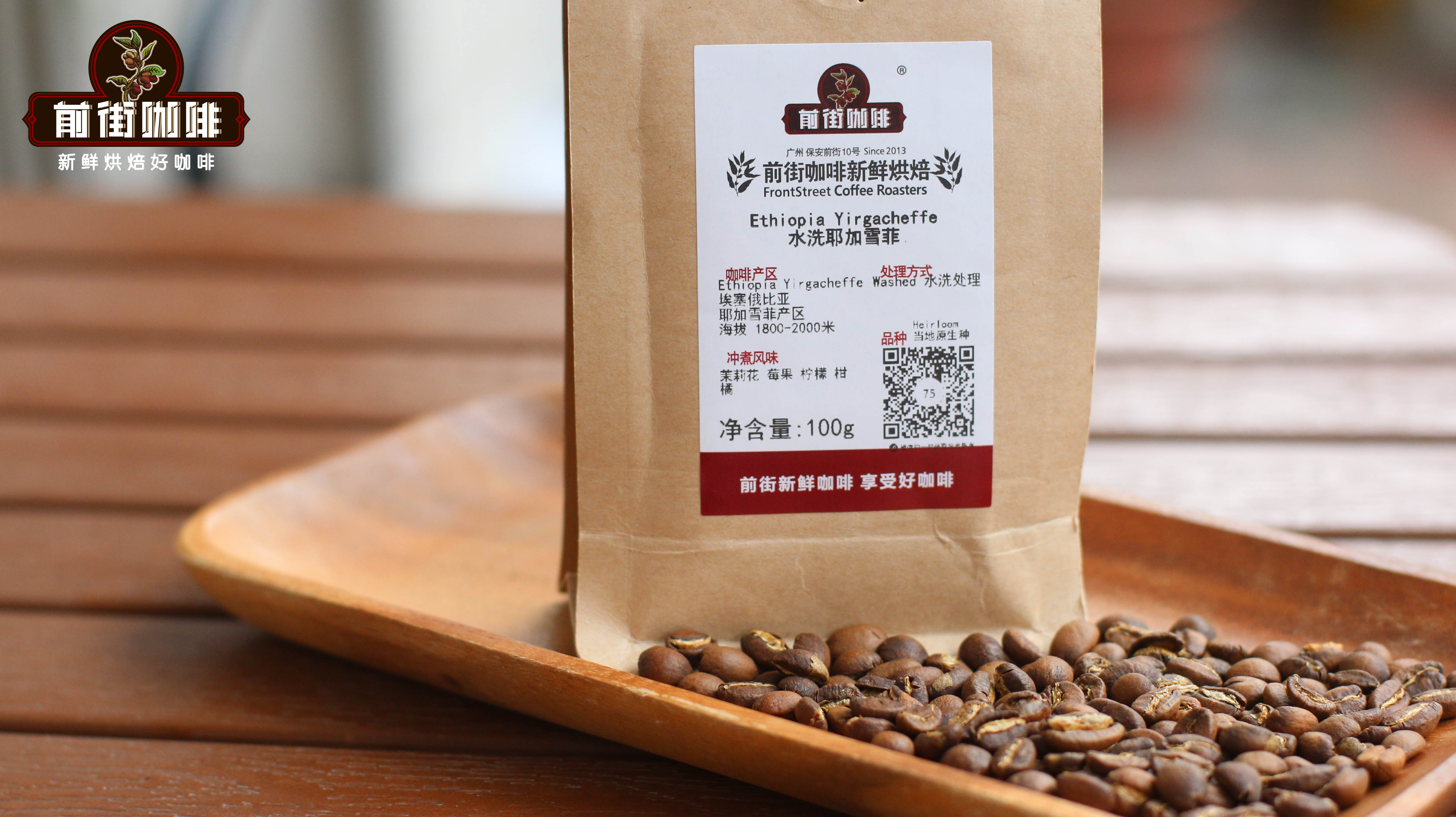
Among Ethiopia's many coffee origins, Yirgacheffe can be said to be the best known. For people just starting to explore single-origin coffee, it is almost a must-have ticket in—its flavor is highly recognizable, its price is relatively friendly, and its quality is quite stable. Together, these factors make Yirgacheffe a typical representative of floral and fruity notes in the specialty coffee world.
What makes Yirgacheffe special?
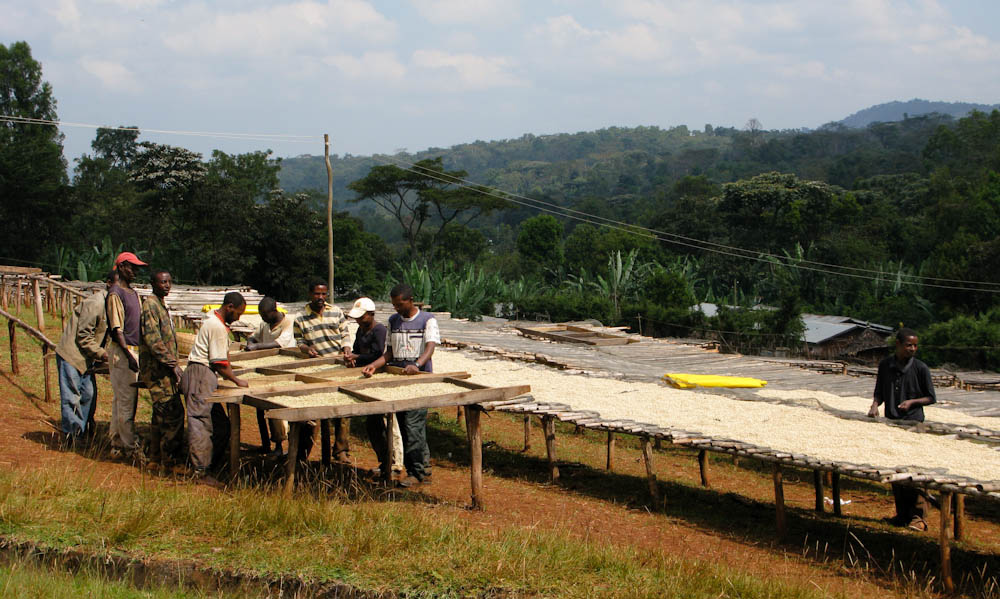
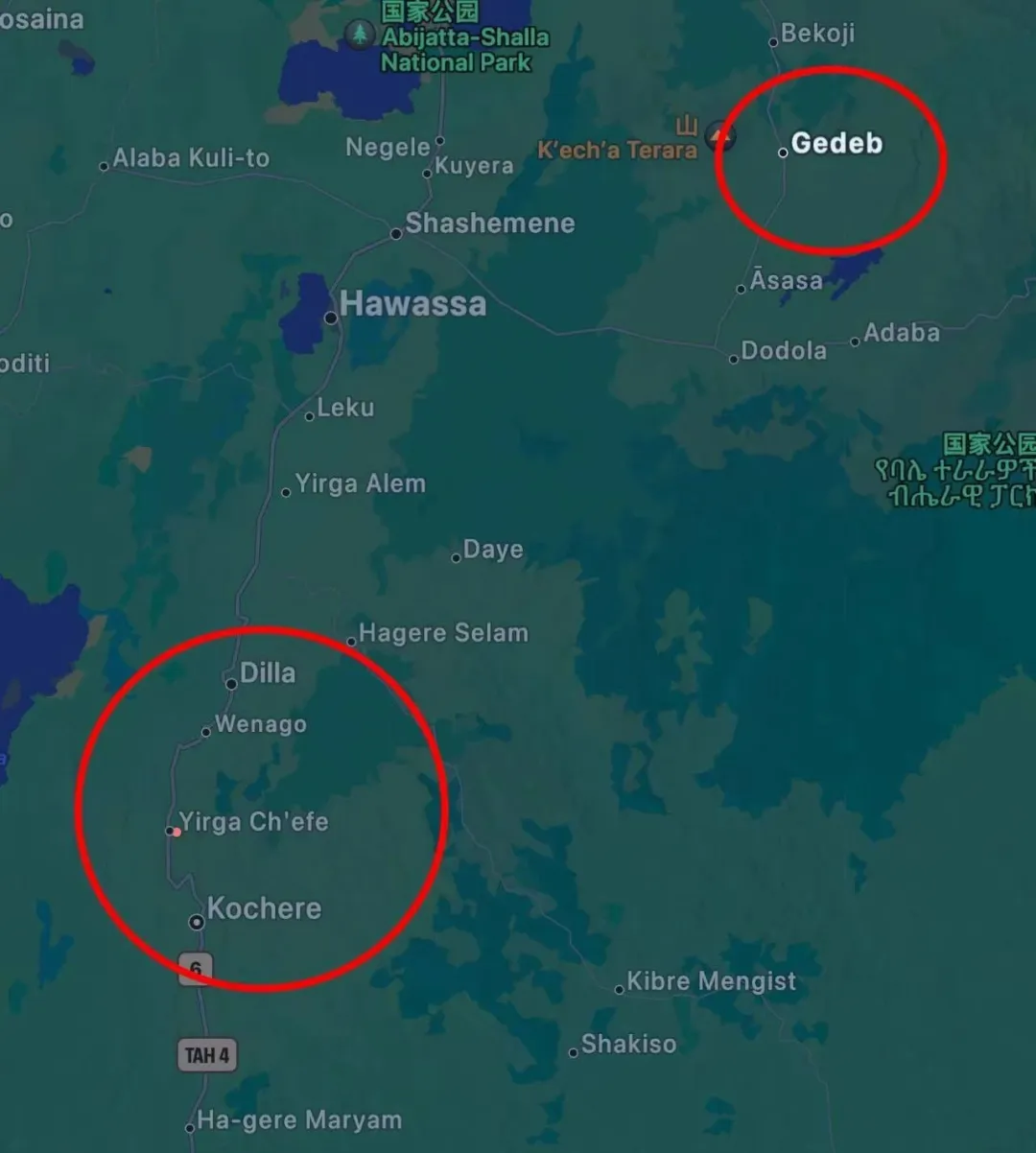
Yirgacheffe is located in southwestern Ethiopia and was originally just a small town under the Gedeo Zone. This place itself is a natural wetland with abundant water resources, and the average annual temperature is between 15 and 25 degrees Celsius. In addition, the temperature difference between day and night brought by the high altitude exactly meets the conditions needed for the growth of Arabica coffee trees.
At first, the town of Yirgacheffe belonged to Sidama, another well-known coffee region in Ethiopia. Later, as the specialty coffee market increasingly favored coffee beans with fresh flavors, the Ethiopian government also began to pay attention to the performance of coffee produced in the town of Yirgacheffe.
People gradually discovered that coffee beans produced in the area around the town of Yirgacheffe had unique floral and citrus notes, clearly different from the flavors of other areas in Sidama. In addition, many coffee bean traders specifically requested to purchase beans grown in the town of Yirgacheffe, so in 2010 the Ethiopian Commodity Exchange decided to separate the Yirgacheffe region from Sidama, and that is how today's well-known Yirgacheffe region came to be.
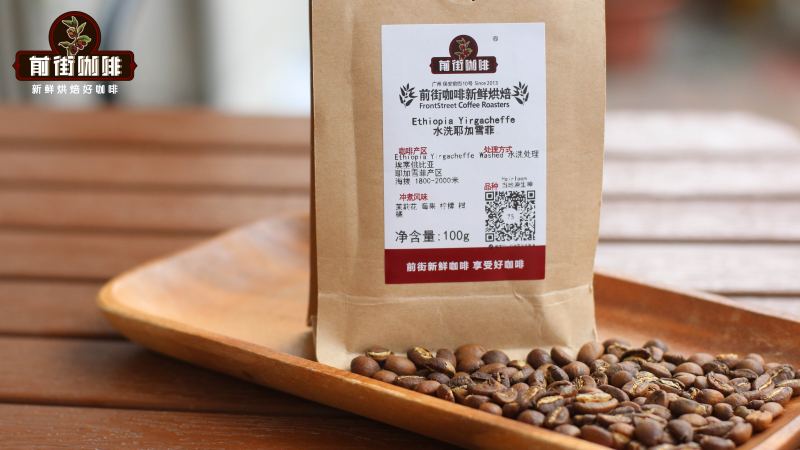
If you are trying Yirgacheffe for the first time, you might start with Front Street. Yirgacheffe Gudingding. This bean is washed, belongs to the premium grade of Yirgacheffe, and has a medium-light roast. After brewing, the body is light, and on the palate you can feel a refreshing citrus-like acidity, accompanied by white floral aromas, honey-like sweetness, and a finish similar to green tea. Through the drip bag format, you can also conveniently experience the charm of Front Street. Yirgacheffe Gudingding.
How should drip bag coffee be brewed?
1. The amount of coffee in a drip bag is usually clearly labeled (generally 10 grams), so it can be easily handled even without a grinder or electronic scale.
2. Next, determine the amount of water and the water temperature. As with pour-over coffee, use a coffee-to-water ratio of 1:15 to 1:16, and the final coffee liquid will be about 140 to 150 milliliters. The water temperature is recommended to be controlled at around 90°C. It is of course best to have a thermometer or temperature-controlled kettle; if not, you can also estimate roughly—after the water boils, turn off the heat and open the lid, let it sit for 2 to 3 minutes, and the water temperature will be roughly down to 90°C (based on a room temperature of 28°C).
3. Once ready, first warm the mug (or cup), then take out the drip bag, tear open the seal along the "Open" mark, unfold the "ears" on both sides of the filter bag, hang it on the rim of the cup, and gently shake the coffee bed level.
4. For the first pour, simply wet the entire coffee bed, then let it bloom for ten seconds.
5. After the bloom, begin the second pour. Use a small stream and pour in circles directly until full. When the coffee bed drops slightly, continue pouring to full again. Repeat this until the coffee liquid in the cup reaches about 140 to 150 milliliters, then remove the drip bag and start enjoying it.
6. If you want to control the amount of water more precisely, you can also first pour 150 to 160 milliliters of water into the pouring kettle. During brewing, pour all the water from the kettle, and after the coffee liquid has completely filtered into the cup, remove the drip bag. The entire brewing process can be completed in about 1 minute.
Because drip bag coffee uses pre-ground coffee, its aroma dissipates faster than whole coffee beans. Therefore, if you want to fully experience the coffee's flavor, it is best to drink it as soon as possible. Front Street. Yirgacheffe drip bag coffee is freshly roasted and freshly ground within 5 days, and shipped within 24 hours after ordering, minimizing aroma loss as much as possible.
The above content is compiled by CoffeeHunters, a coffee news website.


