







How Do Costa Rican Coffee Farms Shape Honey-Processed Flavor?
Costa Rican coffee is known for balanced smoothness, chocolate notes, and honey-like sweetness. The Strawberry Candy Geisha Blend from Mirazu Estate uses the raisin honey process, pairing Geisha's floral aroma with the berry sweetness of ET47, SL28, and MAICO, and cups with jasmine, strawberry, raisin, and a creamy mouthfeel.
Growing areas sit on the Central Plateau at 1,200 to 1,600 meters, where the Irazu, Barva, and Poas volcanoes feed fertile soil. Harvest runs from November to March across San José, Heredia, and Alajuela. Front Street Coffee roasts this lot medium-light and brews it as pour-over to keep the sweetness forward.
Costa Rican coffee has always been known for its balanced smoothness, chocolate notes, and honey-like sweetness. The Strawberry Candy Geisha Blend from Mirazu Estate, newly launched by Front Street Coffee, uses the raisin honey processing method, skillfully combining the floral aroma of Geisha with the berry sweetness of ET47, SL28, and MAICO, presenting jasmine floral notes, strawberry, raisin, and a creamy mouthfeel. This article, from Front Street's perspective on origins, will sort out Costa Rica's main producing regions and the terroir characteristics of Tarrazu, explain in detail Mirazu Estate's cultivation philosophy, the variety composition of the Geisha blend, and the key points of the raisin honey processing method, and include Front Street's roaster's medium-light roast profile, cupping report, and pour-over parameters, taking you through a complete understanding of this prominently sweet Costa Rican honey-processed coffee.
For more specialty coffee information, welcome to follow our WeChat public account: Front Street Coffee (FrontStreet Coffee).
Costa Rican coffee, with its honey-like sweet flavor, has always been hard for many seasoned coffee lovers to give up. Guests often walk into Front Street Coffee (FrontStreet Coffee) and ask the baristas whether there are any sweet-tasting pour-over beans. At such times, Front Street's baristas will lay out the various Costa Rican coffee beans one by one and explain them in turn. Why exactly does Costa Rican coffee present a honey-like sweetness? Next, Front Street will chat with everyone about its own Costa Rican coffee beans.
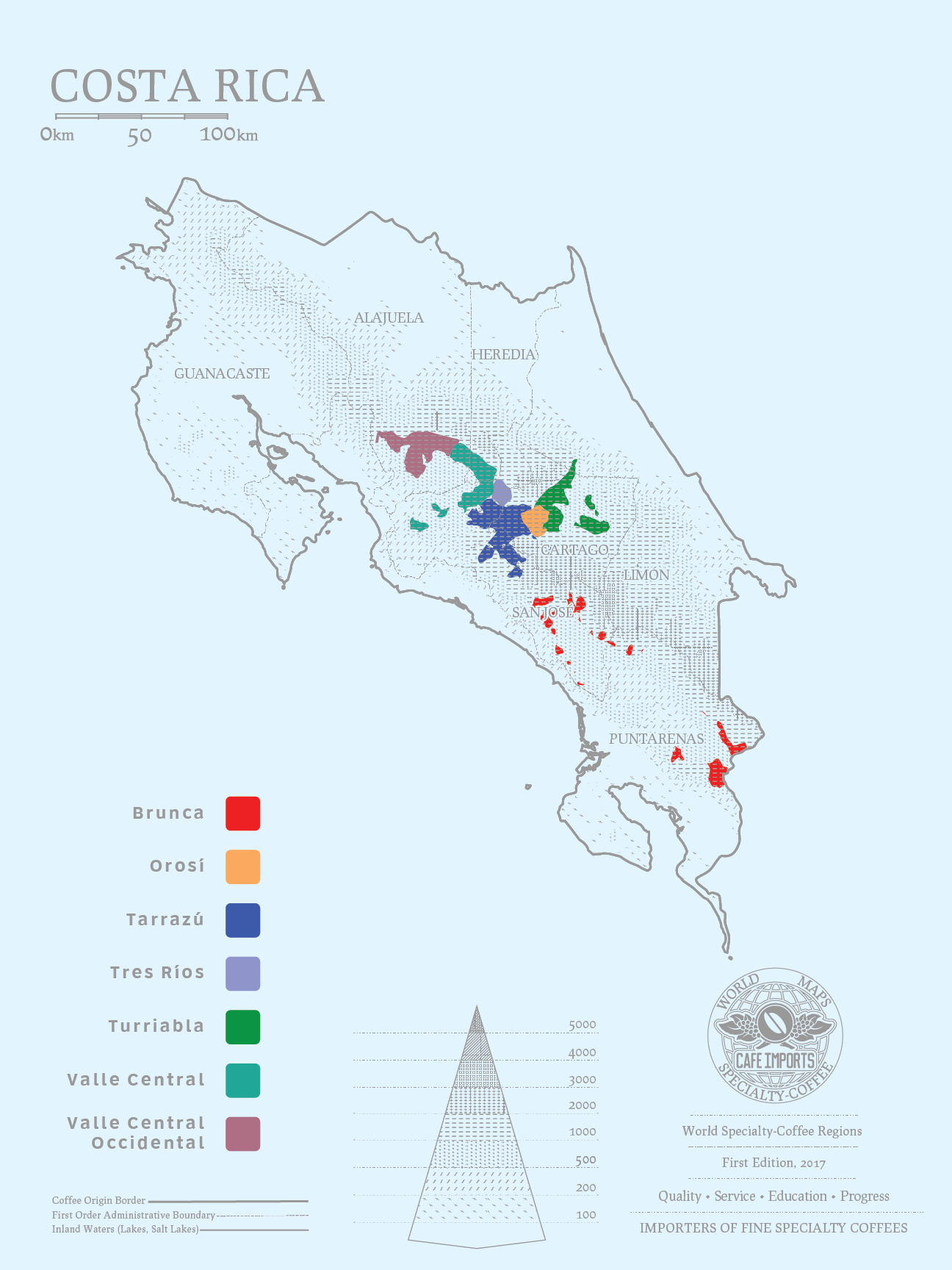
Costa Rican Producing Regions Costa Rica is located in Central America and was the first country in Central America where coffee was introduced and cultivated, with a very long planting history. The country has fertile volcanic soil and ideal drainage conditions, especially in the Central Plateau area, with an altitude between 1,200 and 1,600 meters, a harvest period concentrated from November to March of the following year, and three sub-regions under its jurisdiction: San José, Heredia, and Alajuela. Within the producing area stand three high-altitude volcanoes—Irazu, Barva, and Poas—continuously supplying nutrients to nearby coffee farms. The superior microclimate, combined with the fertile soil of two volcanoes, gives the beans of this region outstanding qualities from the start, such as chocolate and cocoa notes, bright fruit acidity, and elegant aromas.
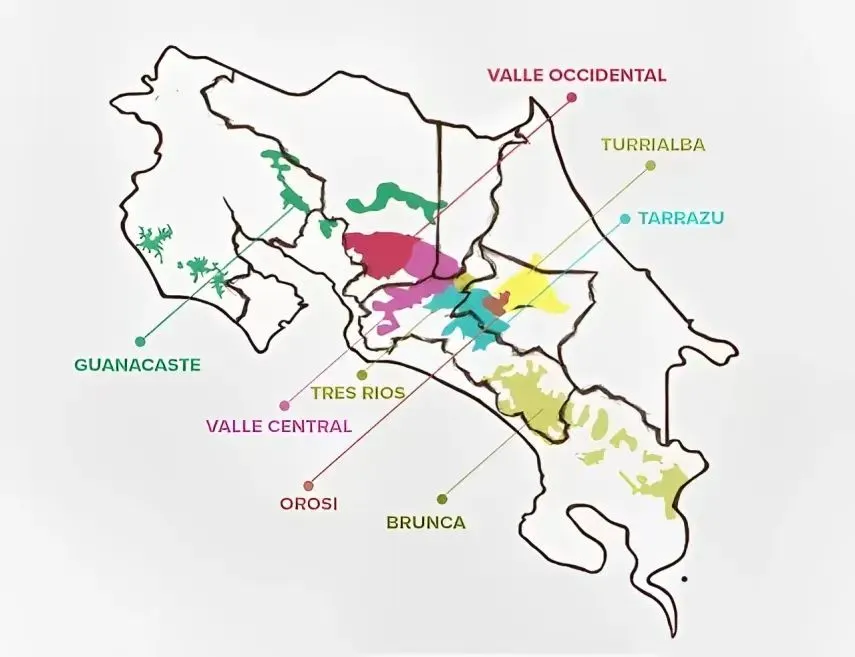
Costa Rica has eight major coffee producing regions in total, namely: Western Valley Valley Central Occidental, Central Valley Valley Central, Tarrazu Tarrazu, Tres Rios Tres Rios, Orosi Orosi, Brunca Brunca, and Turrialba Turrialba. The vast majority of the country's specialty coffee comes from the Tarrazu producing region.
Tarrazu is located south of the capital San José and is one of Costa Rica's most valued coffee-growing areas. "La Minita Tarrazu" is a fairly famous local product, but its output is quite limited, about 72,600 kilograms per year, produced from a piece of land called "La Minita," which is owned by the McAlpine family of the United Kingdom for the most recent three generations and has the LaMinita Estate in the Tarrazu region with an annual output of only 160,000 pounds. In fact, this land can produce more than 450 tons of coffee each year. However, La Minita Tarrazu does not use artificial fertilizers or pesticides throughout the growing process, and both harvesting and sorting are done by hand. This practice is to prevent the air-jet sorting method from damaging the coffee beans to some extent.
Costa Rican coffee has always been known for its balanced flavor, rich chocolate taste, and smooth mouthfeel. Tarrazu is located south of the capital San Jose and is one of the country's most valued coffee-growing areas. Front Street believes that Tarrazu coffee beans are plump, with a rich BODY, smooth mouthfeel, rich chocolate and nut aromas, moderate acidity, and a quite alluring aroma. A representative Costa Rican coffee—Front Street Costa Rica Mirazu Estate Geisha Blend Coffee Beans.
Country: Costa Rica Estate: Mirazu Estate Altitude: 1700m Processing Method: Raisin Honey Processing Varieties: Geisha, ET47, SL28, MAICO
Costa Rica Mirazu Estate Mirazu Estate is very small in scale, and the entire estate is cared for entirely by Esteban and his family. Esteban Sanches was originally a family member of the neighboring Little Candle Estate. Out of his dedication to coffee beans, he independently founded Mirazu Estate. The small wet-processing machine in the processing plant was designed and assembled by Sanches himself.
In the coffee farm, Sanches said that the quality of coffee must start with the trees themselves. Machines can certainly distinguish good from bad, but if the quality grown is already excellent, there is no need to rely on machines to distinguish good from poor. He also mentioned that God gave us a beautiful environment, and we care for the coffee beans with love. This is giving back and sharing. He thanks everyone for their help in allowing him to realize his dream, and he is also happy to share his experience and results with other farmers, so that everyone's coffee dream can come true. Coffee Bean Varieties
The Front Street Costa Rica Strawberry Candy Geisha Blend purchased by Front Street Coffee (FrontStreet Coffee) this time is composed of 50% Geisha coffee beans and 50% ET47, SL28, and MAICO blended together. These varieties are all grown on the same estate and then blended as single-origin coffee beans.
It is worth mentioning the two varieties ET47 and SL28. ET47 is a native variety originating from Ethiopia. In the 1990s, the Costa Rica Coffee Institute gave many introduced varieties as research trees for resistance to leaf rust to farmers in the Tarrazu region for planting. The original goal of breeding SL28 was to produce coffee beans in large quantities that combined high quality with resistance to pests and diseases, while in some producing regions the breeding goal was mainly placed on high yield, without considering disease resistance. Thanks to Bourbon genetics, although SL28's yield later fell short of expectations, its bronze leaf color and broad-bean-shaped beans possess excellent sweetness, balance, and complex, varied flavors, as well as notable citrus and black plum characteristics.
This Front Street Costa Rica Strawberry Candy bean is a Geisha blend—does it still count as a single-origin coffee bean? Front Street believes the answer is yes. All the coffee varieties in this Front Street Costa Rica Strawberry Candy coffee bean come from Mirazu Estate and belong to the same single origin, so it is a single-origin coffee bean. Why say this? Front Street gives an example: Ethiopian coffee varieties are numerous and complex, and local coffee trees are basically planted mixed together and then harvested mixed together, which also explains why Ethiopian coffee beans appear in different sizes. As long as the coffee beans are grown within the same producing region, whether a single variety or mixed varieties, they count as single-origin coffee beans. Coffee beans like those from Ethiopia are equivalent to natural blending, while this Front Street Costa Rica Strawberry Candy Geisha Blend belongs to post-blending.
Coffee Bean Processing Method
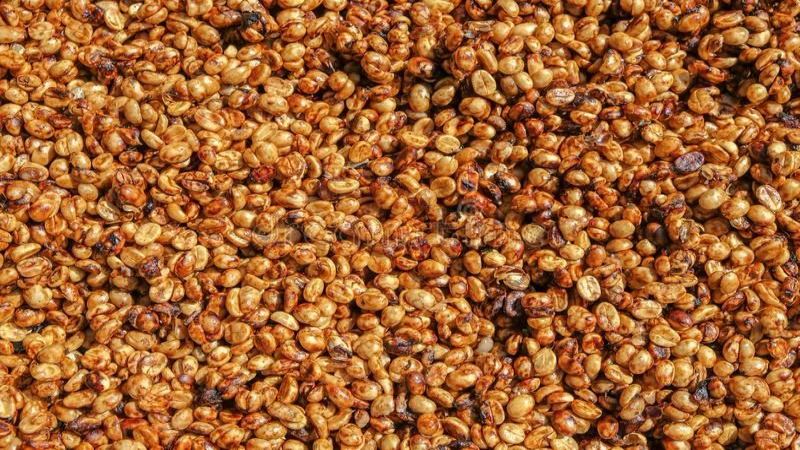
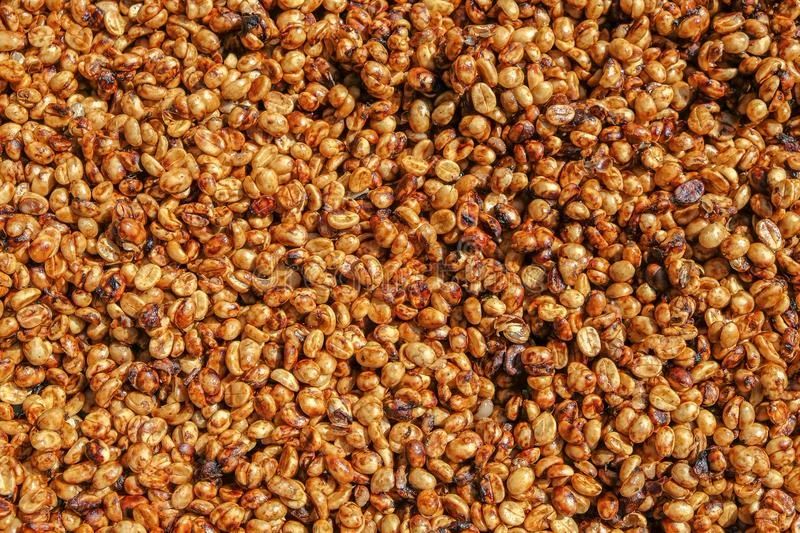
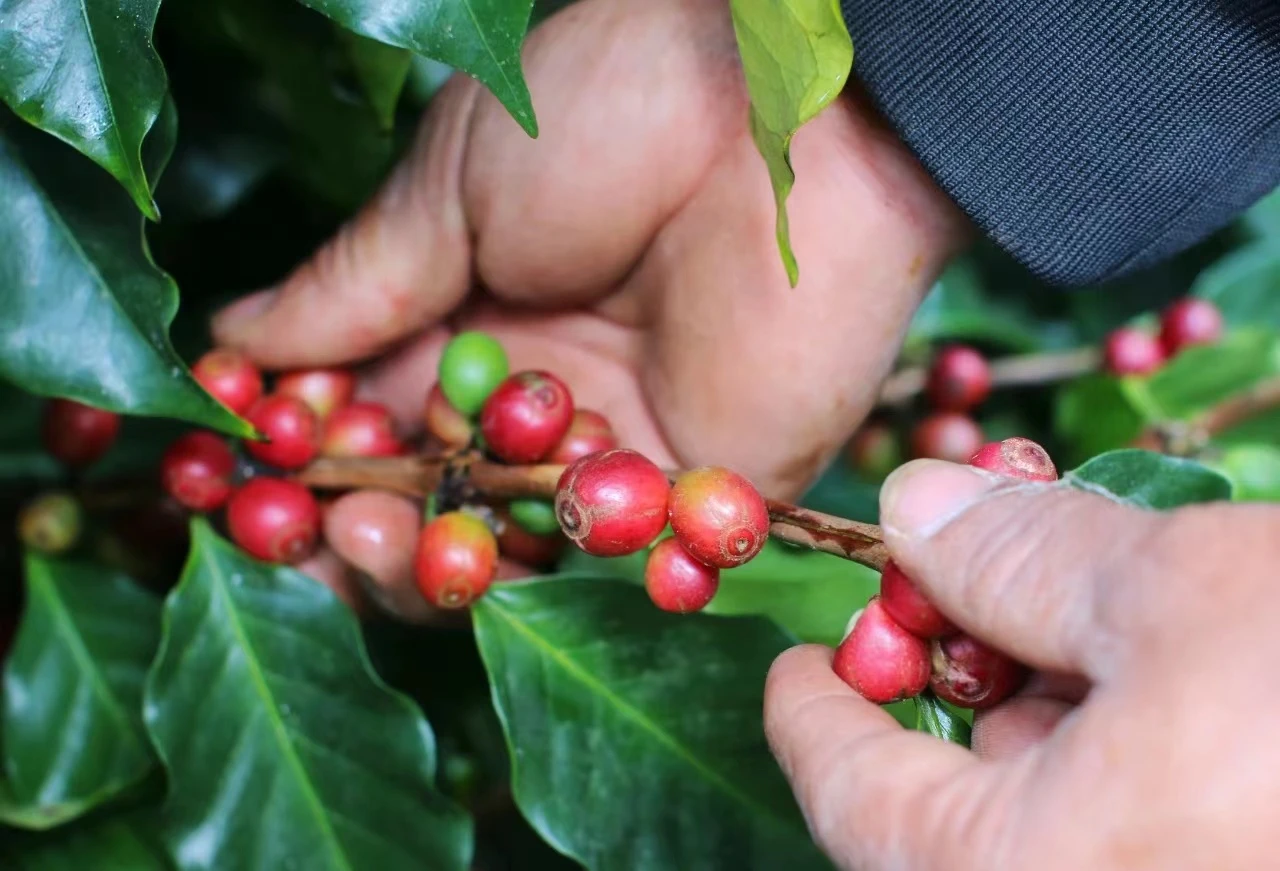
The raisin honey processing method retains 100% mucilage and uses a zero-water processing method. This increases the difficulty of the honey processing method and requires strict control of timing. On the day the coffee cherries are harvested, the harvested coffee fruit is poured into a large water tank. Fully ripe and plump fruits will sink to the bottom; underdeveloped or overripe fruits will float to the surface, and these floating beans need to be removed. The selected coffee fruits are placed on raised beds to dry for at least three days, then the cherry skin is removed, the mucilage is retained, and drying continues.
At this stage, climate factors are the key to the success or failure of honey processing. During the drying process, these coffee cherries must be constantly turned to ensure even drying, but the frequency of turning must be well controlled. Drying needs to be slow to ensure the coffee undergoes fermentation processing, but not so slow that over-fermentation occurs. Front Street believes that this richly sweet raisin honey processing method can give the coffee a white-wine-like mouthfeel and balanced acidity, with a relatively rich fermentation aroma.
Front Street Coffee (FrontStreet Coffee) Green Bean Analysis
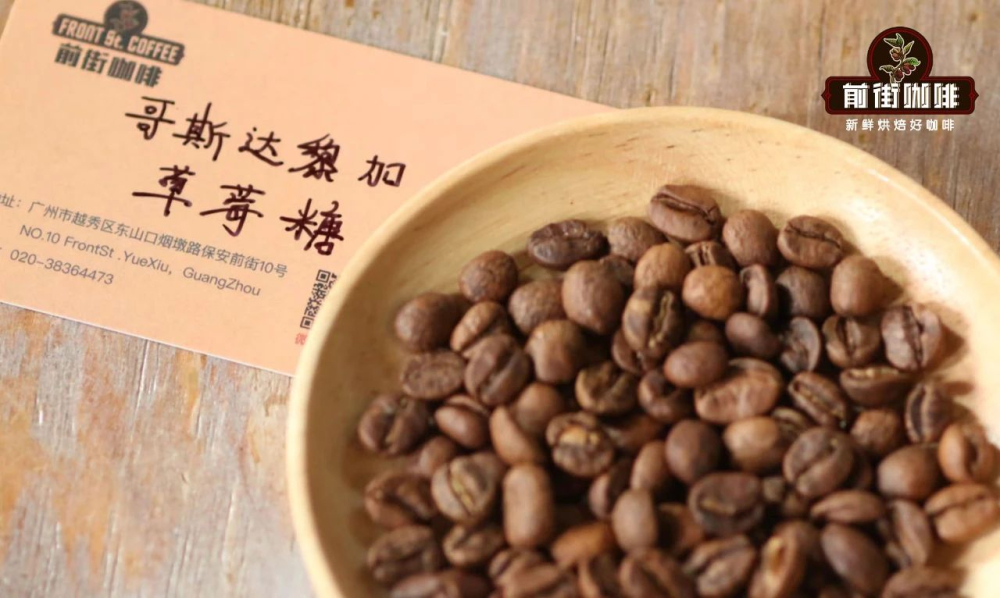
This batch of Front Street Costa Rica Mirazu Strawberry Candy Geisha coffee purchased by Front Street Coffee (FrontStreet Coffee) is composed of 50% Geisha coffee beans and a blend of ET47, SL28, and MAICO. The Geisha variety provides this coffee with jasmine aroma, while the other varieties bring richer strawberry and berry flavors. Through the raisin honey processing method, the sweetness of this coffee is enhanced. In order to highlight the floral aroma and fermented sweetness of this Front Street Strawberry Candy coffee bean, Front Street's roaster used a medium-light roast for this Front Street Costa Rica Geisha Blend coffee bean.
Front Street Coffee (FrontStreet Coffee) Roasting Recommendations Roasting machine Yangjia 800N semi-direct fire, roasting amount 300g.
Preheat the drum temperature to 200°C, lower to 175°C for charging, adjust the flame to 120, open the damper to 3, the turning point is 1'32", and maintain the flame; at 114°C keep the flame unchanged and open the damper to 4. At 6'15" it turns yellow, the grassy smell disappears, and it enters the dehydration stage. At 140°C lower the flame to 100 and keep the damper at 4. At 9'00" dehydration is complete, wrinkles and dark streaks appear on the bean surface, and the toast smell turns into coffee aroma, which is the prelude to first crack. At this time, pay attention to listening for the sound of first crack. At 10'25" first crack begins, open the damper fully to 5, and keep the flame unchanged. The development time after first crack is 1'30", and the beans are dropped at 193.5°C.
Front Street Coffee (FrontStreet Coffee) Cupping Report Front Street Coffee (FrontStreet Coffee) conducts cupping within 8-24 hours after the sample coffee beans are roasted. The cupping bowls generally used by Front Street Coffee (FrontStreet Coffee) baristas are 200ml ceramic bowls marked with 150ml and 200ml scale lines. According to SCAA standards, the TDS of the water is about 150ppm. Too low a TDS easily causes over-extraction, while too high a TDS affects the mouthfeel and easily causes under-extraction. The water temperature used for cupping is 94 degrees. According to SCAA cupping standards, the grinding degree is controlled so that the passing rate through a No. 20 standard sieve (0.85 mm) is 70%-75%. The ratio is 11 grams of coffee powder to 200 milliliters of hot water, that is, 1:18.18, so that the extracted concentration falls exactly within the golden cup range of 1.15%-1.35%, with a steeping time of 4 minutes.
Dry aroma: dried fruit, berries Wet aroma: floral, berries Flavor: raisin, berries, nuts, creamy mouthfeel
Front Street Coffee (FrontStreet Coffee) Brewing Suggestions and Insights Water temperature: 90-91 degrees
Grind size: EK43s setting 10 (fine granulated sugar size)
Coffee-to-water ratio: 1:15
Dose: 15 grams *Regarding grind size, Front Street determines it through sieving. Based on the grinding recommendations provided by the Specialty Coffee Association of America SCA for pour-over coffee, Front Street then verifies through actual practice. Using different grind sizes for brewing produces noticeably different results, and the grind size for each coffee bean will vary somewhat. This is the significance of sieving. If there is no sieve at home, Front Street Coffee (FrontStreet Coffee) suggests judging by observing the flow rate: if the flow is too fast, the grind is coarse; if the flow is too slow, the grind is fine.
Front Street brewing method: In the first stage, pour 30 grams of water for a 30-second bloom, then pour 95 grams (the electronic scale shows about 125 grams), completing the pour in about 1 minute. When the water level drops to 2/3 of the coffee bed, pour the remaining 100 grams (the electronic scale shows about 225 grams), completing the pour in about 1 minute 40 seconds. Dripping is completed at 1'55''-2'00'', remove the dripper, and extraction is complete.
Brewing flavor: jasmine aroma, strawberry and raisin flavors on the palate, with a finish of strawberry candy and nut flavors, and a creamy mouthfeel.
The above content is compiled by CoffeeHunters, a coffee news website.


