







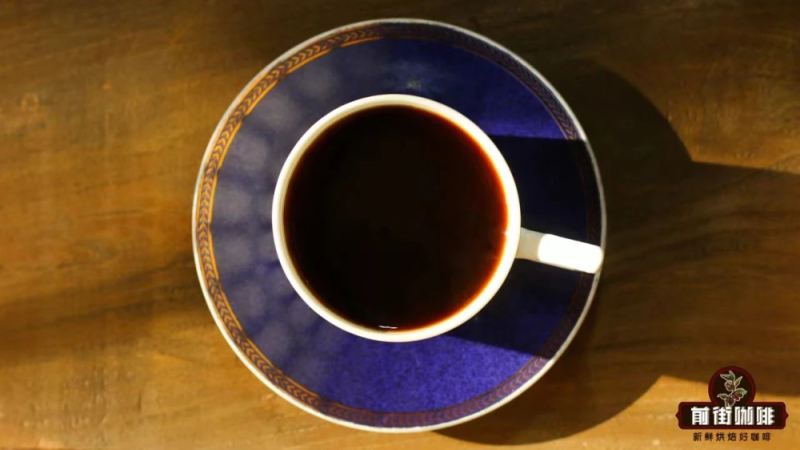
Blending Coffee Beans for Americano and Latte
The difference between an Americano and a latte comes down to what is added to the shared espresso base. An Americano is espresso diluted with hot water, keeping the flavor focused and the bitterness more pronounced; a latte is espresso blended with steamed milk, which softens acidity and adds body and sweetness.
A standard espresso is about 30 milliliters, pulled at roughly nine atmospheres, and its quality sets the ceiling for both drinks. Americano proportions are commonly one part espresso to two or three parts water. Front Street Coffee's four espresso blends, Black Cocoa, Specialty, Commercial, and Warm Sun, suit different milk and water builds.
The difference between Americano and Latte ultimately comes back to the shared base of Espresso. Americano is espresso diluted with water, while Latte is espresso blended with milk, and the two have completely different flavor directions. From the perspective of Front Street Coffee, this article first breaks down the extraction logic and drinking method of Espresso, then explains the key points of making Latte and milk frothing techniques, and finally systematically introduces the recipe ideas and flavor performance of Front Street Coffee's four espresso coffee beans: Black Cocoa Blend, Specialty Blend, Commercial Blend, and Warm Sun Blend, helping coffee lovers understand the complete chain of a delicious espresso from beans to cup.
Before discussing what exactly separates Americano from Latte, which cup tastes less bitter, and whether black coffee or milk coffee is more appealing, Front Street Coffee feels it is necessary to first clarify the concept of espresso.
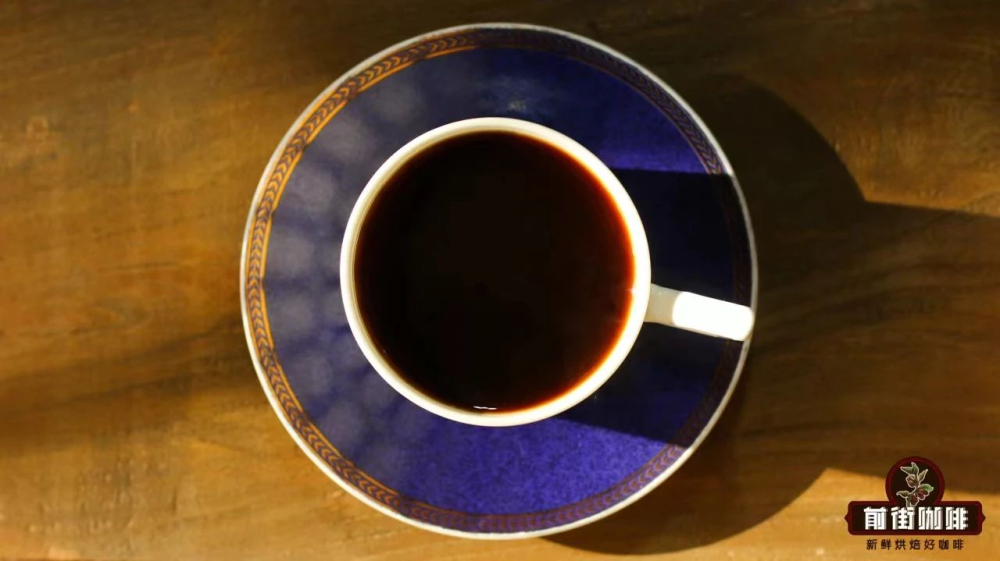
What exactly is espresso
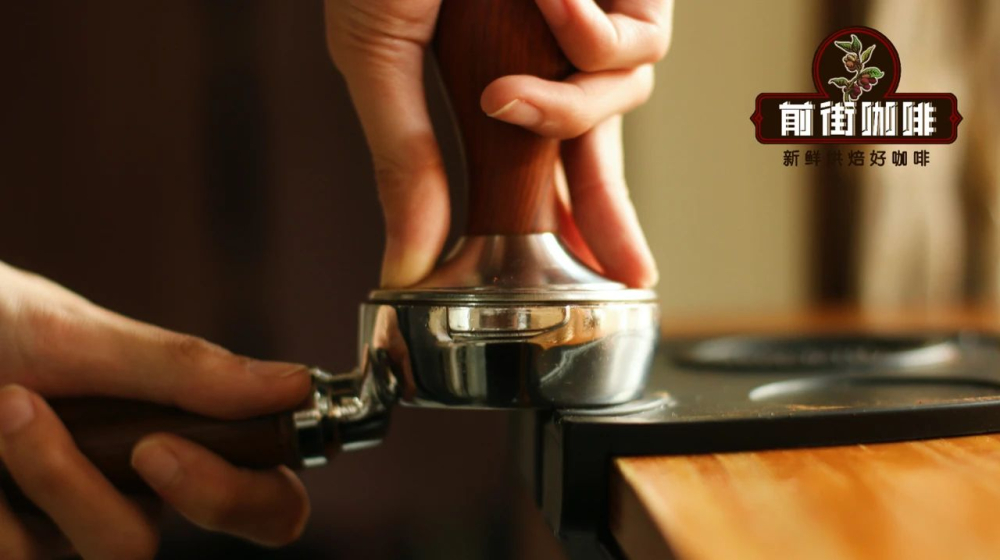
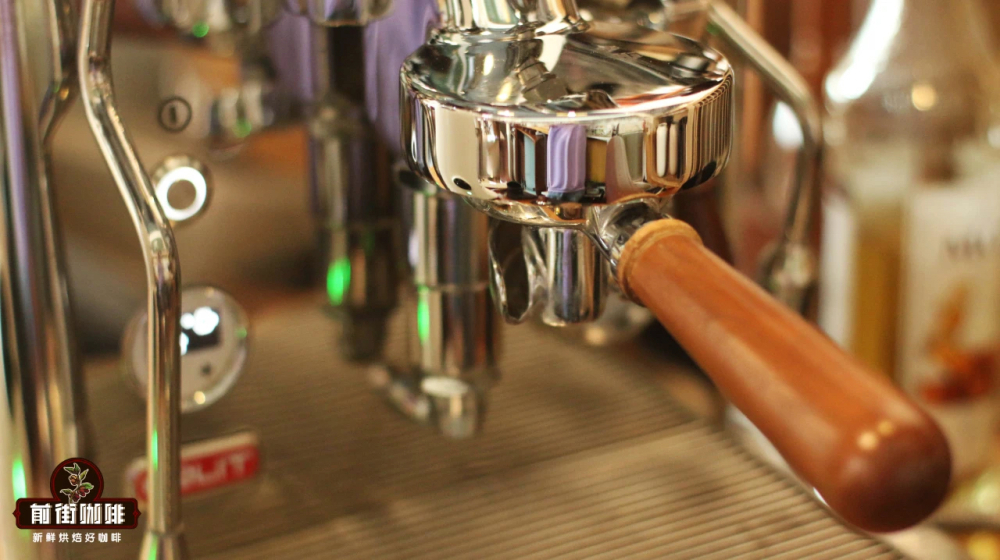
The word Espresso refers both to a coffee beverage and to a brewing method. When making espresso with an espresso machine, the dose, brew ratio, extraction time, grind size, water temperature, and pressure all affect the final result. The machine, at about nine atmospheres of pressure, forces nearly boiling hot water through a finely ground and evenly tamped bed of coffee, producing a small cup of extremely concentrated, intensely flavored coffee liquid.
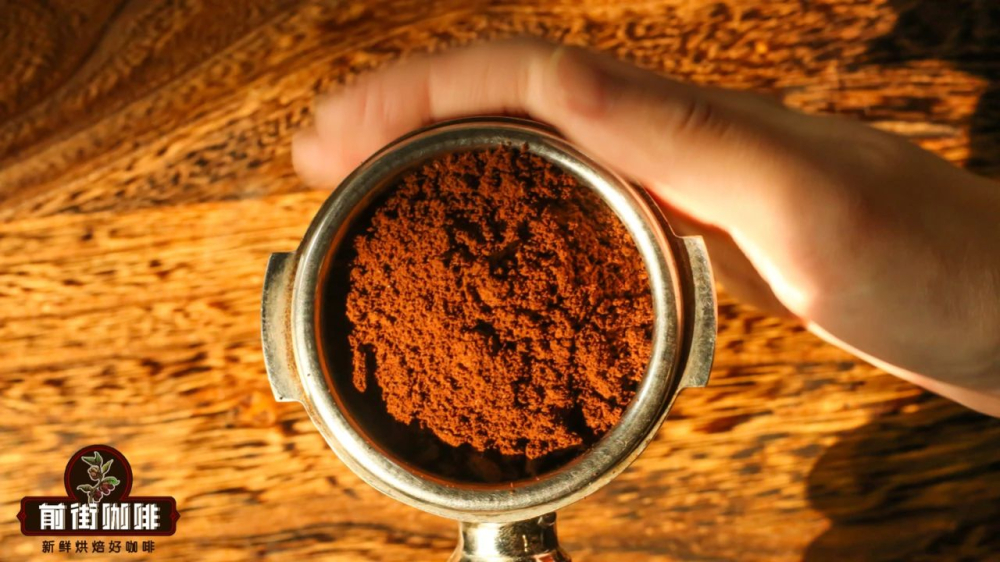
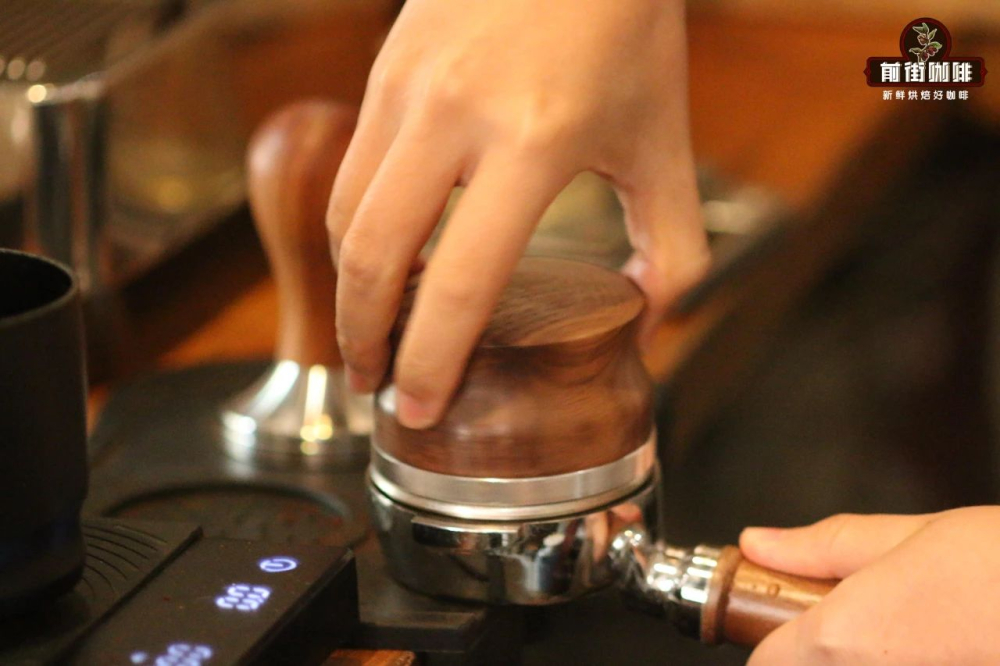
Espresso is a coffee that tests coffee quality and barista skill. Here is a reminder to highlight the key point: Espresso is also the base for popular coffee drinks such as Americano and Latte. As is well known, today's Americano is made of espresso + water. Water is colorless and tasteless and serves to dilute, so the quality of the taste depends on the espresso, and the flavor quality of the espresso mainly depends on the coffee beans and extraction.
Espresso is a highly representative classic Italian coffee, rich and layered in flavor, capable of amplifying and presenting certain flavor characteristics of the coffee beans, and different impressions emerge as you drink it slowly. It can be said that, Espresso as the base of many espresso drinks, if the Espresso is not made well, then there is no point expecting other fancy espresso drinks to taste good.
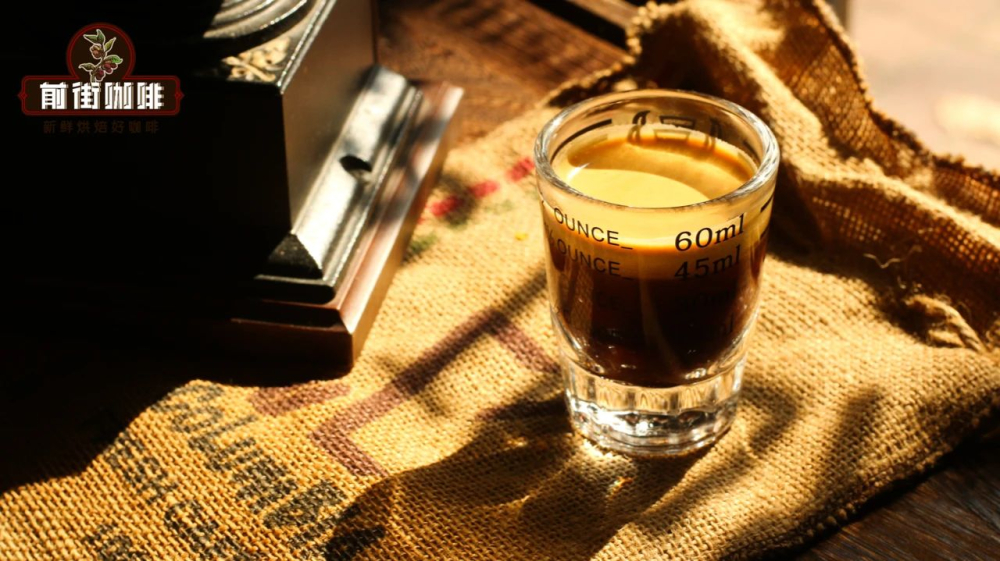
A standard espresso is about 30 milliliters in volume, extracted in a very short time, with a layer of golden-brown coffee crema covering the surface, fine, dense, and thick, appetizing just to look at. This layer of crema is usually called Crema. The aroma is mainly carried by the Crema, while the taste is handled by the extracted liquid itself.
Should you add sugar to Espresso
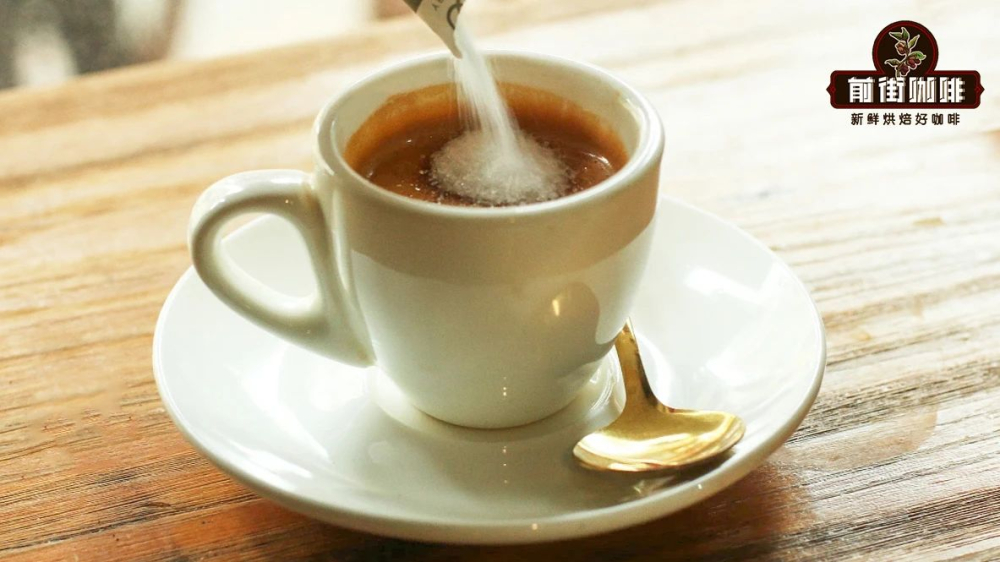
Some people are used to adding sugar, while others do not add it at all; there is no standard answer to this. However, from a health perspective, Front Street Coffee still recommends adding as little as possible or simply not adding any.
The traditional way to drink Espresso is: immediately add a small spoonful of white sugar after it is served, and drink while stirring; this way the coffee's mouthfeel becomes much softer, the bitterness is no longer so abrupt, and a moderate acidity also emerges.
Of course, if you truly love coffee, it is highly recommended to order an Espresso at a cafe. Why? Because you will discover that espresso made by an espresso machine can be so rich; besides bitterness, you can also taste flavors such as fruit acidity, floral notes, nuts, and even wine-like aromas.
Latte
Latte is familiar to everyone, and almost every coffee shop offers this milk coffee.
Unlike Americano, Latte is a milk coffee. "Latte" means "milk" in Italian, so if you order a single latte in Italy, you will get a cup of milk without coffee. Corresponding to the Americano method of adding water to espresso, the Latte method is to add milk or frothed milk to espresso, and the proportion of milk is relatively large, so the milk flavor dominates, making it more like milk with a coffee flavor.
However, making a delicious cup of Latte is not simple. Different coffee bean flavors, different richness of fresh milk, and different extraction parameters will all change the taste of the Latte.
How to make Latte?
As mentioned earlier, Latte consists of two parts: espresso and milk. Hot Latte uses frothed milk, which greatly tests the barista's skill in steaming milk, so making a hot Latte can be broken down into three steps: first extract the espresso, then froth the milk, and finally combine the frothed milk with the espresso and complete the latte art.
One bean used in Front Street Coffee stores is the Warm Sun Blend, a blend of 60% sherry barrel coffee beans and 40% sun-dried Yirgacheffe. After repeated adjustments, 20 grams of coffee powder was determined to extract 40 grams of coffee liquid, with an extraction time of 28 seconds.
Front Street Coffee believes that choosing a suitable espresso blend bean is also very important. Blended coffee, also called mixed coffee, is the mixing of various single-origin coffee beans together, so as to fully bring out the strengths of each single-origin coffee bean. Blend beans are made by mixing coffee beans from different origins to create a more balanced taste. At the same time, before blending coffee beans, you must first understand the different coffee varieties and flavors around the world; beans from different origins have different characteristics. Different coffee beans have different personalities due to different varieties and origins, with subtle differences in flavors such as acidity, bitterness, sweetness, aroma, and body.
Currently on the market, there are 2 types of espresso coffee beans : one is single-origin espresso beans, and the other is the more common blended espresso beans. Single-origin coffee beans tend to focus more on expressing the unique characteristics of a certain type of coffee.
Next, Front Street Coffee will talk about the recipe ideas for several of its own blend beans. For different types of coffee, the espresso coffee beans formulated by Front Street Coffee have different emphases in mouthfeel and flavor.
Several espresso coffee beans currently sold by Front Street Coffee are all blend types, namely the espresso coffee bean recommended by many baristas - Front Street Black Cocoa Blend, Specialty Blend, Commercial Blend, and Warm Sun Blend coffee beans.
1. Specialty Blend Coffee Beans
Specialty Blend Coffee Beans are an espresso coffee bean that has accompanied Front Street Coffee stores for many years. Until the end of 2019, Front Street Coffee stores used this coffee bean as the espresso base bean. To blend a stable espresso coffee bean, you need to start with stable, high-yield coffee-producing countries, so when Front Street Coffee's roaster formulated this Specialty Blend Coffee Bean, they chose the two countries with the highest and most stable arabica coffee bean production worldwide - Colombia and Brazil. The ratio is 60% Colombia mixed with 40% Brazilian coffee beans. Washed Colombian coffee beans give this Specialty Blend Coffee Bean a soft fruit acidity and black cocoa tonality, while Brazilian coffee beans are responsible for providing this coffee bean's full-bodied mouthfeel.
Therefore, when this espresso bean is used to make espresso, the dark chocolate tonality is very prominent, the mouthfeel is solid and full, and the finish carries nutty notes. It is precisely because it is balanced and has a distinct dark chocolate flavor that it is suitable for both black coffee and milk coffee, which is why Front Street Coffee has used it as a store production bean for more than six years.
2. The espresso coffee bean recommended by many baristas - Front Street Black Cocoa Blend Coffee Beans

Made into Americano, it shows obvious winey chocolate and citrus acidity; made into Latte, it has flavors such as vanilla cream and liqueur chocolate.
Commercial Blend is different from the other three blend coffee beans; Commercial Blend is a commercial choice. The main base of Commercial Blend Coffee Beans is Colombia and Brazil, with proportions of 60% and 30%, and for the remaining 10%, Front Street Coffee's roaster chose Robusta coffee beans.
For coffee bean information, please follow Coffee Workshop (WeChat public account cafe_style) For professional coffee knowledge exchange, please add WeChat ID kaixinguoguo0925
The above content is compiled by CoffeeHunters, a coffee news website.


