







How do Yirgacheffe and Hambela SOE coffee beans differ?
Yirgacheffe and Sidamo Hambela are two representative Ethiopian single-origin coffees. Yirgacheffe is mainly washed, giving delicate floral aromas, citrus-lemon notes and a clean, bright cup; Hambela Huakui is naturally processed, with intense aromatics, pronounced sweetness and a strawberry-and-cream flavor. The article compares origin, processing and flavor, then covers brewing Hambela SOE coffee beans in a moka pot.
Yirgacheffe was once part of Sidamo and became an independent region after farmers elsewhere misused the name. The Gutingding Cooperative sits in the Worka sub-region at 1,900 to 2,300 meters and was established in 2012 with more than 300 members. Washed processing arrived from the Americas in the 1970s and became the regional standard.
Ethiopia is an important origin for specialty coffee, and among its single-origin coffees, Yirgacheffe and Sidamo Huakui are two highly representative examples. Yirgacheffe is mainly washed, with delicate floral aromas and citrus-lemon notes, and a clean, bright mouthfeel; Sidamo Huakui, on the other hand, is naturally processed, with intense aromatics, pronounced sweetness, and a famous strawberry-and-cream flavor. This article compares the two in terms of origin background, processing method, and flavor characteristics, and focuses on introducing the brewing method and flavor performance of Front Street. Natural Huakui SOE coffee beans in a moka pot, to help coffee lovers better understand the characteristics of these two beans.
When it comes to single-origin specialty coffee from Ethiopia, Front Street. Yirgacheffe and Front Street. Huakui are undoubtedly two quite representative choices.
The Yirgacheffe region was originally part of Sidamo. In the local dialect, YirgaCheffe roughly means "let us settle and live in this snowy land." The coffee produced here naturally carries elegant floral notes and a uniquely distinctive flavor, so much so that coffee farmers in other regions also falsely used the name "Yirgacheffe" to sell their own beans. In the end, Yirgacheffe was separated out and became an independent region.
Starting in the 1970s, the Yirgacheffe region introduced the washed processing method from the Americas, which both improved green bean quality and increased processing efficiency. After that, the washed method gradually became the mainstream in the region. Washed Yirgacheffe is characterized by distinct floral notes and citrus-lemon notes, with a clean and translucent cup. Thanks to this unique flavor, the washed processing method won Yirgacheffe a large number of loyal fans, and Front Street Gutingding is one of them.
Front Street. Yirgacheffe Gutingding coffee beans
Region: Yirgacheffe region, Ethiopia
Cooperative: Gutingding Cooperative
Altitude: 1,900 meters—2,300 meters
Variety: local heirloom varieties
Processing method: washed processing
Gutingding Cooperative is located in the Worka sub-region at the southeastern end of Yirgacheffe. It was established in 2012 and currently has more than 300 members. It is known as "the last pure land of Yirgacheffe." Gutingding Village was the earliest village area to be independently demarcated. When the cooperative was founded, many members originally came from the Worka cooperative, so their expertise in producing specialty coffee beans is quite mature.
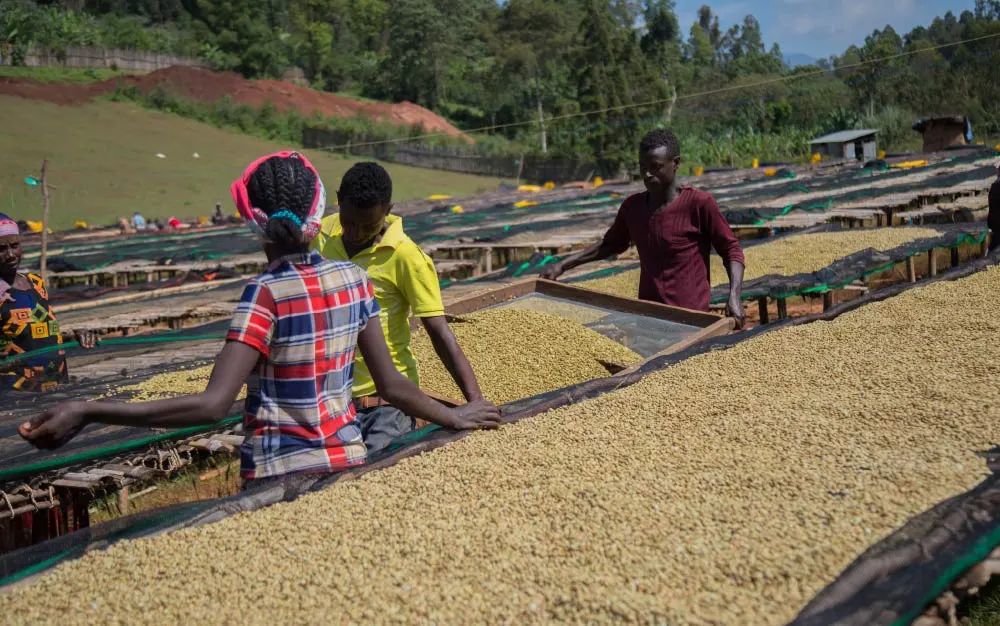
Front Street. Huakui coffee beans also perform impressively. For many years, specialty coffee beans produced in the Sidamo region have repeatedly won honors in national and even continental green bean competitions, such as the TOH (Taste of Harvest) green bean competition.
Another bean also won an award at the TOH competition, and that is Huakui coffee beans. Huakui comes from the Hambela sub-region under the Guji zone in the larger Sidamo region.
Coffee beans from the Sidamo region usually use the most traditional and primitive processing method—natural processing. The whole coffee fruit is dried directly in the sun, allowing the sugars in the pulp and mucilage to penetrate more fully into the green beans. Therefore, compared with washed beans, natural beans have stronger aromatics and more pronounced sweetness. This is exactly the case with Huakui coffee. In 2017, with its rich strawberry-and-cream flavor, it won over many judges and took first place in that year's TOH natural group.
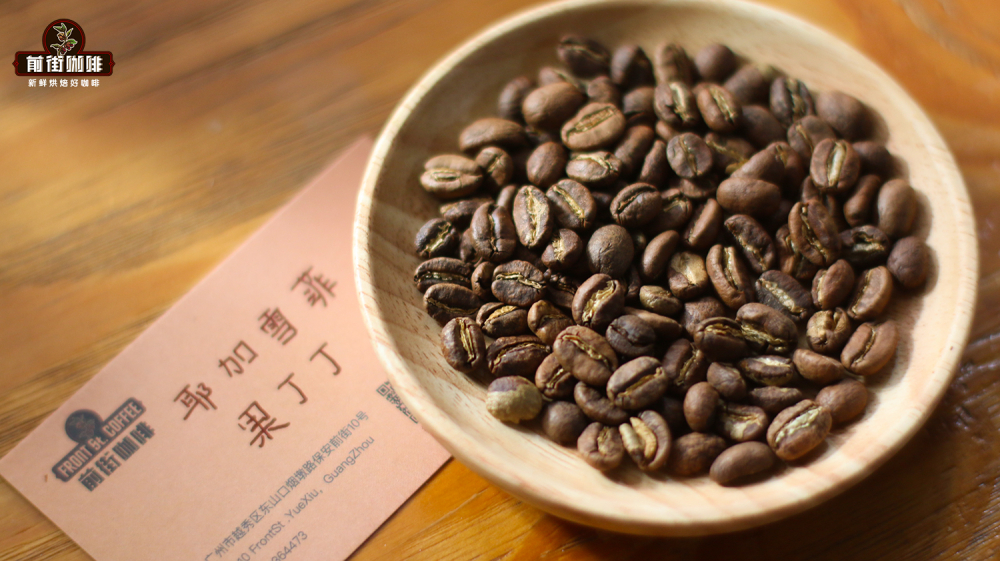
In the same year, this coffee bean was introduced to the domestic market. Because it has alluring cream, guava, and dried mango flavors, and with only slight improvements in green bean processing technology it has the potential to become the next Geisha, it was named "Huakui," meaning chief of a hundred flowers, which fully shows the high expectations placed on it.
There are many types of Huakui coffee. Here, Front Street. Natural Huakui coffee beans are recommended first. Choose a light roast, suitable for pour-over, capable of presenting the bright sweet acidity of citrus, blueberry, and guava; if you want to make moka pot coffee and espresso, you can buy Front Street. Natural Huakui SOE.
How do you make Huakui SOE with a moka pot? What flavor characteristics does moka pot coffee have?
Before brewing coffee, you need to prepare fresh coffee beans, water, a grinder, a gas stove for heating (or an induction cooker), and the star of the show—a moka pot and a bag of freshly roasted Front Street. Natural Huakui SOE coffee beans.
First remove the base of the moka pot and pour pure warm water into the lower chamber. This can shorten the brewing time and also prevent the coffee grounds from heating too quickly and developing a scorched, bitter flavor. Control the water level at about 0.5 cm below the pressure relief valve line. The purpose of the safety valve is to prevent excessively fine coffee grounds from causing a blockage in the extraction channel and causing the coffee pot to explode. If the safety valve is submerged in water and the extraction channel happens to be blocked, the consequences of a high-temperature moka pot explosion would be unimaginable.
To extract a rich black coffee, the grind size needs to be much finer than for regular pour-over. The Front Street store uses an EK-43s grinder, with a setting of 0.5 fineness. The amount of grounds depends on the size of the moka pot. Here at Front Street, a three-cup Bialetti classic pot is used, with 18 g of grounds.
Pour the ground coffee into the filter basket, fill it to nine-tenths full, smooth it level with your finger, and then place it into the base. There is no need to tamp it firmly; an overly compacted coffee bed can easily block the upward flow of water and thus affect extraction.
Next, screw the upper chamber and lower chamber tightly together, wipe the body of the pot dry with a towel, and place it on a gas stove or induction cooker to heat. When using an open flame, be careful to keep the flame from extending beyond the base of the moka pot as much as possible.
Wait for the moka pot to heat up. When you hear a hissing sound, turn the heat to low, and the coffee liquid and oils will slowly flow out. When you see the coffee liquid in the upper chamber half full, you can turn off the heat source and move the pot to the table, using the remaining heat and pressure inside the pot to continue extracting the rest of the coffee liquid.
Finally, pour the extracted coffee liquid into a cup. You can taste it directly, and the flavor will be very rich and solid. For friends who usually like Americano, Front Street suggests adding hot water at 70–80°C at a ratio of 1:5, stirring, and then drinking. At this point it will show fresh fruity sweet acidity; if you prefer coffee with milk, you can pair the moka pot coffee with milk, and it will have a faint floral aroma, the clean sweetness of orange, and the aroma of cranberry cookies.
The above content is compiled by CoffeeHunters, a coffee news website.


