







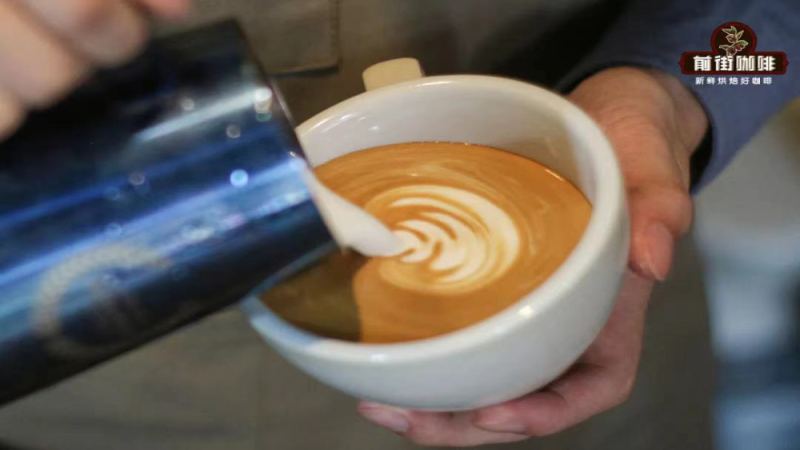

Front Street Coffee currently offers several types of espresso drinks, including lattes, cappuccinos, and mochas. Among them, lattes and cappuccinos have the highest order rates, so what are the differences in their taste and flavor characteristics? How much caffeine is in a cup of latte? Next, Front Street Coffee will answer these questions one by one in this article.
What is cappuccino?
Cappuccino is a classic Italian coffee that has the same ingredients as latte, consisting of milk foam, milk, and espresso. At the same time, according to Front Street Coffee, cappuccino is divided into dry cappuccino and wet cappuccino. Dry cappuccino has more milk foam and a rich mouthfeel; wet cappuccino has less milk foam than dry cappuccino and more milk aroma, but both have relatively more milk foam. At present, in China, places like Front Street Coffee use the dry cappuccino method, with thicker milk foam plus an appropriate amount of milk, and its dense texture has captured many coffee lovers.

What is latte?
Latte is actually a transliteration of the Italian word "Latte," meaning milk, so if you order a latte at an Italian coffee bean shop, what you may get is a cup of milk. Therefore, in Italy, latte actually means coffee with milk. With the emergence of espresso machines, steam wands became standard equipment on espresso machines, making it easy to heat milk on the coffee machine, and modern latte took shape accordingly. So much so that in the 1980s, baristas from Seattle, Washington, began "coloring" with rich-textured milk, which was the prototype of latte art.

Also, because each coffee shop uses espresso blend beans with different flavors and different models of espresso machines, latte will have subtle differences from shop to shop in the ratio of milk to coffee, beans used, extraction parameters, and so on. But in general, latte is a coffee beverage made by adding a large amount of milk to espresso. Lattes made with different coffee beans will also have different flavors, lattes made with different milks will also have different flavors, and even different ratios of coffee to milk can present different flavors.
SoWhat coffee beans are used for espresso?
As Front Street Coffee said above, espresso extracted from different coffee beans and then combined with milk also presents different flavors. So Front Street Coffee will use the beans it currently uses as an example to recommend what coffee beans espresso should be made from.

For example, the Sunflower Warm Sun series, Front Street Coffee's own blend currently used in stores, is Front Street's most proud blended coffee work at present. It is blended from Honduras Sherry coffee and Yirgacheffe natural Red Cherry coffee, and when added to milk it highlights rich chocolate, caramel, and slightly tipsy flavors.
Front Street Coffee Sunflower Warm Sun Blend
Flavor:Obvious fruity acidity, a light berry aroma, wine aroma, rich chocolate flavor, and a clear sweet aftertaste.
Recipe:Honduras Sherry : Yirga Red Cherry = 7:3

This blend is made by Front Street using Yirgacheffe natural Red Cherry and Honduras Sherry. Front Street's design concept for this blend is that it can be used for both espresso and pour-over. When used to make espresso, the flavor it gives off has an obvious fermented wine aroma. On the palate, the acidity of citrus and berries immediately emerges, with whiskey aroma, and the finish is dark chocolate.
So this is also one of the reasons why coffee lovers who come to Front Street Coffee can taste fermented wine aroma when drinking espresso. In addition, Front Street Coffee also supplies another three espresso coffee beans (click this link), so everyone only needs to choose according to their own preferences.
So how are latte and cappuccino made?
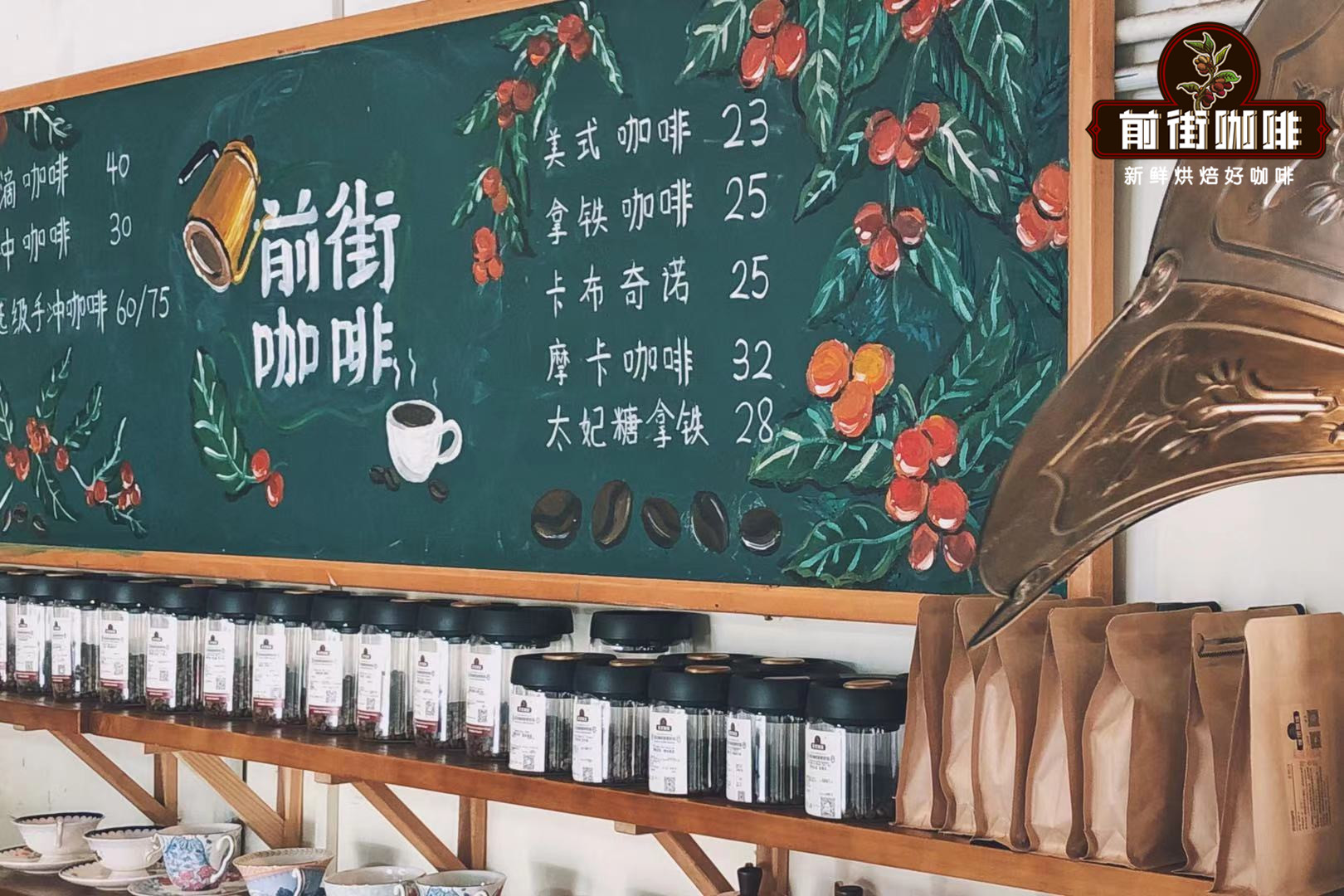
As Front Street Coffee said above, because each coffee shop uses a different recipe ratio, it is also very normal to order the same espresso drink at different coffee shops and taste somewhat different coffee flavors. But as long as it is espresso extracted from high-quality espresso coffee beans, the flavor of this espresso drink will inevitably be excellent.
Cappuccino recipe ratio
As Front Street Coffee mentioned above, traditional cappuccino is made from 1/3 espresso, 1/3 milk, and 1/3 milk foam. Cappuccino is divided into dry and wet types. Dry cappuccino has more milk foam, while wet cappuccino has relatively less milk foam. The cappuccino to be made below belongs to the dry cappuccino type.
The espresso extraction parameters used for latte and cappuccino are the same. The espresso extraction parameters are as follows:
Front Street uses a Lelit V3 espresso machine.
Pressure: 9 bar
Temperature: 90.5~96°C
Time: 20~30 sec
Coffee-to-water ratio: 1:1.7~1:2
Dose: 10g (single espresso) 20g (double espresso)
Extracted espresso yield: 20ml (single) 40ml (double)
Front Street uses a double espresso when making latte. After extraction, the coffee beans' flavor profile is: obvious fruity acidity, a light berry aroma lingering, rich wine aroma and chocolate flavor, and a comfortable sweet finish.

At the same time, the milk used for latte and cappuccino and the milk frothing temperature are also the same. The only differences are the volume and the thickness of the milk foam.
Milk: whole fresh milk (Front Street uses Vitasoy fresh milk)
Milk steaming temperature: 50-60°C (too low a temperature cannot stimulate the lactose in milk, while too high a temperature will destroy the protein in milk and create a gritty texture)
Milk foam thickness: 1 cm (milk foam thinner than 1 cm is for making flat white; milk foam thicker than 1 cm is for making cappuccino).

Cappuccino recipe ratio suggestion
Cappuccino is generally only served hot, because if it is made into an iced drink, it will quickly dissolve into a latte.
Front Street suggests a coffee-to-milk ratio of 1:3.5 for making cappuccino, 40ml espresso : 140ml hot milk. By pouring the milk in a circular motion to fully integrate it with the espresso, you can get a hot cappuccino. Finally, gently push out a simple pattern,
then this cup of cappuccino is complete.

Front Street Coffee cappuccino flavor profile:It will have a relatively obvious liqueur chocolate flavor. Paired with milk and dense milk foam, it shows a very full mouthfeel, a rich and lasting cocoa flavor, accompanied by a smoky wine-like note.
HotLatte recipe ratio suggestion
Front Street suggests a coffee-to-milk ratio of 1:6.5 for making latte, 40ml espresso : 260ml hot milk. By pouring the milk in a circular motion to fully integrate it with the espresso, you can get a hot latte. Heating fresh milk releases the sweet lactose molecules better. After being evenly mixed with espresso, the whole latte naturally has the sweet taste of milk, without stealing the spotlight from the espresso. Instead, against the backdrop of milk, it better reflects the flavor of the espresso.
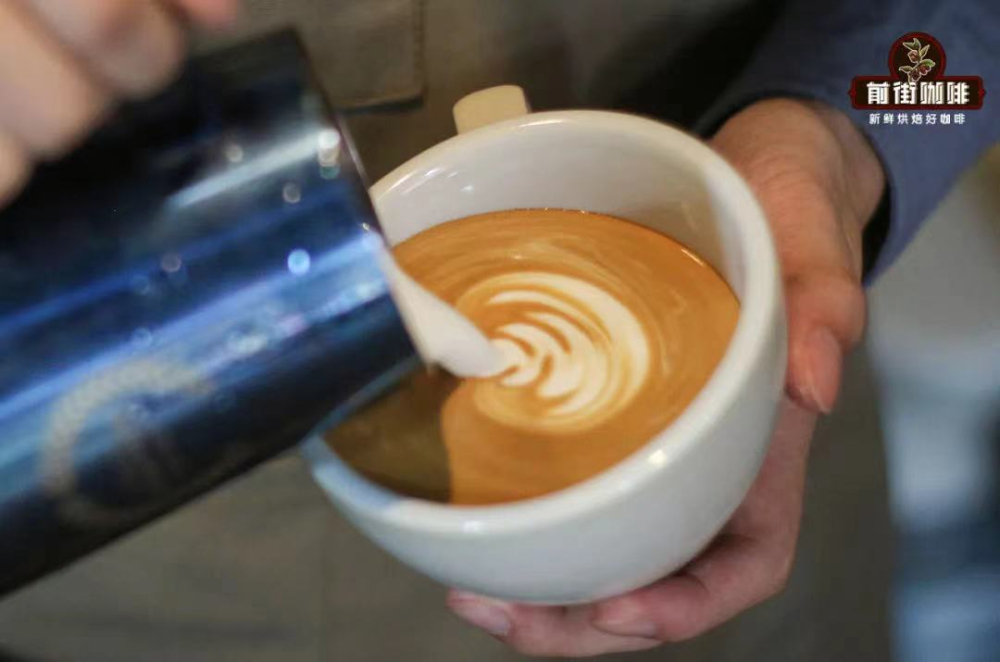
Front Street Coffee hot latte flavor profile:Whiskey aroma, with lactose and coffee acidity colliding to create a milkshake-like sweetness, and the finish is a nutty aftertaste like hazelnut.
So how much caffeine is actually in a cup of latte?
According to research data, most adults can consume 400 milligrams of caffeine a day, and the caffeine content varies among coffee varieties. For example, most of the coffee beans in Front Street stores are Arabica varieties, and this kind of coffee bean has a caffeine content of only 0.9-1.2%, causing very little harm to the human body.

The above is what Front Street Coffee has compiled regarding how much caffeine a cup of latte contains and the taste and flavor characteristics of cappuccino and latte. In addition, from the above everyone can also knowCan espresso be used for latte art? Of course it can. As long as it is steamed milk, it will have dense milk foam, and it can naturally mix with espresso to become a cup of rich milk coffee. At the same time, Front Street Coffee also hopes this article can help coffee lovers who want to learn related knowledge, so that in the future they can choose Italian-style milk coffee that suits their own taste.
For more specialty coffee beans, please add the private WeChat of Front Street Coffee, WeChat ID: kaixinguoguo0925
The above content is compiled by CoffeeHunters, a coffee news website.


