







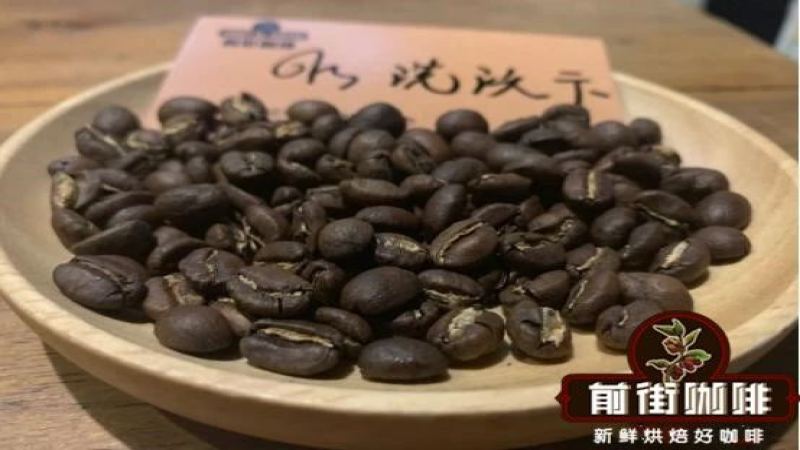
Roasting Plants Manufacturers and Yirgacheffe Worka Washed G1
Yirgacheffe is a town in southern Ethiopia's Gedeo Zone that split from Sidamo as an independent specialty region once washed processing stations appeared. The Worka cooperative's washed G1 is a light-roasted local heirloom lot with lemon, kumquat and white grape juice notes. G1 is the top green bean grade, reflecting careful sorting of ripe cherries.
The area sits at 1,800 to 2,000 meters and uses a garden coffee system, with springs and rivers supplying water for washing. Yirgacheffe also covers sub-regions such as Wenago, Kochere, Gelena and Abaya. Most farmers cannot build household processing facilities, so stations buy cherries from smallholders, process them and resell to traders. Roasting plants manufacturers and barista origin country context both matter when evaluating such lots.
Yirgacheffe, as Ethiopia's most representative specialty coffee region, is renowned worldwide for its unique floral and fruity aromas and bright acidity. The washed G1 produced by the Worka cooperative is an exceptionally rare high-quality lot. This article will provide a comprehensive analysis of the flavor code of this bean, from the region's background, cooperative history, washed processing techniques, and green bean grading standards, to Front Street Coffee's roasting and brewing practices, taking you deep into understanding how a cup of clean and translucent Yirgacheffe is born.
Yirgacheffe Worka Washed G1
[Front Street Coffee: Yirgacheffe·Washed Worka]
Country: Ethiopia
Grade: G1
Region: Worka Worka
Roast Level: Light Roast
Processing Method: Washed
Variety: Local Heirloom
Processing Station: Worka Cooperative
Flavor: Lemon, Kumquat, White Grape Juice
01 | Region Introduction
Yirgacheffe is geographically a small town in southern Ethiopia, originally under the jurisdiction of Sidamo. With the establishment of washed processing stations, local coffee exhibited distinctive flavor characteristics, and Yirgacheffe gradually separated from Sidamo to become an independent representative region, rising to fame in the global coffee scene.
Yirgacheffe town is located in the Gedeo Zone, downstream of the Great Lakes, surrounded by numerous springs and rivers, providing ample fresh water resources for washing stations. Front Street also noted that in ancient Ethiopian language, "Yirgacheffe" is composed of two parts: Yirga ይርጋ Yərga means calm and stable, and Cheffe ጨፌ Č̣äfe refers to marshy wetlands, together meaning "let us settle and live in this wetland."
Yirgacheffe (Specialty Region) : Altitude 1,800~2,000 meters | Garden Coffee System |
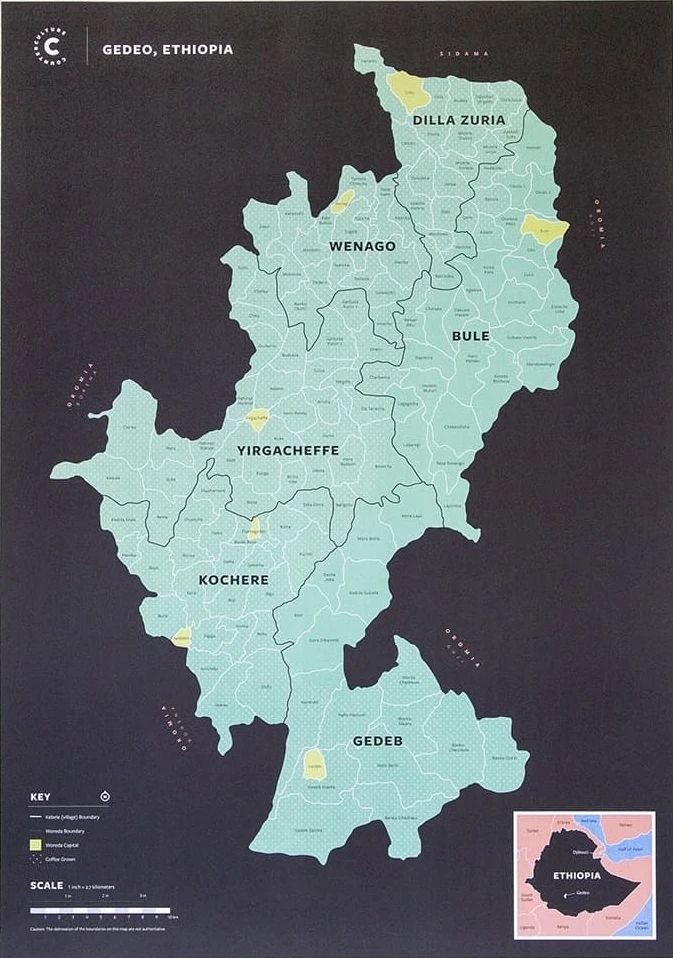
Yirgacheffe was originally part of the Sidamo region but was separated due to its unique flavor. In addition to Yirgacheffe town itself, it also includes surrounding sub-regions such as Wenago, Kochere, Gelena, and Abaya.
Yirgacheffe encompasses numerous villages, micro-regions, cooperatives, and processing stations. In most parts of Ethiopia, coffee farmers still live difficult lives and cannot afford to build their own household processing facilities. Therefore, many processing stations have emerged, purchasing coffee cherries from surrounding smallholders for processing, then reselling to green bean traders.
Coffee trees are mostly planted in farmers' backyards or mixed with other crops in fields, with limited production per household, a typical garden coffee model. Almost all award-winning Yirgacheffe beans come from the aforementioned coffee villages and communities. The "Yirgacheffe flavor" that baristas often mention refers to intense jasmine fragrance, lemon or lime acidity, and peach, almond sweetness, or tea aroma. Beyond floral notes, the delicate body is like silk massaging the mouth, with a wonderful tactile sensation. Currently, many coffee chemists have begun studying the microclimate and terroir around Yirgacheffe, attempting to derive the planting formula for specialty coffee.
Strictly speaking, Yirgacheffe is part of Ethiopia's Sidamo province, located northwest of Sidamo, by mountains and lakes, and is one of Ethiopia's highest-altitude coffee regions. Yirgacheffe itself is a town of about 20,000 people. The neighboring three small regions of Wenago, Kochere, and Gelena Abaya are also classified under the Yirgacheffe region because their coffee flavors are almost identical to Yirgacheffe. However, the production methods and flavors here are so outstanding that Ethiopian coffee farmers compete to pride themselves on having Yirgacheffe flavors in their coffee, thus separating from the Sidamo region to stand alone, also becoming Africa's most famous region.
02 | Worka Cooperative
This bean comes from a single farm in Ethiopia, processed by the Worka cooperative. The Alemayehu Alako farm is a member of the Worka cooperative.
The Worka cooperative was established in 2005 and joined the famous Yirgacheffe Coffee Farmers Cooperative Union (YCFCU) that same year, known for producing high-quality natural Yirgacheffe. The Worka cooperative has about 300 coffee farmers under it. YCFCU was founded in 2002, with members including 26 other cooperatives, serving over 45,000 coffee farmers.
Worka is located in the southeasternmost Gedeb region of Yirgacheffe. In earlier years, this area exported locally produced green coffee beans under the name Worka, or had them processed by the Worka cooperative; but in the past two or three years, individual single-origin sources have been discovered one by one by coffee hunters worldwide, such as: Banko Gotiti, Banko Dadhato, Halo Bariti, etc. Gedeb village was the earliest village area to be independently separated a few years ago. Many individual smallholder farmers were originally members of the Worka cooperative, and their coffee production skills are naturally beyond question.
The Worka cooperative is located in the southern part of the Gedeb region, established in 2005 and joined the famous Yirgacheffe Coffee Farmers Cooperative Union (YCFCU) that same year, known for producing high-quality natural Yirgacheffe. The Worka cooperative has about 300 coffee farmers under it. YCFCU was founded in 2002, with members including 26 other cooperatives, serving over 45,000 coffee farmers.
03 | Processing Method
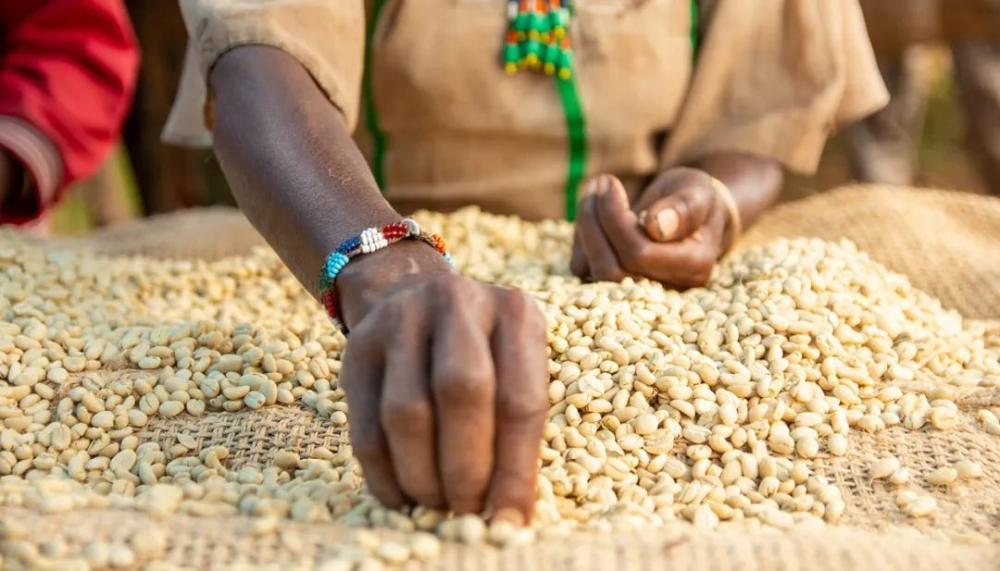
The refining method in the Yirgacheffe region is mostly washed processing, placed in washing tanks for about 72 hours of fermentation to remove mucilage. Some of the acids produced during mucilage fermentation enter the beans. At the same time, since there is no fruit pulp or mucilage attached to the parchment during drying, the unique fruity aroma of natural beans is absent, and the flavor tends toward clean and bright, with more pronounced acidity. Dried directly outside the facility. The green beans are manually sorted, pass quality inspection by the Ethiopian Coffee and Cocoa Authority, and are traded and exported through bidding.
Washed processed coffee is less likely to have wild flavors, possessing pure and refreshing characteristics, suitable for light roast levels; this washed Ethiopian coffee can reach the highest grade G1, which is already a grade with very few defects.
04 | Green Bean Analysis
Heirlooms (local native varieties) is a name unique to Ethiopia, encompassing a wide range of varieties. As the birthplace of coffee, Ethiopia has hundreds to thousands of varieties. Plants in farmers' backyards or coffee trees in wild forests are mostly not specifically identified or classified, and almost no distinction is made. Various coffee trees are planted together with other cash crops on the land, harvested when ripe, processed, and then exported labeled as Heirloom. Coffee harvested this way combines the same-period harvests of multiple smallholders, and a single lot may contain dozens or hundreds of unclassified varieties.
African coffee beans use this defect ratio grading method. Indonesian beans are mainly divided into 6 grades, namely G1~G6. The highest grades for washed beans are G1 and G2; the highest grades for natural beans are G1 and G3.
What does that represent? As follows:
Washed: Grade-1; Grade-2 (G1>G2)
Natural: Grade-1 and Grade-3~Grade-5 (G1>G3>G4>G5)
A few points to note:
a) Regardless of washed or natural, both have Gr-1, with the condition of "zero" defects and Premium Cup. Whether washed or natural, Gr-1 is the rating for the best of the best or Cup of Excellence coffee.
b) The lowest grade for natural Yirgacheffe and Sidamo is Gr-4.
c) Beans of the same grade, such as Limu Gr-2, can be good or bad, depending on the exporter's sorting level and investment.
d) Based on the existing "zero" defect requirement, Gr-1 beans (including washed or natural) are extremely rare, because processing costs are high, and very few suppliers will do it.
05 | Roasting Analysis
The bean density is quite hard. Roast with relatively high heat to climb. The yellowing point is around 5 minutes 30 seconds, then lower the heat and open the damper to enter the Maillard reaction. At 160°C, lower the heat again to extend the Maillard reaction time. First crack is about 186.3°C. This washed bean needs to lower the heat before first crack to prevent too rapid a climb causing burnt bitterness. At 1 minute 40 seconds, drop the beans at 194.2°C.
Roaster: Yangjia 600g semi-direct fire
Preheat the roaster to 200°C and charge. Set the damper to 3, turn on the heat after 30 seconds, adjust the heat to 160. Turning point at 1:32, yellowing at 5:30, grassiness disappears, entering the dehydration stage. Lower heat to 120, open damper to 4. At 170°C, lower heat again to 50.
After eight minutes, dehydration is complete. The bean surface shows wrinkles and dark spots, and the toasted bread aroma turns to coffee aroma, a prelude to first crack. At this time, lower the heat to 40 and listen carefully for the sound of first crack. At 9:00, first crack begins. Adjust heat to 40, fully open damper to 5. Post-first-crack development time is 1 minute 40 seconds, dropping at 194.2°C.
Flavor: This bean is finely washed, making the acidity more pronounced and delicate, presenting yellow lemon acidity, caramel sweetness, cream, lemon black tea flavors, and a floral finish.
06 | Brewing Analysis
Medium-light roast allows the coffee beans to retain more floral and fruity aromas. Compared to medium-dark roast, high-altitude light-roasted coffee beans have a denser internal structure, requiring higher water temperature and finer grinding to better extract the coffee's flavor compounds. Here, Front Street will use 92~93°C hot water for extraction. For grind size, Front Street will use a No. 20 standard sieve with an 80% passing rate.
Friends who often read Front Street articles should know that Front Street Coffee baristas always use the classic three-stage method, because this makes the coffee's layers richer while clarifying the flavors of the coffee's front, middle, and back sections. The method is to increase the amount of water poured each time after blooming. Usually, water is poured when the coffee liquid is about to drop to the surface of the coffee bed, using small, medium, and large water flows for three-stage extraction:
Recommended brewing methods: Siphon, Pour Over
Grind size: Fine sugar coarseness (EK43s setting 10)
V60 dripper, 15g coffee, water temperature 91°C, grind size No. 20 sieve with 80% passing rate, water-to-coffee ratio 1:15
First stage: pour 30g water for 30-second blooming, then pour 95g (scale shows about 125g), complete pouring in about 1 minute. When the water level drops to 2/3 of the coffee bed, pour the remaining 100g (scale shows about 225g), complete pouring in about 1 minute 35 seconds. Drip finishes at 2'10", remove the dripper, extraction complete.
The above content is compiled by CoffeeHunters, a coffee news website.


