








Yirgacheffe washed vs natural: which suits a french press vs wok setup?
Washed Yirgacheffe shows fresh jasmine florals and citrus with a clean, transparent mouthfeel; natural Yirgacheffe keeps more fruit sugar and delivers intense berry and tropical fruit flavors. The difference comes from processing, not the region, so the same Ethiopian terroir yields two distinct cups depending on whether the pulp is removed before or after drying.
The natural method is the older technique and carries more hard-to-control variables, so quality can vary, while washed processing arrived in Ethiopia in 1972 and became mainstream. For a french press vs wok comparison, the press suits these beans with a coarse grind, a set coffee-to-water ratio, and a timed steep; a wok is not brewing gear, so how to use coffee pot methods remain the practical route.
Ethiopia's Yirgacheffe is a highly favored region in the specialty coffee world, and its two main processing methods—washed and natural—each have distinctive characteristics, with dramatically different flavor profiles. Washed Yirgacheffe is renowned for its fresh jasmine florals and citrus notes, with a clean and transparent mouthfeel; natural Yirgacheffe, because it retains more sugar from the fruit pulp, presents intense berry and tropical fruit flavors. This article will approach the topic from the perspective of processing techniques, comparing in detail the core differences between washed and natural, while also sharing the French press brewing parameters for Front Street's Natural Red Cherry coffee beans, including key information such as coffee-to-water ratio, water temperature, grind size, and steep time, helping coffee lovers easily recreate a cup of full-flavored Yirgacheffe at home.

Ethiopian Yirgacheffe — Front Street Natural Red Cherry French Press Brewing Guide
The natural method is arguably the oldest and most primitive of all coffee processing techniques. However, because the entire operation involves a large number of hard-to-control variables, quality can easily be inconsistent, and so it was once labeled a backward processing method and drew considerable criticism. As the industry continued to evolve, various new processing techniques emerged one after another, such as washed, honey, wine-flavored, raisin, and anaerobic fermentation, among others.
Front Street Yirgacheffe also underwent this transformation. In 1972, Ethiopia, in order to improve coffee quality, introduced washed processing technology from Central and South America, which made the jasmine florals and citrus aromas inherent to Yirgacheffe even fresher and more delightful, propelling it into the top ranks of the world's specialty coffee beans. From that point on, the washed method gradually became the mainstream processing method. Front Street Washed Yirgacheffe is positioned as an everyday staple coffee, balancing both great taste and affordability, and is suitable for pour-over, cold brew, French press, and many other extraction methods, making it an ideal choice for beginners as well.
The reason natural beans produce unpleasant off-flavors stems largely from defects in the processing stages. As long as strict control is exercised at every step, achieving a clean and bright flavor is not difficult. The traditional natural method typically does not involve pre-sorting, sending coffee cherries directly to the drying beds, and only relying on manual sorting after the beans have dried—a rather rough process with a high defect rate that often lacks aroma, and was thus long held in low regard.
Once the root of the problem was identified, the next step was simply to address it directly. Baghi established a rigorous sorting process for this purpose: before the coffee cherries enter the sun-drying stage, unripe green cherries and defective cherries are first removed by hand; during drying, a second round of sorting removes moldy or damaged cherries; after about two weeks, when the green bean moisture content drops to 12%, the sugars and essence from the fruit pulp have fully penetrated into the coffee beans, after which hulling takes place (this step is the same as in the traditional natural method); after removing the parchment beans, density and bean color tests follow (the same as the latter half of the washed process), and finally any defective beans that slipped through are picked out by hand and eye.
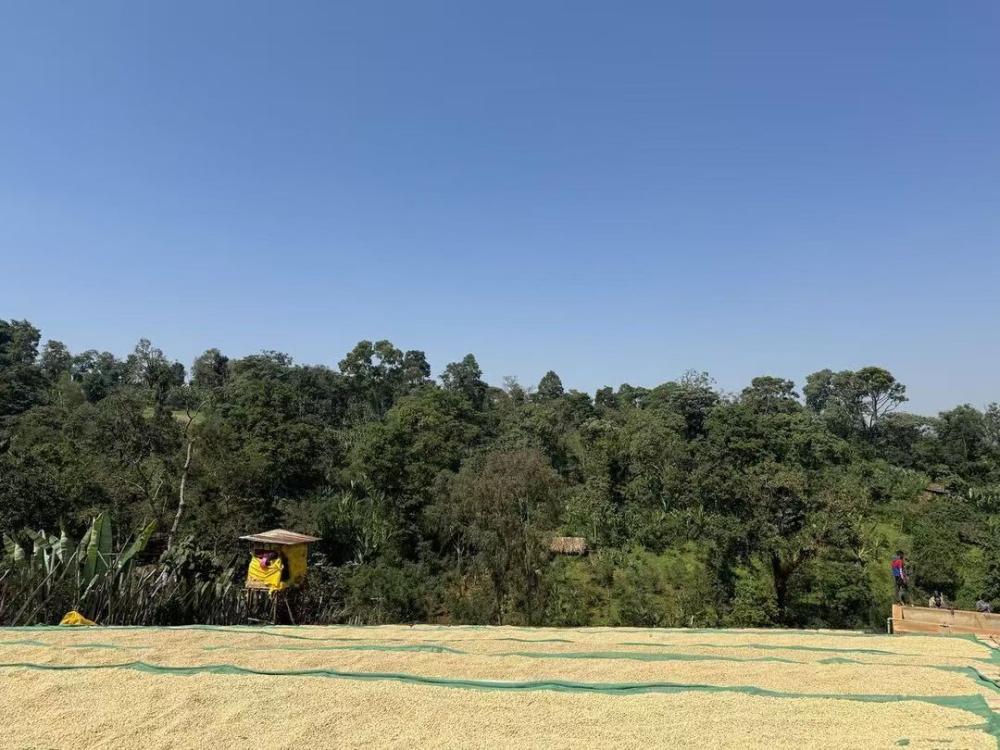
After passing through these strict layers of quality control, the green beans have already reached a superior standard, and that clear, flawless, fruit-filled sunshine flavor that washed beans lack is perfectly expressed.
Fully Washed:
This method uses washing and fermentation to remove the skin, pulp, and mucilage. Farms using the washed method must build washing channels and be able to continuously introduce fresh water. During processing, the fermented beans are placed into the channel, and by pushing them back and forth, the friction between the beans and the force of the water flow clean the coffee beans to a smooth and spotless state. After washing is complete, the coffee beans are still wrapped in the parchment layer, with a moisture content of about 50%, and must be dried to bring the moisture content down to 12%, otherwise the beans will continue to ferment and then become moldy and spoiled. The ideal drying method is sun-drying, which, although it takes 1 to 3 weeks, produces exceptionally outstanding flavor and is therefore highly favored.
Whether natural or washed, both have a wide range of enthusiasts. Today Front Street will share the French press brewing method for Front Street Yirgacheffe Red Cherry, so coffee fans can conveniently enjoy a delicious cup of coffee at home anytime!
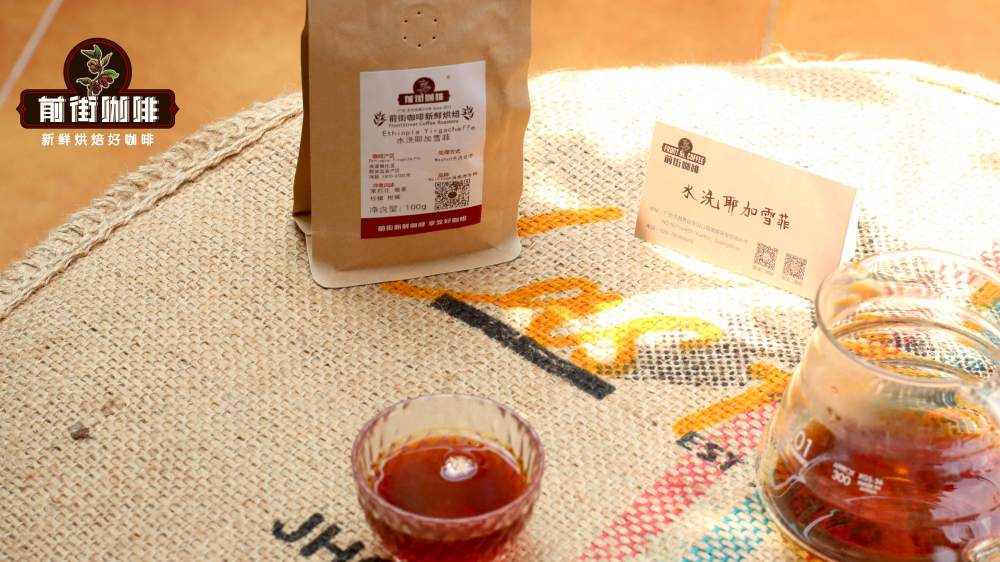
Front Street Natural Red Cherry Coffee Beans
Country: Ethiopia
Region: Yirgacheffe
Altitude: 1800-2000m
Variety: Local Heirloom
Processing Method: Natural
Front Street Natural Red Cherry French Press Brewing Parameters
Coffee-to-Water Ratio: 1:15
Water Temperature: 92°C
Grind: EK43s-10.5 setting
Steep Time: 4 minutes
Note: The grind size for coffee used in a French press should be somewhat coarser, because the coffee grounds and water remain in contact for a relatively long time in a French press; if the coffee is too fine, it can easily cause over-extraction. At the same time, avoid fine particles mixing into the coffee liquid during filtration. When pouring water, it is best to keep the water temperature at around 92°C; too high a temperature will cause over-extraction, pushing the taste toward bitterness and causing the coffee to lose its original flavor.
Cover with the lid and let it sit for 4 minutes. After 4 minutes, slowly press the filter down, then pour out the coffee.
Flavor: Red berries, citrus, tropical fruit, strawberry
The above content is compiled by CoffeeHunters, a coffee news website.


