







Who Invented Espresso and Where Did Mocha Come From?
Espresso was born in Italy around the early 20th century, when Luigi Bezzera of Milan built a steam-powered brewing device. The fast extraction gave it the name Espresso, meaning express. Early results tasted bitter and burnt until Gaggia's 1940s innovations produced a golden crema and a cleaner, layered cup, which then spread worldwide.
The mocha origin story sits inside that wider spread: once espresso traveled, different regions added local ingredients, producing Americano, latte, cappuccino, and mocha. Front Street offers four espresso blends, including Specialty, Commercial, Dark Cocoa, and Strawberry Candy, each built for different drinks and serving situations.
Espresso is a lifestyle shared globally, but do you know its origins and evolution? From the perspective of Front Street Coffee, this article tells the story of espresso's birth in Italy, from Luigi Bezzera's steam equipment to Gaggia's technological innovation, and then to the classic drinks derived today such as lattes, cappuccinos, mochas, and Americanos. We will also introduce four blend beans specially designed for espresso by Front Street, including Specialty Blend, Commercial Blend, Dark Cocoa Blend, and Strawberry Candy Espresso Blend, and share the flavor characteristics and suitable scenarios for each bean, giving you a comprehensive understanding of the charm of espresso.
Espresso is not just a drink; it is more like a lifestyle attitude that crosses borders and is loved by people around the world. Every day, it is probably impossible to count how many cups of espresso countless coffee enthusiasts enjoy. But have you ever wondered where this magical coffee actually comes from? And who created it?
Today, Front Street Coffee will take everyone to trace the origin story of espresso.
The birthplace of espresso: Italy
Many people may know that espresso comes from Italy. Italy is the birthplace of many types of coffee, such as the lattes and cappuccinos we are familiar with. Around the early 20th century, about 100 years ago, Luigi Bezzera in Milan invented a new steam-powered coffee brewing device. Because the brewing process was extremely fast, people named it using the Italian word "Espresso" (meaning "Express").
However, when it first came out, due to limitations in coffee bean materials and operating methods, the espresso produced had a bitter taste and a burnt flavor. It was not until the 1940s, with the technological innovation led by Gaggia, that the taste and quality of espresso were completely reversed and improved. The espresso extracted by the new system not only had a beautiful golden crema on the surface, but also had a delicate flavor and rich layers, completely without any burnt taste. From then on, the improved espresso became a symbol of Italian coffee culture.
Because of its extremely high concentration, after espresso spread around the world, people in different regions gradually added various ingredients according to local taste preferences, creating many world-famous espresso drinks, such as Americano, latte, cappuccino, mocha, and more.
Today, the making of espresso is much more refined than when it was first invented, and the quality of the coffee beans used for espresso has also continued to improve, so many coffee shops' espresso only presents bitterness. Front Street Coffee believes that a good cup of espresso should be strong and rich yet clean in taste, bitter without being burnt, with a strong sweet aftertaste.
Front Street Coffee's daily store output uses blend coffee beans to extract espresso, because blend beans are more stable than single-origin beans in ensuring the taste and quality of each cup of espresso. Front Street Coffee has also launched four blend coffee beans specifically for making espresso, based on the taste needs of mass consumers.
"Front Street Coffee Specialty Blend Coffee Beans" uses Brazilian Arabica and Colombian Arabica. The extracted espresso shows notes of dark cocoa, roasted nuts, and a caramel-like finish, with a mellow body and strong sweet aftertaste.
"Front Street Coffee Commercial Blend Coffee Beans" uses Brazilian Arabica, Colombian Arabica, and Vietnamese Robusta. The extracted espresso presents cocoa and nutty flavors, with a mellow and intense body and strong sweet aftertaste.
"The Espresso Moka Pot Coffee Beans Recommended by Many Baristas at Front Street Coffee - Front Street Dark Cocoa Blend Coffee Beans" uses Yunnan Arabica and Brazilian Arabica. The extracted espresso has a slight fruity acidity, dark chocolate, and nutty flavors, with a rich and slightly acidic body.
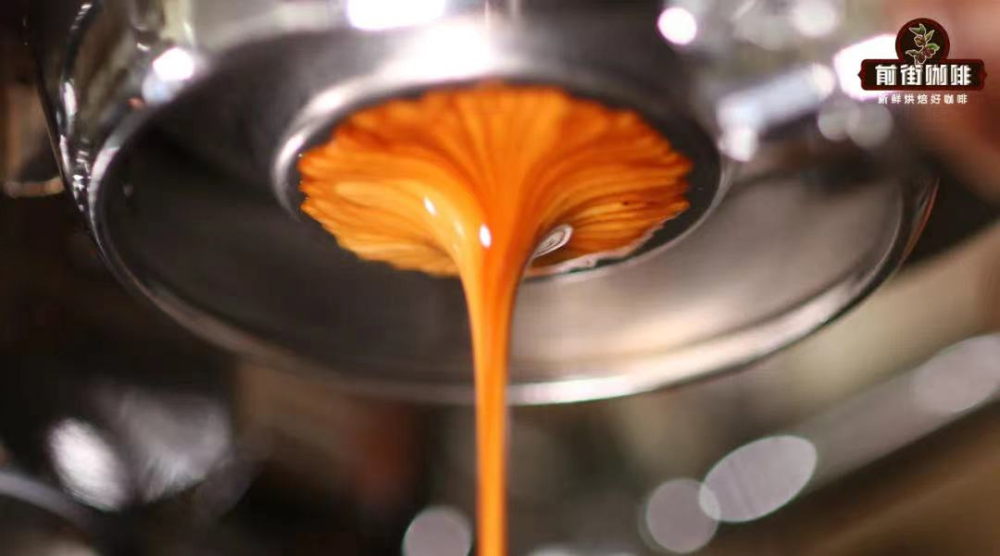
"Front Street Strawberry Candy Espresso Blend Coffee Beans" uses Ethiopian sun-dried Yirgacheffe, Colombian, and Costa Rican honey-processed beans. The extracted espresso exhibits flavors of floral notes, berries, cream, grapes, and dried blueberries, with a rich and smooth body and unique flavor.
Because of its strong and intense taste, espresso is very suitable as the base for coffee drinks. Paired with different proportions of milk, milk foam, water, etc., it can create a wide variety of espresso drinks.
1. Latte (Caffe Latte)
Latte means milk in Italian. If you walk into an Italian coffee bar and tell the barista you want a "Latte," they might look confused and then hand you a cup of milk. In Italy, if you want to drink a coffee latte, you must say "Caffe Latte" to get the latte coffee you want.
When Front Street Coffee's baristas make a latte, they usually use a double espresso (40g) as the base, add 240 ml of hot milk or cold milk frothed to smooth milk foam, and blend evenly.
2. Cappuccino
Compared with a latte, cappuccino's milk foam is thicker and denser. Its appearance is like the Italian Franciscan monks, with a white hood covering a dark brown robe. In Italian, Cappuccino refers to the Franciscan monks, and cappuccino got its name from this.
To highlight the characteristics of cappuccino, Front Street Coffee's baristas generally only make hot cappuccino, because this allows you to taste the rich coffee flavor better. The method is not complicated: first take a double espresso (40g), add 150 ml of hot milk, and when frothing, make the milk foam about 3 cm thick. In this way, when you take the first sip, you can feel the rich mouthfeel of the aromatic coffee crema blended with the fluffy foam.
3. Mocha
Originally, the word mocha referred to a port in Yemen. Coffee beans exported from there to surrounding areas had a strong chocolate flavor, so mocha coffee was also used to generally refer to special coffee beans with chocolate aroma. Later, after the port was demolished, in order to drink coffee with the same flavor, Europeans added chocolate sauce or cocoa powder to milk coffee, which evolved into the espresso mocha coffee we know today.
When Front Street Coffee's baristas make an espresso mocha, they usually use a double espresso (40g) plus 20–30g of chocolate sauce or cocoa powder, stir evenly, then use 200 ml of fresh milk to froth smooth milk foam, with the temperature controlled at 50–60°C, and finally blend it with the chocolate espresso base, pouring a pattern you like. A cup of rich and fragrant mocha coffee is then complete.
4. Americano
During World War II, American soldiers came to Italy. They were not used to the coffee made by Italian espresso machines, so they poured a large amount of hot water into the espresso to dilute the taste.
This practice amazed Italians, so they called this American way of drinking it "Americano," which means "American" in Italian. When Americans heard this slightly mocking term, they not only did not mind, but were actually pleased with themselves, so the name Americano spread and specifically refers to the drinking method of espresso diluted with hot water.
In fact, Americano does not have strict regulations on the amount and temperature of water. Everyone can adjust it according to their preferred strength. After many experiments, Front Street Coffee's baristas developed a 1:6 ratio: pour 40 grams of double espresso into 180 grams of hot water at 80°C, and hot Americano is ready. If you prefer a refreshing and thirst-quenching iced Americano, simply replace the hot water with 90 grams of ice plus 150 grams of room-temperature water, and finally pour double espresso over it in the same way.
The above content is compiled by CoffeeHunters, a coffee news website.


